NEET Biology Multiple Choice Questions – Taxonomy Of Angiosperms

NEET Biology Classification Of Taxonomy Of Angiosperms Multiple Choice Questions

Question 1. Which are the major divisions of the plant kingdom according to Bentham and hooker’s natural system of classification?

  1. Monocotyledons and dicotyledons
  2. Angiosperms and gymnosperms
  3. Cryptogammae and phanerogammae
  4. Unicellular and multicellular plants.

Answer: 1. Monocotyledons and dicotyledons

Question 2. Angiosperms differ from gymnosperms in possessing:

  1. Xylem vessel
  2. Ovule
  3. Xylem tracheids
  4. Seeds.

Answer: 1. Xylem vessel

Question 3. Loranthus is :

  1. Parasite
  2. Epiphyte
  3. Symbiont
  4. Saprophyte.

Answer: 1. Parasite

Read and Learn More NEET Biology Multiple Choice Question and Answers

Question 4. In dicots, vascular bundles are:

  1. Scattered
  2. Closed
  3. Concentric
  4. Arranged in ring.

Answer: 4. Arranged in ring.

Question 5. In monocots, the floral parts occur in groups of:

  1. Two
  2. Three
  3. Four
  4. Five.

Answer: 2. Three

MCQs on Taxonomy of Angiosperms for NEET Question 6. Which of the following is a marine angiosperm:

  1. Potamogeton
  2. Zostera
  3. Utricularia
  4. Vallisneria.

Answer: 2. Zostera

Question 7. Which of the following is an insectivorous plant?

  1. Pinus
  2. Viscum
  3. Nepenthes
  4. Cuscuta.

Answer: 3. Nepenthes

Question 8. Which of the following is a dicot?

  1. Pulse
  2. Cereal
  3. Palm
  4. None of the above.

Answer: 1. Pulse

Question 9. Which of the following is a monocot?

  1. Mango
  2. Citrus
  3. Pulse
  4. Cereals.

Answer: 4. Cereals.

Question 10. Select the smallest angiosperm:

  1. Lotus
  2. Wolffia
  3. Rafflesia
  4. Sugar beet.

Answer: 2. Wolffia

Question 11. A grass becoming tree-like:

  1. Bamboo
  2. Veterinarian (khus)
  3. Eucalyptus
  4. All of the above.

Answer: 1. Bamboo

Question 12. Which of the following angiosperm spreads over the largest area?

  1. Ficus bengalensis
  2. Ficus religiosa
  3. Ficus elastica
  4. Sequio gigantea.

Answer: 1. Ficus bengalensis

MCQs on Taxonomy of Angiosperms for NEET Question 13. Which of the following is called sundew?

  1. Lotus
  2. Drosera
  3. Utricularia
  4. Nepenthes.

Answer: 2. Drosera

Question 14. Monocotyledonous leaf showing reticulate venation is found in:

  1. Smilax
  2. Zea mays
  3. Cocos
  4. Calophyllum.

Answer: 1. Smilax

Question 15. In which of the following seed germinates when still attached to the main plant?

  1. Mango
  2. Rhizophora
  3. Secrewpire
  4. Coconut.

Answer: 2. Rhizophora

Question 16. Double fertilization is characteristic of:

  1. Angiosperm
  2. Gynmosperm
  3. Algae
  4. Pteridophytes.

Answer: 1. Angiosperm

Question 17. Insectivorous plants grow in soil which is deficient in:

  1. Calcium
  2. Magnesium
  3. Nitrogen
  4. Hormones.

Answer: 3. Nitrogen

Questions On Taxonomy Of Angiosperms

Question 1. Bauhinia, cassia, maraca, and Tamarindus belong to the sub-family:

  1. Mimosoideae
  2. Caesalpinoideae
  3. Cruci free
  4. Malvaceae.

Answer: 2. Caesalpinoideae

MCQs on Taxonomy of Angiosperms for NEET Question 2. Acacia, albizzia and mimosa belong to:

  1. Mimosoideae
  2. Acanthaceae
  3. Gramineae
  4. None of the above.

Answer: 1. Mimosoideae

Question 3. The family originally named after a characteristic type of inflorescence found in them, is

  1. Malvaceae
  2. Euphorbiaceae
  3. Asteraceae
  4. Fabaceae.

Answer: 3. Asteraceae

Question 4. Family Cruciferae is also known as:

  1. Tetradynamaceae
  2. Brassicaceae
  3. Raphanaceae
  4. Siliquaceae.

Answer: 2. Brassicaceae

Question 5. Cereals are found in the family :

  1. Compositae
  2. Solanaceae
  3. Leguminosae
  4. Gramineae.

Answer: 1. Compositae

Question 6. Helianthus, sonchus, dahlia and ageraium belong to:

  1. Compositae
  2. Lauraceae
  3. Mimosoideae
  4. Malvaceae.

Answer: 1. Compositae

Question 7. Lycopersicum, capsicum, datura, and Atropa belong to:

  1. Liliaceae
  2. Solanaceae
  3. Leguminosae
  4. Malvaceae.

Answer: 2. Solanaceae

Question 8. For the basis of classification, floral characters of higher plants are taken as a basis because:

  1. Flowers can be easily preserved
  2. Flowers show great variety in structure and colors
  3. Reproductive parts are more conservative than other parts
  4. None of the above.

Answer: 3. Reproductive parts are more conservative than other parts

Mcqs on taxonomy of angiosperms Question 9. The floral diagram represents the following:

  1. Position of the flower
  2. Number and arrangement of floral parts in the flower
  3. Structure of the flower
  4. Habit of the plant.

Answer: 2. Number and arrangement of floral parts in the flower

Question 10. The botanical name of cauliflower is:

  1. Brassica oleraceae var. Botrytis
  2. Brassica oleraceae var. Gongyloides
  3. Brassica oleraceae var. Capitata
  4. Brassica oleraceae var. Gemmifera.

Answer: 1. Brassica oleraceae var. Botrytis

Question 11. Which is the most advanced family of dicots?

  1. Ranunculaceae
  2. Capparidaceae
  3. Rosaceae
  4. Compositae.

Answer: 4. Compositae.

Question 12. The most primitive family of dicots is :

  1. Ranunculaceae
  2. Caryophyllaceae
  3. Cucurbitaceae
  4. Solanaceae.

Answer: 1. Ranunculaceae

Question 13. Calyx is described in terms of:

  1. Number of sepals, free or united
  2. Colour and shape
  3. Activation and special appendages
  4. All of the above.

Answer: 4. All of the above.

Mcqs on taxonomy of angiosperms Question 14. Cotton is obtained from the plants belonging to the family:

  1. Mimosoideae
  2. Malvaceae
  3. Palmae
  4. Rutaceae.

Answer: 2. Malvaceae

Question 15. The pulses-yielding family is :

  1. Leguminosae
  2. Cucurbitaceae
  3. Rosaceae
  4. Solanaceae.

Answer: 1. Leguminosae

Question 16. The lady’s finger belongs to :

  1. Cucurbitaceae
  2. Capparidaceae
  3. Solanaceae
  4. Malvaceae.

Answer: 4. Malvaceae.

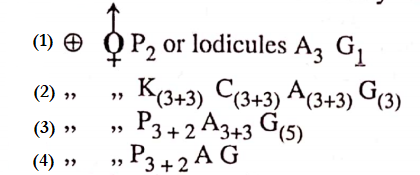
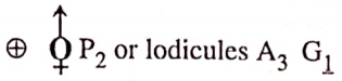
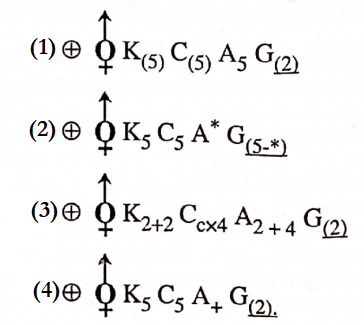
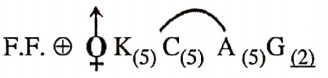
Question 17. The typical floral formula of the family Gramineae is:Classifcation Of Taxonomy Of Angispersm Question 17 Typical floral Formula Of Family Gramineae

Answer: 1. Classifcation Of Taxonomy Of Angispersm Question 17 Typical floral Formula Of Family Gramineae.

Question 18. To which of the following families does allium cepa belong?

  1. Liliaceae
  2. Solanaceae
  3. Papilionatae
  4. Cruciferae.

Answer: 1. Liliaceae

Question 19. Ray-florets and disc-florets are the characteristic features of:

  1. Cruciferae
  2. Malvaceae
  3. Compositae
  4. Solanaceae.

Answer: 3. Compositae

Mcqs on taxonomy of angiosperms Question 20. The stamens of Cruciferae are:

  1. Monoadelphous
  2. Tetradynamous
  3. Didynamous
  4. Epipetalous.

Answer: 2. Tetradynamous

Question 21. In Malvaceae, the androecium is characteristically

  1. Monadelphous and free
  2. Diadelphous and free
  3. Monadelphous and epipetalous
  4. Diadelphous and epipetalous.

Answer: 3. Monadelphous and epipetalous

Question 22. In compositae the placentation is:

  1. Basal
  2. Marginal
  3. Free central
  4. Axile.

Answer: 1. Basal

Question 23. In Liliaceae, flowers are:

  1. Trimerous and hypogynous
  2. Pentamerous and epigynous
  3. Trimerous and epigynous
  4. Tetramerous and hypogynous.

Answer: 1. Trimerous and hypogynous

Question 24. Epicalyx, axile placentation, and monadelphous condition are found in:

  1. Cruciferae
  2. Solanaceae
  3. Umbelliferae
  4. Malvaceae.

Answer: 4. Malvaceae.

NEET Biology Plant Kingdom Angiosperm Question 25. Which type of placentation is found in Cruciferae?

  1. Parietal
  2. Axile
  3. Marginal
  4. Basal.

Answer: 1. Parietal

Question 26. A caryopsis fruit is a characteristic of the family:

  1. Gramineae
  2. Cruciferae
  3. Leguminosae
  4. Malvaceae.

Answer: 1. Gramineae

Question 27. Siliqua or silicula fruit is a characteristic of the family:

  1. Gramineae
  2. Cruciferae
  3. Rutaceae
  4. Compositae.

Answer: 2. Cruciferae

Question 28. Leguminosae is a vast family. The basis for its further division into the three families i.e. Papilionatae, caesalpiniodeae, and Mimosoideae are:

  1. Nature of corolla
  2. Number of arrangements of stamens
  3. Type of placentation and fruit
  4. Both 1 and 2.

Answer: 4. Both 1 and 2.

Question 29. The presence of a false septum (replum) in the ovary is a characteristic of the family :

  1. Cruciferae
  2. Malvaceae
  3. Gramineae
  4. Compositae.

Answer: 1. Cruciferae

Question 30. The condition of androecium in papilionatae is:

  1. Monadelphous
  2. Diadelphous
  3. Polyadelphous
  4. Syngenesious.

Answer: 2. Diadelphous

Question 31. In Solanaceae, the placentation is:

  1. Axile
  2. Marginal
  3. Basal
  4. Superficial.

Answer: 1. Axile

Question 32. Which one of the following correctly represents the condition of the androecium in Papilionaceae?

  1. Monadelphous and epipetalous
  2. Diadelphous and epipetalous
  3. Monadelphous and free
  4. Diadelphous.

Answer: 4. Diadelphous.

Question 33. The floral diagram provides information about flowers concerning:

  1. Number of parts of a flower
  2. The general structure, cohesion, and adhesion
  3. Position of flower concerning mother axis
  4. All of the above.

Answer: 4. Position of flower for mother axis

NEET Biology Plant Kingdom Angiosperm Question 34. The inflorescence in compositae is:

  1. Umbel
  2. Spike
  3. Capitulum
  4. Catkin.

Answer: 3. Capitulum

Question 35. The androecium in compositae is:

  1. Syngenesious and epipetalous
  2. Polyandrous and syngenesious
  3. Epipetalous and monadelphous
  4. Polyandrous and monoadelphous.

Answer: 1. Syngenesious and epipetalous

Question 36. The type of placentation in Leguminosae is :

  1. Capitulum
  2. Superficial
  3. Marginal
  4. Axile.

Answer: 3. Marginal

Question 37. The unit of inflorescence in Gramineae is :

  1. Basal
  2. Catkin
  3. Spikelet
  4. Panicle.

Answer: 3. Spikelet

Question 38. The number of small scaly lodicules which form the perianth in the family Gramineae is:

  1. Two
  2. Five
  3. One
  4. Four.

Answer: 1. Two

NEET Biology Plant Kingdom Angiosperm Question 39. Wheat belongs to the family:

  1. Leguminosae
  2. Gramineae
  3. Liliaceae
  4. Solanaceae.

Answer: 2. Gramineae

Question 40. Which of the following is a sign of a zygomorphic flower?

  1. 5
  2. 9
  3. 9

Answer: 2. 5

Question 41. The androecium is indefinite and polyandrous in :

  1. Mimosoideae
  2. Papilionatae
  3. Malvaceae
  4. Rutaceae.

Answer: 1. Mimosoideae

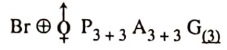
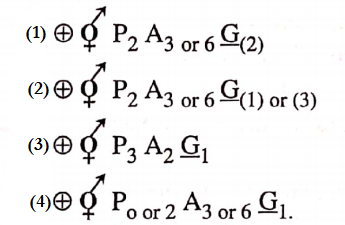
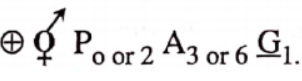
Question 42. Which of the following is the floral formula of Asphodelus tenuifolius (liliaceae)?

Classifcation Of Taxonomy Of Angispersm Question 42 The Floral Formula of asphodelus tenuifolius

Answer: 2.Classifcation Of Taxonomy Of Angispersm Question 42 The Floral Formula of asphodelus tenuifolius.

Plant Taxonomy for NEET MCQs Question 43. Vexillum, alae, and keel are present in the family:

  1. Liliaceae
  2. Solanaceae
  3. Asteraceae
  4. Papilionaceae.

Answer: 4. Papilionaceae.

Question 44. In which of the family is gynoecium carpellary syncarpous?

  1. Labiatae
  2. Solanaceae
  3. Cruciferae
  4. In all three.

Answer: 4. In all the three.

Question 45. Mimosa belongs to the family :

  1. Mimosoideae
  2. Rosaceae
  3. Malvaceae
  4. Cruciferae.

Answer: 4. Cruciferae.

Question 46. Flowers are epigynous in family:

  1. Malvaceae
  2. Rutaceae
  3. Cruciferae
  4. Compositae.

Answer: 4. Compositae.

Question 47. In which flower is the odd sepal anterior?

  1. Lathyrus odoratus
  2. Ocimum basilicum
  3. Asphodelus tenuifolius
  4. Brassica campestris.

Answer: 1. Lathyrus odoratus

Plant Taxonomy for NEET MCQs Question 48. Flowers are trimerous in the family:

  1. Malvaceae
  2. Labiatae
  3. Liliaceae
  4. Rosaceae.

Answer: 3. Liliaceae

Question 49. Numerous flowers are found in the family :

  1. Rosaceae
  2. Cruciferae
  3. Malvaceae
  4. Compositae.

Answer: 2. Cruciferae

Question 50. How many genera are present in the family Cruciferae (Brassicaceae)?

  1. 275
  2. 375
  3. 400
  4. 475.

Answer: 2. 375

Question 51. Which of the following belongs to the family Brassicaceae?

  1. Cajanus cajan (arhan)
  2. Dolichos lablab (sem)
  3. Archis hypogea (groundnut)
  4. All of the above.

Answer: 4. All of the above.

Question 52. In which of the family is the ovary obliquely placed?

  1. Solanaceae
  2. Malvaceae
  3. Rosaceae
  4. Cruciferae.

Answer: 1. Solanaceae

Question 53. Gramineae includes plants which are called:

  1. Cereals
  2. Herbs
  3. Pulses
  4. Shrubs.

Answer: 1. Cereals

Plant Taxonomy for NEET MCQs Question 54. Which of the following is known as the ‘sunflower family’?

  1. Asteraceae
  2. Fabaceae
  3. Poaceae
  4. None of the above.

Answer: 1. Asteraceae

Question 55. Bisexual flower is a flower in which:

  1. Only petals are present
  2. Only stamens are present
  3. Only gynoecium is present
  4. Both stamens and pistil are present

Answer: 4. Both stamens and pistil are present

Question 56. Perianth is reduced to lodicules in the family :

  1. Liliaceae
  2. Gramineae
  3. Compositae
  4. Malvaceae.

Answer: 2. Gramineae

Question 57. Most important cereal crop of india is:

  1. Nymphaea
  2. Allium cepa
  3. Triticum vulgare
  4. Pisum sativum.

Answer: 3. Triticum vulgare

Question 58. Which of the following belongs to the family astera-ceae?

  1. Zinnia and Dahlia
  2. Chrysanthemum and helianthus
  3. Aster
  4. All of the above.

Answer: 4. All of the above.

Question 59. Papilionaceous corolla is found in:

  1. Pisum sativum
  2. Mimosa pudica
  3. Delonix regia
  4. Brassica campestris.

Answer: 1. Pisum sativum

Plant Taxonomy for NEET MCQs Question 60. Mimosoideae is characterized by:

  1. 10 Stamens in two whorls of 5 each
  2. 10 Stamens out of which 3 are staminodes
  3. 10 Free stamens
  4. Numerous free stamens.

Answer: 4. Numerous free stamens.

Question 61. Tamarindus indica, the common tamarind tree belongs to:

  1. Cruciferae
  2. Mimosoideae
  3. Caesalpinoideae
  4. Papilionatae.

Answer: 4. Papilionatae.

Question 62. A flower has five fused sepals, five fused petals, 5 epipetalous free stamens and carpellary, syncarpous superior ovary with a swollen axile oblique placenta which family will you assign to the flower?

  1. Solanaceae
  2. Leguminosae
  3. Compositae
  4. Cruciferae.

Answer: 1. Solanaceae

Question 63. Seeds of which of the following yield edible oil?

  1. Artemisia
  2. Sunflower
  3. Safflower
  4. All of the above.

Answer: 4. All of the above.

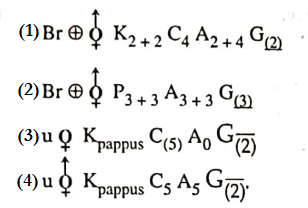
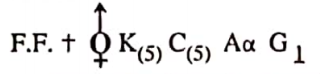
Question 64. The floral formula of the family Compositae is

  1. K5C5A5g(5)
  2. K5C5A5g(5)
  3. K6C5A(9)-1G
  4. Classifcation Of Taxonomy Of Angispersm The Foral Formula of the family composiate

Answer: 4. Classifcation Of Taxonomy Of Angispersm The Foral Formula of the family composiate

MCQs on Taxonomy of Angiosperms for NEET  Question 65. Which of the following statements is correct for the capitulum of sunflower?

  1. Ray florets are outer, disc florets are inner
  2. Disc florets are outer, ray florets are inner
  3. Both are in the center of the Capitulum
  4. Both are located on the periphery.

Answer: 1. Ray florets are outer, disc florets are inner

Question 66. Sonchus belongs to:

  1. Cruciferae
  2. Rutaceae
  3. Malvaceae
  4. Compositae.

Answer: 4. Compositae.

NEET Biology Questions With Answers

Question 67. The presence of vexillum (standard), wings (alae), and keel (carina) is a characteristic feature of the family:

  1. Rutaceae
  2. Cruciferae
  3. Malvaceae
  4. Papilionatae.

Answer: 4. Papilionatae.

Question 68. The floral formula:

Classifcation Of Taxonomy Of Angispersm Question 68 The Floral formula

  1. Cruciferae
  2. Malvaceae
  3. Rosaceae
  4. Papilionatae.

Answer: 4. Papilionatae.

Question 69. Cassia fistula belongs to the sub-family: acacia belongs to:

  1. Cruciferae
  2. Malvaceae
  3. Rosaceae
  4. Cruciferae

Answer: 4. Cruciferae

Question 70. What is the diagnostic character of the Cruciferae family?

  1. Presence of ray and disc florets
  2. Presence of a staminal tube
  3. Presence of four clawed and diagonally arranged petal, tetradynamous condition
  4. None of these.

Answer: 1. Presence of ray and disc florets

Question 71. Which set of the following plants belong to the family Liliacaeae:

  1. Onion, garlic and asparagus
  2. Smilax, aloe and gloriosa
  3. Urginea, scilla, and yucca
  4. A11 of above.

Answer: 3. Urginea, scilla, and yucca

Question 72. The scientific name of the common tomato is:

  1. Raphanus sativus
  2. Lycopersicum esculentum
  3. Murraya
  4. Lberis.

Answer: 4. Lberis.

Question 73. Asphodelus tenuifolius belongs to:

  1. Cruciferae
  2. Malvaceae
  3. Liliaceae
  4. Rutaceae.

Answer: 2. Liliaceae

NEET Important Questions Biology

Question 74. The condition of the androecium in Compositae is:

  1. Diadelphous
  2. Didynamous
  3. Syngenesious
  4. Monadelphous.

Answer: 3. Syngenesious

Question 75. Cereals are found in the family:

  1. Cruciferae
  2. Solanaceae
  3. Gramineae
  4. Leguminosae.

Answer: 3. Gramineae

Question 76. Angiosperms originated about how many million years ago:

  1. 20
  2. 100
  3. 130
  4. 200.

Answer: 3. 130

Question 77. In arachis hypogea corolla is

  1. Cruciform
  2. Papilionaceous
  3. Bilabiate
  4. Infundibuliform.

Answer: 3. Bilabiate

Question 78. Spirocyclic flowers are present in the family :

  1. Ranunculaceae
  2. Cruciferae
  3. Malvaceae
  4. Leguminosae.

Answer: 2. Cruciferae

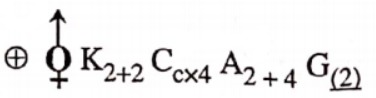
Question 79. The typical floral formula of the family Cruciferae is:

Classifcation Of Taxonomy Of Angispersm The Typical Floral Formula Of Family Cruciferae

Answer: 3. Classifcation Of Taxonomy Of Angispersm The Typical Floral Formula Of Family Cruciferae.

Question 80. Spirocyclic flowers are present in the family :

  1. Ranunculaceae
  2. Cruciferae
  3. Malvaceae
  4. Leguminosae

Answer: 1. Ranunculaceae

Question 81. The names dicots and monocots are based on the number of cotyledons in the embryo. Which of the following is not true for monocotyledons:

  1. Parallel venation in leaves
  2. Scattered vascular bundles
  3. Tap roots grow profusely
  4. Flower parts in sets of 3

Answer: 3. Tap roots grow profusely

NEET Important Questions Biology

Question 82. The typical formula for Gramineae is:

Classifcation Of Taxonomy Of Angispersm The Typical Formula For Gramineae

Answer: 4. Classifcation Of Taxonomy Of Angispersm The Typical Formula For Gramineae.

Mcqs on taxonomy of angiosperms Question 83. Polyadelphous condition is characteristic of the family:

  1. Compositae
  2. Malvaceae
  3. Liliaceae
  4. Rutaceae.

Answer: 4. Rutaceae.

Question 84. In which of the following families calyx is modified into pappus?

  1. Cruciferae
  2. Leguminosae
  3. Compositae
  4. Solanaceae.

Answer: 3. Compositae

Question 85. One of the statements does not apply to the family Cruciferae:

  1. Flowers are pentamerous
  2. Flowers are ebracteate
  3. Fruit is siliqua
  4. Stigmas are usually commissural.

Answer: 1. Flowers are pentamerous

Question 86. Which of the following represents the condition seen in the family Compositae?

  1. Superior ovary, axile placentation
  2. Inferior ovary, axile placentation
  3. Superior ovary, single basal ovule
  4. Inferior ovary, single basal ovule.

Answer: 4. Inferior ovary, single basal ovule.

Question 87. Cereals are found in the family :

  1. Malvaceae
  2. Cruciferae
  3. Gramineae
  4. Leguminoseae.

Answer: 4. Leguminoseae.

NEET Important Questions Biology

Question 88. Petunia differs from the rest of the Solanaceae in having:

  1. Numerous ovules and stamens with apical pores
  2. Infundibuliform corolla and persistent calyx
  3. Irregular calyx and unequal filaments
  4. Swollen placenta and accrescent calyx.

Answer: 3. Irregular calyx and unequal filaments

Mcqs on taxonomy of angiosperms Question 89. Major food crops of the world belong to:

  1. Leguminosae
  2. Solanaceae
  3. Gramineae
  4. Cruciferae.

Answer: 3. Gramineae

Question 90. Triticum aestivum is:

  1. Diploid
  2. Triploid
  3. Haploid
  4. Hexaploid.

Answer: 4. Hexaploid.

Question 91. Asphodelus tenuifolius differs from the rest of the lilaceae in the presence of:

  1. Cortical roots and centric leaves
  2. Gamophyllous perianth and distinct stamens
  3. Gamophyllous perianth and epiphyllous
  4. Polyphyllous perianth and epiphyllous stamens.

Answer: 3. Gamophyllous perianth and epiphyllous

Question 92. Allium differs from the rest of lilliaceae in:

  1. Absence of umbel inflorescence and centric leave
  2. Presence of bulbs and umbel inflorescence
  3. Absence of umbel inflorescence and bulb
  4. The presence of centric leaves and perianth

Answer: 2. Presence of bulbs and umbel inflorescence

NEET Biology Notes – Taxonomy Of Angiosperms

NEET Biology Classification Of Taxonomy Of Angiosperms

Features of Flowering Plants (Angiosperms. (Gk. cmgion-vessel. sperma-sned).

Angiospermae is a large category of flowering plants characterized by seed formation within fruits and the arrangement of sporophylls into flowers.

They exhibit the following traits:

Sporophylls amalgamate to form flowers.

  • A microsporophyll, or stamen, consists of a filament and an anther. A megasporophyll (carpel) is intricately folded and partially sterilized to produce a stigma, style, and ovary containing ovules.
  • Double fertilization consistently takes place. Endosperm is produced via triple fusion and is generally triploid.
  • The fertilized ovule matures into seeds that are enclosed within fruits. A fruit is, by definition, a mature ovary that facilitates the protection and dispersal of seeds.
  • Xylem consists of vessels, whereas phloem is composed of sieve tubes and partner cells.
  • Secondary growth occurs in the stems and roots of dicotyledons.
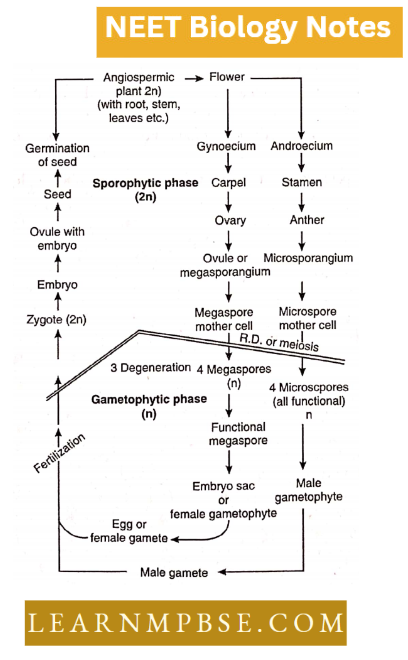
  • Angiosperms exhibit the distinctive plant alternation of generations. The dominating phase is the sporophyte, whereas the gametophyte is markedly reduced in size and wholly dependent on the sporophyte for nourishment.
  • This condition is not limited to angiosperms but is found in all seed plants.

Taxonomy Of Angiosperms NEET Notes

Classifcation Of Taxonomy Of Angispersm Schematic Representation Of Alternation Of Generations In A Typical Angiospermic Plant

Read and Learn More NEET Biology Notes

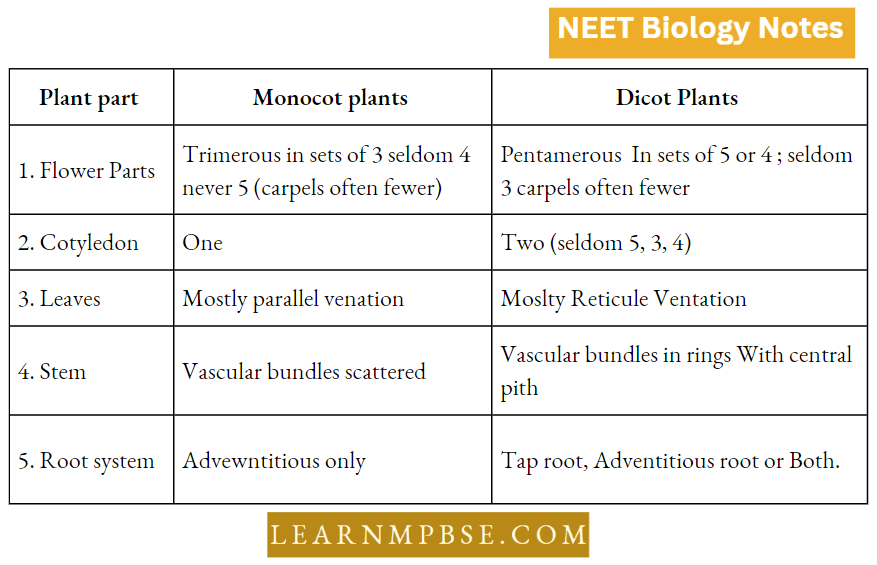
Classifcation Of Taxonomy Of Angispersm Difference Between Monocots And Dicots

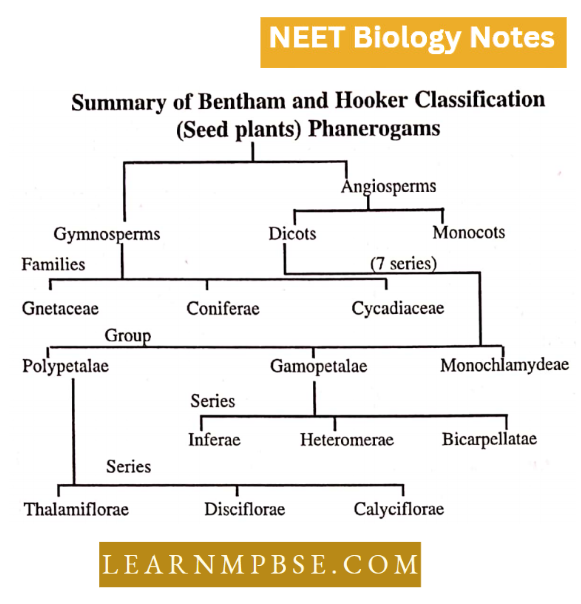
Classifcation Of Taxonomy Of Angispersm Summary Of Bentham And Hooker Classification Phanerogams

NEET Biology Taxonomy Of Angiosperms Important Characters Of Selected Families

Characteristics of Solanaceae

  1. Aerial parts are hairy.
  2. Stem usually with collateral vascular bundles.
  3. Leaves alternate becoming opposite in the floral region.
  4. Flower actinomorphic, hypogynous.
  5. Sepals 5, gamosepalous.
  6. Petals 5, gamopetalous.
  7. Stamens 5, polyandrous antipetalous and epipetalous.
  8. Gynaecium, bicarpellary, syncarpous, superior, ovary obliquely placed.
  9. Axile placentation with swollen placenta
  10. Fruit Berry or Capsule. Classifcation Of Taxonomy Of Angispersm Fruit Berry Or Capsule
  11. Important Genera. Solatium tuberosum (Potato), Capsicum annum (Chillies) Nicotiana tobacum (tobacco), Cestrum noctumum (night queen), Datura.

Taxonomy Of Angiosperms NEET Notes

The old names of some families have been changed new names are given below

  1. Old Name – New Name
  2. Cruciferae – Brasicaceae
  3. Papilionoideae- Fabaceae
  4. Umbelliferae- Apiacae
  5. Compositae- Asteraceae
  6. Labiatae- Lamiaceae
  7. Gramineae- Poaceae
  8. Palmae- Arecaceae
  9. Caesalphiniaceae- Cassiaceae
  10. Mimosoidae- Mimosaceae

The old family Leguminosae now includes three sub-families:

  1. Mimosoideae,
  2. Caesalpinioideae and
  3. Papilionoideae.

These subfamilies have now been raised to the level of families are called:

  1. Mimosaceae
  2. Caesalpiniaceae and
  3. Fabaceae.

Characteristics of Family Cruciferae

  1. Mostly sulphur-smelling herbs.
  2. Absence of flowers.
  3. Hexacyclic flowers.
  4. Calyx 4, free sepals arranged in two whorls of two each 2 + 2u’
  5. Corolla 4, clawed petals, Cruciform, 4 x.
  6. Androecium typically (6), tetradynamous lateral stamens arranged in two whorls, 2, shorter + 4 longer median.
  7. Pollen grains with a reticulate exine.
  8. Presence of green, dot-like nectaries at the bases of stamens.
  9. Gynaecium is typically bicarpellary, syncarpous, superior.
  10. The ovary is bilocular owing to the formation of a false septum stretching between the two parietal placentae. The two carpels are placed transversely.
  11. Fruit is typically a siliqua or silicula.
  12. Classifcation Of Taxonomy Of Angispersm Characteristics of family Gramineae
  13. Important plants. Brassica campestris (Mustard), Raphanus sativus (Radish), Iberis amara (Candytuft) Brassica juncea (halon).

Characteristics of Family Leguminosae

  1. Alternate, stipulate, pulvinate, and generally pinnately compound leaves.
  2. Gamosepalous, persistent calyx with odd sepal or lobe anterior.
  3. Polypetalous corolla generally with ascending or descending imbricate aestivation, sometimes valvate.
  4. Monocarpellary gynaecium.
  5. Ovary unilocular with marginal placenta along the ventral suture which is always posterior.
  6. Fruit is a legume, sometimes a lomentum.
  7. Sub-family Papilionatae. It is characterized by zygomorphic flowers, gamosepalous calyx, papilionaceous corolla, stamens usually 10, diadelphous, sometimes monadelphous, pollen grains simple, seeds without arterioles, leaves pinnate, digitate, trifoliate, sometimes simple.

Characteristics of Family Leguminosae

  1. Alternate, stipulate, pulvinate, and generally pinnately compound leaves.
  2. Gamosepalous, persistent calyx with odd sepal or lobe anterior.
  3. Polypetalous corolla generally with ascending or descending imbricate aestivation, sometimes valvate.
  4. Monocarpellary gynaecium.
  5. Ovary unilocular with marginal placenta along the ventral suture which is always posterior.
  6. Fruit is a legume, sometimes a lomentum.
  7. Sub-family Papilionatae. It is characterized by zygomorphic flowers, gamosepalous calyx, papilionaceous corolla, stamens usually 10, diadelphous, sometimes monadelphous, pollen grains simple, seeds without arterioles, leaves pinnate, digitate, trifoliate, sometimes simple.

Classifcation Of Taxonomy Of Angispersm Characteristics of family Gramineae

  1. Important plants. Pisum sativum, Cicer arienum, Lupinus, Dalbergia sisoo, Arachis hypogea.
  2. Sub-family Caesalpinoideae. Flowers irregular, calyx free or united, imbricate, corolla polypetalous, ascending imbricate in bud condition, stamens 10 or less, free rarely many, pollen grains simple, leaves usually pinnate, sometimes bipinnate, rarely simple.

Classifcation Of Taxonomy Of Angispersm Subfamily casalpinoideae.

  1. Important plants. Cassiafistula, Buhinia and Tamarindus indica.
  2. Sub-family Mimosoideae. Flowers regular, calyx gamosepalous, corolla gamopetalous, stamens 4—many, free or monadelphous, pollen grains compound, seeds marked with arterioles, leaves usually bipinnate.

Classifcation Of Taxonomy Of Angispersm Sub family Mimosoideae

Important plants. Acacia arabica, Acacia catechu, Mimosa pudica.

Taxonomy Of Angiosperms NEET Question Bank

Characteristics of Family Malvaceae

  1. Younger parts are covered with stellate hairs and contain a lot of mucilage.
  2. Leaves alternate, stipulate, palmately veined.
  3. Presence of epicalyx.
  4. Sepals and petals typically 5, stamens numerous, monadelphous, forming a staminal tube, epipetalous.
  5. Twisted aestivation of the corolla.
  6. Monothecous anthers and spiny (echinulate) pollen grains.
  7. Schizocarpic, carcerulus fruit or a loculicidal capsule.

Classifcation Of Taxonomy Of Angispersm Loculicidal Capsule

Important plants. Gossypium, Hibiscus rosa sinensis, Malva sylvestris, Althea rosea.

Distinguishing Characters of Family Compositac (Astcraccae)

  1. Plants are generally herbs.
  2. Inflorescence a capitulum-homogamous or heterogamous.
  3. Calyx-sepals pappus or 2-3 scales.
  4. Corolla —Ray florets—ligulate Disc, florets—tubular.
  5. Androecium-stamens 5, epipetalous syngenesious.
  6. Gynaecium-carpellary, syncarpous ovary inferior, unilocular with a single basal ovule, stigma bifid.
  7. Fruit a cypsella.
  8. F.F. Ray Florets Br or neuter,

Classifcation Of Taxonomy Of Angispersm Disc Florets

Examples Ornamental. Chrysanthemum, Helianthus, Dahlia, Zinnia, Aster, Cosmos. Oil yielding. Carthamus tinctorius, Helianthus annus. Medicinal. Artemisia maritima, Saussurea lappa.

Characteristics of Family Liliaccae

  1. Generally actinomorphic, trimerous, and hypogynous flowers.
  2. Perianth petaloid, biseriate.
  3. Stamens are 6, biseriate, epiphyllous anisophyllous.
  4. Tricarpellary syncarpous superior ovary with axile placentation.
  5. Fruit a berry or loculicidal capsule.
  6. Seed monocot endospermic.

Classifcation Of Taxonomy Of Angispersm Family lilianceae

Important Genera. Allium cepa, (Onion) Asparagus, Smilax, Yucca, Gloriosa, and Aloe

Characteristics of Family Cucurbitaccae

  1. Plants herbs, generally climbing.
  2. Flowers, unisexual, epigynous.
  3. Androceium-stamens synandrous.
  4. Gynaecium-tricarpellary, ovary inferior, trilocular with parietal placentation.
  5. Fruit —a pepo.
  6. Vascular bundle in stem collateral.

Classifcation Of Taxonomy Of Angispersm Vascular bundle in stem bicollateral

Examples. Vegetables, Cucurbita, Coccinia, Cucumis sativus, Trichosanthes anguinFruit. Cucumis melo.

Classification Of Angiosperms NEET

Characteristics of family Gramirieae

  1. Flowers are arranged in spikelets which in turn are grouped in spikes.
  2. Each spikelet is enclosed with two scales called glumes.
  3. Each flower is covered with two scales called lemma and palea.
  4. Anthers generally divaricate and versatile.
  5. Ovary unilocular and two feathery stigmas.
  6. Fruit is commonly a caryopsis or grain.

Classifcation Of Taxonomy Of Angispersm Characteristics of family Gramineae

Important plants

Triticum aestivum (wheat), Oryza sativa (rice), Zea mays (maize), Hordeum vulgare (barley), Avena sativa (oats), Andropogon odoratus, and Saccharum munja.

  • The floral formula delineates the arrangement of various whorls of the flower, their quantity, cohesiveness, adhesion, and any interrelationships.
  • The Brassicaceae family, previously referred to as Cruciferae, comprises 375 genera and around 3,200 species, including 150 endemic to India.
  • The Fabaceae family was previously referred to as Papilionideae. In the Poaceae family, the perianth is referred to as lodicule.
  • The inflorescence in Poaceae or Gramineae is a spikelet.
  • In the Gramineae family, the fruit is a caryopsis, wherein the pericarp is merged with the testa.
  • Bamboo is utilized for the production of sticks, flutes, ladders, furniture, and other items.
  • Khus oil is derived from the roots and rhizomes of Vetiveria zizanoides.
  • In the Liliaceae family, the flowers are trimerous, pentacyclic, and hypogynous.
  • In Liliaceae, the gynoecium is tricarpellary, syncarpous, and trilocular with axile placentation.
  • The odd sepal is positioned anteriorly in Papilionaceae. Nodulated roots occur on the roots of Papilionaceae members.
  • The corolla is papilionaceous in the family Papilionaceae.
  • Oil is derived from the seeds of Arachis hypogea (groundnut) and Glycine max (soybean). Oil undergoes hydrogenation to produce vanaspati ghee.
  • The fruit is referred to as siliqua or silicula in the Brassicaceae family.
  • The stamens in Brassicaceae are six in number, polyandrous, and tetradynamous.
  • The inflorescence of Brassica oleracea var. botrytis (cauliflower) is consumable.
  • The roots of Lepidium sativum treat syphilis, hemorrhoids, and cough.
  • The inflorescence is a capitulum in the family Compositae.
  • The fruit of Compositae is a cypsella, which may or may not possess a pappus.
  • The gynoecium of the sunflower is carpellary, syncarpous, inferior, unilocular, and contains a single basal ovule.
  • In the Solanaceae family, the gynoecium is carpellary, syncarpous, superior, and features an obliquely positioned ovary with a large placenta. The placentation is axile.
  • Tomatoes, potatoes, and chilies are members of the Solanaceae family.

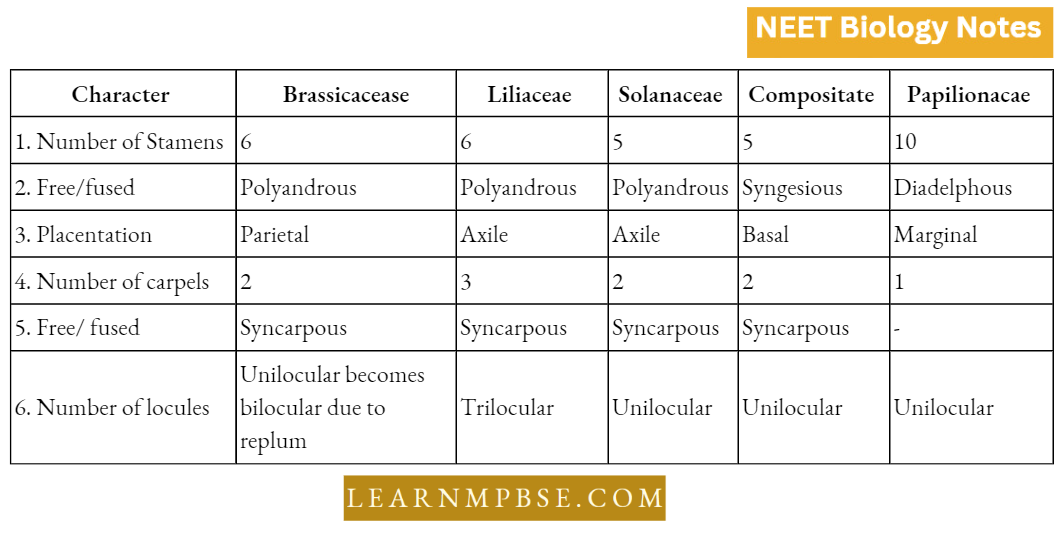
Classifcation Of Taxonomy Of Angispersm Selected Comparative Features

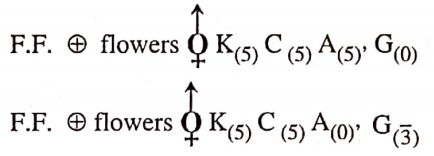
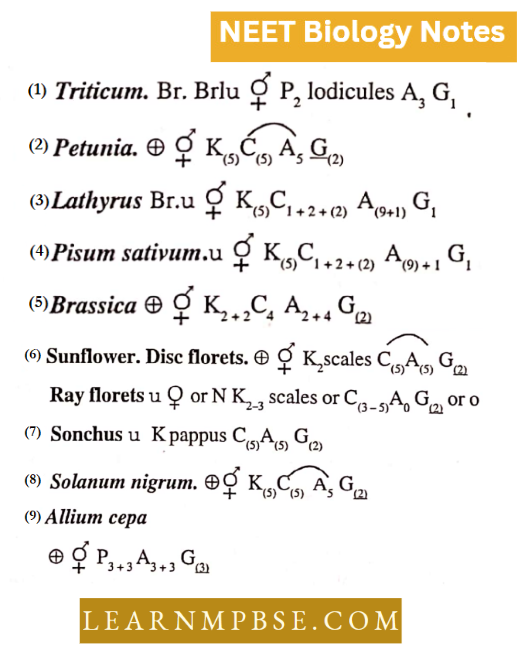
Floral Formulae 

Classifcation Of Taxonomy Of Angispersm Floral Formulae

NEET Biology Taxonomy Of Angiosperms Quanta To Memory

  • Bentham and Hooker classified seed plants into three divisions: Dicots, Monocots, and Gymnosperms.
  • Hooker characterized taxa based on direct examination of the specimens.
  • These are the most prevalent vascular plants on the planet.
  • The plant structure is the sporophyte, which is differentiated into authentic roots, stems, and leaves.
  • In botany, phytospecies constitutes the fundamental unit of classification.
  • In the phylogenetic categorization system, plants are categorized based on evolutionary tendencies.
  • The biological definition of species mostly relies on the attributes of reproductive structures.
  • A novel species is identified based on floral characteristics.
  • Floral organs, such as stamens and carpels, exhibit less changes compared to vegetative traits.
  • For instance, In Malvaceae, the stamens are typically monadelphous.
  • Currently, woody plants are considered primitive, whereas herbaceous plants are viewed as advanced.
  • Fruits are exclusive to angiosperms, vascular tissue is highly developed, and tap roots are prevalent in dicots.
  • In angiosperms, bees serve as the predominant pollinators of agricultural species due to their attraction to floral nectar and fragrance.
  • Insectivorous plants thrive on nitrogen-poor soil.
  • They obtain partial nitrogen satisfaction from deceased insects.

Plant Taxonomy NEET

  • Pollination by bats is called chiropterophily. Bats are attracted due to nectar and pollen grains.
  • Stems have conjoint, collateral, or concentric vascular bundles which may be open as in dicots or closed as in monocots.
  • Dependence on water is overcome by siphonogamy.
  • Monocots do not grow in girth, though they grow in length and produce new leaves and flowers.
  • Seeds are perennating structures and help in the dispersal of plants.
  • Smallest parasitic plant is Arceothobium minastissimum. In cyathium inflorescence, a single male flower is represented by a single stamen.
  • When an entire inflorescence is converted into a fruit, it is called a composite fruit.
  • The flowers are unisexual and are on the same plant, this condition of a plant is referred to as monoecious.
  • The entire family of Compositae is characterized by the presence of head or capitulum inflorescence.
  • Agave and Bamboo are perennial but are monocarpic monocots, usually with no normal secondary growth due to the absence of cambium.
  • Xylem has vessels, i.e., wood is porous. However, vessels are absent in some members of Ranales, for Example, Tetracentron, Trochodendron, Sarcandra, etc.
  • Phloem has companion cells in association with sieve tubes.
  • Double fertilization is a regular phenomenon.
  • Endosperm is usually triploid and is formed as a result of triple fusion after fertilization.
  • Seeds are enclosed within the pericarp i.e., fruits are formed due to the presence of the ovary.
  • The leaves of bryophyllum have buds on the margins of leaves. These buds develop into new plants.
  • In Arachis hypogea (groundnut), the flowers after pollination bury themselves inside the soil and develop into fruits and seeds. Such movements are called geocarpic movements.
  • Royal Botanical Garden Herbarium at Kew (England) is the biggest famous herbarium in the world and has 65,000,000 plants.
  • Indian Botanical Garden Herbarium at Sibpur (Kolkata) is the biggest in India and has 25,000,000 plants.

NEET Biology Taxonomy Of Angiosperms Questions from competitive examinations

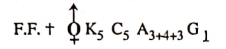
Question 1. The flora! Formula condition +, <j> k5, c5, a7 + 3, g1 is found in the family

  1. Mimosoidcac
  2. Caesalpiniaceae
  3. Papilionaceac
  4. Cruciferae

Answer: 2. Caesalpiniaceae

Question 2. A plant has a butterfly-shaped flower with one standard wing-like and two keel petals. The plant belongs to the family:

  1. Papilionaceae
  2. Compositae
  3. Malvaceae
  4. Rubiaceae.

Answer: 1. Papilionaceae

Question 3. Gloriosa superba has parallel venation with leaf apex modified as tendril belongs to which of these families?

  1. Cucurbitaceae
  2. Malvaceae
  3. Labiatae
  4. Liliaceae.

Answer: 3. Labiatae

Angiosperm Families NEET

Question 4. The flower of Fabaceae is:

  1. Actinomorphic, complete, trimerous
  2. Actinomorphic, incomplete, pentamerous
  3. Zygomorphic, complete, trimerous
  4. Zygomorphic, complete, pentamerous

Answer: 4. Zygomorphic, complete, pentamerous

Question 5. Choose the correct description of the flower depicted in the floral diagram given below

Classifcation Of Taxonomy Of Angispersm Floral diagram

  1. United, valvate sepals; free, imbricate petals; free stamens; unilocular ovary with marginal placenta
  2. United, valvate sepals: free, imbricate petals, epipetalous stamens; unilocular ovary with marginal placenta
  3. United, valvate sepals; free, imbricate petals; free stamens; unilocular ovary with axile placenta
  4. United, valvate sepals; free, twisted petals; free stamens; unilocular ovary with marginal placenta

Answer: 1. United, valvate sepals; free, imbricate petals; free stamens; unilocular ovary with marginal placenta

Question 6. Angiosperms have dominated the land flora primarily by their:

  1. Power of adaptability to diverse habitats
  2. Nature of pollination
  3. Domestication by humans
  4. A large number of seeds

Answer: 1. Power of adaptability to diverse habitats

Question 7. Lady’s finger belongs to the family:

  1. Liliaceae
  2. Cucurbitaceae
  3. Brassicaceae
  4. Malvaceae

Answer: 4. Malvaceae

Question 6. The botanical name of chana is:

  1. Dolichos
  2. Lablab purpeureuns
  3. Phaseolus assets
  4. Cicer arietinum

Answer: 1. Dolichos

Angiosperm Families NEET

Question 9. Plants of which one of the following groups of genera are pollinated by the same agency?

  1. Triticum, cocos, mangifera
  2. Ficus, kigelia, casuarina
  3. Salvia, morus, euphorbia
  4. Bombax, butea, bauhinia

Answer: 4. Bombax, butea, bauhinia

Question 10. Pentamerous actinomorphic flowers, bi-carpellary ovary with oblique septa, and fruit a capsule or barry are characteristic features of:

  1. Solanaceae
  2. Liliaceae
  3. Asteraceae
  4. Brassicaceae

Answer: 1. Solanaceae

Question 11. What type of placentation is seen in sweet peas?

  1. Free central
  2. Marginal
  3. Basal
  4. Axile

Answer: 4. Axile

Question 12. “Ordines anomaly” of Bentham and hooker includes

  1. Seed plants showing abnormal forms of growth and development
  2. Plants described only in a fossil state
  3. Plants described in the literature but which Bentham and hooker did not see in original
  4. A few orders which could not be placed satisfactorily

Answer: 1. Seed plants showing abnormal forms of growth and development

Question 13. Observe the given floral diagram and choose the suitable floral formula from the following:

Classifcation Of Taxonomy Of Angispersm Question 13 Floral diagram

Classifcation Of Taxonomy Of Angispersm Question 13 Floral diagram.

Answer: 3. Classifcation Of Taxonomy Of Angispersm Question 13 Floral diagram.1

Question 14. In the members of the family Malvaceae, anthers are described as

  1. Diadelphous and distichous
  2. Diadelphous and monotonous
  3. Monadelphous and distichous
  4. Monadelphous and monotonous

Answer: 4. Monadelphous and monotonous

Question 15. Syngcncsious stamen is found in family

  1. Atasteraccac
  2. Solaanacceae
  3. Fabaceae
  4. Poaceae

Answer: 1. Atasteraccac

Characteristics Of Angiosperms NEET

Question 16. Which of the following is a merit in the Bentham and hooker’s system of classification?

  1. At the position of gymnospermae in between decals and mounts
  2. Closely related families are placed apart
  3. The placement of the family Asteraceae at the beginning of gamopetalous
  4. The placement of order rentals at the beginning
  5. The placement of orchidaccae in microspermae.

Answer: 4. The placement of Orchidaceae in microspermae.

Question 17. Which of the following represents the floral characters of Liliaccae?

  1. Six tepals. Zygomorphic, six stamens, bilocular ovary, axile placentation
  2. Tetramerous, actinomorphic, polyphyllous, unilocular ovary, axile placentation
  3. Trimerous, actinomorphic, polyandrous, superior ovary, axile placentation
  4. Bisexual, zygomorphic, gamophyllous, inferior ovary, marginal placentation
  5. Unisexual, actinomorphic, trilocular, inferior ovary, axile placentation.

Answer: 3. Trimerous, actinomorphic, polyandrous, superior ovary, axile placentation

Question 18. The botanical name of soybean is:

  1. Cajanus cajan
  2. Glycine max
  3. Glycyrrhiza glabra
  4. Abrus precatorius
  5. Dolichos lablab.

Answer: 2. Glycine max

Question 19. Which of the following is/are not characteristic features of Asteraceae?

  1. Cypsela type of fruit
  2. Syngenesious stamens
  3. Ovary bicarpellary and superior
  4. Placentation marginal
  5. Head type of inflorescence.

Answer: 3. Ovary bicarpellary and superior

Question 20. Family podostemaceae is placed under the series:

  1. Mulliovulatae aquatic
  2. Microembryeae
  3. Dephnales
  4. Uniscxuales
  5. Hetcromerae.

Answer: 1. Mulliovulatae aquatic

Question 21. In guava, cucurbits flowers are:

  1. Hypogynous flower
  2. Epigynous flower
  3. Pcrigynous (lower)
  4. Both hypogynous and perigynous

Answer: 2. Epigynous flower

Angiosperm Taxonomy NEET Exam Preparation

Question 22. In floral formula (k) denotes :

  1. Polysepnlous
  2. Gamoscpalous
  3. Polypetalous
  4. Gamopctalous.

Answer: 2. Gamoscpalous

Question 23. Consider the following statements for gymnosperms and angiosperms.

  1. Double fertilization is an event unique to gymnosperms.
  2. Angiosperms range in size from microscopic to tall trees of sequoia.
  3. In gymnosperms, the seeds are not covered.
  4. In gymnosperms, the male and female gametophytes have an independent free-living existence.

Of the above statements

  1. A and b alone are correct
  2. C alone is correct
  3. B and c alone are correct
  4. C and D alone are correct
  5. D alone is correct.

Answer: 1. A and b alone are correct

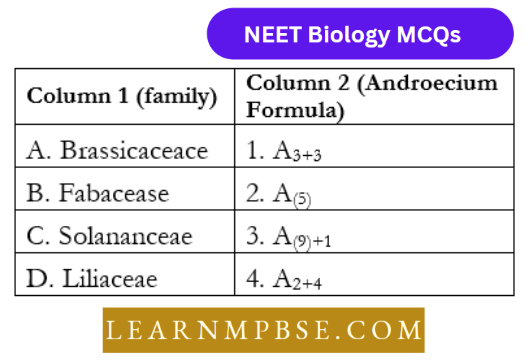
Question 24. Match die following and choose the correct combination from the options given.

Classifcation Of Taxonomy Of Angispersm Question 24 Match The columns

  1. A-4,B-3,C-2,D-1
  2. A-1,B-2,C-3,D-4
  3. A-2,B-3,C-4,D-1
  4. A-4,B-3,C-1,D-2
  5. A-4,B-3,C-1,D-2

Answer: 1. A-4,B-3,C-2,D-1

Question 25. The distinct features of Fabaceae are

  1. Zygomorphic, diadelphous, and monocarpellary
  2. Actinomorphic, monadelphous, and monocarpellary
  3. Zygomorphic, monadelphous and pentacarpellary
  4. Zygomorphic, polyadelphous and tricarpellary
  5. Zygomorphic, diadelphous, and bicarpellary.

Answer: 1. Zygomorphic, diadelphous, and monocarpellary

Question 26. Among bitter gourd, mustard, brinjal, pumpkin, china rose, lupin, cucumber, sunn hemp, gram, guava, bean, chili, plum, petunia, tomato, rose, Withania, potato, onion, aloe, and tulip how many plants have hypogynous floowers?

  1. Ten
  2. Fifteen
  3. Eighteen
  4. Six

Answer: 1. Ten

Question 27. In China rose flowers are:

  1. Actinomorphic, epigynous with valvate aestivation
  2. Zygomorphic, hypogynous with imbricate aestivation
  3. Zygomorphic, epigynous with twisted aestivation
  4. Actinomorphic, hypogynous with twisted aestivation

Answer: 4. Actinomorphic, hypogynous with twisted aestivation

NEET Biology Multiple Choice Questions – Nature and Scope of Biology

NEET Biology Nature and Scope of Biology Multiple Choice Questions

Question 1. The term ‘biology’ for the study of living organisms was coined by.

  1. Lamark and triviranus
  2. Husley
  3. Purkinje and von mohl
  4. Aristotle

Answer: 1. Lamark and Trimarans

Question 2. Animals ate like plants in that they respire:

  1. During day only
  2. During night only
  3. During day and night
  4. When required only.

Answer: 3. During day and night

Question 3. Study of animal behaviour comes under:’

  1. Ecology
  2. Aetiology
  3. Euthenics
  4. Eugenics.

Answer: 2. Ethology

Question 4. Areas which cannot be subjected to scientific analysis are:

  1. Human intelligence
  2. Human faith
  3. Animal behaviour
  4. Origin of life.

Answer: 2. Human faith

NEET Biology MCQs

Read and Learn More NEET Biology Multiple Choice Question and Answers

Question 5. The study of injuries and wounds is known as :

  1. Tricology
  2. Numerology
  3. Traumatology
  4. Torpedology.

Answer: 3. Traumatology

Nature And Scope Of Biology MCQs

Question 6. The study of the chemical aspect of living organisms:

  1. Microbiology
  2. Biochemistry
  3. Cryobiology
  4. Ethology.

Answer: 2. Biochemistry

Question 7. The science of characters and distribution of nice is known as:

  1. Ethnology
  2. Anthropology
  3. Sociology
  4. Malacology.

Answer: 1. Ethnology

NEET Biology MCQs

Question 8. Dendrology is the study of:

  1. Grasses
  2. Flowers
  3. Trees and shrubs
  4. Trees.

Answer: 3. Trees and shrubs

Question 9. Agrostology is the cultivation of :

  1. Oil seeds
  2. Crops
  3. Grasses
  4. Fruit trees.

Answer: 3. Grasses

Question 10. Study of light effects on flowering of plants :

  1. Photobiology
  2. Photomorphogenesis
  3. Photoperiodism
  4. Vernalisation.

Answer: 3. Photoperiodism

Question 11. The most primitive vascular plants are:

  1. Ferns
  2. Brown algae
  3. Cycas
  4. Red algae.

Answer: 1. Ferns

Question 12. Biotechnology refers to :

  1. Linkage
  2. Cross-over
  3. Recombination
  4. Tissue culture.

Answer: 2. Cross-over

Nature And Scope Of Biology MCQs

Question 13. The science which deals with the classification, identification and naming of organisms is known as :

  1. Physiology
  2. Ecology
  3. Systematic
  4. Biology.

Answer: 3. Systematic

Question 14. The father of taxonomy is:

  1. Charles Darwin
  2. John ray
  3. Julian Huxley
  4. Carolus Linnaeus.

Answer:4. Carolus Linnaeus.

Question 16. Who was the first to classify animals?

  1. Aucrbauch
  2. Aristotle
  3. Carolus Linnaeus
  4. Darwin.

Answer: 2. Aristotle

NEET Biology MCQs

Question 17. The genetic composition of the population about habitat is called :

  1. Gynaecology
  2. Gynaecology
  3. Gerontology
  4. Euthenics.

Answer: 2. Gynaecology

Nature And Scope Of Biology MCQs

Question 18. The branch of zoology dealing with the study of fishes is called :

  1. Herpetology
  2. Ichthyology
  3. Pisciculture
  4. Saurology.

Answer: 2. Ichthyology

Question 19. The branch of zoology which deals with the study of visceral organs is called:

  1. Angiology
  2. Splanchnology
  3. Anthology
  4. Arthrology.

Answer: 2. Splanchnology

Question 20. The study of nests of birds is known as :

  1. Craniology
  2. Ichthyology
  3. Nidology
  4. None.

Answer: 3. Nidology

Question 21. Herpetology is the study of:

  1. Birds
  2. Snails
  3. Marine fishes
  4. Snakes.

Answer: 4. Snakes.

Question 22. Syndesmology is the study of:

  1. Hormones
  2. Skeletal joints
  3. Desert
  4. None of the above.

Answer: 2. Skeletal joints

Question 23. The study of structural morphology and organisation is known as:

  1. Tectology
  2. Technology
  3. Ontogeny
  4. Osteology.

Answer: 1. Tectology

Question 24. The study of acquired characters is known as:

  1. Tectology
  2. Technology
  3. Odontology
  4. None of the above.

Answer: 2. Ctenology

Question 25. ‘Angiology’ is the study of:

  1. Blood
  2. Blood and the blood groups
  3. Blood vessels
  4. Heart attack.

Answer: 3. Blood vessels

Question 26. The study of coelenterates is called:

  1. Cardiology
  2. Gynaecology
  3. Entomology
  4. Cosmetology.

Answer: 1. Cnidology

Question 27. ‘Aerology’ is the study of:

  1. Ticks and mites
  2. Annelids
  3. Aquatic insects
  4. Crossbreed.

Answer: 1. Ticks and mites

Question 28. Branch of zoology which deals with the study of cartilage :

  1. Conchology
  2. Chondriology
  3. Craniology
  4. Cardiology

Answer: 2. Chondriology

Question 29. The study of ants is called

  1. Tricology
  2. Myrmecology
  3. Mattologv
  4. None of above

Answer: 2. Myrmecology

Question 30. The branch of zoology which deals with the study of shells is known as

  1. Coikhology
  2. Ecology
  3. Aetiology
  4. Ornithology.

Answer: 1. Coikhology

Question 31. Ornithology is concerned with the study of:

  1. Fishes
  2. Birds
  3. Animal fossils
  4. Reptiles.

Answer: 2. Birds

Question 32. Red mood cells of mammals lack a nucleus except:

  1. Horse
  2. Rabbit
  3. Camel
  4. Elephant.

Answer: 3. Camel

Scope Of Biology NEET Questions

Question 33. In the tobacco mosaic virus, heredity material is :

  1. Rna
  2. DNA
  3. Lipid
  4. Proteins.

Answer: 1. Rna

Biology MCQs For NEET

Question 34. Migration of birds is studied under:

  1. Phenology
  2. Kalology
  3. Ornithology
  4. Aetiology.

Answer: 1. Phenology

Question 35. In saurology, we study:

  1. Flying birds
  2. Lizards
  3. Sea snakes
  4. Earthworm.

Answer: 2. Lizards

Question 36. The study of olfactory organs and nose is called:

  1. Phenology
  2. Rhinology
  3. Tricology
  4. Phrenology.

Answer: 2. Rhinology

Question 37. The science dealing with the study of life at low temperatures is:

  1. Cryobiology
  2. Craniology
  3. Kalology
  4. Carcinology.

Answer: 1. Cryobiology

Question 38. The study of growing old is called:

  1. Gynaecology
  2. Gerontology
  3. Karyology
  4. Tectology.
  5. (M.p. P.m.t. 1996, Pb.p.m.t., 2000)

Answer: 2. Gerontology

Biology MCQs For NEET

Question 39. Kalology deals with the study of:

  1. Human beauty
  2. Nuclear cytology
  3. Conditions of animals
  4. Dead aquatic organisms.

Answer: 1. Human beauty

Question 40. Baby bom after the operation is called :

  1. Scissorian baby
  2. Caesarean baby
  3. Situs inversus
  4. Postmortem baby.

Answer: 2. Caesarean baby

Question 41. Which of the following is a tracer element?

  1. C14
  2. H3
  3. P32
  4. All of the above.

Answer: 4. All of the above.

Question 42. Serendipity is :

  1. Explaining natural phenomenon
  2. Discovery by chance
  3. Any discovery
  4. None of the above.

Answer: 2. Discovery by chance

NEET Biology Questions

Question 43. The structural formula of benzene was discovered by:

  1. Alexander fleming
  2. Newton
  3. Kekule
  4. Archimedes.

Answer: 3. Kekule

Question 44. Which of the following best describes the scientific method?

  1. Developing and testing the hypothesis
  2. Using sensitive electronic devices
  3. Collecting and analysing all known facts on a subject
  4. Conducting experiments in laboratories.

Answer: 1. Developing and testing hypothesis

Question 45. Which of the following is not a characteristic of a /hypothesis?

  1. A deductive inference
  2. An inductive inference
  3. A guess about cause and effect
  4. A generalization from specific observation

Answer: 1. A deductive inference

Question 46. An argument that birds evolved wings to fly, this type of argument is referred to as:

  1. Causal
  2. Teleological
  3. Mcchanistics
  4. Circular.

Answer: 2. Teleological

NEET Biology Questions

Question 47. An Electron microscope has high-resolution power. It is due to:

  1. Electromagnetic lenses
  2. Very low wavelength of electron beam
  3. The low wavelength of the light source used
  4. High numerical aperture of glass.

Answer: 2. Very low wavelength of electron beam

Question 48. A theory is :

  1. An educated guess
  2. Modified hypothesis
  3. The idea was given by a scientist
  4. A generalization supported by experiments.

Answer: 4. A generalization supported by experiments.

Question 49. Angstrom, the unit of measurement in the transmission electron microscope is equal to:

  1. 0.001 pm
  2. 0.001 pm
  3. 0.0001 pm
  4. 0.00001 pm.

Answer: 3. 0.0001 pm

Question 50. The science which deals with the study of drugs and the preparation of medicines is called:

  1. Physiology
  2. Pharmacology
  3. Pathology
  4. Psychology.

Answer: 2. Pharmacology

NEET Biology Practice Questions

Question 51. Technique by which cellular components are separated on the basis of their physical properties:

  1. Chromatography
  2. Cell fractionation
  3. Autoradiography
  4. Electrophoresis.

Answer: 2. Cell fractionation

Question 52. During the study of materials under an electron microscope the material is dry, thin and kept in a vacuum to:

  1. Get a straight beam of electrons
  2. Avoid collision of electrons with atoms of o and n
  3. Avoid multiple scattering of electrons
  4. All of the above.

Answer: 4. All of the above.

Nature and Scope of Biology MCQs Question 53. The study of domestic animals is called

  1. Entomology
  2. Veterinary science
  3. Forestry
  4. Agronomy.

Answer: 2. Veterinary science

Question 54. Auxenic culture is:

  1. Pure culture without contamination
  2. Culture of gases
  3. Culture of tissue
  4. Pure culture of microbe without any nutrients.

Answer: 1. Pure culture without contamination

Question 55. The study of nuclear cytology is called :

  1. Radiology
  2. Neurology
  3. Karyology
  4. Mycology.

Answer: 3. Karyology

Question 56. Most of the extraordinary properties of water are due to of its molecules:

  1. Polarity
  2. Hydrogen bonds
  3. Covalent bonds
  4. None of the above.

Answer: 1. Polarity

Question 57. Resolution power is the ability to :

  1. Distinguish two close points
  2. Distinguish two close objects
  3. Distinguish amongst organelles
  4. Magnify images.

Answer: 1. Distinguish two close points

NEET Biology Practice Questions

Question 58. The resolving power of the human eye is:

  1. 100 Pm
  2. 200 Pm
  3. 50 Pm
  4. 1000 Pm

Answer: 1. 100 Pm

Question 59. The physical basis of life is:

  1. Cell
  2. Protoplasm
  3. Nucleus
  4. Cytoplasm.

Answer: 2. Protoplasm

Question 60. Scientific ins estimations are ill iv nearer totnitli. When there is:

  1. Experimental procedures and monitoring are very accurate
  2. Correct observation
  3. Accurate prediction
  4. Sound knowledge of mathematics.

Answer: 1. Experimental procedure and monitoring very accurate

Question 61. Egg-lasing mammals are:

  1. Rat
  2. Platypus
  3. Kangaroo
  4. Kangaroo rat.

Answer: 2. Platypus

Question 62. Flowering in mclocanna bamusoidcs (maitake) occurs:

  1. Every year
  2. After 10 years
  3. After 4s years
  4. After 6 months.

Answer: 3. After 4s years

Question 63. Which of the following plants has remained unchanged for the past several million years?

  1. Pinus
  2. Rice
  3. Acacia
  4. Ginkgo.

Answer: 4. Ginkgo.

Question 64. What will you call the study of plant and animal tissues outside the body in a glass tube?

  1. In vivo
  2. In vitro
  3. Innate
  4. Desperate.

Answer: 2. In vitro

Question 65. At which height would nitrogen bubble out of the blood :

  1. 6.4 km
  2. 7.2 km
  3. 4 Km
  4. 5.6 km.

Answer: 2. 7.2 km

Question 66. Antons the following isotopes, which is not radioactive?

  1. Cu
  2. P35
  3. H3
  4. K4.

Answer: 2. P35

Question 67. The electron microscope is made up of:

  1. Fluorochromes
  2. Polariser and analyser filters
  3. Electromagnetic lenses
  4. Objective and ocular glass.

Answer: 3. Electromagnetic lenses

NEET Biology Test Online

Question 68. Natural sciences deal with the study of living objects and are known as:

  1. Physical sciences
  2. Social sciences
  3. Biological sciences
  4. None of the above.

Answer: 3. Biological sciences

Question 69. Bambnsa tnlida flower only after attaining the age of:

  1. 3 Years
  2. 20 Years
  3. 12 Years
  4. 48 Years.

Answer: 4. 48 Years.

Question 70. The cell was discovered by :

  1. Robert Hooke
  2. Schleiden and schwann
  3. Virchow
  4. Strasburger.

Answer: 1. Robert Hooke

Question 71. The science dealing with the study of heredity and variations is known as:

  1. Eugenics
  2. Genetics
  3. Cytology
  4. Breeding.

Answer: 2. Genetics

Question 72. Generally, the hereditary material is :

  1. Protein
  2. Rna
  3. Dna
  4. Mrna.

Answer: 3. Dna

NEET Biology Test Online

Question 73. Cuscuta, a total parasite bears:

  1. Single cotyledon
  2. Two cotyledons
  3. Cotyledons absent
  4. Many cotyledons.

Answer: 3. Cotyledons absent

Question 74. When discoveries are made by accident and unexpectedly the phenomenon is called

  1. Mutation
  2. Serendipity
  3. Recombination
  4. Linkage.

Answer: 2. Serendipity

Question 75. Total number of animal species is :

  1. 1200000
  2. 700000
  3. 170000
  4. 500,000.

Answer: 1. 1200000

Question 76. Which one of the following has remained unchanged for the last many million years?

  1. Rose
  2. Rice
  3. Cockroach
  4. Mosquito

Answer: 3. Cockroach

NEET Biology Test Online

Question 77. A scientist is a person who:

  1. Links patterns or draws relationships among several isolated facts
  2. Determines principles from the observation
  3. Discover general principles
  4. All of the above.

Answer: 4. All of the above.

Question 78. Charles Robert Darwin (1809-18821 made some generalisations and set forth the theory of :

  1. Mutation
  2. Survival of fittest
  3. Acquired characters
  4. Natural selection.

Answer: 4. Natural selection.

Question 79. Robert Hooke observed the presence of cellulae in 1665. However actual living cells were observed by :

  1. Theodor schwann (1839)
  2. Louis Pasteur (1862)
  3. A.v. Leeuwenhoek (16701)
  4. M. Schleiden (1838)

Answer: 3. A.v. Leeuwenhoek (16701)

Question 80. Biology cannot be studied in isolation. The knowledge of the electromagnetic theory of physics has been instrumental in devising the:

  1. Compound microscope
  2. Electron microscope
  3. Uv microscope
  4. Dark field microscope.

Answer: 2. Electron microscope

Biology MCQs with answers for NEET Question 81. Which of the following provided the earliest record of scientific approach in biology?

  1. Robert Hooke (1635-1703)
  2. A.v. Leeuwenhoek (1632-1723)
  3. Carl linnaeus (1707-1778)
  4. Adreas vesalius (1514-1564)

Answer: 4. Adreas vesalius (1514-1564)

Question 82. Which of the following discovered linkage and introduced the term genetics?

  1. Walter Sutton
  2. Hugo de Vries
  3. G. Mendel
  4. William Bateson.

Answer: 4. William Bateson.

Question 83. Who won the nobel prize for ’ Green Revolution’?

  1. Stanley cohen
  2. H.g. Khorana
  3. Ian wilmut
  4. Norman ernst borlaug.

Answer: 4. Norman ernst borlaug.

Question 84. Who first used and defined the term “molecular biology”?

  1. W.t. Astbury
  2. Alexander Flemming
  3. Oswald Theodore Avery
  4. Herber boyer.

Answer: 1. W.t. Astbury

Question 85. Which of the following is used as a bioweapon?

  1. HIV
  2. Spores of bacillus anthracis
  3. Virus
  4. Spores of mycobacterium tetani.

Answer: 2. Spores of bacillus anthracis

NEET Biology Test Online

Question 86. Bioinformatics deals with :

  1. Systematic development, application and validation of computational hardware
  2. Systematic development and application of computing system-database searching to make novel observations about biological processes
  3. Information about the assessment of the environment
  4. Production of improved varieties.

Answer: 2. Systematic development and application of computing system-database searching to make novel observations about biological processes

Question 87. Medicine deals with :

  1. Treating diseases with drugs or curative substances
  2. Compounding, preserving and identifying drugs
  3. Knowledge of action of medicines
  4. Treating disability by external physical means.

Answer: 1. Treating diseases with drugs or curative substances

NEET Biology Multiple Choice Questions – Reproductive Health

NEET Biology Reproductive Health Multiple Choice Questions

Question 1. Health involves which of the Following?

  1. Orating awareness
  2. Deciding Facilities and support
  3. Finding new techniques
  4. All of these.

Answer: 4. All of these.

Question 2. the number oF organisms in the population is added by :

  1. Immigration
  2. Birth
  3. emigration
  4. Both 1 and 2.

Answer: 4. Both 1 and 2.

Question 3. The most thickly populated country is :

  1. Bangladesh
  2. Australia
  3. U.S.A.
  4. India.

Answer: 1. Bangladesh

Question 4. The main factors of population growth in India are:

  1. More oF birth rate
  2. Less oF death rate
  3. Lack oF education
  4. All the above.

Answer: 4. All the above.

Read and Learn More NEET Biology Multiple Choice Question and Answers

Question 5. “Saheli” contraceptive oral pill was developed at:

  1. Department of Biotechnology, New Delhi
  2. CDRi. Lucknow
  3. NEERi, Nagpur
  4. Department of Molecular Biology, Hyderabad.

Answer: 2. CDRI Lucknow

Question 6. The best way to decrease the population of a country is :

  1. To educate people
  2. To have better houses,
  3. To kill people on a large scale
  4. To practise and implement Family planning.

Answer: 4. To practise and implement Family planning.

NEET Biology MCQs

Question 7. The birth control devices not used by women are:

  1. Diaphragm
  2. Oral pill
  3. Condom
  4. Copper.

Answer: 3. Condom

Question 8.  The prenatal technique to determine the genetic disorders in a Foetus is called

  1. Laparoscopy
  2. Amniocentesis
  3. Abstinence
  4. Coitus interruptus.

Answer: 2. Amniocentesis

Question 9. What is correct about a test tube baby?

  1. Fertilization in Female’s genital tract and growth in test tube
  2. The rearing of a prematurely born baby in an incubator
  3. Fertilization outside and gestation inside the mother’s womb
  4. Both Fertilization and development are done outside the Female genital tract.

Answer: 3. Fertilization outside and gestation inside the mother’s womb

Question 10. Amniocentesis is a technique to :

  1. Estimate essential amino acids in the body
  2. Detect chromosomal anomalies in the Foetus
  3. Reverse sex of the Foetus
  4. Correct genetic disorders of the Foetus.

Answer: 4. Correct genetic disorders of the Foetus.

Question 11.  Test tube baby is a technique where :

  1. Zygote is taken From the oviduct cultured and then implanted
  2. Ovum is taken out, then Fertilized and implanted
  3. Sperm and ovum are Fused and the zygote is grown in a test tube
  4. None of the above.

Answer: 2. Ovum is taken out, then Fertilized and implanted

Question 12. Progesterone in the contraceptive pill :

  1. Prevents ovulation
  2. inhibits estrogen
  3. Checks attachment oF zygote to endometrium
  4. All the above.

Answer: 1. Prevents ovulation

NEET Biology MCQs

Question 13. Indian population Forms what percentage of the world population?

  1. About 10%
  2. About 7%
  3. About 20%
  4. About 21%.

Answer: 1. About 10%

Question 14. Infant mortality in India is :

  1. 14/1000
  2. 45/1000
  3. 62/1000
  4. 72/1000.

Answer: 4.72/1000.

Question 15. Infant mortality rale is minimum in :

  1. Sweden
  2. Japan
  3. England
  4. The USA.

Answer: 2. Japan

NEET Biology MCQs

Question 16. On which day, the world population touched 5th billion?

  1. May 2, 1985
  2. July 2, 1986
  3. May 2, 1987
  4. July 2, 1987.

Answer: 4. July 2, 1987.

Question 17. Replacement rate is estimated to be :

  1. 1.8
  2. 2.0
  3. 2.1
  4. 3.5.

Answer: 2.2.0

Reproductive Health NEET Questions Question 18. According to the 200i census, the Indian population was :

  1. 684 million
  2. 844 million
  3. 1027 million
  4. 228 million.

Answer: 3. 1027 million

Question 19.  In India, the First census was conducted in :

  1. 1851
  2. 1872
  3. 1921
  4. 1951.

Answer: 2.1872

Question 20. “theory of Four Humors” was proposed by :

  1. Theophrastus
  2. Aristotle
  3. Alexander
  4. Pluto.

Answer: 1.theophrastus

NEET Biology MCQs

Question 21. The population explosion’ being witnessed is mainly due to :

  1. Better job Facilities
  2. Increase in agricultural production
  3. Better health care
  4. None of these.

Answer: 3. Better health care

Question 22. The higher population in cities is mainly due to the:

  1. More Opportunities for Education
  2. Availability of clean drinking water
  3. Better sanitation
  4. Higher-income resources.

Answer: 4. Higher income resources.

Question 23. Population explosion has occurred in the last:

  1. 500 years
  2. 300 years
  3. 100 years
  4. 50 years.

Answer: 3. 100 years

Question 24. July 2 is observed as :

  1. World population day
  2. No tobacco day
  3. World environment day
  4. World Health Day.

Answer: 1. World Population Day

NEET Biology Questions

Question 25. the First case oF iVF-Et techniques success, was reported by :

  1. Bayliss and Starling Taylor
  2. Robert Steptoe and Gilbert Brown
  3. Louis Joy Brown and Banting Best
  4. Patrick Steptoe and Robert Edwards.

Answer: 4. Patrick Steptoe and Robert Edwards.

Question 26. the loss of Forests, urbanization and increasing pollution due to :

  1. Population explosion
  2. Global warming
  3. Greenhouse Effect
  4. Ozone depletion.

Answer: 1. Population explosion

Question 27. The high increase in human population is due to :

  1. Increase in the average lifespan
  2. Better medical Facilities
  3. Decrease in death rate
  4. All of these.

Answer: 4. All of these.

Question 28. A national level appears to build up a reproductive!)’  healthy Soviets were taken up in our country in:

  1. 1950s
  2. 1960s
  3. 1980s
  4. 1990s

Answer: 1.1950s

Question 29. Emergency contraceptives are collective iF used within :

  1. 72 hrs of coitus
  2. On 72 ins oF ovulation
  3. 72 lu-s oF menstruation
  4. 72 hrs oF implantation

Answer: 1. 72 hrs of coitus

NEET MCQs On Human Reproduction

Question 30. Choose the right one among the statements given below:

  1. lUDs arc is generally inserted by the user herselF
  2. lUDs increase phagocytosis reaction in the uterus
  3. lUDs suppress gametogenesis
  4. lUDs once inserted need not be replaced

Answer: 2.lUDs increase phagocytosis reaction in the uterus

Question 31. The following statements are given regarding MtP. Choose the correct options given below :

1.MtPs are generally advised during the First trimester

2.MtPs are used as a contraceptive method

3.MtPs are always surgical

4.MtPs require the assistance of qualified medical personnel

    1. 2 and 3
    2. 2 and 3
    3. 1 and 4
    4. 1 and 2

Answer: 4.1 and 2

Question 32. From the sexually transmitted diseases mentioned below identify one which does not specifically affect the sex organs

  1. Syphilis
  2. AiDS
  3. Gonorrhea
  4. Genital warts

Answer: 2. AIDS

NEET MCQs On Human Reproduction

Question 33. Condoms are one of the most popular contraceptives for the following reasons:

  1. These are effective barriers To insemination
  2. They do not interfere with the coital act
  3. These help in reducing the risk of STD
  4. All of the above.

Answer: 4. All of the above.

Question 34. Choose the correct statement regarding the ZiFt procedure :

  1. Ova Collected From a Female donor is transferred to the Fallopian tube to Facilitate zygote Formation
  2. A zygote is collected From a Female donor and transferred to the Fallopian tube
  3. A zygote is collected From a Female donor and transferred to the uterus
  4. Ova Collected From a Female donor and transferred to the uterus

Answer: 2. Zygote is collected From a Female donor and transferred to the Fallopian tube

NEET Reproductive Health previous year Questions

Question 35. Diaphragms are contraceptive devices used by the Females. Choose the correct option From the statements given below :

1. They are introduced into the uterus

2 . They are placed to cover the cervical region

3. They act as physical barriers For sperm entry

4. They act as spermicidal agents

    1. 1 and 2,
    2. 1 and 3,
    3. 2and 3,
    4. 3 and 4.

Answer: 3. 2and 3,

NEET Biology Notes – Reproductive Health

NEET Biology Notes For Reproductive Health

  • Health is affected by the Following :
  1. Genetic disorders.
  2. Infection.
  3. Lifestyle including Food and water.
  4. Physical exercises.
  • Genetic disorders: these are inborn errors. these are deficiencies with which a child is born. such as mongolism. genetic disorders also include deficiencies or defects which a child inherits From birth.
  • Reproductive health: it means total well-being in all aspects of reproduction i.e. physical, emotional, behavioural and social.
    • A society with people having physically and Functionally normal reproductive organs and normal emotional and behavioural interaction among them in all sex-related aspects is called a reproductively healthy society.
    • Reproductive and Child Health Care (RCH) programmes are carried out at the National Level to look after these problems.
  • Sex education: Sex education is concerned with creating awareness among people about reproductive organs, adolescence and associated changes, safe and hygienic practices, and sexually transmitted diseases including AiDS.
  • Significance of Reproductive Health in a Society: A reproductively healthy society’ survives in a normal way. Reproductive health ensures that all individuals in the reproductive age group are Fertile and able to carry on the human race Further.
  • Individuals should be educated about reproduction-related aspects like controlled population, absence of sex abuses and sex-related crimes in society and enable people to think and take up necessary steps to build up a reproductively healthy society.
  • Aspects of reproductive health need to be given special attention in the present scenario: ConFerring upon the demands of the present situation of our country, the following aspects of reproductive health should be given special attention :

Reproductive Health Neet Important Points

  1. Control of the human population.
  2. Creation of awareness about reproduction-related aspects among people including sex education to students.
  3. implementation of various action plans to attain reproductive health.
  4. Continued research on reproduction-related areas.
  5. Measures of birth control.
  • Sex education should be encouraged in schools:  Sex education should be encouraged in schools to give the right information to young minds to save them From myths and misconceptions about sex-related aspects.
    • Proper information about reproductive organs, adolescence and related changes, safe hygienic sexual practices, and sexually transmitted diseases like AiDS would help people to lead a reproductively healthy life
    • Thus sex education is necessary to make society reproductively healthy.
  • Reproductive health in our country has tremendously improved in the past 50 years and the Following are some areas of improvement.
    • Improved Medical Facilities available For the treatment of diseases.
    • Rapid decline in death rate.
    • Success oF programmes like Family planning and Reproductive and Child Health Care Programmes.
    • Increased awareness among people about reproduction-related aspects.
  • RCH programmes also include providing medical Facilities and care to persons about problems like menstrual irregularities, pregnancy-related aspects, MtP, StD, birth control and infertility.

Read and Learn More NEET Biology Notes

NEET Biology Reproductive Health Objectives OF RCH

  1. creating awareness about canon* reproduction-related problems.
  2. Providing Facilities and support to the building, up a reproductively healthy society.
  3. Providing audio-usual and print media support to various government and non-government organisations.
  4. Educating the people and providing the right information to them From myths and mis- mis-misconceptions
  5. Providing project education regarding reproductive organs, adolescence and related changes, and safe and hygienic sexual practices.
  6. Providing information regarding the danger of sexually transmitted diseases, AiDS etc.

Various contraceptive options:

Various contraceptive options are available now such as natural/ traditional, barrier, and lUDs. pills, injectables, implants and surgical methods. though there are certain ill-elFects For some of these methods, they are not very significant. they have to be used under strict medical guidance and supervision only.

Different types oF lUDs:

Different types oF lUDs are presently available such as the non-medicated IUDs example. i-pipes loop), copper-releasing lUDs (CUt, CU 7, Multiload 375) and hormone-releasing ones (Progestasert, LNG-20)

Functions:

IUDs increase phagocytosis oF sperms within the uterus and the Cu ions released by some suppress sperm motility and the Fertilising capacity oF sperms. the hormone-releasing iUDs. in addition, make the uterus unsuitable For implantation and the cervix hostile to the sperm.

Advantages:

IUDs are ideal contraceptives For Females who want to delay pregnancy and space children. it is one of the most widely accepted methods of contraception in India.

Oral Contraceptives:

  • The oral administration of low dosages of progestagens or progestagen-estrogen combos constitutes an alternative contraceptive strategy utilized by females.
  • They are administered in tablet form, commonly referred to as ‘pills.’ Pills must be taken daily for two consecutive days, preferably between the first five days of the menstrual cycle.
  • Following a 7-day interval (during which menstruation transpires), the procedure must be resumed in the same sequence until the intended duration of contraception is achieved. They impede ovulation and implantation, as well as modify the quality of cervical mucus to obstruct or delay the entry of sperm.
  • Pharmaceuticals demonstrate high efficacy with little adverse effects and are widely accepted by females.

NEET Biology Notes

Advantages of Saheli:

A‘Saheli’, the new oral contraceptive For females contains a non-steroidal preparation called ‘centchroman’. it is a ‘once a week’ pill with very Few side effects and high contraceptive value.

Medical termination of Pregnancy:

  • Medical termination of Pregnancy (MTP) is the intentional termination of pregnancy before Full term. MtP is legalised in our country with certain strict conditions to avoid its misuse. MTP is generally performed to get rid oF unwanted pregnancies due to rapes, casual relationships etc.
  • It is also used in certain cases when the continuation of the pregnancy could be harmful or even fatal to either the mother the Foetus or both. MTPs are formed by qualified medical professionals preferably during the First trimester.
  • Avoiding sexual intercourse with unknown/multiple partners, and using oF condoms during coitus are some of the simple tips to avoid contracting STDs.
  • inability to conceive or produce children even after 2 years of unprotected sexual cohabitation is called infertility. Various methods are now available to help such couples.

Reproductive Health Causative Agents

  • Population:  Population is defined as a group of organisms or the same species within which individuals may change genetic information occupying a particular space.
  • Demography: Demography deals with the statistical study of the population.
  • The population has characteristics which are a Function of the whole group and not of the individuals these are population density, birth rate, death rate, potential oF dispersion and growth Form.
  • The population is defined as the total number of individuals of a species present lit a particular area: lie enemies in a population have some common characteristics, share a common pone pool and are capable of interbreeding among themselves to produce let tile ollspimgs
  • Aim of Population Study: The alarming rise in the human population has created many scrum problems, l herblore, population education has been introduced into the school and college curricula. Population education is aimed at making students aware of the following:
    1. consequences of uncontrolled population growth such as environmental pollution, depletion of natural resources, extinction of species, etc ;
    2. Benefits oF lowering population growth rate to the biosphere ;
    3. advantages of a small Family to humans ;
    4. growth, distribution and density of population ;
    5. relation oF population to the standards oF liFe.
  • Aspects of Demography.
  1. Demography: The scientific study of the human population is called demography. it deals with three phenomena :
      1. Changes in population, i.e., growth or decline.
      2. Composition of the population, i.e., age groups, and sex ratios.
      3. Distribution of the population in space.
  • Demographic study is carried out through census, and registration of births and deaths.
  • Census: Census is the counting of population, age and sex of individuals, marital status, number of children per couple, number of dependents, number of earning hands, education, literacy, mother tongue, religion, race, occupation, type of employment, mortality, etc.
    • India, census is undertaken every ten years, for example, i97i, i98i, i99i. it takes over one year For the completion oF census. The Census of our country was carried out in February 2001 it is over one billion.
  • Population density: Population density of a species is the number of individuals of a species per unit area or volume example, the number of animals per square kilometre; the number of trees per acre of a Forest etc. For instance, the number of people per square kilometre in 1991.
    • If the total number of individuals is represented by the letter N and the number oF units oF space by the letter S, the population density D can be obtained as D = N/S.
  • Consequences OF Higher Population Density

Neet Reproductive Health Chapter Notes

As the population density increases in a country beyond its means; it brings the following problems:

  1. Per capita income comes down
  2. Natural resources like land, minerals, wood, Fuel, etc. decrease
  3. general health goes down
  4. The large population of a country is the result of having large Families and the quality of life deteriorates accordingly.

Birth or Natality rate:

It is often measured as the number of births per 1,000 individuals in a population annually. It increases both the population size and population density.

  • The national average birth rate in India is roughly 28.6 births per 1,000 inhabitants each year. Kerala has the lowest birth rate among Indian states at 18 per 1,000, whilst Uttar Pradesh has the highest at 34.8 per 1,000.
  • The total number of live births in a year is equal to the mid-year population multiplied by the mortality rate.
  • It is the opposite of the birth rate. It is sometimes measured as the number of deaths per 1,000 residents in a population per year
  • It is often measured as the number of births per 1,000 individuals in a population annually. It increases both the population size and population density.
  • The national average birth rate in India is roughly 28.6 births per 1,000 inhabitants each year. Kerala has the lowest birth rate among Indian states at 18 per 1,000, whilst Uttar Pradesh has the highest at 34.8 per 1,000.
  • The total number of live births in a year is equal to the mid-year population multiplied by the mortality rate.
  • It is the opposite of the birth rate. It is sometimes measured as the number of deaths per 1,000 residents in

Difference between Natality Rate And Mortality Rate

Reproductive Health Difference Between Natality rate and Mortality rate

  • Population growth: Population growth is determined by several individuals added to the population by births (natality) and immigration (entry of individuals of the same species into an area From outside). it increases the population size. the number of individuals lost From the population by deaths (mortality) and emigration (departure of individuals of the same species From one area to outside). it decreases the size of the local population but the species spreads to new areas.
    • If more individuals are added than lost, the population will show positive growth.
    • But if more individuals are lost than added, then the population shows negative growth.
    • But if the two rates are equal, then the population will become stationary and is called zero growth.
    • Population growth = (Births + immigration) – (Deaths + emigration).
      Migration involves the two-way movement of a whole population From one area to another area. Migration is not considered as a Factor determining the population size.
  • Growth Rate: it is the increase in the number of individuals per unit time per unit number of individuals due to natality being higher than mortality. in other words, the growth rate is the difference in the birth rate and death rate in a population. the growth rate of the human population is 2%; 0.8% in developed countries and 2.5% in developing countries.
    it is i.7% in India as per census oF 200i.
  • Reasons for an overpopulation
    1. Religious Beliefs. Certain religions Forbid Family planning. Saudi Arabia and the United Arab Emirates have a population growth rate of 3% despite being among the richest and most educated countries.
    2. Education: It is found that population growth is inversely related to the degree and percentage of education. Over 50% of the Indian citizens are illiterate. Most of them believe that a higher number of children are a blessing to God.
    3. Early Marriage: In most developing countries, marriages are solemnised at an early age between i5-20 years.
    4. Child-Labour. In many families, children are asked to work to earn a livelihood. Such Families consider a larger number of children to be an asset.
    5. Decreased Mortality: The death rate has Fallen in most countries including India mostly due to the spread of medical Facilities and awareness of care For Infants.
    6. increased Average Life Span: The average life span of human beings is steadily rising in most countries. it has reached a Figure of more than 75 years in developed countries and around 56 years in developing countries like India.
    7. incidence of Epidemics: they have come down due to the increased spread of health services and, the stress of government and civic agencies on sanitation and vaccination.
    8. Famine and Floods. Previously innumerable deaths used to occur due to these two reasons Advancement of technology has made it possible to Forecast impending disasters and take preventive as well as remedial measures.
    9. increased Facilities. Every government pays special attention to building Facilities like transportation, health services, proper storage and distribution of Food, housing and other Facilities For the poor

Reproductive Health NEET Notes

Major Disadvantages OF Large Families :

The major Disadvantages OF Large Families are

    1. The mother may suffer From ill health due to Frequent pregnancies.
    2. Economically weak parents cannot maintain their standard of living.
    3. Children do not get nutritious Food, proper clothing, proper medical Facilities and good education.
    4. over the health of the mother leads to less attention to children.
    5. Overcrowding leads to problems of sanitation, sewage, transportation, environmental and noise pollution, and various socio-economic problems related to juvenile delinquency and crime.
  • Disadvantages of Large Population
    1. Deficiency oF the essential commodities oF liFe viz. Food, clothes and shelter.
    2. Depletion of resources.
    3. Unemployment.
    4. Poverty.
    5. StriFe among different groups.
    6. Lack of interest towards life.
    7. Crime and addictions.
    8. Abortion.
    9. Restrict the Family to two children.
  • Family Planning”.The main objective of family planning or family welfare programmes is to prevent the fertilization of the dead ovum by the male sperm and stop the increase in population growth by various methods, such as contraceptives, intrauterine devices, vasectomy and tubectomy.
  • Contraceptives (Anirudh) for males and intrauterine devices, loop for females are used to avoid pregnancy. Vasectomy is the method of sterilizing a male by surgical operation of the sperm duct or vas deferens. Tubectomy is the method of sterilizing a female by the surgical operation of fallopian tubes. Whatever the method employed, it must take care of the health of the persons concerned.
  • Because of the family planning methods, the birth rate in India is reduced to some extent. The government gives incentives to those who adopt family planning.
  • Ways of Family Planning
    1. Late marriage for young persons.
    2. Increase in the sources of recreation to divert the attention from sex.
    3. The couple should not mate between the 8th and 18th day from the start of the menstrual cycle.
    4. Use of contraceptives.
    5. Sterilization
    6. Use of drugs.
    7. Strife among different groups.
    8.  Crime and addictions
  • Population Control

Population explosion can be checked by two methods—population education and birth control.

  • Population Education

The knowledge about the relationship between population size and the availability of resources For the welfare of the society is called population education.

    1. the students should be convinced about the relationship between overpopulation and unemployment.
    2. the citizens should be told how the large size of the population is eating away at the resources of the state and the reasons For the limited availability of health care, education Facilities and other welfare schemes.
    3. People should be made aware of how a large number of children eat away the meagre resources of the Family with nothing left For bad days, how large Families rely on indebtedness to meet emergencies.
    4. How child bread earners do not improve the conditions of the Family, how uneducated children remain a burden on society, etc. they should be convinced that a small Family can live comfortably even with meagre resources.
    5. Mass Media of Communication. Radio, television, newspapers, magazines, hoardings and posters should be employed to spread the message of Family planning and birth control and its advantages.
    6. The future of mankind depends on the stabilisation of the human population at a level that ensures the necessities of life, employment and happiness.
    7. The law about marriageable age should be widely published and strictly enforced (2 years For boys and 8 years For girls). In developed countries, women marry at the age of 25-35.
    8. As far as possible. miss should bo laid on (hr mini Ftlnln% ul ilic women. Women 2veing higher Mvia! Matu is perfect for small Families. Stub women gc2nnlly matiy late.
    9. Remove the Mi|vititionv ami wrong beliefs in the society higher number oF children hong ihvl’s pill connected with the earthly or heavenly prosperity.

The various methods of birth control

  1. Use oF Contraceptives means prevention oF conception ;
    The following contraceptives are popular :
    • Diaphragm: Hie vaginal diaphragm is a rubber cup stretched over a collapsible metal spring coil. it is designed to fit over the cervix, i.e. the mouth of the uterus which prevents Fertility or conception.

Reproductitive Health Methods Of Family Planning

    • Condom: The condom is a sheath oF rubber which Fits on the erect penis. it is put on the penis beFore it is introduced into the vagina during intercourse.
    • Jellies, creams and Foams: Several different spermicidal jellies, creams and Foams are available For use as contraceptive agents. These jellies, creams and Foams are inserted into the vagina Five to FiFteen minutes beFore ejaculation takes place.

Importance Of Reproductive Health NEET

Introduction oF copper ‘t’: or loop in the Female uterus prevents the entry oF sperms in the uterus iUD (intra-uterine device).

  1. Oral contraceptives. these are popularly known as “pills” and are combinations of synthetic sex hormones which suppress the production of ovum. these pills alter the ovulation cycle.
  2. Sterilization. it is the surgical technique by which the passage of sperm or ovum is discontinued. Both men and women can be sterilized without losing their ability to function sexually.
    • Vasectomy: In men, the sterilization procedure is called vasectomy.
    • tubectomy: In women, part of the Fallopian tube is cut and tied.
    • Laparoscopy: it is the mechanism of tying the oviducts or tubal ligation and hence blocking them with the help of an instrument called a laparoscope. Because oF ligation, the ovum cannot pass into the uterus nor the sperm reach the egg For Fertilization.
  3. Medical termination of pregnancy (MTP). it is the cessation of pregnancy by surgery, suction or by other means.
  4. Other measures
    • Abstinence: Abstaining From intercourse.
    • Coitus interrupts: It involves the withdrawal of the penis From the vagina beFore ejaculation occurs.
    • Zero ‘O’ method: This is a natural effective and practical method where the woman has to Find Herself in the Fertile and infertile period, by keeping a close watch on the uterine charge. the safest period to avoid pregnancy is From the beginning of mucus discharge next Four days after the discharge has stopped.

Reproductive Health


NEET Biology Reproductive Health Questions From Competitive Examinations

Question 1. Which of the following is a convincing reason for Kuion’s growth as a country?

  1. High birth rate
  2. Low mortality rate
  3. Low population of old people
  4. High population of young children.

Answer: 4. High population of young children.

Question 2. If the rate oF addition oF new members increases concerning the individual host oF the same population, then the graph obtained has :

  1. Declined growth
  2. Exponential growth
  3. Zero population growth
  4. None of these.

Answer: 2. Exponential growth

Question 3. Copper-t prevents :

  1. Ovulation
  2. Fertilization oF egg
  3. Implantation
  4. Both B and C.

Answer: 4. Both B and C.

Question 4. Which is related to males?

  1. Oral pill
  2. tubectomy
  3. Vasectomy
  4. None of these.

Answer: 3. Vasectomy

Question 5. Study oF population trends is:

  1. Kalography
  2. Psychobiology
  3. Biography
  4. Demography.

Answer: 4. Demography.

Importance Of Reproductive Health NEET

Question 6. July 11 is :

  1. World Environment Day
  2. World Population Day
  3. World AIDS Day
  4. World Education Day.

Answer: 2. World Population Day

Question 7. A method of birth control is :

  1. GIFt
  2. Zift
  3. IVF-Et
  4. IUDs

Answer: 4. IUDs

Question 8. What is the Function of copper t?

  1. Prevents mutation
  2. Prevents Fertilization
  3. Prevents zygote Formation
  4. B and C.

Answer: 4. B and C.

Question 9.In the production oF test tube babies:

  1. Fertilization is external and Foetus Formation is internal
  2. Fertilization is internal and Foetus Formation is external
  3. Fertilization and Foetus Formation are external
  4. Fertilization and Foetus Formation are internal.

Answer: 1. Fertilization is external and Foetus Formation is internal

Question 10. Certain characteristic demographic Features of developing countries are :

  1. High Fertility, high density, rapidly rising mortality rate and a very young age distribution.
  2. High infant mortality rate, low Fertility, uneven population growth and a very young age distribution.
  3. High mortality, high density, uneven population growth and a very old age distribution.
  4. High Fertility, low or rapidly Falling mortality rate, rapid population growth and a very young age distribution.

Answer: 4. High Fertility, low or rapidly Falling mortality rate, rapid
population growth and a very young age distribution.

Question 11. Oral contraceptives are prescribed in Females to check :

  1. Ovulation
  2. Fertilization
  3. Implantation
  4. Entry oF sperms in the vagina.

Answer: 1. Ovulation

Question 12. Zero growth means :

  1. Natality is zero
  2. Natality balances mortality
  3. Natality is less than mortality
  4. Natality is more than mortality.

Answer: 2. Natality balances mortality

Question 13. The following is a technique for direct introduction of gametes into the oviduct:

  1. MtS
  2. Et
  3. IVF
  4. Post.

Answer: 3. IVF

Question 14. Which of the following is a mechanical barrier used in birth control:

  1. Loop
  2. Copper-t
  3. Diaphragm
  4. Dalcon shield.

Answer: 3. Diaphragm

Question 15. Which of the following is the most sparsely populated state of India?

  1. Manipur
  2. Arunachal Pradesh
  3. Rajasthan
  4. Meghalaya.

Answer: 2. Arunachal Pradesh

Question 16. Maximum growth rate occurs in :

  1. Lag phase
  2. Exponential phase
  3. Stationary phase
  4. Senescent phase.

Answer: 2. Exponential phase

Reproductive Health PDF NEET

Question 17. In a population, the condition at which the rate of addition of new members is more than the rate of individuals lost indicates :

  1. Zero population growth
  2. Exponential growth
  3. Fluctuating growth
  4. Declining growth
  5. None of these.

Answer: 2. Exponential growth

Question 18. The growth curve is normally :

  1. J-shaped
  2. V-shaped
  3. S-shaped
  4. C-shaped.

Answer: 3. S-shaped

Question 19. The greatest biological problems Faced by human beings are:

  1. Population explosion
  2. Depletion of the ozone layer
  3. Depletion of natural resources
  4. Land erosion.

Answer: 1. Population explosion

Question 20. The formula For exponential population growth is:

  1. dl/clN = rN
  2. c/N/rN = dt
  3. rN/r/N = dt
  4. dN/dt = rN.

Answer: 4. dN/dt = rN.

Question 21. Human population growth is :

  1. Lag
  2. Stationary
  3. Exponential
  4. None of these.

Answer: 3. Exponential

Question 22. Which of the Following birth control measures can be considered the safest?

  1. the rhythm method
  2. the use oF physical barrier
  3. termination oF unwanted pregnancy
  4. Sterilization techniques.

Answer: 2. the use of a physical barrier

Question 23. Write one of the Following concretely mulched Sexually transmitted Diseases (S tD) with its pathogen.

  1. AIDS—Fiacillus anthraeis
  2. Syphilis—7’irponcma
  3. pallidumUirlhcrilis—Entamoeba gingivalls
  4. Gonorrhoea—Leislimania donovani.

Answer: 2. Syphilis—7’irponcma

Question 24. lire most important component of contraceptive pills is: .

  1. Progesterone
  2. Growth hormone
  3. Thyroxine
  4. Luteinising hormone.

Answer: 1. Progesterone

Question 25. Chancroid is a sexually transmitted disease caused by :

  1. treponema
  2. Haemophilus
  3. Nlisseiria
  4. Chlamydia
  5. trichomonas

Answer: 4. trichomonas

Question 26. Which of the following causes abortion in ladies?

  1. Viruses
  2. Bacteria
  3. Mycoplasma
  4. None of these.

Answer: 3. Mycoplasma

Question 27. Which one of the following statements is incorrect about menstruation?

  1. At menopause in the Females, there is an especially abrupt increase in
    gonadotropic hormones
  2. the beginning of the cycle of menstruation is called menarche
  3. During normal menstruation about 40 ml of blood is lost
  4. the menstrual Fluid can easily clot.

Answer: 4. the menstrual Fluid can easily clot.

Population Control Methods NEET

Question 28. Consider the statements given below regarding contraception and answer as directed thereafter:

(1)Medical termination of pregnancy (MTP) during the First trimester is generally safe

(2)Generally chances of conception are nil until the mother breast-feeds the Infants up to two years.

(3) Intrauterine devices like copper-t are effective contraceptives.

(4)contraception pills may be taken up to one week after coitus to prevent conception.

Which two of the above statements are correct?

  1. 1,3
  2. 1, 2
  3. 2, 3
  4. 3, 4.

Answer: 1. 1,3

Question 29. Given below are Four methods (a-d) and their modes of action (i-iv) in achieving contraception. Select their correct matching From the Four options that Follow.

Reproductive Health

  1. 1-C, 2-D, 3-A, 4-B
  2. 1-B, 2-C, 3-A, 4-D
  3. 1-C, B-A, 3-D, 4-B
  4. 1-D, 2-A, 3-B, 4-C

Answer: 3. 1-C, B-A, 3-D, 4-B

Question 30. Medical termination of Pregnancy (M l P) is considered a sale tip to how many weeks of pregnancy?

  1. Eight weeks
  2. Twelve weeks
  3. Eighteen weeks
  4. Six weeks.

Answer: 2. twelve weeks

Question 31. Which one of the Following is the most widely accepted method of contraception in India, at present?

  1. Cervical caps
  2. tubectomy
  3. Diaphragms
  4. BJDs (Intrauterine devices).

Answer: 4. BJDs (Intrauterine devices).

Sexually Transmitted Diseases NEET

Question 32.  The test-tube Baby Programme employs one of the following techniques?

  1. Intra uterine insemination (IUI)
  2. Gamete intra Fallopian transfer (GIFt)
  3. Zygote intra Fallopian transFer (Z1Ft)
  4. Intra cytoplasmic sperm injection (ICSI).

Answer: 3. Zygote intra Fallopian transfer (Z1Ft)

Question 33. What is the Figure given below showing in particular?

Reproductitive Health particular

  1. Uterine cancer
  2. tubectomy
  3. Vasectomy
  4. Ovarian cancer.

Answer: 2. tubectomy

Question 34. Which of the following is wrongly matched?

  1. IUI – semen collected From the husband or donor is artificially introduced either into the vagina or into the uterus.
  2. GIFt – transFer oF embryos with more than 8 blastomeres into the Fallopian tube.
  3. ICSI – sperm directly injected into the ovum.
  4. ZIFt – transFer oF embryos with up to 8 blastomeres into the Fallopian tube.
  5. tVF – Fertilization outside the body in almost similar conditions as that in the body.

Answer: 2. GIFt – transFer oF embryos with more than 8 blastomeres into the Fallopian tube.

Question 35. One of the legal methods of birth control is :

  1. By abstaining From coitus From day 10 to 17 oF the menstrual cycle
  2. By having coitus at the time of daybreak
  3. A premature ejaculation during coitus
  4. Abortion by taking an appropriate medicine.

Answer: 4. Abortion by taking an appropriate medicine.

Question 36. Which of the following cannot be detected in developing

  1. Foetus by amniocentesis ?
  2. Sex of the Foetus
  3. Down syndrome
  4. Jaundice
  5. Klinefelter syndrome

Answer: 3. Jaundice

Question 37. Artificial insemination means:

  1. Transfer oF sperms oF husband to a test tube containing ova
  2. Artificial introduction oF sperm to a healthy donor into the vagina
  3. Introduction oF sperms to a healthy donor directly into the ovary
  4. Transfer oF sperms oF a healthy donor to a test

Answer: 2. Artificial introduction oF sperm to a healthy donor into the vagina

NEET Biology Multiple Choice Questions – Biodiversity and Wildlife Conservation

NEET Biology Biodiversity And Wildlife Conservation Multiple Choice Questions

Question 1. Forest and wildlife are:

  1. Non-renewable resources
  2. Renewable natural resources
  3. Inexhaustible resources
  4. None of the above.

Answer: 2. Renewable natural resources

Question 2. Which one of the following forests is more diverse?

  1. Coniferous evergreen
  2. Deciduous evergreen
  3. Tropical rain forest
  4. Subtropical rain forest.

Answer: 3. Tropical rainforest

Question 3. Deciduous forests are characteristic of the region having:

  1. Severe winter only
  2. Warm summer only
  3. Less winter and warm summer
  4. Severe winter and warm summer.

Answer: 4. Severe winter and warm summer

Read and Learn More NEET Biology Multiple Choice Question and Answers

Question 4. Which one of the following is most effective in controlling floods?

  1. Deforestation
  2. Reforestation
  3. Constructing dams
  4. Digging deep canals.

Answer: 2. Reforestation

NEET Biology previous year MCQs

Question 5. Indian bustard bird is on the verge of extinction due to:

  1. Deforestation
  2. Climate changes
  3. Hunting
  4. All of the above.

Answer: 3. Hunting

Question 6. Tropical evergreen forests are found in India in:

  1. Himachal Pradesh
  2. Madhya Pradesh
  3. Assam
  4. Tamil Nadu.

Answer: 2. Madhya Pradesh

Question 7. Which of the following birds has gained importance as wildlife in recent years?

  1. Pheasants
  2. Egrets
  3. Indian Bustard
  4. Pelican.

Answer: 3. Indian Bustard

Question 8. Corbett National Park, first to be established, is present in:

  1. U.P. and famous for tiger
  2. Rajasthan and famous for Blackbuck
  3. Punjab and home for Antelopes
  4. H.P. and famous for birds.

Answer: 1. U.P. and famous for tiger

Question 9. Which of the following birds in India is on the verge of extinction?

  1. Pink-headed duck
  2. Passenger pigeon
  3. Indian Bustard
  4. Sandpiper.

Answer: 3. Indian Bustard

NEET Biology previous year MCQs

Question 10. What percentage of the total land area is covered by forests in India?

  1. 32%
  2. 21%
  3. 23%
  4. 25%.

Answer: 3. 23%

Question 11. Conifers are the dominant vegetation of:

  1. Tropical zone
  2. Cold temperate region
  3. Polar region
  4. Equatorial region.

Answer: 2. Cold temperate region

Question 12. How many species of plants are threatened with extinction?

  1. 25,000
  2. 20.000
  3. 15,000
  4. 10,000.

Answer: 1. 25,000

Question 13. With reference to the conservation of wildlife, how many ‘Project Tiger’ areas have been selected:

  1. 17
  2. 18
  3. 19
  4. 20.

Answer: 1. 17

Question 14. In which state of India is the Gir Lion sanctuary situated?

  1. Maharashtra
  2. M.P.
  3. Gujrat
  4. Rajasthan.

Answer: 3. Gujrat

NEET Biology previous year MCQs

Question 15. The most effective means of conservation is to:

  1. Remove predators
  2. Preserve habitat
  3. Vaccination against diseases
  4. Census the species during the breeding season.

Answer: 2. Preserve habitat

Question 16. The bird ‘Dodo’ became extinct because of:

  1. Its beautiful feathers
  2. Hunting
  3. Its curved beak
  4. It’s melodious songs.

Answer: 2. Hunting

Question 17. Which is the only home of the yellow-maned Indian Lion?

  1. Corbett National Park
  2. Gir Forest, Gujarat
  3. Sariska Tiger Project
  4. Kanha Forest

Answer: 2. Gir Forest, Gujarat

Question 18. Indian Rhinoceros is the most protected species in National Park:

  1. Corbett
  2. Kaziranga
  3. Bandipur
  4. Gir.

Answer: 2. Kaziranga

Question 19. What for IUCN stands:

  1. International Understanding on Coal and Nuclear Fuel
  2. International Union for Controlling Noosphere
  3. International Union for Conservation of Nature
  4. International Union for Co-operation on Nuclear Weapons.

Answer: 3. International Union for Conservation of Nature

Question 20. Small parks tend to support only:

  1. k-selected species
  2. r-selected species
  3. Climax species
  4. Species with small niches.

Answer: 2. r-selected species

Environmental Science MCQs For NEET

Question 21. The main causes of the extinction of wildlife is:

  1. Air pollution
  2. Water pollution
  3. Industrial gases
  4. Deforestation.

Answer: 4. Deforestation.

Question 22. Deforestation causes:

  1. Diseases
  2. Epidemics
  3. Soil erosion
  4. Rainfall.

Answer: 3. Soil erosion

Question 23. Quinine is obtained from:

  1. Cinchona plant
  2. Bamboo plant
  3. Sandalwood
  4. Rosha grass.

Answer: 1. Cinchona plant

Question 24. Rare species are those:

  1. With small populations in the world
  2. Which are likely to become endangered
  3. Which are in danger of extinction
  4. None of the above.

Answer: 1. With small populations in the world

Question 25. Biologists celebrate every year 5th June as:

  1. Darwin’s birthday
  2. World Environment day
  3. World Health Organisation day
  4. World Population Day.

Answer: 2. World Environment Day

Question 26. On which date life day is celebrated?

  1. July 15
  2. June 5
  3. August 21
  4. December 16.

Answer: 2. June 5

Environmental Science MCQs For NEET

Question 27. Project Tiger was launched in:

  1. 1972
  2. 1981
  3. 1975
  4. 1961.

Answer: 1. 1972

Question 28. Nilgiri Biosphere Reserve Project is concerned – with the conservation scheme of:

  1. Tamil Nadu
  2. Karnataka
  3. Kerala
  4. All the above.

Answer: 4. All the above.

Question 29. Biosphere reserve areas are:

  1. 13
  2. 17
  3. 19
  4. 25.

Answer: 1. 13

Question 30. Wildlife Protection Act was made in:

  1. 1982
  2. 1972
  3. 1988
  4. None of the above.

Answer: 2. 1972

Question 31. In national parks which of the following are not allowed:

  1. Forestry
  2. Grazing
  3. Cultivation and private ownership
  4. All of the above.

Answer: 4. All of the above.

Question 32. World Forest Day is observed on:

  1. 28th February
  2. 6th October
  3. 21st March
  4. 5th June.

Answer: 3. 21st March

Environmental Science MCQs For NEET

Question 33. The concept of critical habitats is:

  1. Territory of an animal
  2. Breeding, nursing, feeding and resting area
  3. A boundary beyond which an animal will not move
  4. Another name for wildlife sanctuary.

Answer: 2. Breeding, nursing, feeding and resting area

Question 34. The species which are in the immediate danger of extinction are called:

  1. Rare species
  2. Threatened species
  3. Endangered species
  4. All of the above.

Answer: 3. Endangered species

Question 35. The percentage of endangered living species is:

  1. 40
  2. 20
  3. 18
  4. 10.

Answer: 4. 10.

Question 36. Periyar Wildlife Sanctuary is situated at:

  1. Balagaon—Orissa
  2. Nilgiri — Tamil Nadu
  3. Idukki —Kerala
  4. Nainital —U.P.

Answer: 3. Idukki —Kerala

Environmental Science MCQs For NEET

Question 37. Ranthambore National Park is situated in:

  1. Punjab
  2. Rajasthan
  3. Gujarat
  4. Madhya Pradesh.

Answer: 2. Rajasthan

Question 38. Deforestation causes:

  1. Soil erosion
  2. Reduced rainfall
  3. More floods
  4. All of these.

Answer: 4. All of these.

Question 39. Quinine is:

  1. Plant product
  2. Animal product
  3. Synthetic drug
  4. Microbial product.

Answer: 1. Plant product

Question 40. White tigers are conserved in:

  1. Corbett National Park
  2. Kanha National Park—Mandla, Balaghat”
  3. Tandoba National Park, Chandrapur
  4. Bandipur National Park, Mysore

Answer: 1. Corbett National Park

Question 41. Flamingoes in India are preserved at:

  1. Sambar Lake
  2. Lake Mansarovar
  3. Rann of Kutch
  4. Chilka Lake.

Answer: 4. Chilka Lake.

Question 42. Deforestation may reduce the chances of:

  1. Frequent cyclones
  2. Soil erosion
  3. Rainfall
  4. Landslides.

Answer: 3. Rainfall

NEET MCQs On Ecology And Biodiversity

Question 43. Earth summit at Rio-de-Janeiro (Brazil) was related to:

  1. Land survey
  2. Soil fertility
  3. Conservation of genetic resources of animals and plants
  4. None of the above.

Answer: 3. Conservation of genetic resources of animals and plants

Question 44. Cultigens include:

  1. Domestic animals
  2. Wild animals
  3. Cultivated plants
  4. Both (1) and (3).

Answer: 4. Both (1) and (3).

Question 45. If environmental restoration is started right now, resolving the present man-made ecological crisis will take about:

  1. 100 yrs
  2. 200 yrs
  3. 300 yrs
  4. 50 yrs.

Answer: 1. 100 yrs

Question 46. Man disturbs natural food chains by:

  1. Use of fossil fuel
  2. Family planning
  3. Introduction of exotic species
  4. All the above.

Answer: 3. Introduction of exotic species

Question 47. Silent Valley of Kerala is being preserved because it has:

  1. Rare plants and animals
  2. Only natural forest of India
  3. Costly timber plants
  4. Recreational value.

Answer: 1. Rare plants and animals

Question 48. MAB stands for:

  1. Man and Biosphere
  2. Man, Antibiotic and Bacteria
  3. Man and Biotic community
  4. Mayer, Andersand and Bisby.

Answer: 1. Man and Biosphere

NEET MCQs On Ecology And Biodiversity

Question 49. Kaziranga Wildlife Sanctuary is famous for:

  1. Tiger
  2. Rhino
  3. Elephant
  4. Musk deer.

Answer: 2. Rhino

Question 50. The ‘threatened species ’ refers to the species which are:

  1. Endangered
  2. Rare
  3. Vulnerable
  4. All the above.

Answer: 4. All the above.

Question 51. The number of vertebrate species facing danger of extinction is about:

  1. 10
  2. 100
  3. 1000
  4. 10,000.

Answer: 3. 1000

Question 52. The concept of “Biosphere Reserve” was conceived by:

  1. ZSI
  2. BSI
  3. UNESCO
  4. Govt, of India.

Answer: 3. UNESCO

Question 53. Which of the following animals has become almost extinct in India?

  1. Wolf
  2. Rhinoceros
  3. Cheetah
  4. Hippopotamus.

Answer: 3. Cheetah

NEET MCQs On Ecology And Biodiversity

Question 54. Whales when washed ashore will die because:

  1. Their body temp will increase
  2. They cannot respire
  3. Their skin will crack
  4. Their bones will be crushed because of the weight of the body.

Answer: 4. Their bones will be crushed because of the weight of the body

Question 55. The famous Chipko movement was started by:

  1. Bahuguna
  2. Rajiv Gandhi
  3. Menaka Gandhi
  4. Salim Ali.

Answer: 1. Bahuguna

Question 56. When was MAB launched by UNESCO?

  1. 1971
  2. 1975
  3. 1981
  4. 1972.

Answer: 1. 1971

Question 57. A species in immediate danger of extinction is:

  1. Endangered
  2. Vulnerable
  3. Rare
  4. None of the above.

Answer: 1. Endangered

Question 58. Identify the correct match between tiger reserve and its state:

  1. Corbett- Madhya Pradesh
  2. Planau- Orissa
  3. Manas -Assam
  4. Bandipur – Tamil Nadu.

Answer 2. Planau- Orissa

Question 59. The First National Park of India is:

  1. Kanha N.P.
  2. Periyar N.P.
  3. Corbett N.P.
  4. Bandipur N.P

Answer: 3. Corbett N.P.

NEET MCQs On Ecology And Biodiversity

Question 60. Which of the following is a matching pair of sanctuary and its main protected animals?

  1. North Eastern Himalayan Region – Samba
  2. Sunderban – Rhino
  3. Gir-Lion
  4. Kaziranga – Musk Deer.

Answer: 3. Gir-Lion

Question 61. About what species of earth’s species will be destroyed if all the tropical rainforests are destroyed?

  1. 10
  2. 20
  3. 50
  4. 90.

Answer: 3. 50

Question 62. Species most vulnerable to extinction from human activities are those with:

  1. Low carrying capacity
  2. High population growth rates
  3. Large niches
  4. Many natural predators.

Answer: 1. Low carrying capacity

Question 63. Which of the following types of animals does man chiefly protect?

  1. Feeble animals
  2. Harmless animals
  3. Useful animals
  4. Animals are likely to perish.

Answer: 4. Animals likely to perish.

Question 64. The red panda is preserved at:

  1. Dachigam National Park (JK)
  2. Sasan Gir N.P. (Gujarat)
  3. Kangchcnd Zong N.P, (Sikkim)
  4. Sintlipal N.P.(Orissa).

Answer: 3. Kangchcnd Zong N.P, (Sikkim)

Question 65. “Chipko Movement” is the world’s most known eco-development programme started by Sunder Lai Bahuguna (1973). It is related to:

  1. Conservation of Forests
  2. Afforestation
  3. Planting
  4. Population.

Answer: 1. Conservation of Forests

Question 66. Which is correct for threatened (T) species:

  1. It is a species to be conserved to avoid its becoming rare, endangered or vulnerable species
  2. It is an endangered species like the Rhino; and Asiatic Lion which is in danger of extinction
  3. It is a vulnerable species like musk deer, or black buck which is likely to move into the endangered category in the near future
  4. It is a rare species like wild Asiatic Ass with a small population in certain geographical areas.

Answer: 1. It is a species to be conserved to avoid its becoming rare, endangered or vulnerable species

Wildlife Conservation Quiz Questions

Question 67. Vulnerable (V) species are those:

  1. Which live in the national park
  2. Which are wild
  3. Which require conservation
  4. Which are likely to be in danger of extinction in the near future.

Answer: 4. Which are likely to be in danger of extinction in the near future?

Question 68. Rare (R) species:

  1. Those who are in danger of extinction
  2. Those with small populations in certain geographical areas
  3. Those which are found in the silent valley of Kerala
  4. Those which are likely to be endangered.

Answer: 2. Those with small population in certain geographical areas

Biodiversity and Conservation NEET  Question 69. A biosphere reserve preserves:

  1. Genetic resources of organisms
  2. Traditional lifestyles of tribals
  3. Wild population
  4. All of the above.

Answer: 4. All of the above.

Question 70. Animals and plants can be best protected in:

  1. Sanctuaries
  2. Zoos
  3. National Parks
  4. Botanical gardens.

Answer: 3. National Parks

Question 71. Conservation of wildlife is essential to:

  1. Protect ecosystem
  2. Safeguard the environment of the earth
  3. Protect threatened wildlife
  4. All of the above.

Answer: 4. All of the above.

Question 72. The symbol of WWF-N is:

  1. Tiger
  2. Rhododendron
  3. White Bear
  4. Red Panda.

Answer: 4. Red Panda.

Question 73. Threatened species often include:

  1. Endangered species
  2. Vulnerable species
  3. Rare species
  4. All of the above.

Answer: 4. All of the above.

Question 74. Species which occur in small populations and are restricted to only certain geographical areas are placed under the category:

  1. Endangered species
  2. Vulnerable species
  3. Rare species
  4. All of these.

Answer: 3. Rare species

Wildlife Conservation Quiz Questions

Question 75. Conservation of living resources is a complex operation and is concerned with:

  1. Plants and animals
  2. All living organisms and non-living elements of the environment on which they depend
  3. Protection of wildlife and the forests in which these inhabit
  4. Plants, animals and microbes.

Answer: 2. All living organisms and non-living elements of the environment on which they depend

NEET Questions Biodiversity Question 76. Which one of the following would be more appropriate for producing high-yielding varieties?

  1. More application of fertilizers, irrigation and use of pesticides
  2. Breeding with wild varieties of organisms with genetic potentiality to respond to improved inputs
  3. Development of disease-resistant varieties of plants
  4. Selection of wild organisms and their subsequent preservation.

Answer: 2. Breeding with wild varieties of organisms with genetic potentiality to respond to improved inputs

Question 77. Had Cinchona been eliminated before its use was discovered, man would have been deprived of:

  1. Use of its bark as dalchini
  2. Tejpat used as a spice
  3. Antimalarial drug
  4. Valuable timber.

Answer: 3. Antimalarial drug

Question 78. Kanha Biosphere Reserve is to be established in:

  1. UP
  2. MP
  3. Meghalaya
  4. Orissa.

Answer: 2. MP

Question 79. Cold deserts of India occur in

  1. Rann of Kutch and Gujarat
  2. Thar
  3. N.E. States
  4. Lahul Spiti and Ladakh.

Answer: 4. Lahul Spiti and Ladakh.

Question 80. In wildlife sanctuary:

  1. Harvesting of trees for timber and forest products is permitted
  2. Only wild fauna are protected
  3. Private ownership is allowed
  4. All of the above.

Answer: 4. All of the above

Question 81. A number of Biosphere reserves in the world is:

  1. 143
  2. 243
  3. 75
  4. 374.

Answer: 2. 243

Question 82. Marine invertebrates are protected in:

  1. Gulf of Mannar
  2. Gulf of Cambay
  3. Bay of Bengal
  4. All of the above.

Answer: 1. Gulf of Mannar

Wildlife Conservation Quiz Questions

Question 83. What is common to Lantana, Eichhomia and African catfish?

  1. All are endangered species of India
  2. All are keystone species
  3. All arc mammals found in India
  4. All the species are neither threatened nor indigenous species of India.

Answer: 4. All the species are neither threatened nor indigenous species of India.

Question 84. The extinction of passenger pigeons was due to:

  1. Increased number of predatory birds.
  2. Over-exploitation by humans
  3. Non-availability of the food
  4. Bird flue vims infection

Answer: 2. Over-exploitation by humans

Question 85. Which of the following statements is correct?

  1. Parthenium is an endemic species of our country
  2. African catfish is not a threat to indigenous catfishes
  3. Steller’s sea cow is an extinct animal
  4. Lantana is popularly known as carrot grass.

Answer: 2. African catfish is not a threat to indigenous catfishes

Question 86. Among the ecosystems mentioned below, where can one find maximum biodiversity?

  1. Mangroves
  2. Desert
  3. Coral reefs
  4. Alpine Meadows

Answer: 3. Coral reefs

Biodiversity and Conservation MCQ Question 87. Which of the following forests is known as the ‘lungs of the planet Earth’?

  1. Tiaga forest
  2. Tundra forest
  3. Amazon rain forest
  4. Rain forests of North East India

Answer: 3. Amazon rainforest

Question 88. The active chemical drug reserpine is obtained from:

  1. Datura
  2. Rauwolfia
  3. Atropa
  4. Papaver

Answer: 2. Rauwolfia

Question 89. Which of the following groups of plants exhibit more species diversity?

  1. Angiosperms
  2. Algae
  3. Bryophytes
  4. Fungi

Answer: 4. Fungi

Question 90. Which of the below-mentioned regions exhibit less seasonal variations?

  1. Tropics
  2. Temperates
  3. Alpines
  4. Both (1) and (2).

Answer: 1. Tropics

Question 91. The historic convention on Biological Diversity held in Rio de Janeiro in 1992 is known as:

  1. CITES Convention
  2. The Earth Summit
  3. G-16 Summit
  4. MAB Programme

Answer: 2. The Earth Summit

Question 92. What is common to the techniques

  1. In-vitro fertilisation,
  2. Cryopreservation and
  3. Tissue culture?
  1. All are in situ conservation methods.
  2. All are ex-situ conservation methods
  3. All require ultra modem equipment and large space
  4. All are methods of conservation of extinct organisms

Answer: 2. All are ex-situ conservation methods

Question 93. Select the incorrect statement.

  1. Species diversity increases as we move away from the equator towards the poles.
  2. Stellar’s sea cow and passenger pigeon became extinct due to over-exploitation by man.
  3. Lantana and Eicltlwmia are invasive weed species in India.
  4. Among animals, insects are the most species-rich taxonomic group.

Answer: 1. Species diversity increases as we move away from the equator towards the poles.

NEET Biology Notes – Biodiversity and Wildlife Conservation

NEET Biology Biodiversity and Wildlife Conservation Biodiversity. (Gk-Bios = Life; Diversity = Form)

It is the occurrence of different kinds of organisms and the complete range of varieties adapted to different climates, environments and areas being constituents of food chains and food webs of biotic interrelationship. Biodiversity refers to the totality of genes, species and ecosystems of a regi4n.

Biodiversity differs from place to place. As there is a continuous loss of biodiversity due to increasing population, resource consumption, urbanization and pollution, it is important to conserve it.

The basic reason for concern is that biodiversity is being lost even before it attains its size. Loss of biodiversity would check the evolutionary capability of biota to cope with an environmental loss.

Genetic Diversity. All living organisms store genetic information and functions according to the information coded in genes.

  • Genetic diversity refers to the variation of genes within species. The differences could be in alleles (different variants of the same genes), in entire genes (the traits determining particular characteristics) or in chromosomal structures.
  • Genetic diversity enables a population to adapt to its environment and to respond to natural selection. If a species has more genetic diversity, it can adapt better to the changed environmental conditions. Lower diversity in a species leads to uniformity, as is the case with large monocultures of genetically similar crop plants.
  • This has an advantage when increased crop production is a consideration, but can be a problem when an insect or a fungal disease attacks the field and poses a threat to the whole crop.

NEET Biology Biodiversity And Wildlife Conservation Notes

Read and Learn More NEET Biology Notes

Species Diversity. The diversity includes the whole range of organisms found on earth. The number of identified species worldwide is between 1-7 and 1-8 million. However, the estimates of the total known species maybe 50 million. A large number of plant and animal species are yet to be identified. There are many more species to be present in the tropics.

Importance Of Species Diversity To Ecosystem:

Ecologists believe that communities with more species tend to be more stable than those with fewer species.

A stable community has the following attributes.

  1. It shall not show too much of variations in the year-to-year productivity.
  2. It must be either resistant or resilient to seasonal disturbances.
  3. It must be resistant also to invasion by alien species.

David Tilman had shown through his ecology experiments using outdoor plots, the following features.

  1. The plots with more species showed less year-to-year variation in the total biomass.
  2. Plots with increased diversity showed higher productivity.

Global Biodiversity

  • According to IUCN (2004), the total number of plant and animal species described is about 1.5 million.
  • The species inventories for taxonomic groups in temperate countries/regions is more complete than those in tropical countries/regions.
  • A more conservative and scientifically sound estimate has been made by Robert May; it puts the global species diversity at about seven million.
  • More than 70% of all the species recorded are animals and plants account for about 22%; 70% of the animals are insects.

Biodiversity And Conservation NEET Notes

Biodiversity And Wildlife Conservation NEET Notes

These Estimates Do Not Give Any Figure For Prokaryotes For The Following Reactions:

  1. The conventional taxonomic methods are not suitable/sufficient for identifying these microbial species.
  2. Many of these species cannot be cultured under laboratory conditions.
  3. Biochemical and molecular biology techniques would put their diversity into millions.
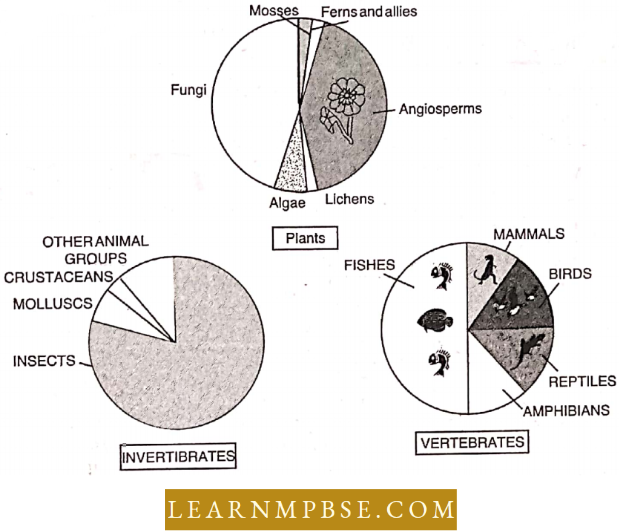
Representation Of Global Biodiversity Of Major Taxa Of Plants Invertrabrated And Vertebraates

Ecosystem Diversity: Species are distinct units of diversity, each playing a specific role in the ecosystem.

  • Diversity at the level of community and ecosystem has three perspectives i.e. Alpha, Beta and Gamma diversity.
  • Ecosystem diversity describes the number of niches, trophic levels and other ecological processes that maintain energy flow, food webs and recycling of nutrients.

The Three Perspectives Of Diversity At the Level Of Community And Ecosystem Are:

  1. Alpha diversity
  2. Beta diversity and
  3. Gamma diversity.
  1. Alpha Diversity. It refers to the diversity of organisms sharing the same community. It has been found that there is an increase in diversity with a decrease in latitude.
  2. Beta Diversity. The rate of replacement of species along a gradient of habitat or communities is called beta diversity.
  3. Gamma Diversity. It is the rate at which additional species are found as replacements in different localities of the same habitat.

Gradients Of Biodiversity: Biodiversity varies with changes in latitude or altitude. As we move from high to low latitudes (i.e., from the poles to the equator), broadly speaking, the biological diversity increases.

  • In the temperate region, the climate is severe with short growing periods for plants. In tropical rainforests, the conditions are favourable for growth throughout the year.
  • Favourable environmental conditions favour speciation and make it possible for a larger number of species to occur and grow.
  • For example, the mean number of vascular species per 0-1 ha sample area in tropical rain forests varies from 118-236, whereas it is only in the range of 21-48 species in the temperate zones.
  • Latitudinal and altitudinal gradients of species diversity are two master gradients of biodivorsity.

Biodiversity And Conservation NEET Notes

Patterns Of Biodiversity

  • Biodiversity is not uniform throughout the world but varies with changes in latitude and attitude.
  • Favourable environmental conditions favour speciation and make it possible for a large number of species to exist there; i.e. biodiversity is more in such areas than in others.
  1. Latitudinal Gradients
    • Species diversity decreases from the equator towards the poles.
    • The tropics (between 23.5° N to 23.5°S) harbour more species than temperate and polar regions.
    • For example. Columbia situated near the equator, has about 1400 species of birds, while New York (41°N) has 105 species. Greenland (71°N) has about 56 species and India (in the equator region’) has 1200 species.
    • The number of species of vascular plants in the tropics is about ten times more than that of temperate forests.
    • The Amazonian rain forest in South America has the greatest biodiversity on earth; it harbours about 40000 species of plants. 1.25.000 species of insects. 3000 of fishes, 427 of amphibians, 3.78 of reptiles. 1300 of birds and 427 of mammals.
  2. Species-Area relationship
    • Alexander Von Humboldt has observed that within a region, species richness increased with increased explored area, but only up to a limit.
    • The relationship between species richness and area for a number of taxa like angiospermic plants, freshwater fishes and birds is found to be a rectangular hyperbola.
    • On a log scale, the relationship becomes linear (straight line) and is described by the equation.
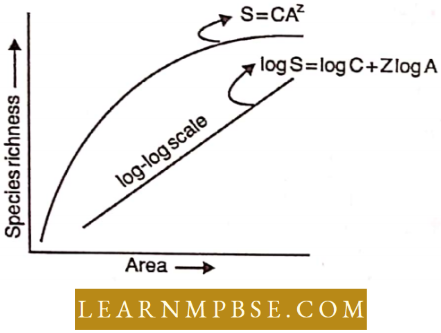
Biodiversity Natural Resources Wild Life Forest And Their Conservation Species Area Relationship

log S = log C + Z log A.

where, S = Species Richness Z = slope of a line (regression coefficient)

A = area and C = y-intercept

Ecologists have found that the value of the Z-line ranges between 0.1 and 0. irrespective of the taxonomic group or the region.

But in this analysis in very large areas like a continent, the Z-value ranges between 0.6 and 1.2.

The Z value for frugivorous birds and mammals in tropical forests is found to be 1.15.

Biodiversity And Wildlife Conservation NEET Notes

Use Of Biodiversity In Agriculture

  1. As a source of new crops.
  2. As a source material for breeding varieties.
  3. As a source of new biodegradable pesticides.

Only 20% of total plant species are cultivated to produce 85% of the world’s food.

Wheat, com and rice, the three major carbohydrate crops, yield nearly two-thirds of the food sustaining the human population. Fats, oils, fibres, etc. are other uses for which more and more new species need to be investigated.

Drugs And Medicines From Biodiversity:

Numerous significant medications have derived from botanical sources.

  • Examples of plant-derived compounds transformed into important pharmaceuticals include
  • Morphine (Papaver somniferum), utilized as an analgesic; Quinine (Chinchona ledgeriana), employed in malaria treatment; and Taxol, an anticancer agent synthesized from the bark of the yew tree (Taxus brevifolia, T. baccata).
  • Presently, 25% of the pharmaceuticals in the pharmacy originate from only 120 plant species.
  • However, globally, traditional medicines utilize thousands of plant species.
  • Plants can also be utilized in the production of countless synthetic goods known as botanochemicals.

Aesthetic And Cultural Benefits From Biodiversity:

Examples of aesthetic rewards include ecotourism, bird watching, wildlife, pet-keeping, gardening etc. Throughout human history, people have related biodiversity to the very existence of the human race through cultural and religious beliefs.

Biodiversity Is Essential For The Maintenance And Sustainable Utilization of goods and services from ecological systems as well as from individual species.

NEET Biodiversity And Wildlife Conservation Chapter Notes

Causes Of Loss Of Biodiversity: Biological diversity is lost before its size is known.

  1. Increased human population.
  2. Consumption of resources.
  3. Pollution due to human activities.

Consequences Of Loss Of Biodiversity

  1. It would check the evolutionary capability of biota to cope with environmental changes.
  2. It would result in the extinction of species.
  3. As man is dependent on food and other necessities, its loss will be hard-pressed for mankind.

Threats To Biodiversity: Important factors leading to extinction of species and consequent loss of biodiversity are

  1. Habitat Loss And Fragmentation
    • It is the most important or primary cause of extinction.
    • The tropical rain forests initially covered 14% of the land surface of the earth, but now they cover only 6% of the land area.
    • The Amazonian forests, called the ‘Lungs of the planet’, are cleared for cultivation of soyabean or conversion into grasslands for raising beef cattle.
    • Total loss of a habitat deprives many animals and plants of their homes and they face extinction
    • Degradation of habitats by pollution threatens the survival of many species.
    • When a large habitat becomes fragmented, animals requiring large territories and those with certain migratory habits are adversely affected and their populations start decreasing.
  2. Introduction Of Exotic Species Leading To Endangering The Species: Exotic species are having a large impact, especially in island ecosystems, which harbour much of the world’s threatened biodiversity. A few examples are
    • Nile perch, an exotic predatory fish introduced into Lake Victoria (South Africa) threatens the entire ecosystem of the lake by eliminating several native species of the small Cichlid fish species that were endemic to this freshwater aquatic system.
    • Water hyacinth clogs rivers and lakes and threatens the survival of many aquatic species in lakes and river flood plains in several tropical countries including India.
    • Lantana camara has invaded many forest lands in different parts of India and strongly competes with the native species.
  3. Over-exploitation of soil, water,
  4. Atmospheric pollution and
  5. Intensive agriculture and forestry.

Biodiversity And Conservation NEET Notes

Protected Areas: These areas are land or sea dedicated to the protection and maintenance of biological diversity. They include National parks. Sanctuaries and Biosphere Reserve. As of Sept. 2002. India has 581 protected areas.

  • National Parks. A national park is an area which is strictly reserved for the betterment of wildlife and where activities like forestry, grazing or cultivation are not permitted. In these parks, even private ownership rights are not allowed.
  • Sanctuaries. A sanctuary is a protected area which is reserved for the conservation of only animals and human activities like harvesting of timber, and collection of minor forest products and private ownership is allowed so long as they do not interfere with well well-being of animals.
  • A biosphere reserve is a specified area in which multiple use of the land is permitted by dividing it into certain zones, each zone being specified for a particular activity.

Biosphere Reserve: A biosphere reserve is a specified protected area of land and/or coastal environment in which multiple use of the land is permitted by dividing it into zones, each for a particular activity.

Types Of Biodiversity NEET Biology

Recently, the concept of Biosphere Reserve has been evolved by UNESCO’s Man and Biosphere Programme (MABP). Till May 2002, there are 408 biosphere reserves located in 94 countries out of which 13 are in India. Of these, the Nilgiri Biosphere Reserve was declared in 1986.

Zones of Biosphere Reserve. A biosphere reserve is divided into three zones: core, buffer and manipulation.

  1. Core Zone. No human activity is allowed in the core zone.
  2. Buffer Zone. Limited human activity is permitted in the buffer zone.
  3. Manipulation Zone. Several human activities can occur in the manipulation zone.

Types Of Biodiversity NEET Biology

Role of a Biosphere Reserve. A biosphere reserve preserves

  1. Conservation of wild populations,
  2. Development, and
  3. Genetic resources of domesticated plants and animals carrying out scientific research monitoring and education.

Benefits Of Protected Areas

  1. Maintaining viable populations of all native species and subspecies.
  2. Maintaining the number and distribution of communities and habitats, and conserving the genetic diversity of all the present species.
  3. Preventing human-caused introduction of alien species.
  4. Making it possible for species/habitats to shift in response to changes in the environment.

Ex-situ Conservationhttps://learnmpbse.com/neet-biology-organisms-and-population-ageing-and-death-notes/. It means maintenance of offsite collections either in gardens by farmers, and botanical gardens or storing seeds, genes, pollen, tissue culture etc.

  • The rare plants have been found to flourish in large numbers under the care and protection of gardeners and nature lovers.
  • Farmers have been maintaining genetic diversity (enormous varieties) of crop plants since ancient times by saving seeds or other components for the next plantings.
  • Collection of samples of cultivated and wild varieties of plants and storing them in botanical gardens is another method of conservation of germplasm.
  • In seeds, the living material remains in a metabolically suspended state. When the seeds are to be stored for longer periods, it is necessary to avoid conditions which favour respiration and enzymatic action.
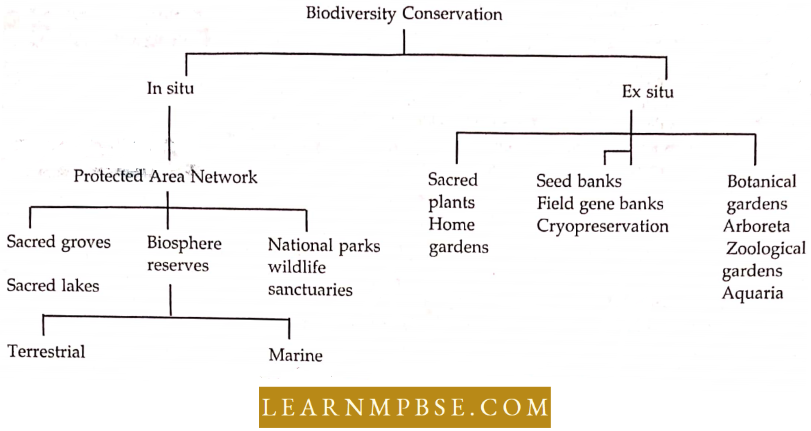
In Situ And Ex Situ Approches Of Conserving Biodiversity In India

Hot Spots Of Biodiversity: The concept of ‘Hot-spots’ was developed by Norman Myers (1988) to designate specific areas for in-situ conservation. The hot spots are the richest and most threatened reservoirs of plant and animal life on earth.

NEET Biology Biodiversity Notes

The Criteria For Determining Hot Spots Are:

  1. Number of endemic species.
  2. Degree of threat which is measured in terms of habitat loss.

There are 25 hot spots in the world out of which two are in India. They are the Western Ghats and Eastern Himalayas.

Hot spots of the Eastern Himalayas are active centres of evolution and rich in diversity of flowering angiosperms. Western Ghats have semi-evergreen forests. The Western Ghats include two main centres of biodiversity i.e., Aqastyamalai Hills and Silent Valley.

IUCN Red List. It is a catalogue of taxa that are facing the risk of extinction. The uses of the red list are

  1. Developing awareness, about the threat of loss of biodiversity
  2. Identification and documentation of endangered species.
  3. Providing a global index of the decline of biodiversity.
  4. Defining conservation.

IUCN Red List Categories
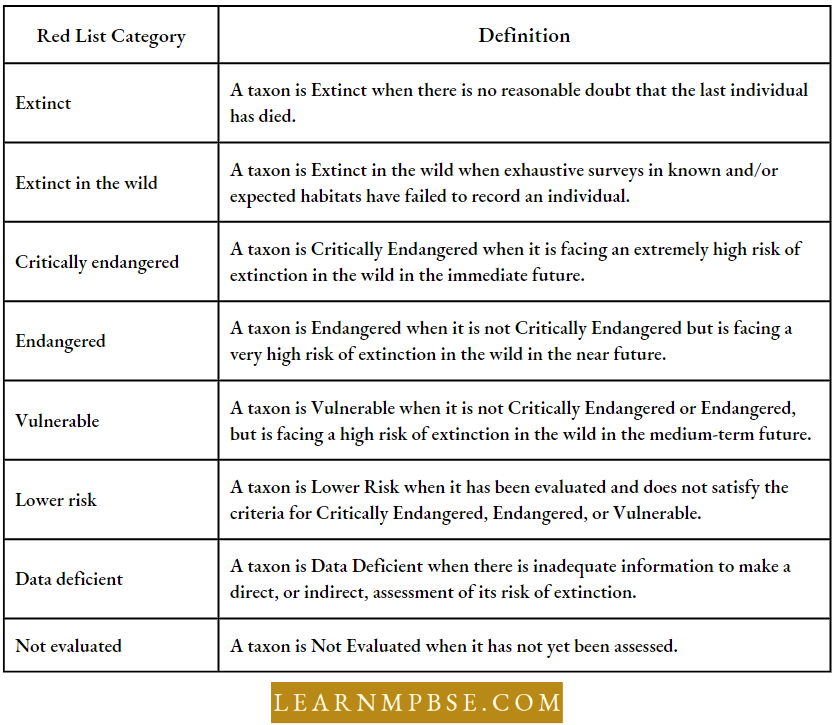
Biodiversity Natural Resources Wild Life Forest And Their Conservation IUCN Red List Categories

NEET Biology Biodiversity and Wildlife Conservation Natural Resources

Natural Resources are components of the biosphere and include energy, air, land, water, minerals, plants, animals and microorganisms.

As a result of manipulation by man, the biosphere has become transformed into a human-dominated environment called Noosphere (noo = mind, sphere = domain).

Natural Resources Are Categorised As Follows:

Depending on the availability and abundance the natural resources are classified into the following kinds

  1. Inexhaustible Resources. These resources are not likely to be exhausted by man’s consumption and other uses. They are, for example, wind, tidal energy and precipitation.
  2. Exhaustible Resources. These are the resources which are likely to be exhausted by man’s consumption.

Kinds of natural resources based on renewability

  1. Renewable Resources. These resources are naturally replenished after man’s consumption. They have the inherent capacity to reappear by quick recycling. They are water, wood, soil, natural pastures living organisms etc.
  2. Non-Renewable Resources. The resources that cannot be replaced faster than they are used. They are fossil fuels and mineral ores.

Kinds Of Natural Resources Based On Composition
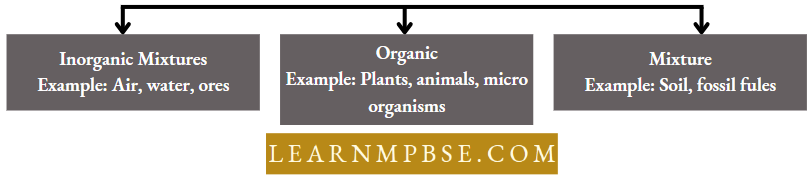
Kinds Of Natural Resources Based On Composition

There Are Three Types On The Basis Of The Ownership.
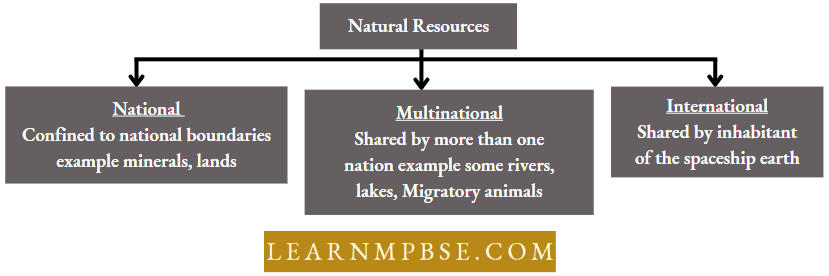
Biodiversity Natural Resources Wild Life Forest And Their Conservation Three Types On The Basis Of The Ownership

  • Other direct sources of energy are sunlight, hydroelectric and wind power, tidal energy, and nuclear and geothermal energy.
  • Presently, the major energy sources arc fuel wood and fossil fuels (coal, petroleum and natural gas).
  • Per capita energy consumption per day in the U.S.A. has reached 2,50,000 keal. It is as low as 10,000 kcal in developing countries.
  • Thirty per cent of the world’s population, living in industrialized countries, consume about 80% of total global energy.

NEET Biology Biodiversity and Wildlife Conservation Type Of Soil Components And Vegetation

Soil. It is a weathered superficial layer of the earth’s crust which is capable of supporting life.

Soil As A Resource. Landforms about 1l/5th of the earth a major constituent of the lithosphere and are the source of many materials, which are used by man.

All the terrestrial plants obtain their water and mineral nutrients from the soil. The yield of all biotic products in terrestrial ecosystems depends upon soil. Numerous microbes (bacteria and fungi) and many animals which are involved in the decomposition process live in the soil. All of them form humus by accumulation of partially synthesised organic materials.

NEET Biology Biodiversity Notes

Pedology. The branch of science which deals with the study of soil is called pedology.

Origin Of Soil. The processes of soil formation are generally divided into two stages:

  1. Weathering. The breakdown of bigger rocks into fine mineral particles is called weathering. It is mostly a physical or chemical process.
    • Chemical Weathering. It is caused by oxidation, hydrolysis or carbonation.
    • Mechanical Weathering. It is caused by living organisms, for example, lichens, grazing animals or earthworms.
  2. Pedogenesis Or Soil Development (Soil Maturation). It is a constructive biochemical process which converts the disintegrated mass of rock particles into mature soil. It consists of humification, eluviation and illuviation.
    • Humification. The remains of plants and animals undergo decomposition to produce an amorphous colloidal complex called lumens. The process of formation of humus is known as humification.
    • Eluviation And Illuviation. Washing down or leaching the contents of the upper layer of the soil is called eluviation and the decomposition of the contents of the upper layer in the deeper layer is called Illuviation. These two processes go on simultaneously.
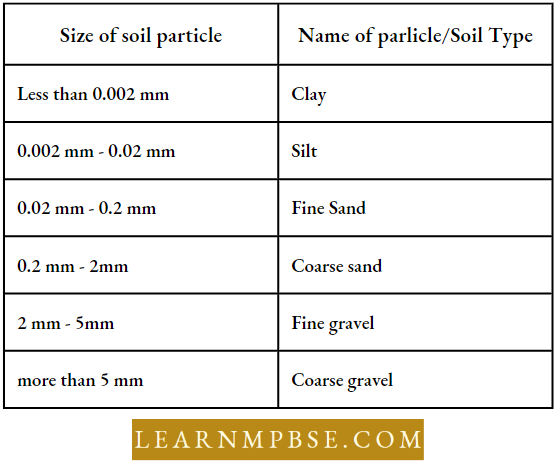
Soil Type And Soil Particles

  1. Sandy Soils: Mainly sand.
  2. Clayey Soils: Mainly clay.
  3. Loamy Soils: Sand, silt and clay.
  4. Sandy Loam Soils: Sand particles are dominating
  5. Silt Loam Soils: Silt particles are dominating
  6. Clayey Loam Soils: Clay particles are dominating

Types Of Vegetation On The Basis Of Nature Of Soil

  1. Rock Soil: Lithophytes
  2. Sandy Soil: Psammophytes
  3. Humus Or Acidic Soil: Oxylophytes
  4. Cold Soil: Psychrophytes
  5. Crevices Of Rocks: Chasmophytes
  6. Deserts: Gemophytes
  7. Saline Or Alkaline: Halophytes

Types Of Soil On The Basis Of Origin

  1. Skeletal Or Immature Soil. Partly weathered parental rocks.
  2. Residual Soil (Sedentary Soil). Soil exists in the place of their origin.
  3. Transported Soil. Shifted to different places.
    1. Alluvial Soils. Transported by the water of rivers.
    2. Colluvial Soils. Shifted due to gravitational force.
    3. Aeolian Soil. Shifted by wind.

Leaching. It is an important factor which makes the soil poor in its resources. In this process, minerals and organic substances are removed from the top layer of soil by rainwater.

Importance Of Biodiversity Conservation NEET Study Material

Biological Agencies. They are also active in causing loss of resources from the soil. Cultivation of soil year after year makes the soil less productive.

Mulching. Use of artificial protective covering having a mixture of wet straws, leaves etc.

  • Man-land ratio in India is very low i.e. 0.48 hectare per capita of available land.
  • Of the particulate constituents, clay and humus mainly are the determinants for the properties of soil.
  • Sand and silt consist largely of quartz (SiO2), and are chemically inert.

Clay is chemically more active and possesses a high capacity to hold water and ions. Pure clay is not a suitable medium for plant growth, because it forms a solid impenetrable mass. However, if mixed with other constituents of the soil, the charges on the ions link the particles together to form aggregates (or crumbs) to produce granular soil.

Soils without clay particles are structureless, and powdery and are not capable of holding water and nutrients.

Soil Organisms. A large number of organisms occurring in the soil like bacteria, fungi, algae, protozoans, nematodes, insects, earthworms etc. are called soil organisms. The number of earthworms may be as high as 6,00,000 – 79,11,000 per hectare in Indian grassland.

(Dash 1978) Bacteria are the most abundant of all soil organisms (14 million to 58 million/gm.) followed by protozoans (10,000 – 2 million/gm).

These Organisms Play Following Important Roles In The Soil:

  1. Nitrogen fixation
  2. Mycorrhizal association
  3. Soil-borne diseases
  4. Decomposition of organic matter.

Humus is formed by the accumulation of partially decayed and partially synthesised organic materials such as cellulose, hemicellulose, lignin, sugar, lipids and proteins. It helps in making the soil granular.

  • It causes air spaces to be formed in the clay soil and increases the water-holding capacity of sandy soils. Humus is rich in nutrients and thus enhances plant growth. Being black, humus absorbs heat and warms up the soil.
  • Plant debris falling on the ground which is undecomposed is called litter. Broken and partially decomposed organic matter is called duff or more. The organic matter in acidic conditions does not decompose rapidly due to inhibition of microbial activities, this partially decomposed organic matter is called peat or muck.

Importance Of Top Soil: Soil plays a multiple role in the life of organisms

  1. It provides water and mineral nutrients to the terrestrial plants.
  2. It is the medium in which plant and animal materials are decomposed. The inorganic components, namely CO2, and H2O, formed as the end products of decomposition are released into the environment for reuse by plants.
  3. It provides a habitat for microbes.

Soil Erosion. In this process, the fertile soil surfaces are detached and deposited at other places.

Agents Of Soil Erosion

  1. Water Erosion. This type of soil erosion is caused by water. The raindrops fall on the superficial layers and erosion takes place due to the flow of water.
  2. Sheet Erosion. Due to heavy rain, the top fertile soil is removed in the form of a thin sheet.
  3. Rill Erosion. Fast-running water cut stream or groove-like structures in soil.
  4. Gully Erosion. On steep slopes, fast-running water cuts the soil deep and forms channel-like structures called gullies.
  5. Ravine Erosion. During floods fast running water cut off the margins of the river. Due to heavy rains, the minerals are also lost from the topsoil and the soil becomes less fertile.
  6. Wind Erosion. In deserts, soil erosion takes place continuously due to wind and cyclones.
  7. Land Slides Or Slip Erosion. Due to heavy rains, the edges of hills are washed away and due to gravity, they fall.
  8. Stream Bank Erosion. Due to floods, the banks of rivers are eroded.

Principles Of Soil Erosion

  1. Normal Or Geological Erosion. This is a slow process. It is a common natural phenomenon. A balance is maintained between formation and erosion.
  2. Accelerated Soil Erosion. In this type of erosion, a balance is not maintained between erosion and formation. The speed of erosion is so fast due to man or any other reason that it is impossible to have a similar formation speed. Due to this type of soil erosion man has to face many problems.

Biological Methods Of Soil Conservation

  1. Contour agriculture
  2. Mulching
  3. Crop rotation
  4. Dry farming.

NEET Biology Biodiversity Notes

Restoration Of Soil Fertility

  1. The application of biofertilizers is useful in enhancing soil fertility.
  2. Various organic farming measures, which provide increased input to soil have long-term beneficial effects on soil futility.

NEET Biology Biodiversity and Wildlife Conservation Sources Of Water

The sources of water on earth are oceans, rivers, lakes, soil moisture and groundwater.

Oceans contain 97% of 14 billion cubic kilometres (km³) of remaining water. Ice in the polar ice caps and permanent glaciers had about 3% of the remaining water. The rest of the water is in the form of water vapours, lakes, rivers and groundwater.

List Of Marine Resources

The global hydrological cycle enables oceans to provide a consistent supply of fresh water for human, animal, and plant utilization.

  • The ocean serves as a repository for several compounds involved in biological cycles and various other items.
  • Marine vegetation functions as a primary producer.
  • Kelp and several marine organisms are utilized as sustenance.
  • Iodine and industrial gums are derived from seaweeds.
  • Agar is derived from the green algae Gracilaria and Gelidium.
  • Algin is extracted from Sargassum and Turbinaria.
  • Pearls derived from pearl oysters are utilized as precious adornments.
  • Mollusc shells are utilized to produce quicklime.
  • Sodium, chloride, magnesium, and bromide are derived from seawater.
  • Petroleum and natural gas are extracted from continental shelves.
  • The oceans provide as supplies of deuterium, uranium, gold, manganese, iron, lead, and sulfur.

Fresh Water:

Out of the 3%, 77.2% is stored in glaciers and icecaps and 224% is groundwater and soil moisture. The remaining 0.36% is present in lakes, rivers, streams, swamps etc. This fresh water is available for drinking and irrigation purposes. In the atmosphere, there is 0.00 J of water.

Ocean water is also very important for mankind. Man’s direct relation is more with fresh water. Rainfall is due to the evaporation of ocean water and as a result of this fresh water is available. 90% of the total evaporated oceanic water reaches back into the ocean.

Role Of Water In Supporting System:

Water plays a vital role in supporting the system as follows.

  1. It has an influence in regulating climate.
  2. The ocean acts as a heat bank for coastal regions releasing and absorbing heat.
  3. Waterfalls, tides and river currents are used to move machines and generate hydroelectric power.
  4. Water is essential for agriculture and industry.
  5. It provides a surface for navigation.
  6. Water provides the hydrogen required in living systems.

Conservation Of Water Resources:

For the conservation and management of freshwater following methods can be employed

  1. Reducing agricultural water wastage by increasing the efficiency of the irrigation system.
  2. Afforestation and protection of watersheds to improve economy.
  3. Formation of artificial clouds, so that a change can be brought into the atmosphere.
  4. Changes in the vegetation of a particular area, so that even in the dry season maximum amount of water can be stored. In addition to this dams should be constructed to stop the drainage of rainwater.
  5. Control the distribution of water by constructing big dams.
  6. Desalinization of seawater and saline groundwater.
  7. Proper utilization of underground water.
  8. Attempt to extract minerals from water.
  9. Melt the glaciers and snow for use as a freshwater resource.
  10. Regular dredging and desolation of water bodies.

Wetlands:

Wetlands are low-lying areas usually covered by shallow water and have characteristic soils and water-tolerant vegetation. Wetlands may be either freshwater or saltwater (coastal). Freshwater wetlands include marshes (where grass-like plants dominate), swamps (where trees or shrubs dominate), and periodically flooded riverine forests found in lowlands along streams.

Wetlands occupy almost 6% of the world’s land surface and provide crucial environmental services. Wetlands are often drained, dredged or filled up for housing and industrial purposes. They are increasingly threatened by agriculture, pollution and engineering constructions (such as dams).

Importance Of Wetlands

  1. They serve as groundwater recharge areas.
  2. To help clean and purify water runoff.
  3. They are highly productive areas.
  4. In saltwater wetlands, the mangroves hold sediment and accumulate soil along the shoreline.
  5. As mangroves expand into the ocean other plants colonize the soil left behind.

Measures For Salt Water Wetland Conservation: Coastal wetlands are called saltwater wetlands which include highly productive estuaries.

NEET Biology Biodiversity Notes

Wetland Conservation:

Wetland conservation programmes are generally based on

  1. Preparation of wetland inventories.
  2. Identification of wetlands of critical importance for their protection.
  3. Checking waste disposal in wetlands.
  4. Reduction of excessive inflow of nutrients and silt into wetlands from surrounding uplands by keeping them under plant cover.

NEET Biology Biodiversity and Wildlife Conservation Grasslands

Grasslands, commonly referred to as rangeland, supply feed and shelter for domestic animals and wildlife. In rural regions, dried hay extracted from grasslands, especially from tall grasses, serves as fuel or thatching material.

Grass cover is exceptionally effective in binding soil particles through a densely branching fibrous root system, hence markedly diminishing soil erosion.

  • In India, the extent of diverse grass cover, encompassing fallow and wastelands, is approximated to constitute around 18% of the total land area.
  • Including the forested region, which constitutes approximately 19% of total land and predominantly facilitates grazing, roughly 37% of land is deemed available for grazing.
  • India’s average annual yield of dry grass or hay is approximately 250 million tons.

Degradation of Grassland:

Degradation or destruction of grassland is mainly related to overpopulation. To enhance food production, grasslands possessing fertile soils are ploughed and converted to agricultural lands (for example North American prairies).

In developing countries, grassland areas are frequently overgrazed. For example, the number of animals grazing in the arid and semi-arid regions of India had been found to be 2-10 times greater than the capacity of the grassland to feed the animals.

Management Of Grasslands

  1. Protection from grazing
  2. Use of rotational grazing
  3. Removal of woody bushes or shrubs and weeds.
  4. Use of controlled burning to promote recycling of nutrients.
  5. Conservation of soil and water by reducing loss of soil and water.

NEET Biology Biodiversity and Wildlife Conservation Forests

A forest is a special biotic community of immense value to the environment and living beings.

  • Forests provide a large number of products which are of great economic value such as timber, firewood, bamboo, cane, oils, resins and useful chemicals.
  • In India, forests have been reported to cover 22.7% of land (74.8 million hectares).
  • Remote sensing surveys have shown forest cover to be about 14%.
  • Constitution of Indian forests
    • Tropical dry deciduous forests (38.7%),
    • Tropical moist deciduous forests (30.9%),
    • Tropical thorn (6.9%),
    • Plant sale and teak (13%).
  • Forests check soil erosion, control air pollution and provide shelter to a large number of animals.

Conservation of forests involves the extraction of timber and wood on a sustainable basis, replantation of native species on a replaceable basis, and special afforestation programmes.

  • The Union and State governments have launched several afforestation programmes.
  • The Social Forestry Programme started in 1976, seeks the use of public and common land to produce firewood, fodder, and small timber for the use of the rural community to reduce pressure on existing forests needed for soil and water conservation.

Agroforestry programmes—aim at reviving ancient land use practices (same land used for farming, forestry and animal husbandry).

Urban forestry programme— consists of planting trees for aesthetic purposes in urban areas.

Forest Cover: In India, 74.8 million ha or 22.7% LAPD was under forest cover in 1980 (Central Forestry Commission). It has increased to 75.23 million hectares or 22.96% in 1993. Champion and Seth (1968) have recognised 16 forest types in India. 38.7% area is covered by tropical deciduous forests, 30.9% by tropical moist deciduous forests, 6.9% by tropical thorn, and 13% by Sal and Teak strands.

Threats To Biodiversity NEET Exam Preparation

Biological Methods Of Soil Conservation

  1. Contour agriculture
  2. Mulching
  3. Crop rotation
  4. Dry farming.

Restoration Of Soil Fertility

  1. The application of biofertilizers is useful in enhancing soil fertility.
  2. Various organic farming measures, which provide increased input to soil have long-term beneficial effects on soil fertility.

NEET Biology Biodiversity and Wildlife Conservation Importance Of Forest Resources

Productive Functions

  1. Forests Provide Wood. Indian forests yield valuable timber wood like teak, sal, deodar, shisha etc.
  2. Forests Provide Paper. The conifers and bamboo are used as raw materials to prepare paper.
  3. Medicinal Plants in forests provide medicine of great importance.
  4. Forests provide a number of products like resins, gums, rubber, food and insecticides.
  5. Forests provide shelter to a variety of animals.
  6. Forests also provide the cork for example oak (Quercus)

Protective Functions: Role of forests in the protection of lands. Forests play a vital role in the life and economy of all tribes living in the forests.

  1. Forests prevent the erosion of soil by wind and water.
  2. Large trees provide shade which prevents the soil from becoming dry and friable during the summer.
  3. They check the velocity of raindrops or wind striking the ground and reduce the dislodg¬ing of the soil particles.
  4. The root system of plants firmly binds the soil.

Role Of Forests In Retaining Sub-Soil Water: Forests improve the quality of soil by increasing its porosity. The forest soil absorbs water during rains like a giant sponge and does not allow it to evaporate or run off quickly.

It ensures a perennial supply of subsoil water in springs and wells. Thus the hill slopes with vast forest cover in the catchment areas conserve water and gradually release it into streams, rivers and subsoil springs.

Deforestation: According to an estimate; almost 40% of forests have been lost in the tropics and 1% of forests in the temperate region.

  • In India, at the beginning of the twentieth century, forests covered about 30% of land whereas by the end of the century, it reduced to 19.4%.
  • The National Forests policy (1988) has recommended 33% forest cover for plains and 67% for hills.

Causes For Deforestation.

  1. Forests are converted into agricultural lands to feed the growing human population.
  2. Forests are cleared for making homes and establishing industries.
  3. Trees are felled for timber, firewood, etc.
  4. Jhum cultivation in the north-eastern states has contributed to deforestation.

Consequences of Deforestation

  1. Carbon dioxide concentration in the atmosphere has increased.
  2. There is a loss of biodiversity due to habitat destruction.
  3. Deforestation disturbs the hydrological cycle.
  4. There is soil erosion and it may lead to desertification in extreme cases.

Forest Conservation: Before man’s evolution, 70% of the land was covered by forests, which is now only 16%. The forests were depleted due to river valley projects, commercial use, agriculture development etc. To stop the destruction of forests, forest management, social forestry and public efforts are also necessary.

Forest management should be such that along with the protection of forests, production should also increase.

Afforestation: Looking at the rapid destruction rate of forests, the National Agriculture Commission started a scheme in 1976 called social forestry. Under this scheme such trees were to be planted which give the fuel wood to the local people, fodder for their animals, tools for agriculture, some teak for making houses and minor forest produce etc.

Many afforestation programmes have been taken in hand by central and state governments.

  1. Social Forestry Programme (1976). It requires raising trees for fuel wood, fodder, agricultural implements and fruits on public and common lands for the benefit of rural communities. The programme is aimed at reducing the demand on existing forests needed for soil and water conservation.
  2. Agroforestry Programme. It is aimed at reviving the ancient practice of using the same land for farming, forestry and animal husbandry.

Urban Forestry Programme. It is aimed at growing ornamental and fruit trees in urban areas along roads, in private compounds and in common parks.

Threats To Biodiversity NEET Exam Preparation

Ecological Uses

  1. Protection of Land. Plant cover protects soil from drastic changes in temperature, action of wind, action of raindrops, holding soil, preventing landslides and making the soil spongy as well as fertile.
  2. Retention of Subsoil water. Plant litter and humus prevent run-off, hold water like a sponge and allow percolation, resulting in perennial fresh water through springs.
  3. Climate. Moderating and moistening effects
  4. Frequency Of Rainfall. Increases. Atmospheric humidity becomes high.
  5. Pollution. Forests reduce atmospheric pollution absorbing gases and collecting SPM.
  6. Shelter. To wild animals.

NEET Biology Biodiversity and Wildlife Conservation Wild Life

William Hornaday coined the term wildlife when he wrote the book Our Vanishing Wild Life.  Wildlife refers to any living organism in its natural habitat. It includes plants, animals and micro-organisms other than cultivated plants and domesticated animals.

  • Wildlife balances the population and maintains the food chain and natural cycle.
  • It preserves the environment as a self-sustaining system.
  • Wildlife is of great value as a gene bank for feeding programmes in animal husbandry and fishery, which are of great benefit to humans.
  • Human activities have hastened the extinction of many species which is otherwise a natural phenomenon.
  • The extinction of a species is a part 6f the natural process.
  • The destruction of wildlife is on account of food, safety and pleasure; habitat destruction; over-exploitation and international commercial trade.
  • The threatened species of plants and animals have been categorised as endangered (E), Vulnerable (V), and Rare (R).
  • Conservation is the management of human use of the biosphere so that it may yield the greatest sustainable benefit to the present generation while maintaining its potential to meet the needs and aspirations of future generations.
  • For conservation of the wild life rare species of plants and animals have been categorised as endangered, vulnerable and rare according to the degree of danger facing them.
  • Steps for conservation of the wildlife include
  • Protection of threatened species,
  • Preservation of the ecosystem
  • Safeguarding of critical habitat.
  • Bilateral and multilateral agreements should be made to protect the species whose migratory ranges are over more than one country.

NEET Biology Biodiversity and Wildlife Conservation Concept Of Endangered Species

A species is considered as endangered when its natural regeneration is not able to keep pace with exploitation or destruction by natural and unnatural means.

The International Union for Conservation of Nature and Natural Resources (IUCN) has identified rare species of plants and animals on the following basis:

  1. The present and past distribution,
  2. The decline in the population in the course of time,
  3. Abundance and quality of natural habitat and
  4. Biology and potential value of the species.

IUCN has recognised the following categories on the basis given above.

  1. Endangered (E). These are the species or taxa facing extinction and whose survival is unlikely if the causal factors continue to operate. The number of these species is reduced to a critical level or whose habitats have been so heavily decreased that they are believed to be in immediate danger of extinction.
  2. Vulnerable (V). These are the species which would fall into the category of endangered species in the near future if causal factors continue to operate. The category includes
    • Species of which most or all the populations are decreasing because of over-exploitation, extensive destruction of habitat or other environmental disturbances;
    • Species with populations that have been seriously depleted and whose ultimate security is not yet assured, and
    • Taxa with populations that are still abundant but are under threat from serious adverse factors throughout their range.
  3. Rare (R). These are the taxa with small world populations that are not at present endangered or vulnerable but are at risk. These taxa are usually localised within restricted geographical areas or habitats are thinly scattered over a more extensive range.
  4. Threatened (T). These are the taxa which fall into any one of the above three categories- endangered, vulnerable and rare. Some species are marked as threatened where it is known that they are endangered, vulnerable or rare but there is not enough information to say which of the three categories is appropriate for them.
  5. Out Of Danger (O). These are the taxa which were earlier placed in one of the three above categories but which are now considered relatively secure because of the application of effective conservation methods.
  6. Indeterminate (I). These are the taxa suspected of belonging to one of the first three categories but for which insufficient information is currently available.

Endangered Plants: Botanical Survey of India attempted in 1970 to investigate plants belonging to different categories. Under this project, a list of 100 endangered species of plants has been prepared in collaboration with the Forest Research Institute, Dehradun. So far, however, about 900 taxa of plants are listed as endangered or rare in India.

  • Estimated number of Plant species: 45,000
  • Vascular Plants: 15,000
  • Non-flowering plants: 30,000
  • No. of species endemic to India: 7,000
  • No. of species of ethnobotanical interest: 800
  • No. of cultivated species or endemic: 250
  • No. of wild forms and relatives of cultivated species: 320

The list of endangered species of plants and animals is given in the Red Data Book. Many countries have prepared their own Red Data Books. Department of Environment, Government of India, has published two volumes of Red Data Book, listing 435 endangered species of plants.

As against the Red Data Book, there is a Green Book. It lists plants grown in protected areas. A Green Book has been prepared, in which hundreds of rare plants have been listed, which are growing in the gardens of the Botanical Survey of India.

In-Situ And Ex-Situ Conservation Methods NEET Biology

List of Some Endangered Plants: The following is a list of some common plants which are reported as endangered, appearing in various books. The list is divided into four groups for the sake of easy information.

  1. Endangered Ornamental Plants. The following are some well-known plants grown in gardens:
    • Aerides Ctispum; Fam. Orchidaceae: important for its showy flowers.
    • Cymbidium Macrorhizon; Fam. Orchidaceae, terrestrial leafless orchid, rare occurrence, horticultural importance.
    • Peiphiopedilum Fairieanum; Fam. Orchidaceae; Asian Lady’s Slipper; known for its flowers.
    • Rhododendron Edgeworthii; Fam. Ericaceae; epiphytic ornamental herb of horticultural value.
    • Symploca Chengapae; Fam. Symplocaceae; ornamental tree with fragrant flowers.
  2. Endangered Plants Of Medicinal Value. Some of the medicinal plants falling in this category are given below.
    • Atropa Acuminata; Fam. Solanaceae; Sag angur, Angur shefa; this herb is called Indian Belladonna.
    • Commiphora Wightii; Fam. Burseraceae; Guggul; this small tree is a source of oleoresin which among other things is known to reduce cholesterol levels in the blood.
    • Coptis Teeta; Fam. Ranunculaceae; Mishme teeth; herb useful for medicine obtained from rhizomes.
    • Podophyllum Hexandmm; Fam. Podophyllaceae; Papri, Ban-baingan; a drug from rhizomes, besides being stimulant and purgative, has destructive action on cancerous tissues.
    • Ravolfia Serpentina; Fam. Apocynaceae; sarpgandha; air dried roots are useful as antihypertensives and sedatives.
    • Saussurea Lappa; Fam. Asteraceae (Compositae); Kuth, Brahmakamal; roots are used in the treatment of bronchial asthma.
  3. Endangered Plants Of Scientific Value. These plants are either botanical curiosities or academically important.
    • Balanophora Involucrata; Fam. Balanophoraceae; fleshy tuberous root parasite of trees.
    • Dischidia Bengalensis; Fam. Asclepiadaceae; leaves form pitchers, and special branched roots develop from the petiole for absorption.
    • Nepenthes Khasiana; Fam. Nepenthaceae; insectivorous pitcher plant.
    • Psilotum Nudum; Fam. Psilotaceae (Pteridophytes); a primitive leafless pteridophyte of academic interest.
    • Sapria Himalayana; Fam. Rafflesiaceae; root parasite with flowers up to 35 cm in diameter, root parasite.
    • Tetracentron Sinense; Fam. Tetracentraceae; a primitive vessels dicotyledonous plant of great academic interest.
  4. Endangered Plants Of Economic Importance. Some of the economically useful plants which come under the category of threatened plants are given below.
    • Dioscorea Spp.; Fam. Dioscoreacea; this is known as a source of steroidal hormones.
    • Phyllostachys Bambusoides; Fam. Gramineae (Poaceae); bamboo of great economic value; such as wickerwork, walking sticks, manufacture of writing and printing papers.
    • Pinus Gerardiana; Fam. Pinaceae (Gymnosperms); chilgoza; the seeds called chilgoza are edible.
    • Santalum Album; Fam. Santalaceae; Chandan; useful in perfumery.

NEET Biology Biodiversity and Wildlife Conservation Various Protected Wild Animals In India

  1. Reptiles
    1. All species of Monitor Lizard
    2. Water Lizards
    3. Gavialis
    4. Python
    5. Leathery tortoise.
  2. Birds
    1. Bustard
    2. Pink-headed ducks
    3. Pheasants
    4. White-eyed ducks.
  3. Mammals
    1. Indian Rhinoceros
    2. Lion
    3. Tiger
    4. White tiger
    5. Panther
    6. Snow Leopard
    7. Clouded Leopard
    8. Gazelle
    9. Kashmir Stag
    10. Swamp deer
    11. Musk deer
    12. Lasser Panda
    13. Pangolin
    14. Wild ass
    15. Gibbons
    16. Lion-tailed monkeys
    17. Golden langurs
    18. Nilgiri Langur
    19. Malabar Langur
    20. Lakhi-mpur Langur
    21. Travancore Langur.

In-Situ And Ex-Situ Conservation Methods NEET Biology

Some Endangered Animal Species In India

  1. Reptiles
    1. Reticulated Python — Python reticulatus.
    2. Indian Rock Python — Python molurus.
    3. Water Monitor — Varanus salvator.
    4. Common Indian Monitor — Varanus bengalensis.
    5. Tortoise Shell Turtle — Eretmochelys imbricata.
    6. Gavialis
  2. Birds
    1. Black-Necked Crane — Grus nigricollis.
    2. Cheer Pheasant — Catreus wallichii.
    3. Himalayan Monal Pheasant — Lophophorus impedance.
    4. Western Tragopan — Tragopan melanocephalus.
    5. Likh Florican — Sypheotides indica.
    6. Great Pied Hornbill — Buceros bicornis.
    7. Great Indian Bustard — Ardeotis nigriceps.
    8. Jerdon’s Courser — Cursorius bitorquatus.
    9. Nilgiri Tahr — Hemitragus hylocrius
    10. White-eyed duck.
  3. Mammals
    1. Mouse Deer — Trigulus memmina.
    2. Hangul/Kashmir Stag — Cervus eephus hung.
    3. Thamin/Brow Antlered stag — Cennts eldi eldi.
    4. Four Horned Antelope — Tetracerus quadricornis.
    5. Wild Buffalo — Bubalus bubalus.
    6. Asiatic Wild Ass — Asians hemionus khur.
    7. One Horned Rhino — Rhinoceros unicornis.
    8. Asian Elephant— Eleplias indicus ( = E. maximum).
    9. Red Panda — Ailurus fulgens.
    10. Sloth Bear — Melurus ursinus.
    11. Himalayan Brown Bear — Ursus arctos isabellinus.
    12. Indian Wild Dog — Cam’s alpinus.
    13. Wolf — Canis lupus.
    14. Fishing Cat — Felis viverrina.
    15. Golden Cat — Felis temminki.
    16. Snow Leopard — Panthera uncia.
    17. Clouded Leopard — Neofelis nebulosa
    18. Hoolock Gibbon — Hylobates hoolock.
    19. Nilgiri Langur — Presbytis johni.
    20. Lakhimpur Langur
    21. Tanvancore Langur
    22. Long-Tailed Macaque — Macaco silenus.
    23. Gibbons

NEET Biology Biodiversity and Wildlife Conservation Various Laws For Conservation Of Forest And Wild Life

Forest And Wildlife Laws. Several legal provisions exist in our country to safeguard the national interests related to forests and wildlife. Notable amongst them are listed below:

Forest Act 1927. This act aims to consolidate the law relating to forests, and its basic objectives are:

  1. Setting up and managing reserved forests, protected forests and village forests ;
  2. Protection of non-government forests and forest land ;
  3. Control of movement of forest produce ;
  4. Control of cattle grazing.

Wildlife (Protection) Act 1972, (Amended 1991). This act provides for the protection of wild animals, birds and plants, and includes the following objectives:

  1. Restriction and prohibition on hunting of animals;
  2. Protection of specified plants;
  3. Setting up and managing sanctuaries and national parks
  4. Empowering zoo authority with control of zoos and captive breeding
  5. Control of trade and commerce in wildlife, wildlife products and trophies.

National Forest Policy (1988). The principal aim of our Forest Policy is to ensure environmental stability and maintenance of ecological balance including atmospheric equilibrium which are vital for all life forms, human, animal and plant. The derivation of direct economic benefit (for example production of wood and other materials) is considered subordinate to the principal aim.

NEET Biology Biodiversity and Wildlife Conservation Synopsis

Inexhaustible Resources. These are present in plenty and cannot be exhausted by man’s consumption viz. air, sand, clay etc. Although air will never become limited, its quality can be affected due to the continuous increase in human population.

  • Exhaustible Resources can be exhausted by man’s consumption.
  • Renewable Resources are those which are being continuously consumed by man but renewed by nature, for example, water, wood, natural pastures, soil living organisms etc. The resources reappear by quick replacement, recycling and reproduction in a particular time.
  • Non-renewable resources. They are not renewable after use and are not replenished by nature, for example, fossil fuel, metallic ores viz. copper, iron etc. Fossil fuels include coal, petroleum etc.
  • Extensive Plantation of trees is called afforestation.
  • The agro-forestry includes a variety of land uses when woody species are grown in combination with herbaceous crops.
  • Most biotic resources are renewable
  • Deforestation causes extinction of plant, animal and microbial species.
  • Grassland with scattered trees is called rangeland
  • Wetlands may be either freshwater or saltwater.
  • Biomass energy is biomass
  • Agar is obtained from marine red algae
  • Mine soil can be restored by revegetation

Indian Forests. In India, the forests cover an area of about 8 lakh square km. There are about 15000 species of flowering plants and almost 3000 species of non-flowering plants are present. From the forests, timber, fuel wood, bamboo, medicines, fibres, gum, resins, rubber, aromatic oil, colours, oil, seeds and a number of other small products are obtained, without which our daily life cannot be imagined.

Biodiversity And Its Conservation NEET

India’s Main Forest Areas Are the Himalayan area, valley area, Ganges—Sindhu plains, Rajasthan, Sundarban and eastern and western ghats, south India Andaman Nicobar and Lakshadweep and eastern India.

Forest Cover In India (1999 Estimate)
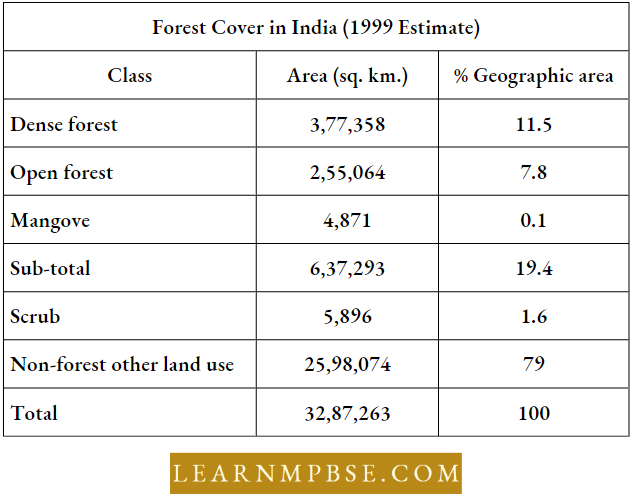
Biodiversity Natural Resources Wild Life Forest And Their Conservation Forest Cover In India

Differences Between Fresh Water Wetland And Marine Wetland. Freshwater wetlands including marshes, swamps and riverine are highly productive. Marine wetlands include highly productive estuaries and provide food and habitat to marine animals. Mangroves are the dominant plant species.

Differences Between Wetland And Grassland. Wetlands are low-lying areas usually covered by shallow water and have water-tolerant vegetation whereas grassland provides foliage and habitat to domestic animals and wildlife.

Differences Between Deforestation And Desertification. The cutting of forest is termed deforestation and conversion of grassland or forest into desert is desertification.

NEET Biology Biodiversity and Wildlife Conservation Ozone Layer

Ozone occurs in minute traces in the atmosphere. It has a peak concentration of around 25 km above the surface of the earth.

  • At no level, the ozone’s concentration is more than a millionth of the main atmosphere.
  • If the entire ozone content is compressed at normal pressure and temperature, it will constitute a layer of only 3 mm thick.
  • Ozone has played a vital role in the evolution of life. Ozone plays a life-sustaining role by not allowing harmful radiation to reach the earth.
  • 12 Mega diversity countries — India is one
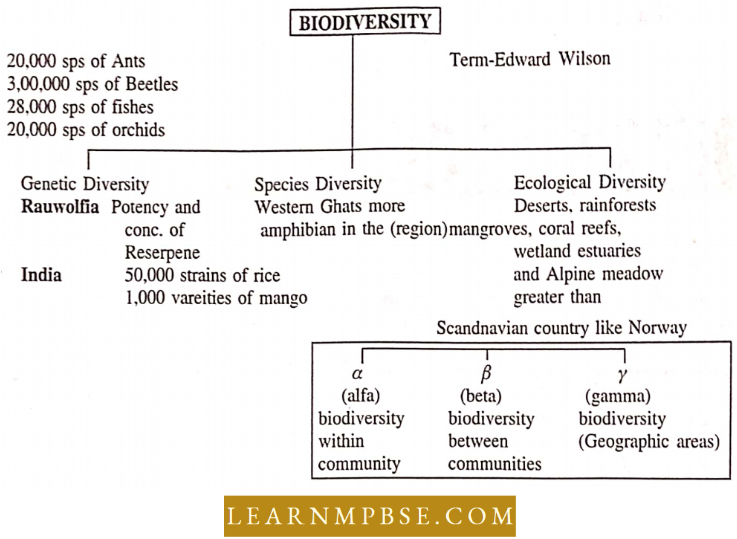
Biodiversity Flowchart

Patterns Of Biodiversity

  1. Latitudinal gradients.
  2. Species area – relationship.

Alexander Von Humboldt = log S = log C + Z log A

Importance Of Species Diversity To Ecosystem

  • Stability
  • Production
  • Ecosystem Health

Loss Of Biodiversity

  • Extinct
  • Extinct in wild
  • Critically endangered
  • Vulnerable
  • Low risk
  • Data Deficient
  • Not evaluated.

Causes Of Loss Of Biodiversity

  1. Habitat loss and fragmentation.
  2. Overexploitation.
  3. Alien species invasions.
  4. Co-extinctions

Conservation Of Biodiversity

  • In-situ Conservation
    1. Hospoli
    2. Protected area,
    3. Sacred grooves
    4. Sacred forests.
    5. Gene banks and Seed banks
  • Ex-Situ Conservation
    1. National Parks
    2. Sanctuaries
    3. Biosphere reserves

Biodiversity And Its Conservation NEET

Need For Conservation Of Biodiversity Species

  1. Narrow utilitarian
  2. Broadly utilitarian
  3. Ethical arguments


NEET Biology Biodiversity and Wildlife Conservation Questions From Competitive Examinations

Question 1. Number of Endangered Species of Angiosperms in India:

  1. 487
  2. 15, 000
  3. 5000
  4. 3000.

Answer: 4. 3000

Question 2. World Wildlife Fund was organised by UNESCO in:

  1. 1961
  2. 1983
  3. 1931
  4. 1915.

Answer: 1. 1961

Question 3. Todaba National Park is located in

  1. Mumbai
  2. Cochin
  3. Chennai
  4. Chandrapura

Answer: 4. Chandrapura

Question 4. The species of animal protected in Biligiri Rangaswamy National Park is:

  1. Panther
  2. Different species of birds
  3. Tiger
  4. Elephant.

Answer: 4. Elephant.

Question 5. The most threatening factor for the survival of plant biodiversity is:

  1. Destruction of natural habitat
  2. Biosphere reserve
  3. Vulnerable ecosystems like mangroves and wetlands
  4. Inaccesibility of habitat.

Answer: 1. Destruction of natural habitat

Question 6. In bioreserves is allowed.

  1. Restricted human population
  2. Private operations
  3. No human population
  4. Permanent human population.

Answer: 1. Restricted human population

Biodiversity And Its Conservation NEET

Question 7. Which endangered animal is the source of the world’s finest, lightest, warmest and most expensive wool-the shahtoosh?

  1. Chiru
  2. Nilgai
  3. Cheetal
  4. Kashmiri goat.

Answer: 1. Chiru

Question 8. According to Indian Forest policy what percentage of land area should be under forest cover?

  1. 13 per cent
  2. 23 per cent
  3. 33 per cent
  4. 43 per cent.

Answer: 3. 33 per cent

Question 9. Species listed in the “Red Data Book” are:

  1. Endangered
  2. Threatened
  3. Vulnerable
  4. All the above.

Answer: 4. All the above.

Question 10. Similipal is:

  1. Sanctuary
  2. National Park only
  3. Biosphere Reserve
  4. ZOO.

Answer: 3. Biosphere Reserve

Question 11. Which is the most effective way to conserve the plant diversity of an area?

  1. By creating biosphere reserve
  2. By creating botanical gardens
  3. By developing a seed bank
  4. By tissue culture method.

Answer: 1. By creating biosphere reserve

Question 12. Which one of the following is a pair of endangered species?

  1. Garden lizard and Maxican poppy
  2. Rhesus monkey and Sal tree
  3. Indian peacock and Carrot grass
  4. Hornbill and Indian Aconite.

Answer: 4. Hornbill and Indian Aconite.

Question 13. If the Bengal tiger becomes extinct:

  1. Hyaenas and Wolves will become scarce
  2. The wild areas will be safe for man and domestic animals
  3. Its gene pool will be lost forever
  4. The population of beautiful animals like deer will get stabilized.

Answer: 3. Its gene pool will be lost forever

Question 14. Which of the following animals is protected in Kaziranga Sanctuary of Assam?

  1. Indian bison
  2. Indian lion
  3. Indian rhinoceros
  4. Indian elephant.

Answer: 3. Indian rhinoceros

Biodiversity And Wildlife Conservation NEET Notes

Question 15. According to IUCN Red List, what is the status of Red Panda (Ailurus fulgens)?

  1. Vulnerable species
  2. Critically endangered species
  3. Extinct species
  4. Endangered species.

Answer: 4. Endangered species

Question 16. Biodiversity Act of India was passed by the Parliament in the year:

  1. 1996
  2. 1992
  3. 2002
  4. 2000.

Answer: 3. 2002

Question 17. One of the ex-situ conservation methods for endangered species is:

  1. Wildlife sanctuaries
  2. Biosphere reserves
  3. Cryopreservation
  4. National parks.

Answer: 3. Cryopreservation

Question 18. Genetic diversity in agricultural crops is threatened by:

  1. Introduction of high-yielding varieties
  2. Intensive use of fertilizers
  3. Extensive intercropping
  4. Intensive use of biopesticides.

Answer: 1. Introduction of high-yielding varieties

Question 19. Blackbuck (Autilope cervical) is an example of:

  1. Endangered species
  2. Extinct species
  3. Vulnerable species
  4. Conservation-dependent species.

Answer: 3. Vulnerable species

Question 20. Keystone species deserve protection because these

  1. Are capable of surviving in harsh environmental conditions
  2. Indicate the presence of certain minerals in the soil
  3. Have become rare due to overexploitation
  4. Play an important role in supporting other species.

Answer: 1. Are capable of surviving in harsh environmental conditions

Question 21. In India, we find mangoes with different flavours, colours, fibre content, sugar content and even shelf-life. The large variation is on account of:

  1. Species diversity
  2. Induced mutations
  3. Genetic diversity
  4. Hybridization.

Answer: 3. Genetic diversity

Question 22. Biosphere Reverses differ from national parks and wildlife sanctuaries because in the former:

  1. Human beings are not allowed to enter
  2. People are an integral part of the system
  3. Plants are paid greater attention than the animals
  4. Living organisms are brought from all over the world and preserved for posterity.

Answer: 2. People are an integral part of the system

Environmental Issues NEET Notes

Question 23. Which one of the following is the correctly matched pair of an endangered animal and a National Park?

  1. Great Indian Bustard — Keoladeo National Park,
  2. Wild ass — Dudhvva National Park
  3. Lion — Corbett National Park
  4. Rhinoceros — Kaziranga National Park.

Answer: 3. Lion — Corbett National Park

Question 24. Which of the following is considered a “hot spot” of biodiversity in India?

  1. Eastern Ghats
  2. Aravalli Hills
  3. Western Ghats
  4. Indo-Gangetic plain.

Answer: 3. Western Ghats

Question 25. Which one of the following is not included under in-situ conservation?

  1. Biosphere reserve
  2. National Park
  3. Sanctuary
  4. Botanical garden.

Answer: 4. Botanical garden

Environmental Issues NEET Notes

Question 26. Which of the following parts of an animal and a plant represents endangered organisms in India?

  1. Cinchona and Leopard
  2. Banjan and Black buck
  3. Bentinckia nicobarica and Red Panda
  4. Tamarind and Rhesus monkey.

Answer: 3. Bentinckia nicobarica and Red Panda

Question 27. Which one is a critically endangered animal species?

  1. Antelope cervicapra
  2. Sus salvanius
  3. Ailttnts fulgens
  4. Caloles versicolor
  5. Hyla.

Answer: 2. Sus salvanius

Question 28. Which of the following regions of our country are known for their rich biodiversity?

  1. Western ghats and eastern Himalayas
  2. Western ghats and Deccan plateau
  3. Eastern Himalayas and gangetic plane
  4. Trans Himalayas and the Deccan peninsula.

Answer: 1. Western Ghats and the eastern Himalayas

Question 29. Pure clay is not suitable for plant growth because:

  1. It is chemically inert
  2. It is chemically active
  3. It forms a solid non-penetrable mass
  4. All of the above reasons.

Answer: 3. It forms a solid non-penetrable mass

Question 30. Humus is an example of:

  1. Soil structure
  2. Crystalloids
  3. Organic colloids
  4. None of them.

Answer: 3. Organic colloids

Question 31. Restoration of ecological equilibrium in mined areas can be achieved through:

  1. Prevention of grazing
  2. Prevention of soil erosion
  3. Revegetation of the mined habitats
  4. Conversion of mined habitats into agricultural ecosystems.

Answer: 3. Revegetation of the mined habitats

Question 32. In the Northern Indian plains, there is an increase in floods in recent times due to:

  1. Soil erosion in the plains
  2. Soil conservation on the hills
  3. Deforestation in the plains
  4. Deforestation in the catchment area.

Answer: 4. Deforestation in the catchment area.

Question 33. Laterization is a process that results in the:

  1. Degradation of soil
  2. Purification of water
  3. Formation of soil
  4. Sterilization of soil.

Answer: 3. Formation of soil

Question 34. Which of the following soils cracks and shrinks most as it dries:

  1. Porous soil
  2. Clay soil
  3. Loam soil
  4. Sandy soil.

Answer: 2. Clay soil

Question 35. What is the best pH of the soil for the cultivation of plants:

  1. 3.4 = 5.4
  2. 6.5 = 7.5
  3. 4.5 = 8.5
  4. 5.5 = 6.

Answer: 4. 5.5 = 6.

Types Of Biodiversity NEET Biology

Question 36. Deforestation causes:

  1. Soil erosion
  2. Soil pollution
  3. Water pollution
  4. Noise pollution.

Answer: 1. Soil erosion

Question 37. Which are the dense forests?

  1. Tropical evergreen forests
  2. Tropical deciduous forests
  3. Tropical Savannah
  4. Chaparral.

Answer: 1. Tropical evergreen forests

Question 38. Which of the following is the main reason for the extinction of animals?

  1. Predation
  2. Pollution
  3. Destruction of habitat
  4. Felling of trees.

Answer: 3. Destruction of habitat

Question 39. Rhizophora occurs in

  1. Mangrove
  2. Tropical rain forests
  3. Tropical deciduous forests
  4. Both (2) and (3)

Answer: 1. Mangrove

Question 40. The major fuel component of biogas is:

  1. CO
  2. CH4
  3. CH3
  4. CO2

Answer: 2. CH4

Question 41. Water infiltration will be slowest in:

  1. Black cotton soil
  2. Sandy soil
  3. Loam soil
  4. Red soil.

Answer: 1. Black cotton soil

Question 42. The amount of alcohol allowed to be mixed with petrol in India is:

  1. 10-15%
  2. 10%
  3. 5%
  4. 2.5%.

Answer: 3. 5%

Question 43. More than 70% of world’s freshwater is contained in:

  1. Antarctica
  2. Glaciers and Mountains
  3. Greenland
  4. Polar ice.

Answer: 4. Polar ice.

Question 44. Identify the odd combination of the habitat and the particular animal concerned:

  1. Sunderbans – Bengal Tiger
  2. Periyar – Elephant
  3. Rann on Kutch – Wild Ass
  4. Dachigam National Park – Snow Leopard

Answer: 2. Periyar – Elephant

Question 45. One of the endangered species of Indian medicinal plants is of:

  1. Ocimum
  2. Garlic
  3. Nepenthes
  4. Podophyllum

Answer: 4. Podophyllum

Question 46. In your opinion, which is the most effective way to conserve the plant diversity of an area?

  1. By developing a seed bank
  2. By tissue culture method
  3. By creating biosphere reserve
  4. By creating a botanical garden.

Answer: 3. By creating biosphere reserve

Question 47. Which of the following represents the maximum number of species among global biodiversity?

  1. Lichens
  2. Fungi
  3. Mosses and Fems
  4. Algae

Answer: 2. Fungi

Environmental Issues NEET Notes

Question 48. Manas Sanctuary is located at:

  1. Assam
  2. Bihar
  3. Gujarat
  4. Rajasthan.

Answer: 1. Assam

Question 49. Assertion (A): Tropical rainforests are disappearing fast in developing countries such as India.

Reason (R): No value is attached to these forests because they are poor in biodiversity.

  1. Both (A) and (R) are true and (R) is the correct explanation of the (A)
  2. Both (A) and (R) are true but the (R) is not the correct explanation of the (A)
  3. (A) is a true statement but (R) is false
  4. Both (A) and (R) are false.

Answer: 3. (A) is a true statement but (R) is false

Question 50. Habitat loss and fragmentation, over-exploitation, alien species invasion and co-extinction are causes of:

  1. Population explosion
  2. Migration
  3. Biodiversity loss
  4. Pollution
  5. Ecological succession.

Answer: 3. Biodiversity loss

Question 51. The venue and year of the Earth Summit on Conservation of Biodiversity was:

  1. South Africa, 2002
  2. Rio de Janeiro, 1992
  3. Johannesburg, 2004
  4. Stockholm, 1974
  5. Ramsar, 1974.

Answer: 2. Rio de Janeiro, 1992

Question 52. India became a party to the ‘Convention on Biological Diversity’ in the year.

  1. 1994
  2. 1993
  3. 1992
  4. 1983.

Answer: 1. 1994

Question 53. Which one of the following is not observed in biodiversity hotspots?

  1. Endemism
  2. Species richness
  3. Accelerated species loss
  4. Lesser inter-specific competition.

Answer: 4. Lesser inter-specific competition.

Threats To Biodiversity NEET Exam Preparation

Question 54. World Summit on Sustainable Development (2002) was held in:

  1. Brazil
  2. Sweden
  3. Argentina
  4. South Africa.

Answer: 4. South Africa.

Question 55. Which one of the following has the highest number of species in nature?

  1. Fungi
  2. Insects
  3. Birds
  4. Angiosperms.

Answer: 2. Insects

Question 56. Which one of the following shows the maximum genetic diversity in India?

  1. Groundnut
  2. Rice
  3. Maize
  4. Mango.

Answer: 2. Rice

Question 57. Which one of the following expanded forms of the following acronyms is correct?

  1. IPCC = International Panel for Climate Change
  2. UNEP = United Nations Environmental Policy
  3. EPA = Environmental Pollution Agency
  4. IUCN = International Union for Conservation of Nature and Natural Resources.

Answer: 4. IUCN = International Union for Conservation of Nature and Natural Resources.

Question 58. World Biodiversity Day is observed on:

  1. 3rd October
  2. 5th June
  3. 29th December
  4. 22th May.

Answer: 4. 22th May.

Question 59. The highest number of species in the world is represented by:

  1. Mosses
  2. Algae
  3. Lichens
  4. Fungi.

Answer: 4. Fungi.

Question 60. The relation between species richness and area is described on a logarithmic scale by the equation [where S = species richness, A = area, Z = slope of the line (regression coefficient), C = Y-intercept]

  1. log S = log C – Z log A
  2. log S = Z log A
  3. log S = log C + Z log A
  4. log S = log C
  5. log C = log S + Z log A.

Answer: 3. log S = log C

Question 61. Which one of the following is not used for ex situ plant conservation?

  1. Seed banks
  2. Shifting cultivation
  3. Botanical Gardens
  4. Field gene banks.

Answer: 2. Shifting cultivation

 

NEET Biology Multiple Choice Questions – Environmental Issues

NEET Biology Environment Pollution And Global Environment Issues Multiple Choice Questions

Question 1. Excess nitrates in the field get mixed up with drinking water. It may result in:

  1. Killing of intestinal bacteria
  2. Upsetting enzyme production
  3. Converting nitrates into nitrites harms haemoglobin leading to anaemia
  4. Producing more amino acids.

Answer: 3. Converting nitrates into nitrites harms haemoglobin leading to anaemia

Question 2. Global warming can be controlled by:

  1. Reducing reforestation, increasing the use of fossil fuel.
  2. Increasing deforestation, slowing down the growth of the human population
  3. Increasing deforestation, reducing the efficiency of energy usage
  4. Reducing deforestation, cutting down the use of fossil fuel.

Answer: 4. Reducing deforestation, cutting down the use of fossil fuel.

Question 3. The Air Prevention and Control of Pollution Act came into force in:

  1. 1981
  2. 1985
  3. 1990
  4. 1975

Answer: 1. 1981

Question 4. Water pollution can be stopped best by:

  1. Treating effluents to remove injurious chemicals
  2. Rearing more fishes
  3. Cultivating useful water plants
  4. Spraying with DDT.

Answer: 1. Treating effluents to remove injurious chemicals

Read and Learn More NEET Biology Multiple Choice Question and Answers

Question 5. Organic waste products:

  1. Should be buried deep in the soil
  2. Can be used for the production of energy
  3. Should be treated with chemicals to prevent the breeding of organisms
  4. Should be dumped into the sea

Answer: 2. Can be used for the production of energy

NEET Biology MCQs

Question 6. Noise pollution causes:

  1. Deafness
  2. Increase in B.P.
  3. Heart trouble
  4. All the above.

Answer: 4. All the above.

Question 7. During the combustion of fuels, gases released are :

  1. CO2 and CO
  2. CO2 and CO2 and SO2
  3. CO2, CO, SO2 and H2O
  4. CO2, CO, H2S and SO2

Answer: 3. CO2, CO, SO2 and H2O

Question 8. The environmental pollutant that can cause birth defects is:

  1. SO2
  2. CO
  3. Smog
  4. Radioactivity.

Answer: 4. Radioactivity.

Question 9. As a general rule, ionizing radiation is most damaging to:

  1. Mature, stable cells
  2. Actively dividing cells
  3. Highly specialized cells
  4. Cells in which food is stored.

Answer: 2. Actively dividing cells

NEET Biology MCQs

Question 10. It is said that Taj may be destroyed due to:

  1. Flood in Yamuna River
  2. The decomposition of marble as a result of high-temperature
  3. Air pollutants released from the oil refinery of Mathura
  4. All of the above.

Answer: 3. Air pollutants released from the oil refinery of Mathura

Question 11. Which of the following is normally not an atmospheric pollutant?

  1. Hydrocarbon
  2. CO2
  3. CO
  4. SO2

Answer: 2. CO2

Question 12. The presence of ozone in the atmosphere of Earth:

  1. Hinders a higher rate of photosynthesis
  2. Has been responsible for increasing the average global temperature in the recent past
  3. Helps in checking the ultraviolet rays to reach earth
  4. Is advantageous since it supplies oxygen for people travelling in jets.

Answer: 3. Helps in checking the ultraviolet rays to reach earth

Question 13. What will happen if our water resources continue to be polluted by industrial wastes?

  1. Sufficient food will not be available to water organisms
  2. Sufficient O2 will not be available to water organisms
  3. B.O.D. value of water will decrease
  4. Drinking water will not be available.

Answer: 2. Sufficient O2 will not be available to water organisms

NEET Biology MCQs

Question 14. In Bhopal gas tragedy, the gas released was:

  1. Methyl isocyanate
  2. Ethyl isocyanate
  3. Sodium isocyanate
  4. Potassium isocyanate.

Answer: 1. Methyl isocyanate

Question 15. Aerosols are:

  1. Chemicals released in the air in the form of mist or vapour with force
  2. Gases released from the exhaust pump
  3. A mixture of carbon particles and mist
  4. Soluble effluents are released in water.

Answer: 1. Chemicals released in the air in the form of mist or vapour with force

Question 16. The component of living cells affected by pollutant SO2 is:

  1. Nucleus
  2. All cell membrane system
  3. Cell wall
  4. Membrane system.

Answer: 2. All cell membrane system

Question 17. The ‘Love Canal Incidence’ is concerned with:

  1. Chemical plant accident
  2. River pollution
  3. Toxic waste dump
  4. Man-made bacteria.

Answer: 3. Toxic waste dump

NEET Biology MCQs

Question 18. The “solution to pollution is dilution.” This can be best correlated to

  1. Air pollution
  2. Water pollution
  3. Noise pollution
  4. Satiation pollution.

Answer: 2. Water pollution

Question 19. Which of the following pollutants is not produced by the exhaust of motor vehicles?

  1. CO
  2. Hydrocarbon
  3. Flyash
  4. SO2

Answer: 3. Flyash

Question 20. Minamata disease is a pollution-related disease which results from:

  1. Release of industrial waste mercury into fishing water
  2. Oil spills into the sea
  3. Accumulation of arsenic in the atmosphere
  4. Release of human organic wastes into drinking water.

Answer: 1. Release of industrial waste mercury into fishing water

Question 21. The most outstanding danger at present for the survival of living beings on the earth is:

  1. Radiation hazard
  2. Automobiles
  3. Industrial effluents
  4. Detergents

Answer: 1. Radiation hazard

Question 22. What does the term ‘overkill’ deal with?

  1. Pesticide poisoning
  2. Soil erosion
  3. Nuclear holocaust
  4. Global warming.

Answer: 3. Nuclear holocaust

Question 23. Radiation is a health hazard because it causes:

  1. Haemophilia
  2. Leukaemia
  3. Pneumonia
  4. Polio.

Answer: 2. Leukaemia

Ecology And Environment NEET MCQs

Question 24. In which industry, do workers suffer from Byssinosis?

  1. Cardboard
  2. Textile
  3. Plastic
  4. Paper.

Answer: 2. Textile

Question 25. Spraying of DDT on crops produces pollution of:

  1. Air only
  2. Air and soil
  3. Air, soil and water
  4. Air and water.

Answer: 3. Air, soil and water

Question 26. The most widely existing pollutants in the air are:

  1. CO
  2. CO2
  3. SO2
  4. None of the above.

Answer: 1. CO

Question 27. If water pollution continues at its present rate, it will eventually:

  1. Stop the water cycle
  2. Prevent precipitation
  3. Make oxygen molecules unavailable to aquatic life
  4. Make nitrates unavailable to aquatic life.

Answer: 3. Make oxygen molecules unavailable to aquatic life

Question 28. Which of the following air pollutants is the chief cause of acid rain?

  1. H2S
  2. CO
  3. SO2
  4. CO2

Answer: 3. SO2

Ecology And Environment NEET MCQs

Question 29. Which part of the human body is first to be affected by nuclear radiation?

  1. Bone marrow
  2. Liver
  3. Lungs
  4. Ear.

Answer: 1. Bone marrow

Question 30. Opuntia was a menace a few decades back in India. It was almost eradicated by:

  1. Spraying DDT
  2. Using tractors
  3. Cochineal insect introduction
  4. Using 2, 4-D.

Answer: 3. Cochineal insect introduction

Question 31. Photochemical smog is caused by the formation of

  1. Aluminium ions
  2. Methane
  3. Sulphur
  4. Free radicals of oxygen.

Answer: 4. Free radicals of oxygen.

Question 32. Where did the epidemic bone softening disease ‘Itai Itai’ occur first?

  1. Myanmar
  2. Japan
  3. South Korea
  4. U.S.A.

Answer: 2. Japan

Question 33. Non-biodegradable toxic pollutants, as they pass through food webs, undergo biological:

  1. Oxidation
  2. Reduction
  3. Magnification
  4. Hydrate.

Answer: 3. Magnification

Ecology And Environment NEET MCQs

Question 34. WHO’s recommendations about the industrial noise limit is:

  1. 105 dB
  2. 75 dB
  3. 135 dB
  4. 165 dB.

Answer: 2. 75 dB

Question 35. Contamination with radioactivity is dangerous because it causes:

  1. Biological magnification
  2. Gene mutation
  3. Photochemical smog
  4. Ozone destruction.

Answer: 2. Gene mutation

Question 36. A pollutant is any substance, chemical or other factor, that changes:

  1. Natural geochemical cycles
  2. The natural balance of our environment
  3. The natural flora of our environment
  4. The natural wildlife of our region.

Answer: 2. The natural balance of our environment

Question 37. The molecular action of ultraviolet light is mainly reflected through:

  1. Photodynamic action
  2. Destruction of hydrogen bonds between DNA strands
  3. Formation of pyrimidine
  4. Destruction of ester bonds.

Answer: 2. Destruction of hydrogen bonds between DNA strands

Question 38. In big cities, automobiles are responsible for air pollution:

  1. 50%
  2. 70%
  3. 80%
  4. 100%.

Answer: 3. 80%

Question 39. An important source of aerosol in the upper atmosphere is:

  1. Sea
  2. Air
  3. Jet aeroplane emission
  4. Soil.

Answer: 3. Jet aeroplane emission

Ecology And Environment NEET MCQs

Question 40. Enriched air, if inhaled for a long time, causes:

  1. Allergy
  2. Bronchitis
  3. Disturbance of psychomotor function
  4. Diarrhoea.

Answer: 3. Disturbance of psychomotor function

Question 41. In a small town, pasture is contaminated with airborne fluorides. Grazing animals in that area will suffer from:

  1. Goitre disease
  2. Thyroid disease
  3. Dental disease
  4. Beri-beri.

Answer: 3. Dental disease

Question 42. Strengthening of the concept of environmental monitoring is due to concern for the:

  1. Quality of environment
  2. Quantity of environment
  3. Quality of monitor
  4. Pure air.

Answer: 1. Quality of environment

Question 43. Mudball technique has been proposed by:

  1. Rice Research Institute, Cuttack
  2. CSIR, New Delhi
  3. Punjab Agriculture University, Ludhiana
  4. The International Rice Research Institute in the Philippines.

Answer: 4. The International Rice Research Institute in the Philippines.

Question 44. Biomagnification is a process of:

  1. Magnification of animals
  2. Enlargement of aquatic animals
  3. The concentration of dangerous chemicals in the body of members of the food web
  4. None of the above.

Answer: 3. Concentration of dangerous chemicals into the body of members of the food web

Question 45. Environmental monitoring helps in all except in:

  1. Identifying pollution problem
  2. Prescribing environmental quality standards
  3. Predicting pollution abatement strategies
  4. Planning pollution abatement strategies.

Answer: 3. Predicting pollution abatement strategies

NEET Biology previous year MCQs

Question 46. Automobiles discharge hydrocarbons and nitrous oxide into the atmosphere which is further converted to:

  1. Carbon monoxide
  2. Ozone and other pollutants
  3. Radioactive substance
  4. Hydrochloric acid and nitrogen dioxide.

Answer: 4. Hydrochloric acid and nitrogen dioxide.

Question 47. In Kolkata, adults are suffering from bronchitis TB. it is due to:

  1. Impure water
  2. Adulterated food
  3. Polluted air
  4. Polluted soil.

Answer: 3. Polluted soil.

Question 48. Air pollution is highest in:

  1. Kolkata
  2. Lucknow
  3. Panchmarhi
  4. Bhopal.

Answer: 1. Kolkata

Question 49. Nowadays DDT is not effective in killing mosquitoes because:

  1. The mosquito population has become strong
  2. DDT is adulterated
  3. DDT has selection pressure on the genetic variability
  4. Mosquitoes have developed adaptive resistance to pesticides.

Answer: 4. Mosquitoes have developed adaptive resistance to pesticides.

Question 50. The population of hawks and eagles is declining because:

  1. Of food scarcity
  2. Of game lovers
  3. Excessive use of poisoned pesticides
  4. Very few dead animals are found in the fields.

Answer: 3. Of excessive use of poisoned pesticides

Question 51. Certain epiphytic lichens indicate changing levels of atmospheric pollution, especially of:

  1. SO2
  2. CO2
  3. NO2
  4. SO3

Answer: 1. SO2

NEET Biology previous year MCQs

Question 52. The ozone layer is chiefly disturbed by:

  1. A large number of automobiles
  2. A large number of factories
  3. Supersonic jets
  4. Chimney exhausts.

Answer: 3. Supersonic jets

Question 53. Carbon monoxide is a very harmful pollutant because it:

  1. Inactivates nerves
  2. Combines with oxygen
  3. Forms a stable compound with haemoglobin
  4. Inhibits Krebs’ cycle.

Answer: 3. Forms a stable compound with haemoglobin

Question 54. B.O.D. of a river was found to be very low, which means water:

  1. Was clean
  2. Was polluted
  3. Contains algae
  4. Contains other dissolved minerals.

Answer: 1. Was clean

Question 55. SO2 pollution can be controlled by all the methods except by:

  1. Removing sulphur after combustion
  2. Precombustion desulphurisation
  3. Electricity
  4. Photochemical oxidants.

Answer: 3. Electricity

Question 56. Nuclear power generates:

  1. Photochemical pollution
  2. SO2 pollution
  3. Air pollution
  4. Thermal pollution.

Answer: 4. Thermal pollution.

Question 57. Many organic substances or organisms help in clearing the water when found in

  1. High concentration
  2. Low concentration
  3. Moderate concentration
  4. Neutral concentration.

Answer: 2. Low concentration

Question 58. When pollution load is higher in the lakes it cannot take place self-purification because:

  1. There is no O2 to sustain microbial activity
  2. No sunlight is present
  3. Microbes die
  4. Pollutants settle down automatically.

Answer: 3. Microbes die

NEET Biology previous year MCQs

Question 59. The level of tolerance of DDT is 10 ppm in the case of Daphnia, therefore Dciphnia:

  1. Can live up to this concentration
  2. Will die if the concentration is lower than this
  3. Can tolerate ten times more concentration of DDT than 10² ppm.
  4. Cannot tolerate DDT at all.

Answer: 1. Can live up to this concentration

Question 60. A better method of pest control is:

  1. The use of chemical pesticide
  2. The use of radioactive substance
  3. By using pesticides taking into account the number and composition of pest population
  4. Use of steam.

Answer: 4. Use of steam.

Question 61. The pollutants emitted by jet aeroplanes in the outer atmosphere as fluorocarbons are known as:

  1. Photochemical oxidants
  2. Aerosols
  3. Loess
  4. Smog.

Answer: 2. Aerosols

Question 62. The chemical which causes damage to WBC, bone marrow, spleen, lymph, nodes and lungs is:

  1. Iodine-131
  2. Calcium
  3. Strontium-90
  4. Iodine-127.

Answer: 1. Iodine-131

Question 63. Name the chemicals which cause bone cancer and tissue degeneration:

  1. Iodine-131
  2. Strontium-90
  3. Iodine-127
  4. Calcium.

Answer: 2. Strontium-90

Question 64. The nuclear explosion causes mainly:

  1. Noise pollution
  2. Soil pollution
  3. Water pollution
  4. Air pollution.

Answer: 4. Air pollution.

NEET MCQs On Climate Change

Question 65. UV radiation to disinfect polluted water is not generally recommended because:

  1. It has no residual germicidal effect
  2. It is not effective against most micro-organisms
  3. The colour and turbidity of water reduce its disinfection potential
  4. Both (1) and (3).

Answer: 2. It is not effective against most micro-organisms

Question 66. UV radiations from sunlight cause the reaction that produces:

  1. CO
  2. SO2
  3. Ozone
  4. NO2

Answer: 3. Ozone

Question 67. What was the cause of the “Yusho” disease which occurred in 1968 from a leak in a canning factory?

  1. DBCP
  2. PCB
  3. Formaldehyde
  4. Mercury.

Answer: 2. PCB

Question 68. Which of the following is the main factor of water pollution?

  1. Smoke
  2. Industrial waste
  3. Ammonia
  4. Detergents.

Answer: 2. Industrial waste

Question 69. Activated sludge is associated with the management of waste and it is a kind of:

  1. Chemical treatment
  2. Mechanical means
  3. Biological treatment
  4. Nuclear means.

Answer: 2. Mechanical means

Question 70. Which of the following is the largest source of formaldehyde vapour pollution in a room?

  1. Utensil
  2. Furniture
  3. Cooking Range
  4. Book.

Answer: 2. Furniture

NEET MCQs On Climate Change

Question 71. The term ‘nuclear winter’ is associated with:

  1. Nuclear war
  2. Nuclear disarmament
  3. Nuclear weapon testing
  4. Aftermath of a nuclear holocaust.

Answer: 4. Aftermath of a nuclear holocaust.

Question 72. The ozone layer in the upper atmosphere is destroyed by

  1. HCl
  2. Photochemical smog
  3. SO2
  4. Chlorofiuoro carbons.

Answer: 4. Chlorofiuoro carbons.

Question 73. The most dangerous radioactive air pollutant is:

  1. Slrontium-90
  2. P-32
  3. S-35
  4. Ca-40.

Answer: 1. Slrontium-90

Question 74. Acid rain is caused by:

  1. SO2
  2. SO2 and NO2
  3. CO2
  4. O2

Answer: 2. SO2 and NO2

Question 75. Which of the following is a qualitative pollutant:

  1. CO2
  2. Insecticide
  3. Plastic
  4. Both (2) and (3).

Answer: 3. Plastic

NEET MCQs On Climate Change

Question 76. DDT is a/an:

  1. Antibiotic
  2. Biodegradable pollutant
  3. Non-biodegradable pollutant
  4. None of the above.

Answer: 3. Non-biodegradable pollutant

Question 77. The decomposition of domestic wastes under natural processes is known as:

  1. Industrial pollution
  2. Thermal pollution
  3. Biodegradable process
  4. Non-biodegradable process.

Answer: 3. Biodegradable process

Question 78. Which of the following causes fibrosis in the lungs?

  1. Lead
  2. CFCs
  3. Asbestos
  4. DDT.

Answer: 3. Asbestos

NEET MCQs On Climate Change

Question 79. Which of the following is a secondary pollutant?

  1. CCl2F2
  2. DDT
  3. (C2H5)4 Pb
  4. PAN.

Answer: 4. PAN

Environmental Issues MCQ NEET Question 80. The air pollution at the source can be controlled by:

  1. Separating the pollutants from harmless gases
  2. Converting the pollutants to innocuous products before their release in the air
  3. Both of them
  4. None of these.

Answer: 3. Both of them

Question 81. Biochemical oxygen demand means:

  1. Amount of oxygen taken up by the micro-organisms present in water
  2. Amount of oxygen released by the micro-organisms present in the water
  3. Amount of nutrients taken up by the micro-organisms present in the water
  4. None of these.

Answer: 1. Amount of oxygen taken up by the micro-organisms present in water

Question 82. Hot water contains dissolved oxygen and then the BOD:

  1. Decreases
  2. Increases
  3. Stabilises
  4. None of these.

Answer: 1. Decreases

Question 83. The gas which is produced in rice paddy and is associated with global warming is:

  1. CH4
  2. Cl
  3. CO2
  4. H2S.

Answer: 1. CH4

Question 84. The newspaper contains one of the following toxic materials. It is:

  1. Cd
  2. Pb
  3. Mg
  4. Hg.

Answer: 2. Pb

Question 85. Which of the following cities has the highest SO2 pollution?

  1. Milan
  2. Seoul
  3. New Delhi
  4. New York.

Answer: 1. Milan

NEET Biology MCQs

Important NEET Questions Biology Question 86. Match the following:

Environmental Pollution And Global Environmental Issues Match The Column Question 85

  1. 1 – (C), 2 – (B), 3 – (D), 4 – (A)
  2. 1 – (B), 2 – (C), 3 – (A), 4 – (D)
  3. 1 – (C), 2 – (D), 3 – (C), 4 – (A)
  4. 1 – (D), 2 – (C), 3 – (A), 4 – (B).

Answer: 1. 1 – (C), 2 – (B), 3 – (D), 4 – (A)

Question 87. The nitrifying bacteria are:

  1. Autotrophic
  2. Holophytic
  3. Parasitic
  4. Chemosynthetic.

Answer: 4. Chemosynthetic.

Question 88. Foul smell in the water of tanks, ponds etc is due to:

  1. Anaerobiosis
  2. Aerobiosis
  3. Biological magnification
  4. Psammophytes.

Answer: 1. Anaerobiosis

NEET Biology MCQs

Question 89. Checking of reradiating heat by atmospheric dust, water vapour, ozone, CO2 etc. is known as:

  1. Greenhouse effect
  2. Radioactive effect
  3. Ozone layer effect
  4. Solar effect.

Answer: 1. Greenhouse effect

Question 90. Photochemical smog is related to the pollution of:

  1. Soil
  2. Water
  3. Noise
  4. Air.

Answer: 4. Air.

Question 91. The most important causative pollutant of soil may be:

  1. Plastics
  2. Iron junks
  3. Detergents
  4. Glass junks.

Answer: 1. Plastics

Question 92. UV radiation from sunlight causes the reaction that produces:

  1. CO
  2. Ozone
  3. Fluorides
  4. SO2

Answer: 2. Ozone

NEET Biology MCQs

Question 93. The greenhouse effect is enhanced in the environment by the gas:

  1. CO2
  2. CO
  3. Fluorocarbon
  4. Methane.

Answer: 1. CO2

Question 94. The most hazardous metal pollutant of automobile exhaust is:

  1. Lead
  2. Copper
  3. Mercury
  4. Cadmium.

Answer: 1. Lead

Question 95. Which substance provides protection from carcinogens?

  1. Aflatoxin
  2. Sterigmatoeytin
  3. Penicillin
  4. Tocopherol.

Answer: 4. Tocopherol.

Question 96. What is the main cause of desertification?

  1. Developmental activities
  2. Tourism
  3. Overgrazing
  4. Irrigated agriculture.

Answer: 1. Developmental activities

Question 97. Taj Mahal is threatened due to the effect of:

  1. Chlorine
  2. Sulphur dioxide
  3. Oxygen
  4. Hydrogen.

Answer: 2. Sulphur dioxide

Question 98. When a huge amount of sewage is dumped into a river, the BOD will:

  1. Increase
  2. Remain unchanged
  3. Slightly decrease
  4. Decrease.

Answer: 1. Increase

Question 99. “Mango necrosis” is due to:

  1. CO2
  2. CO
  3. PAN
  4. SO2

Answer: 4. SO2

Question 100. Minamata disease of Japan which afflicted people with paralysis was traced to:

  1. Algae contaminated with Arsenic
  2. Fish contaminated with Mg
  3. Fruits contaminated with Nickle
  4. Rice contaminated with biofertilizer.

Answer: 2. Fish contaminated with Mg

Question 101. The green scum seen in the freshwater bodies is:

  1. Blue-green algae
  2. Red algae
  3. Green algae
  4. Both (1) and (3).

Answer: 4. Both (1) and (3)

Ecology And Environment NEET MCQs

Question 102. The loudness of a sound that a person can withstand without discomfort is about.

  1. 150 dB.
  2. 215 dB.
  3. 30dB.
  4. 80 dB.

Answer: 4. 80 dB.

Question 103. The major source of noise pollution worldwide is due to:

  1. Office equipment
  2. Transport system
  3. Sugar, textile and paper industries
  4. Oil refineries and thermal power plants.

Answer: 2. Transport system

Question 104. Match correctly the following and choose the correct option.

The correct matches is:

  1. 1-C, 2-D, 3-A, 4-B
  2. 1-A, 2-C, 3-B, 4-D
  3. 1-D, 2-A, 3-B, 4-C
  4. 1-C, 2-D, 3-B, 4-A.

Answer: 1. 1-C, 2-D, 3-A, 4-B

Question 105. Catalytic converters are fitted into automobiles to reduce the emission of harmful gases. Catalytic converters change unburnt hydrocarbons into:

  1. Carbon dioxide and water
  2. Carbon mono oxide
  3. Methane
  4. Carbon dioxide and methane.

Answer: 1. Carbon dioxide and water

Question 106. Why is it necessary to remove sulphur from petroleum products?

  1. To reduce the emission of sulphur dioxide in exhaust fumes
  2. To increase the efficiency of automobile engines
  3. To use sulphur removed from petroleum for commercial purposes
  4. To increase the life span of engine silencers.

Answer: 1. To reduce the emission of sulphur dioxide in exhaust fumes

Question 107. Which one of the following impurities is easiest to remove from wastewater?

  1. Bacteria
  2. Colloids
  3. Dissolved solids
  4. Suspended solids.

Answer: 4. Suspended solids.

Environmental Issues MCQ NEET Question 108. Which one of the following diseases is not due to contamination of water?

  1. Hepatitis-B
  2. Jaundice
  3. Cholera
  4. Typhoid.

Answer: 1. Hepatitis-B

Question 109. Nuisance growth of aquatic plants and bloom-forming algae in natural waters is generally due to high concentrations of:

  1. Carbon
  2. Sulphur
  3. Calcium
  4. Phosphorus.

Answer: 4. Phosphorus.

Question 110. Algal blooms impart a distinct colour to water due to:

  1. Their pigments
  2. Excretion of coloured substances
  3. Formation of coloured chemicals in water facilitated by physiological degradation of algae.
  4. Absorption of light by algal cell wall.

Answer: 1. Their pigments

Question 111. Match the items in column A and column B and choose the correct option:

Environmental Pollution And Global Environmental Issues Match The Column Question 111

  1. 1 – B, 2 – A, 3 – D, 4 – C
  2. 1 – C, 2 – B, 3 – D, 4 – A
  3. 1 – C, 2 – D, 3 – A, 4 – B
  4. 1 – C, 2 – A, 3 – D, 4 – A.

Answer: 3. 1 – C, 2 – D, 3 – A, 4 – B

Question 112. In the textbook, you came across the Three Mile Island and Chornobyl disasters associated with the accidental leakage of radioactive wastes. In India, we had the Bhopal gas tragedy. It is associated with which of the following?

  1. CO2
  2. Methyl Iso-Cyanate
  3. CFC’s
  4. Methy Cyanate.

Answer: 2. Methyl Iso-Cyanate

Question 113. Match the items of column A with column B and select the correct option.

Environmental Pollution And Global Environmental Issues Match The Column Question 113

  1. 1 – B, 2 – C, 3 – A
  2. 1 – C, 2 – B, 3 – A
  3. 1 – A, 2 – B, 3 – C
  4. 1 – C, 2 – A, 3 – B

Answer: 4. 1 – C, 2 – A, 3 – B

NEET Biology Notes – Environmental Issues

NEET Biology Environmental Pollution And Global Environmental Issues

Environment: The environment includes air, water and land, it also includes buildings, landscapes, oceans, parks, open spaces, vehicles and noise.

Pollution: Environmental pollution is an unfavourable alteration of our surroundings, largely as a by-product of man’s actions through direct or indirect effects of changes in energy patterns, radiation levels, chemical and physical conditions and abundance of organisms.”

  • Pollutants can be natural or nian-nuclei. The agents causing pollution are termed pollutants.
  • Pollutants. A pollutant is a substance which may alter environmental constituents or cause pollution. Pollutant is also defined as a constituent in the wrong amount at the wrong place at the wrong time. A pollutant may be a chemical substance, pollen, spores, fungus or other similar substances that may change the natural composition of water, air and soil.

NEET Biology Environmental Issues Air Pollution

Harmful substances are added to the atmosphere by man and atmospheric sources. About 10 x 1012 tonnes of pollutants are added annually to the atmosphere out of which 5 x 10⁸ tonnes (0.05%) is added by activities of man.

Ambient Air. The air we breathe is termed ambient air

Read and Learn More NEET Biology Notes

Normal Composition Of Clean Air

  • Nitrogen: 78.08%
  • Oxygen: 20.94%
  • Argon: 0.93%
  • Carbon dioxide: 0.03%
  • Methane: 0.0002%
  • Hydrogen: 0.0005%
  • Other gases: Traces

Pollutants are classified into gaseous and particulate.

NEET Biology Chapter Wise Notes

Sources Of Air Pollution

  • Gaseous Pollutants Of Air include CO, CO2, NO, NO2, SO2, Hydrocarbons, fluorides and photochemical oxidants such as peroxyacyl nitrate (PAN), Ozone (O3) and aldehydes. They mostly come from motor vehicles and industries. PAN is highly toxic and formed in the air by interaction between nitrogen oxides and hydrocarbons in the presence of sunlight.
  • Particulate Pollutants. They also come from industries and automobiles. They include fly ash, soot, metal dust, cotton fibres, asbestos fibres, leads, aerosols Ichlorofluoro-carbon (CFCs), Polychlorinated biphenyls (PSBs), Tobacco smoke, smog, pollen, cysts and bacteria,
  • Suspended Particulate Matter (SPM). The solid particles or liquid droplets (aerosols) remain suspended in the air. For example, smoke, soot dust, asbestos etc. SPM above the size of 10 mm is trapped by nasal hair, pharyngeal, tracheal and bronchial mucus. The same are coughed out or deposited in the nose as nasal scales.
  • Smaller particles of SPM reach the alveoli. There they may be attacked by phagocytes or pass into living cells. SPM causes irritation in the respiratory tract, bronchitis and lung diseases. These particles may cause asbestosis and pneumoconiosis. They also result in reduced visibility.

Aerosols. These are the chemical substances released into the air with force in the form of vapours from jet aeroplanes.

Source Of Aerosols. Fluorocarbons are released from jet propellants.

  • Harmful Effect. These fluorocarbons depict the ozone layer of the stratosphere, thus permitting some harmful ultraviolet radiation to reach Earth and damage the life on this planet. Carbon tetrachloride (CC14) which originates from human activity also damages the atmosphere.
  • Agricultural Activities As Source Of Air Pollution: Large amounts of pesticides are used in agriculture. When these are sprayed they pollute the air and cause various types of respiratory disorders.
  • Use Of Solvents As a Source Of Air Pollution: The available spray paints and furniture polish nowadays contain various types of volatile organic solvents. The small molecules of these solvents mix with the air and pollute it.
  • Atomic Energy As a Source Of Air Pollution: The production of atomic energy requires the use of unstable chemical compounds. As soon as they are produced they begin to disintegrate. As a result, harmful radioactive gamma rays are given out. These rays are harmful to all living organisms.

Radioactive Substances are released by nuclear explosions and war explosives.

Stationary Combustion Sources Of Air Pollution:

The majority of gaseous and particulate air pollution result from human fuel combustion. Coal primarily consists of carbon, along with incombustible sulfur and nitrogen. Petroleum primarily comprises hydrocarbons, sulfur, and nitrogen.

  • Upon combustion, fossil fuels generate a variety of oxides with carbon dioxide and water. Coal generates mineral ash, a portion of which is released as fly ash.
  • Mobile combustion sources encompass locomotives, automobiles, aircraft, and similar vehicles. The primary contaminants from these sources are carbon monoxide (77.2%), nitrogen (7.7%), and hydrocarbons (13.7%).
  • The combustion of petroleum in automobiles containing lead compounds such as tetraethyl lead—Pb(C2H5)4 and tetramethyl lead—Pb(CH3)4, releases different particulate lead compounds. Inhaled lead may impede hemoglobin synthesis.

Control of Air Pollution Emissions:

Environmental Pollution And Global Environmental Issues Major Pollutants Of Air

Air pollution at the source is controlled in two ways

  1. By separating the pollutants from the harmless gases, and
  2. By converting the pollutants to innocuous products before they are released in the atmosphere.

NEET Biology Chapter Wise Notes

Control Of Pollution From Automobile Exhaust

  1. Efficient engines can reduce the unburnt hydrocarbons in auto emissions.
  2. The use of catalytic converter filler in the vehicle can convert NO2 to nitrogen reducing the hazards of NO2
  3. Use of good quality of fuel.
  4. Unleaded petrol can reduce the load of lead in the exhaust.
  5. The use of CNG (compressed natural gas) lowers the toxic contaminants in the exhaust.

Conversion Of Pollutants. The most important method of conversion of pollutants is oxidation in air.

Common types of Electrostatic precipitators for control of Air Pollution Emissions are Cyclone collectors. Plate-type precipitator and Tube-type precipitator and Lottrell precipitator.

NEET Biology Environmental Issues Global Warming

This refers to the change in the average surface temperature of the globe due to the increasing concentration of greenhouse gases in the atmosphere. Carbon dioxide is the main greenhouse gas. Emissions from the burning of fossil fuels are said to be the main cause of the increase in atmospheric carbon dioxide.

It is estimated that at the present rate of emissions, the global average temperature could rise up to about 4 degrees Celsius in the next 100 years. This will change weather patterns around the globe in turn will have consequences like an increase in sea levels, droughts, desertification, and melting of the glaciers and polar ice sheets.

Climate change will cause serious disruptions in society and may trigger uncertain socio-economic changes. Global warming is considered to be the most important of global environmental concerns and is part of the problem of climate change which is affecting our planet.

Effects Of Global Warming

  1. Effect On Weather And Climate,
    • The average temperature of the earth may increase by 1-4° to 5-8°C by the year 2100.
    • Winter precipitation may decrease at lower altitudes.
    • The frequency of droughts and floods may increase.
    • Climatic change is a threat to human health in tropical and subtropical countries.
  2. Sea Level Change. Sea levels had been raised by 1 to 2 mm per year during the 20th century. It is predicted that by the year 2100, the global mean sea level can increase up to 0.88 m over the 1990 level. Global warming may contribute to sea level rise due to the thermal expansion of the ocean.
  3. Effect On Range Of Species Distribution. Vegetation may extend 250-600 km poleward with a global rise in temperature by 2 to 5°C during the 21st century.
  4. Effect On Food Production. Increased temperature will cause an eruption of plant diseases and pests and the vast growth of weeds.

Strategies To Deal With Global Warming: Some of the strategies that could reduce global warming by stabilizing atmospheric concentrations of greenhouse gases include

  1. Reducing greenhouse gas emissions by limiting the use of fossil fuels, and by developing alternative renewable sources of energy (for example, wind energy, solar energy, etc.)
  2. Increasing the vegetation cover, particularly the forests, for photosynthetic utilization of CO2
  3. Minimizing the use of nitrogen fertilizers in agriculture to reduce NO2 emissions.
  4. Developing substitutes for chlorofluorocarbons.
  5. Apart from the above, litigation strategies, and adaptations to address the localized impacts of climate change will be necessary.

CO2 Fertilization Effect. With a doubling of the atmospheric CO2 concentration, the growth of many plants, particularly the C3 species, under favourable conditions of water, nutrients, light and temperature, could increase by about 30%, on average, in the short-term (i.e. up to a few years).

  • The response of plants to elevated concentrations of CO2 is known as the Carbon dioxide fertilization effect. Due to increased CO2 concentration, the rate of photosynthesis will increase and the stomatal conductance will decrease (due to partial closure of stomata).
  • Thus, the transpiration rate may be reduced and consequently, water-use efficiency will increase.

Greenhouse Effect. Greenhouse gases (CO2 CH4 CFC and NO2) allow sun rays of wavelength 0.15 to 4mm on earth but absorb infrared rays emitted from the earth’s surface. This causes an increase in the temperature of the earth. If the temperature of the earth keeps on increasing at this rate, it will cause the melting of ice on the poles which will result in the submerging of many parts of the earth.

NEET Biology Chapter Wise Notes

Main Greenhouse Gases

Environmental Pollution And Global Environmental Issues Main Greenhouse Gases

NEET Biology Environmental Issues Ozone Shield

Chlorine from chlorofluorocarbons (CFCs) and bromine from halogens (Cx FxBrx) react with ozone in the presence of UV radiations and destroy the same.

  • One molecule of Cl/Br destroys about 100,000 molecules of ozone.
  • There is a hole in the ozone shield over Antarctica and less one over the North Pole. 60% of ozone is destroyed over the South Pole in spring.
  • Thinning of the ozone shield will allow shorter UV radiations to reach Earth and cause extensive damage including skin cancer.

NEET Biology Environmental Issues Ozone Layer Depletion

The upper part of the atmosphere—15-20 km above the Earth- supports a thin layer of ozone gas which filters out the harmful ultraviolet radiation coming from the Sun. If all the ozone is collected in a thin layer around the globe, its thickness would be just about -01 mm. x

Scientific investigations going back to several decades have revealed that this life-saving blanket of ozone is thinning out thereby putting life on Earth at risk. Every year, during winter and spring months, the level of ozone concentration over the Antarctic falls dangerously letting ultraviolet rays come in quantities which can damage human health.

  • For instance, the increased level of ultraviolet rays can cause skin cancer and eye cataracts. The depletion of the ozone layer takes place due to a reaction between ozone and chlorofluoro¬carbons (CFCs), which are released from aerosol spray cans, polyurethane foams, air conditioners and refrigerators.
  • One molecule of chlorofluorocarbon can damage 100,000 molecules of ozone. Already so much ozone has been damaged that even if all the production of the CFCs is halted forthwith, it may take several decades for ozone to recover to its normal levels.
  • The size of the ozone hole over Antarctica has been increasing every year. In 1979 the ozone hole area was 0.7 million km². It increased to 27.2 million km² in 1998. This is twice the size of Antarctica.

An equilibrium is established between generation and destruction of 03, leading to a steady state concentration of the ozone layer in the stratosphere between 20 and 26 km above the sea level.

  • The thickness of the vertical column of the stratospheric O3 layer, condensed to standard temperature and pressure, averages 0.29 cm above the equator and may exceed 040 cm above the poles at the end of the winter season. This layer acts as the ozone shield protecting the earth’s biota from the harmful effects of strong UV radiation.
  • CFCs produce active Chlorine (Cl with Cl radical) in the presence of UV radiations. These radicals catalytically destroy ozone converting it into oxygen. CH4 and N2O also cause ozone destruction.

Ozone Layer As Protective Layer: The ozone layer in the stratosphere is very useful to human beings because it absorbs the major part of harmful ultraviolet radiation coming from the sun. Therefore, it is called a protective layer. However, it has been observed that the ozone layer is getting depleted.

  • One of the reasons for the depletion of the ozone layer is the action of aerosol spray propellants. These are the chemicals such as fluorocarbons and chlorofluorocarbons, These compounds react with ozone gas in the atmosphere thereby depleting it.
  • Scientists all over the world are worried about the destruction of the ozone layer. If the ozone layer in the atmosphere is significantly decreased, these harmful radiations would reach the earth and would cause much damage such as skin cancer, and genetic disorders in men and other living forms.
  • Efforts are being made to find substitutes for these chemicals which do not react with ozone.

Ozone Hole: During the period 1956-1970 the springtime O3 layer thickness above Antarctica varied from 280-325 Dobson units. Thickness was sharply reduced to 225 DU in 1979 and 136 DU in 1985. The decline in springtime ozone layer thickness is called an ozone hole. It was first noted in 1985 over Antarctica.

Cooling of the stratosphere (where the ozoneosphere is located) will produce a bigger ozone hole not only over Antarctica but also over the Arctic region. The ozone layer will further thin out from the rest of the stratosphere. It will be accompanied by major climatic changes all over the globe. Forests will be wiped out in many places. Radio communication will be disrupted.

Biology Handwritten Notes For NEET

Effect Of Ozone Depiction. CFC, aerosol depletes the ozone layer in the higher atmosphere. Thinning of the ozone layer permits more harmful ultraviolet light to reach the earth. UV rays cause sunburn, blindness and inactivation of proteins, RNA, DNA and plant pigments.

UV-B Radiations inhibit photosynthesis in most of the phytoplanktons as it penetrates through the clear open seawater. CFCs have produced a hole in the ozone layer over Antarctica, This hole widened from 129 to 133 dobsons in just one year (1994).

NEET Biology Environmental Issues Water Pollution

Domestic and industrial wastes are poured into the water. Polluting strength is characterised by its biochemical oxygen demand (BOD). BOD is the amount of O2 taken by microorganisms present in water. Its normal limit is 3 ppm. However, the discharge of pollutants may raise BOD to 2500 ppm.

Main Pollutants

  1. Compounds of mercury, arsenic and lead present in polluted water are poisonous.
  2. Some compounds affect water plants.
  3. Organic sulphur compounds interfere with nitrification.
  4. Inorganic nitrates and phosphates stimulate excessive plant growth in lakes and reservoirs.
  5. Some residues left behind such as organochlorides as a result of the use of certain pesticides are highly persistent and pass through food chains. The pesticides result in the destruction of aquatic life.
  6. Change in colour is a very common effect. It is produced by the dyes and inorganic substances like chromium and iron compounds present in the discharges.
  7. Turbidity due to very fine suspended materials or colloidal substances makes water unfit for drinking and use in industries.
  8. An unpleasant odour is resulted due to the presence of free chlorine, phenol, hydrogen sulphide, ammonia, algae and micro-organisms.
  9. Soaps, detergents and alkalies form foam.
  10. Fluoride contents of water cause fluorosis.
  11. Eutrophication is a natural phenomenon observed in deep lakes. Excessive growth of microorganisms consumes much of dissolved O2 and other aquatic life such as fishes are deprived of O2 It occurs due to an increase in pollution content, basically, nitrates and phosphates are the main causes.
  12. Oil spills from ships.

The Major Sources Of Pollution Of Indian Rivers

Environmental Pollution And Global Environmental Issues Major Sources Of Pollution Of Indian Rivers

Marine Pollution. The world’s oceans and seas are getting increasingly polluted. The urban and rural waste finds its way through rivers into the seas and oceans. Marine pollution takes the form of oil spills, discharge of heavy metals and halogenated organic compounds into the seas.

  • Algal blooms, caused by the flow of chemicals from urban effluents release toxic substances into the water and soak all oxygen from it. The result is that marine life including fish is starved of oxygen and in large numbers.
  • This phenomenon is called eutrophication. Some of the harmful chemicals, particularly from industrial wastes, end up in the human food chain. Pollution of sea waters has serious health consequences.

Control Of Water Pollution

  1. Sewage should be fully treated before pouring into rivers.
  2. Water treatment plants should be implemented in all industries.
  3. Chemical oxidation of water is done with the help of ozone. It oxidises water and disinfects the water.
  4. Pseudomonas putida is a bacterium which breaks down esteric compounds, so it is used for the removal of oil spills.

Treatment Of Domestic Sewage. The municipal wastewaters are treated in Effluent Treatment Plant (ETP) prior to disposal in water bodies. It consists of 3 steps: primary, secondary and tertiary.

  1. Primary Treatment It includes physical processing, such as sedimentation, floatation, and shredding (fragmenting and filtering). These processes remove most of the large debris.
  2. Secondary Treatment It is a biological method.
    • Activated Sludge Method. Sewage, after primary treatment, is pumped into an aeration stabilization or oxidation pond. Here, it is mixed with air and sludge containing algae and bacteria. Bacteria consume the organic matter.
    • The process results in the release of CO2 and the formation of sludge or biosolid. Algae produce oxygen for the bacteria. The water, which is now almost clear of organic matter, is chlorinated to kill microorganisms.
  3. Tertiary Treatment. It involves the removal of nitrates and phosphates. The water, after the above treatment, is then released. It can be reused.

Biology Handwritten Notes For NEET

Fluorosis: Excessive ingestion of fluorides over a long period causes fluorosis.

  • Industrial fluorosis is said to affect agricultural and horticultural crops.
  • Fluorosis results in various neuro-muscular disorders, gastrointestinal problems, allergies, dental disorders and severe skeletal disorders leading to crippling of people.
  • In 13 states in India, the drinking water contains high amounts of fluoride.
  • The human body can tolerate a maximum level of fluoride of 1.5 parts per million (mg/1 water).

NEET Biology Environmental Issues Soil Pollution

It is a result of human activities, such as the dumping of wastes, the use of agrochemicals mining operations and urbanization. Alteration in soil by addition and removal of materials leading to reduced productivity is called soil pollution. Here, soil productivity includes both the quantity and tire quality of the produce.

Soil Pollutants. Substances which reduce the productivity of the soil are regarded as soil pollutants.

  1. Soil pollution may be due to: Soil pollutants which include
    • Pesticides,
    • Fertilisers,
    • Industrial wastes,
    • Salts,
    • Radio-nuclides (W) concrete,
    • Asphalt,
    • Tin, iron, lead, copper, mercury, aluminium and
    • Plastics,
    • Discarded food,
    • Paper and
    • Carcasses.
  2. The direct effect of dumping of industrial wastes and use of pesticides.
  3. Pollutants washed out of the atmosphere, for example, acid rain. All these pollutants alter the basic structure and fertility of the soil. Microorganisms are killed, which also alter soil composition.
  4. Intensive farming with poor drainage is also damaging large areas of land in India.

Control Measures Used For Controlling Soil Pollution: Soil pollution caused by solid wastes can be corrected by the following methods

  1. Salvage. Articles which can be recycled should be removed from garbage, for example, metals, glass, plastic, polythene, paper, rags, etc. It involves the collection and categorization of waste.
  2. Transfer Stations. They are meant for temporary storage and bulk transport of garbage for safe disposal.
  3. Burning. This is a common method for reducing the bulk of waste. Rubbish and garbage are commonly burnt in open spaces. It, however, releases offensive odour and smoke.
  4. Incineration. Waste is burnt aerobically at 900-1000°C. The hot gases and smoke are further passed into a chamber where the temperature is 1300°C. It burns the smoke particles.
  5. Sewage sludge and industrial wastes are used as bedding material for road construction.
  6. Recycling Of Wastes. Paper, glass, polythene and metals can be recycled. Though paper recycling is a bit costlier, it saves a lot of wood. For example, one tonne of recycled paper saves 17 medium-sized trees from felling. Recycling of metals not only saves the scarce resource but is also cheaper and less polluting.

NEET Biology Environmental Issues Noise Pollution

It is a result of modern industrialized urban life. It damages the power of hearing as well as the general health of man. The unit of measurement of sound is Bel (B) commonly used as decibel (dB).

  • The most immediate and acute effect of noise pollution is impairment of hearing.
  • The physiological effects of sound pollution are an increase in the rate of heartbeats, constriction of blood vessels, digestive spasms, and dilation of the pupil of the eye.
  • The normal human hearing range is 50Hz to 15000Hz frequencies.
  • Frequencies below 50Hz are called infrasonic (infrasound) and above 15000Hz are ultrasonic (ultrasound).
  • Prolonged exposure to noise levels of 80 dB or more leads to loss of hearing ability.

Environmental Pollution And Global Environmental Issues Noise Pollution

Green Muffler:

Cultivation of vegetation beside roadways to mitigate noise pollution.

NEET Biology Environmental Issues Radioactive Pollution

Sources of environmental radiation are both natural and man-made. The natural sources comprise cosmic rays which reach the surface of the earth from space and terrestrial radiations from radio-nuclides present in the earth’s crust. Many radio-nuclides like radium 224, uranium 235, uranium 238. thorium 232, radon 222, potassium 40 and carbon 14 occur naturally in rocks, soil and water.

  • An atomic nucleus as characterised by its atomic number and its neutron number is called a nuclide.
  • Each radio-nuclide has a constant decay rate.
  • Half-life is the time needed for half of the atoms to decay. This may vary from a fraction of a second to thousands of years.
  • Usually, the nuclides with long half-lives are the main sources of environmental concern.
  • The human species is the final victim of radioactive pollution as it is at the end of all reactions and interactions.
  • Polonium-210. Automobile exhausts have this radioactive carcinogen probably as a companion of antinock lead added to gasoline.
  • Radon. A rare radioactive gaseous element is now found to be emitted from several ingredients causing leukaemia, brain tumours and kidney cancers.
  • Effects of Radiation Pollution. High doses cause instant death. Low doses cause cancer and mutations which are harmful for the next generations also.

Biology Handwritten Notes For NEET

Three common dangerous radioactive elements present in nuclear fallout and enter in our bodies:

  • Cesium137  replaces Na and K in muscles.
  • Strontium90 replaces calcium in bone and causes bone cancer and leukaemia.
  • Iodine131-overactivates thyroid and damages lymph nodes and bone marrow.

The human species is the only species that actively plays with radioactive materials.

Control Measures: The radio-nuclides are separated by coagulation, and precipitation exchanges and the concentrated or solid radioactive parts are stored or buried.

  • The concentrated radioactive parts of wastes are stored in specially insulated tanks.
  • Wastes containing materials with half-life cannot be discharged at all.
  • Small quantities of the concentrated radioactive part of the wastes can be converted into solids such as concrete, glass or ceramic materials.
  • Radioactive wastes are locked in insulated concrete-filled sealed drums and then burst or discharged at least 1000 fathoms deep in the sea.
  • Chornobyl (Ukraine, April 1986) Reactor burst due to overheating causing leakage of radioactive substances.

Sources Of Industrial Pollution

Environmental Pollution And Global Environmental Issues Sources Of Industrial Pollution

Radioactive Pollution Memory Points

  • Biotic Index. It is the idea of pollution of a particular water body. Some organisms are used as indicators of water pollution and are classified into the following categories
    • Class 1. Organisms. Caddis fly, Mayfly (pollution intolerant).
    • Class 2. Organisms. Dragonfly, shrimps, Planaria (mild pollution indicators).
    • Class 3. Organisms. Mosquito larva, chironomids, Tubifex (heavy pollution indicators).
  • Biotic index = number of class 1 organisms + number of class 2 organisms.
  • Any aquatic body with a biotic index of more than 15 is clean, lower than 10 is polluted.
  • Algal Genus Index (AGI). The presence of 20 or more genera of algae in a water body is an indication of high organic pollution. The growth of less than 5 genera of algae is an indication of clean water.
  • Silent Spring. A novel written by Rachel Carson (1962) mentions the effect of DDT on birds. DDT use has been banned in the U.S.A. since then.
  • Grey Snow. Occurred in Norway due to soot from the industrial Ruhr area of Germany.
  • Minamata Disease. Named after Minamata Bay in Japan where mercury-rich waste from an industrial complex was dumped.
  • Gulf War (1990). Fire from oil wells changed the colour of clouds and rain in north India.
  • Water pollution leads to the formation of Heat Islands.

Degradation Of Agricultural Land: Over 87 million hectares of agricultural land in India is prone to degradation by severe erosion.

  • To minimise soil erosions, practices like contour farming, creation of shelter belts, revegetation of steep slopes, appropriate cropping patterns, etc., are followed.
  • In India, there is an immediate prospect of reclaiming 4 million ha of ravines and gullies, 16.73 million ha of culturable wastelands, 9.82 million ha of current fallows, 2.5 million ha of alkaline soil and 5.5 million ha of coastal sandy area.
  • Under the seventh five-year plan, an area of 1.5 million ha has been taken up for reclamation.

Degradation Of Agricultural Land Desertification. Desertification is defined as the degradation of land in arid and semi-arid areas due to a variety of reasons. One-fourth of the planet’s area, about 100 countries and about 1 billion people, are affected by the ever-growing problem of desertification.

  • The Causes Of Desertification Are Many: overgrazing, climate change, water shortage, overcultivation of land, unsustainable agricultural practices, etc. Desertification has a direct effect on the livelihood of people.
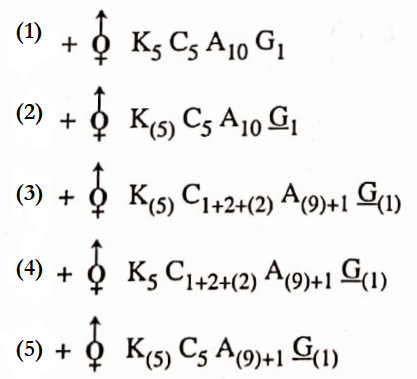
  • Droughts and famines are the immediate consequences of desertification. It also leads to human and animal migrations, and social and Inter-state, conflicts. It is conjectured that in the 21st century, conflicts over water and land will rise sharply.

Degradation Of Agricultural Land Synergism: It is increased toxicity by reactions among primary pollutants. Photochemical smog and London smog (or sulphurous smog) are examples of synergism.

NEET Environmental Issues Notes

Degradation Of Agricultural Land Tobacco Smoke. Tobacco smoke contains at least seven polycyclic hydrocarbons and CO radioactive polonium 210. Both are carcinogens.

  • An average smoker has the risk of developing and dying from lung cancer ten times more than a non-smoker.
  • The risk of lung disease is six times that of heart disease of an average smoker as compared to a non-smoker.
  • BOD is measured by placing a sample of water containing a known amount of oxygen for five days at 20°C in the dusk. After five days, the oxygen content is measured. A high Biological Oxygen Demand (BOD) indicates a high level of microbial pollution.

NEET Biology Environmental Issues Synopsis

The Environment Protection Act 1986, The Insecticide Act, 1968, The Water (Prevention and Control of Pollution) Act, 1974, and The Air (Prevention and Control of Pollution) Act 1981 are concerned with the protection of air, water and soil.

  • The increased amounts of greenhouse gases in the atmosphere are affecting the global climate and this phenomenon is called global change.
  • Greenhouse gases are resulting in global warming.
  • Radioactive substances are another source of air.
  • water and soil pollution. High doses of radiation are fatal.
  • High-intensity sound or noise generated by industrial establishments, defence materials and practices, air travel, automobiles and domestic appliances affect human well-being and communication.

Zone-wise Permissible Ambient Noise Levels

Environmental Pollution And Global Environmental Issues Zone Wise Permissiible Ambient Noise Levels

  • Major issues of global environmental change are global warming and stratospheric ozone depletion.
  • Naturally occurring greenhouse gases like carbon dioxide, methane and N2O in the atmosphere absorb longwave radiations and help maintain the average temperature of Earth around 15°C.
  • The increase in concentrations of greenhouse gases is causing enhanced greenhouse effect, increased global temperature, sea level rise, and change in rainfall patterns etc.
  • Stratospheric ozone plays a vital role by protecting living organisms from the harmful effects of ultraviolet radiation.
  • Ozone hole refers to the thinning of the stratospheric ozone layer during spring.
  • The ozone hole was discovered over Antarctica, but it also occurs over the Arctic region.
  • Man-made chemicals like CFCs are the major cause of ozone depletion.

Differences Between Point And Non-Point Sources Of Water Pollution

Environmental Pollution And Global Environmental Issues Differences Between Point And Non Point Sources Of Water Pollution

The largest source of air pollution in big cities is auto-mobiles.

  • Some of the harmful trace metals are antimony, arsenic, beryllium, cadmium, germanium, lead, mercury, nickel, selenium, vanadium and yttrium.
  • Ozone Day is observed on 16th September.
  • The ozone hole is most prominent in Australia.
  • Ozone, PAN (Peroxy acyl nitrate), HNO3, and H2SO4 are secondary pollutants. Ozone is one gas that is harmful as well as useful for human beings.
  • Lead is released during the burning of petroleum.
  • Lead is absorbed by the body and inhibits haemoglobin formation.
  • Lead also causes deterioration of the central nervous system.
  • In Delhi and Kolkata, pollution is due to automobiles and fire.
  • In Mumbai, the main source of pollution is industries. DDT is a chlorinated hydrocarbon and shows biomagnification.
  • In India, the concentration of DDT in the fat tissue of people is 18-31 ppm.
  • According to the reports of the World Resources Institute (an international research organization), almost four million children die each year due to respiratory infections acquired due to pollution,
  • Freon gas (a chlorolluoro compound) used in aerosol sprays and jet propulsion is responsible for the depletion of the ozone layer.
  • SO2 emitted from the Mathura refinery is supposed to damage the marble of the Taj Mahal as it converts CaCO3 (marble) into unstable calcium sulphate.

Environmental Pollution And Global Environmental Issues Environmental Pollution

Environment Pollution Case Study:

Controlling Vehicular Traffic – Use of CNG

  • Euro 2 norms = Bharat 2
  • Euro 3 norms from April 1, 2005
  • Euro 4 Norms from April 1, 2010

Integrated Wastewater Treatment

  • Conventional sedimentation, filtering and chlorine treatment.
  • Growing/Algae, Fungi, Bacteria in Marshland
  • Remedy for Plastic Waste. Formation of polyblend and use in roads,
  • Organic farming – Beekeeping, dairy management, water harvesting, composting and agriculture

People Participation In Conservation Of Forests – Chipko Movement, Joint Forest Management

  • CPCP – Central Pollution Control Board
  • SPM – Suspended Particulate Matter
  • CNG – Compressed Natural Gas
  • CFCs- Chlorofluoro Carbon
  • B- Bel (Unit of Sound)
  • dB- Decibel
  • BOD- Biological Oxygen Demand
  • DO- Dissolved Oxygen
  • FOAM- Friends of the Areata Marsh
  • ppm- parts per million
  • ppb- parts per billion
  • e-waste- electronic waste
  • DB- Dobson unit
  • ODS- Ozone-depleting substance

Water Pollution Sources And Control Measures NEET

Smog – Smoke + Fog classical smog (London smog) Los Angeles smog (Photo-chemical)

Acid Rains NO2 + SO2 + Water

Ozone depletion

Global warming: Temp of the earth has increased by 0. 6°C doing the last century

  • Environment (Protection) Act 1986
  • Air (Prevention and Control of Pollution) Act 1981 amended in 1983
  • Water (Prevention and Control of Pollution) Act 1974.

Green House Gases

  • CO2 = 60%
  • Methane = 20%
  • CFCs = 14%
  • N2O = 6%

NEET Biology Environmental Issues Questions From Competitive Examinations

Question 1. Depleting of ozone umbrella is due to:

  1. CFCs
  2. PAN
  3. CO2
  4. Coal burning.

Answer: 1. CFCs

Question 2. The American aquatic weed, which had become a trouble in India is?

  1. Dolicus
  2. Hibiscus
  3. Eicchhomia
  4. Hispinosa.

Answer: 3. Eicchhomia

Question 3. Which of the following causes the greenhouse effect?

  1. Oxygen and hydrogen
  2. Carbon dioxide and nitrogen
  3. CO2 and chlorohydrocarbons
  4. Nitrogen and sulphur dioxide.

Answer: 3. CO2 and chlorohydrocarbons

Question 4. NEERI is:

  1. National Environmental Engineering Research Institute
  2. National Ecological and Environment Research Institute
  3. National Eugenics and Ecological Research Institute
  4. National Ethological and Ecological Research Institute.

Answer: 1. National Environmental Engineering Research Institute

Question 5. As it passes into the food chain, the concentration of DDT:

  1. Remains same
  2. Decreases
  3. Increases
  4. Unpredictable.

Answer: 3. Increases

Question 6. Carbon monoxide kills because it destroys:

  1. Haemoglobin
  2. Phytochrome
  3. Cytochrome
  4. Both 1 and 2

Answer: 1. Haemoglobin

Question 7. DDT concentration recorded in the human body has been:

  1. 0.3 – 0.7 ppm
  2. 1.3 – 3.1 ppm
  3. 13 – 13 ppm
  4. 30 – 70 ppm.

Answer: 3. 13 – 13 ppm

Question 8. Lead is considered mainly:

  1. Soil pollutant
  2. Water pollutant
  3. Air pollutant
  4. Noise pollutant.

Answer: 3. Air pollutant

NEET Environmental Issues Notes

Question 9. Which one of the following is not a pollutant?

  1. CO2
  2. CO
  3. SO2
  4. NO2

Answer: 1. CO2

Question 10. A person has an impaired nervous system and signs of madness due to continued intake of metal-contaminated water. The metal is:

  1. Lead
  2. Calcium
  3. Manganese
  4. Mercury.

Answer: 1. Lead

Question 11. What is the intensity of sound in normal conversation?

  1. 10 – 20 decibels
  2. 30 – 60 decibel
  3. 70-90 decibel
  4. 120- 150 decibels.

Answer: 2. 30 – 60 decibel

Question 12. The reason for lung cancer is:

  1. Coal mining
  2. Calcium fluoride
  3. Cement factory
  4. Bauxite mining.

Answer: 3. Cement factory

Question 13. The result of the Ozone hole is:

  1. Global Warming
  2. Acid rain
  3. Greenhouse effect
  4. The UV radiations reach the earth.

Answer: 4. The UV radiations reach the earth

Question 14. Ozone hole means:

  1. Hole in the stratosphere
  2. The same concentration of ozone
  3. Decrease in concentration of ozone
  4. Increase in the concentration of ozone.

Answer: 3. Decrease in concentration of ozone

Question 15. Ganga Action plan was started in:

  1. 1947
  2. 1956
  3. 1982
  4. 1985.

Answer: 4. 1985.

Question 16. Fluoride pollution mainly affects:

  1. Kidney
  2. Heart
  3. Brain
  4. Teeth.

Answer: 4. Teeth.

Question 17. E. coli is used as an indicator organism to determine the pollution of water with:

  1. Pollen of aquatic plants
  2. Heavy metals
  3. Faecal matter
  4. Industrial effluents.

Answer: 3. Faecal matter

Question 18. BOD is a measure of:

  1. Amount of oxygen needed by green plants during the night
  2. Industrial wastes poured into water bodies
  3. Amount of co inseparably combined with haemoglobin
  4. The extent to which water is polluted with organic compounds.

Answer: 4. Extent to which water is polluted with organic compounds.

Question 19. The frequent occurrence of water blooms in a lake indicates which of the following?

  1. Deficiency of nutrients
  2. Deficiency of oxygen
  3. Excessive availability of nutrients
  4. Absence of herbivores in the lake.

Answer: 3. Excessive availability of nutrients

Question 20. A range of loudness of sound of 70-90 decibels is rated as:

  1. Very loud
  2. Painful
  3. Quiet
  4. Uncomfortable.

Answer: 4. Uncomfortable.

Question 21. SO2 pollution affects:

  1. Nucleus
  2. Mitochondria
  3. Ribosomes
  4. Vacuole.

Answer: 2. Mitochondria

Question 22. The Chornobyl nuclear tragedy occurred on which date?

  1. 9th August 1943
  2. 9th August 1945
  3. April 1986
  4. 3rd December 1984.

Answer: 3. April 1986

Question 23. Expand BOD:

  1. Biological oxygen demand
  2. Biosynthetic oxygen demand
  3. Biogeochemical oxygen destroyer
  4. Biogeochemical oxygen dimension.

Answer: 1. Biological oxygen demand

NEET Environmental Issues Notes

Question 24. The term ‘Bio-magnification’ refers to the:

  1. Growth of organisms due to food consumption
  2. Increase in population size
  3. Blowing up of environmental issues by man
  4. Increase in cone, of non-degradable pollutants as they pass through the food chain.

Answer: 4. Increase in a cone, of non-degradable pollutants as they pass through the food chain.

Question 25. This acts as a bioindicator of air pollution:

  1. Alga
  2. Lichen
  3. Pinus
  4. Mustard
  5. Fern.

Answer: 2. Lichen

Question 26. In 1984, the Bhopal gas tragedy took place because methyl isocyanate:

  1. Reacted with ammonia
  2. Reacted with CO2
  3. Reacted with water
  4. Reacted with DDT.

Answer: 3. Reacted with water

Question 27. Lead cone, in blood is considered alarming if it is:

  1. 30 μg/100 ml
  2. 4-6 μg/100 ml
  3. 10 μg/100 ml
  4. 20 μg/100 ml.

Answer: 2. 4-6 μg/100 ml

Question 28. Blood analysis of a patient reveals a usually high quantity of carboxyhemoglobin content. Which of the following conclusions is most likely to be correct? The patient has been inhaling polluted air containing unusually high content of:

  1. Chloroform
  2. Carbon dioxide
  3. Carbon monoxide
  4. Carbon disulphide.

Answer: 3. Carbon monoxide

Question 29. Escherichia coli is used as an indicator organism to determine pollution of water with:

  1. Industrial effluents
  2. Pollen of aquatic plants
  3. Heavy metals
  4. Faecal matter.

Answer: 4. Faecal matter.

Question 30. Which of the following is considered most effective in developing roads:

  1. Bitumen and plastic
  2. Plastic and polyblend
  3. Bitumen and polyblend
  4. Bitumen and recycled e-waste.

Answer: 3. Bitumen and polyblend

Question 31. Pollution of SO2 destroys:

  1. Lichen
  2. Fungi
  3. Algae
  4. Fishes.

Answer: 1. Lichen

Question 32. A lake with an inflow of domestic sewage rich in organic waste may result in:

  1. Death of fish due to lack of oxygen
  2. Death of lake very soon due to algal bloom
  3. Increased production of fish due to a lot of nutrients
  4. Increased population of aquatic web organisms.

Answer: 1. Death of fish due to lack of oxygen

NEET Environmental Issues Notes

Question 33. Nitrogen oxides produced from the emission of automobiles and power plants are the sources of fine airborne particles which lead to:

  1. Industrial smog
  2. Diy acid deposition
  3. Wet acid deposition
  4. Photochemical smog.

Answer: 4. Photochemical smog.

Water Pollution Sources And Control Measures NEET

Question 34. The noise produced in the office is normally at the level of:

  1. 20 db
  2. 30 db
  3. 40 db
  4. 60 db.

Answer: 4. 60 db.

Question 35. Photosynthetic Active Radiation (PAR) has the following range of wavelengths:

  1. 400 – 700 nm
  2. 450 – 950 nm
  3. 340 – 450 nm
  4. 500 – 600 nm.

Answer: 1. 400 – 700 nm

Question 36. Which of the following is not used for disinfection of drinking water?

  1. Phenyl
  2. Chloramine
  3. Chlorine
  4. Ozone.

Answer: 2. Chloramine

Question 37. Which one of the following pairs is mismatched?

  1. Biomass burning – release of CO2
  2. Fossil fuel burning – release of CO2
  3. Nuclear power  – radioactive wastes
  4. Solar energy – the greenhouse effect.

Answer: 4. Solar energy – the greenhouse effect.

Question 38. Identify the correctly matched pair

  1. Kyoto Protocol — Climatic change
  2. Montreal Protocol — Global warming
  3. Ramsar Convention — Groundwater pollution
  4. Basal Convention — Biodiversity conservation.

Answer: 1. Kyoto Protocol — Climatic change

Question 39. Formation of non-functional methaemoglobin causes blue-baby syndrome. This is due to:

  1. Deficiency of iron in food
  2. Excess of nitrates in drinking water
  3. Increased methane content in the atmosphere.
  4. Excess of arsenic concentration in the drinking water.

Answer: 2. Excess of nitrates in drinking water

Solid Waste Management Strategies NEET Study Material

Question 40. Which one of the following statements pertaining to pollutants is correct?

  1. DDT is a non-biodegradable pollutant
  2. Excess fluoride in drinking water causes osteoporosis
  3. Excess cadmium in drinking water causes black foot disease
  4. Methylmercury in water may cause “Itai-itai” disease.

Answer: 1. DDT is a non-biodegradable pollutant

Question 41. Match the following and choose the correct combination from the options given:

Environmental Pollution And Global Environmental Issues Match The Column Question 41

  1. 1 = D, 2 = C, 3 = B, 4 = A
  2. 1 = A, 2 = C, 3 = B, 4 = D
  3. 1 = C, 2 = C, 3 = D, 4 = A
  4. 1 = C, 2 = B, 3 = A, 4 = A
  5. 1 = C, 2 = D, 3 = A, 4 = B.

Answer: 4. 1 = C, 2 = D, 3 = A, 4 = B.

Question 42. Examples of regional pollution are:

  1. Acid rain
  2. Smog
  3. Both (1) and (2)
  4. None of these.

Answer: 3. Both (1) and (2)

Question 43. The greenhouse effect is due to:

  1. CFC + N2
  2. CFC + CO
  3. CFC + O2
  4. CFC + CO2

Answer: 4. CFC + CO2

Question 44. Due to industrialization since 1940 how much per cent of CO2 is increased in the environment?

  1. 10%
  2. 5%
  3. 20%
  4. 15%.

Answer: 1. 10%

Question 45. The greenhouse effect is the cumulative result of the influences of certain gases. Identify the gas which is not involved in this influence:

  1. Methane
  2. Nitrogen
  3. Carbon dioxide
  4. Chlorofluorocarbon.

Answer: 2. Nitrogen

Question 46. Montreal Protocol which calls for appropriate action to protect the ozone layer from human activities passed in the year:

  1. 1985
  2. 1986
  3. 1988
  4. 1987.

Answer: 4. 1987.

Question 47. The limit of BOD prescribed by the Central Pollution Control Board for the discharge of industrial and municipal wastewater into natural surface waters is:

  1. < 100 ppm
  2. < 30 ppm
  3. < 10 ppm
  4. < 3.0 ppm.

Answer: 2. < 30 ppm

Question 48. Photochemical smog pollution does not contain:

  1. Carbon dioxide
  2. PAN (peroxy acyl nitrate)
  3. Ozone
  4. Nitrogen dioxide.

Answer: 1. Carbon dioxide

Biology Handwritten Notes For NEET

Question 49. Which of the following strategies is not a correct approach to reduce global warming?

  1. Reducing greenhouse gas emissions by limiting the use of fossil fuels
  2. Increase the vegetation cover particularly the forest for photosynthetic utilization of CO2
  3. Minimizing the use of nitrogen “fertilizers in agriculture for reducing N2Oemission
  4. Increasing the use of air conditioners, refrigeration units and production of plastic foams and propellants in aerosol spray cans.
  5. Developing substitutes for chlorofluorocarbons.

Answer: 4. Developing substitutes for chlorofluorocarbons.

Question 50. Match the following items in column A with column B and choose the correct answer.

Environmental Pollution And Global Environmental Issues Match The Column Question 50

  1. 1 – B, 2 – C, 3 – E, 4 – A, 5 – D
  2. 1 – E, 2 – C, 3 – A, 4 – B, 5 – D
  3. 1 – C, 2 – C, 3 – E, 4 – A, 5 – B
  4. 1 – E, 2 – D, 3 – C, 4 – B, 5 – A
  5. 1 – B, 2 – E, 3 – D, 4 – C, 5 – A

Answer: 3. 1 – C, 2 – C, 3 – E, 4 – A, 5 – B

Question 51. Pollution from animal excreta and organic waste from the kitchen can be most profitably minimized by:

  1. Storing them in underground storage tanks
  2. Using them for producing biogas
  3. Vermiculture
  4. Using them directly as biofertilizers.

Answer: 2. Using them for producing biogas

Question 52. The Montreal Protocol refers to:

  1. Persistent organic pollutants
  2. Global wasting acid climate change
  3. Substances that deplete the ozone layer
  4. Biosafety of genetically modified organisms.

Answer: 3. Substances that deplete the ozone layer

Question 53. Which one of the following is an environment-related disorder with the correct main cause?

  1. Black lung disease (pneumoconiosis) found mainly in workers in stone quarries and crushers
  2. Blue baby disease (methaemoglobinaemia) due to heavy use of nitrogenous fertilizers in the area
  3. Non-Hodgkin’s Lymphoma is found mainly in workers involved in the manufacture of neem-based pesticides
  4. Skin cancer is mainly in people exposed to benzene and methane.

Answer: 1. Black lung disease (pneumoconiosis) is found mainly in workers in stone quarries and crushers

Question 54. In which one of the following the BOD (Biochemical Oxygen Demand) of sewage (S), distillery effluent (DE), paper mill effluent (PE) and sugar mill effluent (SE) have been arranged in ascending order?

  1. SE < PE < S < DE
  2. PE < S < SE < DE
  3. S < DE < PE < SE
  4. SE < S < PE < DE.

Answer: 2. PE < S < SE < DE

Question 55. In a coal-fired power plant, electrostatic precipitators are installed to control the emission of:

  1. NOX
  2. SPM
  3. CO
  4. SO2

Answer: 2. SPM

Question 56. Ultrasound of how much frequency is beamed into the human body for sonography?

  1. 15-30 MHz
  2. 1-15 MHz
  3. 45-70 MHz
  4. 30-45 MHz.

Answer: 2. 1-15 MHz

Question 57. Which one of the following is not a bioindicator of water pollution?

  1. Blood-worms
  2. Stone flics
  3. Sewage fungus
  4. Sludge-worms.

Answer: 2. Stone flics

Question 58. An increase of BOD in water leads to:

  1. Increase in the dissolved O2 concentration
  2. Increase in the dissolved  O2 concentration
  3. Maintenance of dissolved O2 concentration at the same level
  4. No effect on dissolved O2 concentration.

Answer: 2. Increase in the dissolved O2 concentration

Question 59. Freon gas causing stratospheric O2 depletion is mainly released from:

  1. Refrigerator
  2. Automobile
  3. Thermal Power Plant
  4. Steel Industry.

Answer: 1. Refrigerator

Biology Handwritten Notes For NEET

Question 60. Mercury pollution causes

  1. Black foot disease
  2. Itai-itai disease
  3. Blue-baby syndrome
  4. Minamata disease
  5. Skeletal fluorosis.

Answer: 4. Skeletal fluorosis.

Question 61. Which one of the following is the correct percentage of the two (out of the total of 4) greenhouse gases that contribute to the total global warming?

  1. N2O6%,CO286%
  2. CO240%,CFCs30%
  3. Methane 20%, N2O18%
  4. CFCs 14% methane 20%.

Answer: 4. CFCs 14% methane 20%.

Question 62. A lake near a village suffered heavy mortality of Fish within a few days. Consider the following reasons for this:

  1. Lots of urea and phosphate fertilizers were used in the crops in the vicinity.
  2. The area was sprayed with DDT by an aircraft
  3. The lake was turned green and stinky.
  4. Phytoplankton populations in the lake declined initially thereby greatly reducing photosynthesis.
  1. 1 and 2
  2. 2 and 3
  3. 3 and 4
  4. 1 and 3.

Answer: 2. 2 and 3

Question 63. Which one of the following pairs of gases is the major cause of the “Greenhouse effect”?

  1. CO2 and O3
  2. CO2 and CO
  3. CFCs and SO2
  4. CO2 and N2O

Answer: 4. CO2 and N2O

Question 64. Eutrophication is often seen in:

  1. Deserts
  2. Freshwater lakes
  3. Ocean
  4. Mountains.

Answer: 2. Freshwater lakes

Question 65. Which one of the following statements is wrong in the case of the Bhopal tragedy?

  1. Methyl Isocyanate gas leakage took place
  2. Thousands of human beings died
  3. Radioactive fallout engulfed Bhopal

Answer: 3. Radioactive fallout engulfed Bhopal

Question 66. In an area where DDT had been used extensively, the population of birds declined significantly because:

  1. Earthworms in the area were eradicated
  2. Cobras were feeding exclusively on birds
  3. Many of the bird’s eggs laid did not hatch
  4. Birds stopped laying eggs.

Answer: 3. Many of the bird’s eggs laid did not hatch

Question 67. The Kyoto Protocol was endorsed at:

  1. CoP – 5
  2. CoP – 6
  3. CoP – 4
  4. CoP – 3.

Answer: 4. CoP – 3.

Question 68. Autecology is the:

  1. Relation of a population to its environment
  2. Relation of an individual to its environment
  3. Relation of a community to its environment
  4. Relation of a biome to its environment.

Answer: 2. Relation of an individual to its environment

Question 69. Ecotone is:

  1. A polluted area
  2. The bottom of a lake
  3. A zone of transition between two communities
  4. A zone of developing community.

Answer: 3. A zone of transition between two communities

Biology Handwritten Notes For NEET

Question 70. Biosphere is:

  1. A component of the ecosystem
  2. Composed of the plants present in the soil
  3. Life in outer space
  4. Composed of all living organisms present on Earth which interact with the physical environment.

Answer: 4. Composed of all living organisms present on earth which interact with the physical environment.

Question 71. The ecological niche is:

  1. The surface area of the ocean
  2. An ecologically adapted zone
  3. The physical position and functional role of a species within the community
  4. Formed of all plants and animals living at the bottom of a lake.

Answer: 3. The physical position and functional role of a species within the community

Question 72. According to Allen’s Rule, the mammals from colder climates have:

  1. Shorter ears and longer limbs
  2. Longer ears and shorter limbs
  3. Longer ears and longer limbs
  4. Shorter ears and shorter limbs.

Answer: 4. Shorter ears and shorter limbs.

Question 73. Salt concentration (Salinity) of the sea measured in parts per thousand is:

  1. 10-15
  2. 30-70
  3. 0-5
  4. 30-35.

Answer: 4. 30-35.

Question 74. Formation of tropical forests needs mean annual temperature and mean annual precipitation as:

  1. 18 – 25°C and 150 – 400 cm
  2. 5 – 15°C and 50 – 100 cm
  3. 30 – 50°C and 100 – 150 cm
  4. 5 – 15°C and 100 – 200 cm.

Answer: 1. 18 – 25°C and 150 – 400 cm

Question 75. Which of the following forest plants controls the light conditions at the ground?

  1. Lianas and climbers
  2. Shrubs
  3. Tall trees
  4. Herbs.

Answer: 3. Tall trees

Question 76. What will happen to a well-growing herbaceous plant in the forest if it is transplanted outside the forest in a park?

  1. It will grow normally
  2. It will grow well because it is planted in the same locality
  3. It may not survive because of changes in its microclimate
  4. It grows very well because the plant gets more sunlight.

Answer: 3. It may not survive because of changes in its microclimate

Question 77. If a population of 50 Paramoecium present in a pool increases to 150 after an hour, what would be the growth rate of the population?

  1. 50 per hour
  2. 200 per hour
  3. 5 per hour
  4. 100 per hour.

Answer: 4. 100 per hour

Question 78. What would be the per cent growth or birth rate per individual per hour for the same population?

  1. 100
  2. 200
  3. 50
  4. 150.

Answer: 2. 200

Question 79. A population has more young individuals compared to older individuals. What would be the status of the population after some years?

  1. It will decline
  2. It will stabilise
  3. It will increase
  4. It will first decline and then stabilise.

Answer: 3. It will increase

Question 80. What parameters are used for tiger census in our country’s national parks and sanctuaries?

  1. Pug marks only
  2. Pug marks and faecal pellets
  3. Faecal pellets only
  4. Actual head counts.

Answer: 2. Pug marks and faecal pellets

Question 81. Which of the following would necessarily decrease the density of a population in a given habitat?

  1. Natality > mortality
  2. Immigration > emigration
  3. Mortality and emigration
  4. Natality and immigration.

Answer: 3. Mortality and emigration

Question 82. A protozoan reproduces by binary fission. What will be the number of protozoans in its population after six generations?

  1. 128
  2. 24
  3. 64
  4. 32.

Answer: 3. 64

Question 83. In 2005, for each of the 14 million people present in a country, 0.028 were born and 0.008 died during the year. Using the exponential equation, the number of people present in 2015 is predicted as:

  1. 25 million
  2. 17 million
  3. 20 million
  4. 18 million.

Answer: 2. 17 million

NEET Environmental Issues Notes

Question 84. Amensalism is an association between two species where:

  1. One species is harmed and another is benefited
  2. One species is harmed and the other is unaffected
  3. One species is benefited and the other is unaffected
  4. Both species are harmed.

Answer: 2. One species is harmed and the other is unaffected

Question 85. Lichens are the associations of:

  1. Bacteria and fungus
  2. Algae and bacterium
  3. Fungus and algae
  4. Fungus and virus.

Answer: 3. Fungus and algae

Question 86. Which of the following is a partial root parasite?

  1. Sandalwood
  2. Mistletoe
  3. Orobanche
  4. Ganoderma.

Answer: 2. Mistletoe

Question 87. Which one of the following organisms reproduces sexually only once in its lifetime?

  1. Banana plant
  2. Mango
  3. Tomato
  4. Eucalyptus.

Answer: 4. Eucalyptus.

Question 88. Decomposers like fungi and bacteria are:

  1. Autotrophs
  2. Heterotrophs
  3. Saprotrophs
  4. Chemo-autotrophs

Choose the correct answer

  1. 1 and 3,
  2. 1 and 4
  3. 2 and 3
  4. 1 and 2

Answer: 3. 2 and 3

Question 89. The process of mineralisation by microorganisms helps in the release of:

  1. Inorganic nutrients from humus
  2. Both organic and inorganic nutrients from detritus
  3. Organic nutrients from humus
  4. Inorganic nutrients from detritus and the formation of humus.

Answer: 1. Inorganic nutrients from humus

Question 90. Productivity is the rate of production of biomass expressed in terms of:

  1. (kcal m-3) yr-1
  2. g-2 yr-1
  3. g-1 yr-1
  4. kcal m-2 yr-1
  1. 2,
  2. 3,
  3. 2 and 4
  4. 1 and 3.

Answer: 3. 2 and 4

Environmental Issues NEET Notes

Question 91. An inverted pyramid of biomass can be found in which ecosystem?

  1. Forest
  2. Marine
  3. Grassland
  4. Tundra.

Answer: 2. Marine

Question 92. Which of the following is not a producer?

  1. Spirogyra
  2. Agaricus
  3. Volvox
  4. Nostoc.

Answer: 2. Agaricus

Question 93. Which of the following ecosystems is most productive in terms of net primary production?

  1. Deserts
  2. Tropical rain forests
  3. Oceans
  4. Estuaries.

Answer: 2. Tropical rainforests

Question 94. The pyramid of numbers is

  1. Always upright
  2. Always inverted
  3. Ether upright or inverted
  4. Neither upright nor inverted.

Answer: 3. Ether upright or inverted

Question 95. Approximately how much of the solar energy that falls on the leaves of a plant is converted to chemical energy by photosynthesis?

  1. Less than 1%
  2. 2 – 10%
  3. 30%
  4. 50%.

Answer: 2. 2 – 10%

Question 96. Among the following, where do you think the process of decomposition would be the fastest?

  1. Tropical rain forest
  2. Antarctic
  3. Dry arid region
  4. Alpine region.

Answer: 1. Tropical rainforest

Question 97. How much of the net primary productivity of a terrestrial ecosystem is eaten and digested by herbivores?

  1. 1%
  2. 10%
  3. 40%
  4. 90%.

Answer: 2. 10%

Question 98. During the process of ecological succession, the changes that take place in communities are:

  1. Orderly and sequential
  2. Random
  3. Very quick.
  4. Not influenced by the physical environment

Answer: 1. Orderly and sequential

Question 99. Climax community is in a state of:

  1. Non-equilibrium
  2. Equilibrium
  3. Disorder
  4. Constant change.

Answer: 2. Equilibrium

Question 100. Among the following biogeochemical cycles which one does not have losses due to respiration?

  1. Phosphorus
  2. Nitrogen
  3. Sulphur
  4. All of the above.

Answer: 4. All of the above.

NEET Environmental Issues Notes

Question 101. The sequence of communities of primary succession in water is:

  1. Phytoplankton, Sedges, Free-Floating Hydrophytes, Rooted Hydrophytes, Grasses And Trees.
  2. Phytoplankton, Free-Floating Hydrophytes, Rooted Hydrophytes, Sedges, Grasses And Trees.
  3. Free-floating hydrophytes, Sedges, Phytoplankton, Rooted Hydrophytes, Grasses And Trees.
  4. Phytoplankton, Rooted Submerged Hydrophytes, Floating Hydrophytes, Reed Swamp, Sedges, Meadow And Trees.

Answer: 4. Phytoplankton, Rooted Submerged Hydrophytes, Floating Hydrophytes, Reed Swamp, Sedges, Meadow And Trees.

Question 102. The reservoir for the gaseous type of bio-geochemical cycle exists in

  1. Stratosphere
  2. Atmosphere
  3. Ionosphere
  4. Lithosphere.

Answer: 2. Atmosphere

Question 103. If the carbon atoms fixed by producers already have passed through three species, the trophic level of the last species would be.

  1. Scavenger
  2. Tertiary producer
  3. Tertiary consumer
  4. Secondary consumer.

Answer: 3. Tertiary consumer

Question 104. Which of the following types of ecosystem is expected in an area where evaporation exceeds precipitation, and mean annual rainfall is below 100mm?

  1. Grassland
  2. Shrubby forest
  3. Desert
  4. Mangrove.

Answer: 3. Desert

Question 105. The zone at the edge of a lake or ocean which is alternatively exposed to air and immersed in water is called:

  1. Pelagic zone
  2. Benthic zone
  3. Lentic one
  4. Littoral zone.

Answer: 4. Littoral zone.

Question 106. Edaphic factor refers to:

  1. Water
  2. Soil
  3. Relative humidity
  4. Altitude.

Answer: 2. Soil

Question 107. Which of the following is an ecosystem service provided by a natural ecosystem?

  1. Cycling of nutrients
  2. Prevention of soil erosion
  3. Pollutant absorption and reduction of the threat of global warming
  4. All of the above.

Answer: 4. All of the above.

Question 108. Which of the following countries has the highest biodiversity?

  1. Brazil
  2. South Africa
  3. Russia
  4. India.

Answer: 1. Brazil

Question 109. Which of the following is not a cause for the loss of biodiversity?

  1. Destruction of habitat
  2. Invasion by alien species
  3. Keeping animals in zoological parks
  4. Over-exploitation of natural resources.

Answer: 3. Keeping animals in zoological parks

Question 110. Which of the following is not an invasive alien species in the Indian context?

  1. Lantana
  2. Cynodon
  3. Parthenium
  4. Eichhornia.

Answer: 2. Cynodon

NEET Environmental Issues Notes

Question 111. Where among the following will you find pitcher plants?

  1. Rain forest of North-East India
  2. Sunderbans
  3. Thar Desert
  4. Western Ghats.

Answer: 1. Rain forest of North-East India

Question 112. Which one of the following is not a major characteristic feature of biodiversity hotspots?

  1. A large number of species
  2. Abundance of endemic species
  3. A large number of exotic species
  4. Destruction of habitat.

Answer: 4. Destruction of habitat.

Question 113. Match the animals given in column A with their location in column B:

Environmental Pollution And Global Environmental Issues Match The Column Question 46

Choose the correct match from the following:

  1. 1-A, 2-C, 3-B, 4-D
  2. 1-D, 2-C, 3-A, 4-B
  3. 1-C, 2-A, 3-B, 4-D
  4. 1-C, 2-A, 3-D, 4-B.

Answer: 4. 1-C, 2-A, 3-D, 4-B.

Question 114. What is common to the following plants: Nepenthes, Psilotum, Ramvolfia and Aconitum?

  1. All are ornamental plants
  2. All are phylogenic link species
  3. All are prone to over-exploitation
  4. All are exclusively present in the Eastern Himalayas.

Answer: 3. All are prone to over-exploitation

Question 115. The one-homed rhinoceros is specific to which of the following sanctuaries?

  1. Bhitar Kanika
  2. Bandipur
  3. Kaziranga
  4. Corbett park.

Answer: 3. Kaziranga

Question 116. Amongst the animal groups given below, which one has the highest percentage of endangered species?

  1. Insects
  2. Mammals
  3. Amphibians
  4. Reptiles.

Answer: 3. Amphibians

Question 117. Which one of the following is an endangered plant species of India?

  1. Rauwolfia serpentina
  2. Santalwn album (Sandalwood)
  3. Cycas be done
  4. All of the above.

Answer: 4. All of the above.

Question 118. Non-biodegradable pollutants are created by:

  1. Nature
  2. Excessive Use Of Resources
  3. Humans
  4. Natural Disasters.

Answer: 3. Humans

Question 119. According to the Central Pollution Control Board, particles that are responsible for causing great harm to human health are of diameter:

  1. 2.50 micrometres
  2. 5.00 micrometres
  3. 10.00 micrometres
  4. 7.5 micrometres.

Answer: 1. 2.50 micrometres

Question 120. The material generally used for soundproofing of rooms like a recording studio and auditoriums, etc. is:

  1. Cotton
  2. Coir
  3. Wood
  4. Styro Foam.

Answer: 4. Styro Foam.

Question 121. Compressed Natural Gas (CNG) is:

  1. Propane
  2. Methane
  3. Ethane
  4. Butane.

Answer: 2. Methane

Question 122. The world’s most problematic aquatic weed is:

  1. Azolla
  2. Woljjia
  3. Economia
  4. Trapa.

Answer: 3. Eichomia

Question 123. Which of the following causes biomagnification?

  1. SO2
  2. Mercury
  3. DDT
  4. Both 2 and 3

Answer: 4. Both 2 and 3

NEET Environmental Issues Notes

Question 124. The expanded form of DDT is:

  1. Dichloro Diphenyl Trichloroethane
  2. Dichloro Diethyl Trichloroethane
  3. Dichloro Dipyrydyl Trichloroethane
  4. Dichloro Diphenyl Tetrachloroacetate.

Answer: 1. Dichloro Diphenyl Trichloroethane

Question 125. Which of the following materials takes the longest time for biodegradation?

  1. Cotton
  2. Paper
  3. Bone
  4. Jute.

Answer: 3. Bone

Question 126. Choose the incorrect statement.

  1. The Montreal Protocol is associated with the control of the emission of ozone-depleting substances
  2. Methane and carbon dioxide are greenhouse gases
  3. Dobson units are used to measure oxygen content
  4. The use of incinerators is crucial to the disposal of hospital waste.

Answer: 3. Dobson units are used to measure oxygen content

Question 127. Among the following which one causes more indoor chemical pollution?

  1. Burning coal
  2. Burning cooking gas
  3. Burning mosquito coil
  4. Room spray.

Answer: 3. Burning mosquito coil

NEET Biology Multiple Choice Questions – Principles And Processes Of Biotechnology

NEET Biology Principles And Process Of Biotechnology Multiple Choice Questions

Question 1. Clonal cell lines can be obtained by

  1. Autoradiography
  2. Tissue culture
  3. Centrifugation
  4. Cell fractionation.

Answer: 2. Tissue culture

Question 2. Which is the non-invasive technique of genetic counseling?

  1. Amniocentesis
  2. Chorionic biopsy
  3. Fetal blood sampling
  4. Ultrasonography

Answer: 4. Ultrasonography

Question 3. Who among the following discovered the enzyme restriction endonuclease?

  1. Hamilton Othanel Smith
  2. Sir Godfrey Hounsfield
  3. F. Jacob
  4. Andre Lwoff.

Answer: 1. Hamilton Othanel Smith

NEET Biology MCQs

Question 4. The First hormone artificially produced by culturing bacteria is:

  1. Insulin
  2. Thyroxine
  3. Testosterone
  4. Adrenaline

Answer: 1. Insulin

Read and Learn More NEET Biology Multiple Choice Question and Answers

Question 5. When the number of genes increases in response to some signal, the effect is called:

  1. Gene dosage
  2. Gene pool
  3. Gene amplification
  4. Gene frequency.

Answer: 3. Gene amplification

Question 6. A number of bacteria with recombinant DNA of the same type form:

  1. Clone library
  2. Gene library
  3. Gene pool
  4. Gene frequency.

Answer: 2. Gene library

Question 7. Restriction enzymes may be used for

  1. Making recombinant DNA
  2. Gene mapping
  3. Diagnosis of genetic diseases
  4. All the above.

Answer: 4. All the above.

Question 8. When scientists make an animal superior by view of genotype, introducing some foreign genes in it, the phenomenon is called

  1. Tissue culture
  2. Biotechnology
  3. Genetic engineering
  4. Immunization.

Answer: 3. Genetic engineering

NEET Biology MCQs

Question 9. Many copies of a DNA molecule in a test tube are procured by:

  1. Polymerase chain reaction (PCR)
  2. Molecular chain reaction (MCR)
  3. Ephemeral chain reaction (ECR)
  4. All of them.

Answer: 1. Polymerase chain reaction (PCR)

Question 10. Genetic diagnosis by DNA testing

  1. Detects only mutant and normal alleles.
  2. Can be done only on eggs or sperm.
  3. Involves hybridization to ribosomal RNA.
  4. Utilizes restriction enzymes and a polymorphic site.

Answer: 1. Detects only mutant and normal alleles.

Question 11. DNA can be introduced into any cell by

  1. Injection
  2. Being complexed with calcium salts.
  3. Being placed along with the cell into a gene gun.
  4. Gel electrophoresis.

Answer: 2. Being complexed with calcium salts.

Question 12. Bam HI, Eco RI, and Sma H are the types of

  1. Restriction endooxidascs
  2. Restriction endonucleases
  3. Restriction exonucleases
  4. Restriction polymerases.

Answer: 2. Restriction endonucleases

NEET Biology MCQs

Question 13. The collection of bacteria with gDNA is called

  1. DNA clones
  2. DNA library
  3. Genomic DNA library
  4. DNA library.

Answer: 1. DNA clones

Question 14. Which one of the following pairs is correctly matched?

  1. RNA polymerase – RNA primer
  2. Restriction enzymes-Genetic Engineering
  3. Central Dogma – codon
  4. Okazaki fragments-splicing.

Answer: 2. Restriction enzymes-Genetic Engineering

Question 15. Which one of the following scientists developed the process of DNA fingerprinting?

  1. Kary B. Mullis
  2. T.H. Morgan
  3. H.O. Smith
  4. Alec Jeffreys

Answer: 4. Alec Jeffreys

Question 16. DNA fingerprinting method is very useful for

  1. DNA tests for identity and relationships
  2. Forensic studies
  3. Polymorphism
  4. All of the above.

Answer: 4. All of the above.

Question 17. In DNA fingerprinting

  1. A positive identification can be made
  2. Multiple restriction enzymes digest/generate unique fragments
  3. The polymerase chain reaction amplifies fewer DNA
  4. The variability of repeated sequences between two restriction sites is evaluated.

Answer: 4. The variability of repeated sequences between two restriction sites is evaluated

Question 18. In Northern blotting, RNAs are separated by gel electrophoresis and the RNA bands are transferred onto a membrane of

  1. Diazobenzyl oximetry
  2. Diazobenzene
  3. Diazobromine
  4. None of the above.

Answer: 1. Diazobenzyl oximetry

NEET Biology MCQs

Question 19. In Southern blotting is separated by gel electrophoresis

  1. DNA
  2. m-RNA
  3. t-RNA
  4. Protein.

Answer: 1. DNA

Question 20. Protein engineering is used to study the proteins to compare the catalytic properties of

  1. Normal and mutated form of the enzyme
  2. The normal form of the enzyme
  3. A mutated form of the enzyme
  4. Normal and mutated forms of proteins.

Answer: 1. Normal and mutated form of enzyme

Question 21. Transgenic animals are produced by injecting foreign genes into the

  1. Egg
  2. Nucleus of unfertilized egg
  3. Nucleus of fertilized egg
  4. Nucleus of sperm.

Answer: 3. Nucleus of fertilized egg

Question 22. Western blotting technique was developed by:

  1. Alwin
  2. Edwin
  3. Towbin
  4. Thomas.

Answer: 3. Towbin

Biotechnology MCQs For NEET

Question 23. The process used for separation of protein in polyacrylamide gel is called:

  1. Southern blotting
  2. Northern blotting
  3. Western blotting
  4. Eastern blotting.

Answer: 3. Western blotting

Question 24. What is C-DNA?

  1. Circular DNA
  2. Cloned DNA
  3. DNA produced from reverse transcription of RNA
  4. Cytoplasmic DNA.

Answer: 2. Cloned DNA

Question 25. Which of the following organelles is associated with genetic engineering?

  1. Plastids
  2. Plasmids
  3. Chloroplast
  4. Mitochondria.

Answer: 2. Plasmids

Question 26. The minimum length of cistron in base pairs which synthesizes a polypeptide of 50 amino acids is:

  1. 50 bp
  2. 100 bp
  3. 150 bp
  4. 200 bp

Answer: 3. 150 bp

NEET MCQs On Biotechnology

Question 27. The recent techniques used for separating fragments of DNA is

  1. Northern blotting
  2. Southern blotting
  3. Eastern blotting
  4. Western blotting

Answer: 2. Southern blotting

Question 28. Plasmids are autonomously replicating mini chromosomes found in

  1. Bacteriophage lambda
  2. Leishmania Donovan
  3. Escherichia coli
  4. Paramecium caudatum.

Answer: 3. Escherichia coli

Question 29. Genetic engineering is possible because:

  1. The phenomenon of transduction in bacteria is well-understood
  2. We can see DNA by electron microscope
  3. We can cut DNA at specific sites by endonucleases like DNA asel
  4. Restriction endonucleases purified from bacteria can be used in vitro.

Answer: 4. Restriction endonucleases purified from bacteria can be used in vitro.

Question 30. Restriction endonucleases are

  1. Present in mammalian cells for degradation of DNA when the cell dies
  2. Synthesized by bacteria as part of their defense mechanism
  3. Used for in vitro DNA synthesis
  4. Both (2) and (3).

Answer: 4. Both (2) and (3).

Question 31. In bacteria, genes for antibiotic resistance are usually located in

  1. Chromosomal DNA
  2. Cytoplasm
  3. Mitochondria
  4. Plasmids.

Answer: 4. Plasmids.

NEET MCQs On Biotechnology

Question  32. Which one of the following is related to genetic engineering?

  1. Plasmids
  2. Mitochondria
  3. Mutations
  4. Ribosome

Answer: 1. Plasmids

Question 33. Improvement of the genotype of an organism by the addition of some foreign genes is

  1. Genetic diversity
  2. Gene handling
  3. Tissue culture
  4. Genetic engineering.

Answer: 4. Genetic diversity

Question 34. Two bacteria found to be very useful in genetic engineering experiments are

  1. Nitrosomonas and Klebsiella
  2. Escherichia and Agrobacterium
  3. Nitrobacter and Azotobacter
  4. Rhizobium and Diplococcus.

Answer: 2. Escherichia and Agrobacterium

Question 35. The term hybridoma implies:

  1. DNA-RNA hybrid
  2. Recombination of DNA molecules
  3. Somatic hybridisation
  4. Gametic fusion.

Answer: 3. Somatic hybridization

Question 36. Restriction enzymes are isolated chiefly from

  1. Algae
  2. Fungi
  3. Protozoans
  4. Prokaryotes

Answer: 4. Prokaryotes

Question 37. Which of the following statements is incorrect?

  1. Cosmid contains gene coding for viral protein
  2. Cosmid replicates like plasmids
  3. Cosmid has antibiotic antibiotic-resistant marker gene
  4. Cos site has 12 bases helping to join the complete genome to make it circular.

Answer: 1. Cosmid contains gene coding for viral protein

NEET MCQs On Biotechnology

Question 38. Harris and J.F. Watkins in 1965 first time reported the fusion of following cell lines to form hybrids

  1. Mouse and man
  2. Mouse and hamster
  3. Mouse and chick erythrocytes
  4. Mouse and drosophila

Answer: 1. Mouse and man

Question  39. The genetic recombinants obtained by the insertion of the plasmid into 1 phage genome is called

  1. Cosmid
  2. Phasmid
  3. Phagmid
  4. Foreign DNA.

Answer: 2. Phasmid

Biotechnology Principles and Processes MCQs Question 40. Synthetic DNA or sDNA is

  1. DNA synthesized in the lab without any template
  2. DNA synthesized in the cell without any template
  3. DNA synthesized in the lab. without any nucleotide
  4. DNA is synthesized in the cell without any nucleotide.

Answer: 1. DNA synthesized in the lab without any template

Question 41. A technique used to make numerous copies of a specific segment of DNA quickly and accurately

  1. Ligase chain reaction
  2. Transcription
  3. Polymerase chain reaction
  4. Translation.

Answer: 3. Polymerase chain reaction

Question 42. The human genome contains about:

  1. 10,000 nucleotides
  2. 10,000 genes
  3. 6 billion nucleotides
  4. 6 billion genes

Answer: 3. 6 billion nucleotides

Question 43. A collection of organisms, usually viruses, bacteria, or yeast, which have been transformed by the addition of extra genes from another species

  1. Gene replication
  2. Gene cloning
  3. Gene pool
  4. Gene library.

Answer: 4. Gene library.

Best MCQs For NEET Biology

Question 44. The colony hybridization procedure for the identification of plasmid clones is called

  1. Southern blotting
  2. Grunstcin-Hogncss assay
  3. DNA probes
  4. Molecular assay.

Answer: 2. Grunstcin-Hogncss assay

Question 45. TATAATG sequence near the RNA start point of the prokaryotic promoter is

  1. Nicks
  2. DNA marker
  3. Palindrome
  4. Pribnow box.

Answer: 4. Pribnow box.

Question 46. Which one of the following scientists got the Nobel Prize for his invention of polymerase chain reaction (PCR)?

  1. F. Sanger
  2. Paul Berg
  3. Alec Jeffreys
  4. Kary B. Mullis.

Answer: 4. Kary B. Mullis.

Best MCQs For NEET Biology

Question 47. An artificial process of infecting cells with naked viral DNA is:

  1. Translation
  2. Transduction
  3. Transfection
  4. Transgenic.

Answer: 3. Transfection

Question 48. Producing a ‘giant mouse’ in the laboratory was possible through:

  1. Gene mutation
  2. Gene duplication
  3. Gene synthesis
  4. Gene manipulation.

Answer: 4. Gene manipulation.

Question 49. One of the following is transgenic organisms:

  1. Holly sheep and Flavr savr tomato
  2. Holly sheep and Cotton Bt
  3. Dolly Sheep and Cotton Ct
  4. Flavr savr tomato and Cotton Bt.

Answer: 4. Flavr savr tomato and Cotton Bt.

Question 50. An environmental agent that triggers transcription from an operon is a

  1. Depressor
  2. Inducer
  3. Regulator
  4. Controlling element.

Answer: 2. Inducer

Question 51. Which of the following would not be used in preparing recombinant DNA?

  1. Plasmids
  2. Pages
  3. Restriction enzymes
  4. DNA polymerase 3

Answer: 4. DNA polymerase 3

Question 52. The ability to absorb foreign DNA is

  1. Sexduction
  2. Competence
  3. Hfr
  4. Transduction.

Answer: 2. Competence

Best MCQs For NEET Biology

Question 53. RNA processing is

  1. An event that occurs after RNA transcribed
  2. The rejection of old, worn-out RNA
  3. An event that occurs before RNA is transcribed
  4. Both (1) and (3).

Answer: 1. An event that occurs after RNA transcribed

Question 54. There are special proteins that help to open up the DNA double helix in front of the replication fork. These proteins are

  1. DNA gyrase
  2. DNA polymerase 1
  3. DNA ligase
  4. DNA topoisomerase.

Answer: 1. DNA gyrase

Question 55. Who got the Nobel prize in medicine for their discovery of ‘G-proteins’ and the role of these proteins in the cells :

  1. Robert and Philip Sharp
  2. Gilman and Rodbell
  3. Fischer and Krebs
  4. Ervin Nahar and Bert Sakmann.

Answer: 2. Gilman and Rodbell

Question 56. A gene is made up of

  1. DNA
  2. RNA
  3. Either DNA or RNA
  4. Amino acids.

Answer: 3. Either DNA or RNA

Question 57. The message from nuclear DNA for the synthesis of specific cytoplasmic proteins is carried by

  1. mRNA
  2. t-RNA
  3. s-RNA
  4. rRNA.

Answer: 1. mRNA

NEET Important Questions On Biotechnology

Question 58. Exonucleases cleaving nucleotides one at a time from the end of the polynucleotide chain are

  1. Specific for 5’end of RNA strand
  2. Specific for 3′ end of RNA strand
  3. Specific for both 5′ and 3′ ends of nucleotide strands.
  4. Non-specific for 5′ and 3′ ends of nucleotide strand.

Answer: 3. Specific for both 5′ and 3′ ends of nucleotide strands.

Question 59. Complete transduction is

  1. Transfer of whole genome with the help of virus
  2. Picking up of one or more genes by phage and transferring it to a second host
  3. Integration of genes brought by viral particles into the genome of a new host.
  4. Both 2 and 3.

Answer: 3. Integration of genes brought by viral particles into the genome of a new host.

Question 60. The inducible/lac operon system operates in

  1. Catabolic pathway
  2. Anabolic pathway
  3. Intermediate metabolism
  4. All the above.

Answer: 1. Catabolic pathway

Question 61. Nif genes is a group of proteins

  1. 15 genes
  2. 15 nucleotides
  3. 15 proteins
  4. 10 genes.

Answer: 1. 15 genes

Question 62. Nitrogen-fixing genes are called

  1. Nif genes
  2. Plasmid genes
  3. Leg genes
  4. Cos genes

Answer: 1. Nif genes

Biotechnology Principles and Processes NEET Question 63. Humulin is a

  1. Pig insulin
  2. Human insulin
  3. Viral insulin
  4. Human clone

Answer: 2. Human insulin

Question 64. Mishandling of genetic engineering may cause

  1. Genetic erosion
  2. Green revolution
  3. Silver revolution
  4. White revolution.

Answer: 1. Genetic erosion

NEET Important Questions On Biotechnology

Question 65. Genetic engineering is helpful in

  1. Gene regulation
  2. Gene translation
  3. Gene therapy
  4. Alcohol production.

Answer: 3. Gene therapy

Question 66. The Human Genome Project was the thought of:

  1. Jean Dausset
  2. Watson
  3. Crick
  4. None of the above.

Answer: 1. Jean Dausset

Question 67. The genome map was produced under the human genome project in

  1. 1992
  2. 1994
  3. 1996
  4. 2000.

Answer: 2. 1994

Question 68. The colonies of recombinant bacteria appear white in contrast to the blue colonies of non-recombinant bacteria because of:

  1. Insertional inactivation of alpha-galactosidase in non-recombinant bacteria
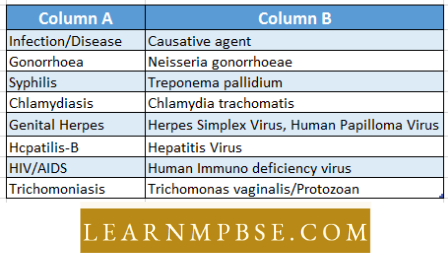
  2. Insertional inactivation of alpha-galactosidase in recombinant bacteria
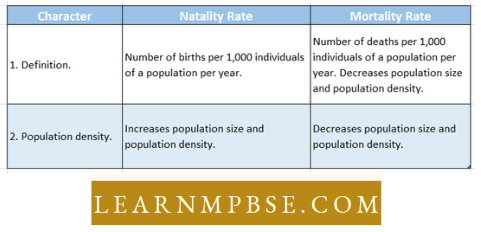
  3. Inactivation of glycosidase enzyme in recombinant bacteria
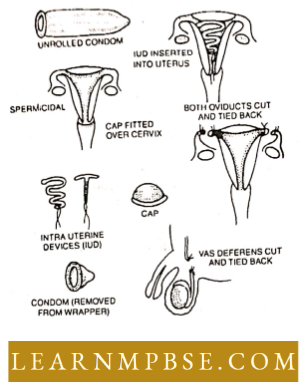
  4. Non-recombinant bacteria containing beta-galactosidase

Answer: 3. Inactivation of glycosidase enzyme in recombinant bacteria
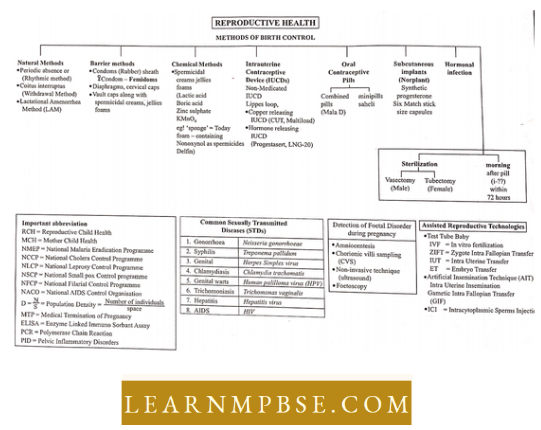
Question 69. Genes that are involved in turning on or off the transcription of a set of structural genes are called
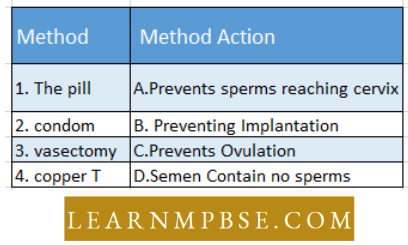
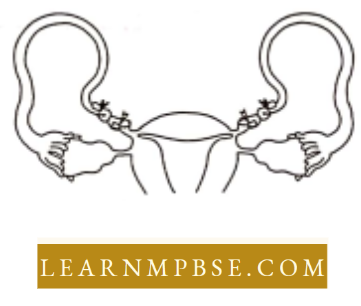
  1. Polymorphic genes
  2. Operator genes
  3. Redundant genes
  4. Regulatory genes

Answer: 2. Operator genes

Question 70. DNA fingerprinting method is very useful for:
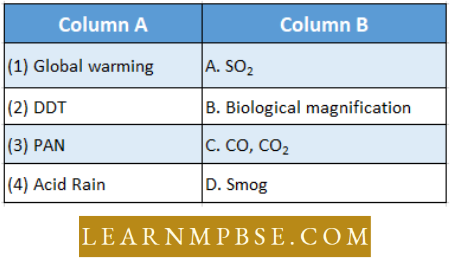
  1. DNA tests for identity and relationships
  2. Forensic studies
  3. Polymorphism
  4. All of the above.

Answer: 4. All of the above.

Question 71. Transgenic organisms are produced by
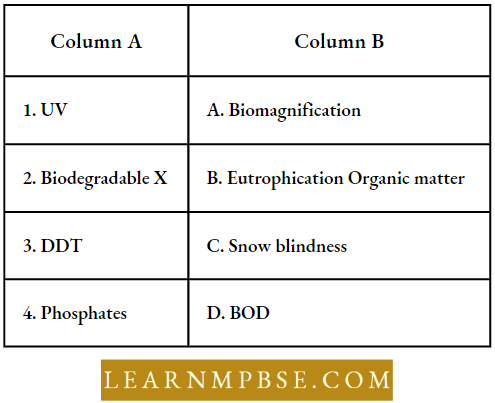
  1. Deleting sex chromosomes
  2. Inducing gene mutations
  3. Introducing foreign genes
  4. Arresting spindle fiber formation.

Answer: 3. Introducing foreign genes

Question 72. The basis for DNA fingerprinting is

  1. Occurrence of restriction fragment length polymorphism (RFLP)
  2. Phenotypic differences between individuals
  3. Availability of cloned DNA
  4. Knowledge of human karyotype.

Answer: 1. Occurrence of restriction fragment length polymorphism (RFLP)

Question 73. Genetically bacteria have been successfully used in the commercial production of:

  1. Human insulin
  2. Testosterone
  3. Thyroxine
  4. Melatonin.

Answer: 1. Human insulin

NEET Important Questions On Biotechnology

Question 74. Which of the following is associated with genetic engineering?

  1. Plastids
  2. Plasmids
  3. Mutations
  4. Hybrid vigor.

Answer: 2. Plasmids

Question 75. PCR stands for:

  1. Polymerase Cyclic Reaction
  2. Polymerase Chain Reaction
  3. Polyethyl Cytosine Reaction
  4. Polymerization Chain Reaction.

Answer: 2. Polymerase Chain Reaction

Question 76. This segment of DNA has restriction sites 1 and 2 which create restriction fragments a, b, and c. Which of the following gel (s) produced by electrophoresis would represent the separation and identity of these fragments?

Principles And Processes Of Biotechnology Segment Of DNA Has Restriction Sites

Answer: 2

Question 77. DNA fragments generated by the restriction endonu¬cleases in a chemical reaction can be separated by

  1. Polymerase chain reaction
  2. Electrophoresis
  3. Restriction mapping
  4. Centrifugation

Answer: 2. Electrophoresis

Question 78. Yeast has become important in genetic engineering because it:

  1. Has plasmids that can be genetically engineered
  2. Allows the study of eukaryotic gene regulation and expression
  3. Grows readily and rapidly in the laboratory
  4. All of the above

Answer: 4. All of the above

Question 79. The gene for cloning may be chemically synthesized:

  1. When the exact sequence of nucleotides is known
  2. Through the use of restriction enzymes and gel electrophoresis to separate restriction fragments
  3. By the Sanger method
  4. By making complementary DNA from genes without introns.

Answer: 1. When the exact sequence of nucleotides is known

NEET Important Questions On Biotechnology

Question 80. You are attempting to introduce a gene that imparts larval moth resistance to bean plants. Which of the following vectors are you most likely to use?

  1. Phage DNA
  2. Bacterial plasmid
  3. Ti plasmid
  4. Yeast plasmid.

Answer: 3. Ti plasmid

Question 81. The genome of Caenorhabditis elegant consists of:

  1. 3 billion base pairs and 30,000 genes
  2. 12 million base pairs and 6,000 genes
  3. 4.7 million base pairs and 4,000 genes
  4. 97 million base pairs and 18,000 genes
  5. 180 million base pairs and 13,000 genes.

Answer: 4. 180 million base pairs and 13,000 genes.

Question 82. Taq polymerase enzyme is found in

  1. Thermits aqucitecus
  2. E.coli
  3. Pseudomonas
  4. Agrobacterium.

Answer: 1. Thermits aqucitecus

Biotechnology Principles and Processes MCQs Question 83. Petroleum-lysing bacteria are being engineered for the removal of oil spills. What is the most realistic danger of these bacteria to the environment?

  1. Mutations leading to the production of a strain pathogenic to humans
  2. Extinction of natural microbes due to the competitive advantage of the “petro-bacterium”
  3. Destruction of natural oil deposits
  4. Poisoning of the food chain.

Answer: 3. Destruction of natural oil deposits

NEET Biology MCQs

Question 84. An attenuated virus:

  1. Is a virus that is non-pathogenic
  2. In an elongated viral particle
  3. Can transfer recombinant DNA to other viruses
  4. Will not produce an immune response.

Answer: 1. Is a virus that is non-pathogenic

Question 85. Which of the following is a difficulty in getting prokaryotic cells to express eukaryotic genes?

  1. The signals that control gene expression are different and prokaryotic promoter regions must be added to the vector
  2. The genetic code differs between the two because prokaryotes substitute the base uracil for thymine
  3. Prokaryotic cells cannot transcribe introns because their genes do not have them
  4. The ribosomes of prokaryotes are not large enough to handle long eukaryotic genes.

Answer: 1. The signals that control gene expression are different and prokaryotic promoter regions must be added to the vector