NEET Biology Notes – Principles And Processes Of Biotechnology

NEET Biology Principles And Processes Of Biotechnology

It pertains to the industry of advancements in research procedures and instruments within the biological sciences.

  • The genesis of biotechnology is rooted in the depths of human history. At the inception of civilization, alcohol derived from fermented steep liquor or plant juices was likely the earliest result of biotechnology.
  • Biotechnology is the application of biological organisms or their derivatives in industrial operations.
  • Modern biotechnology refers specifically to techniques and production technol
  • ogies that entail genetic engineering.
  • The European Federation of Biotechnology (EFB) characterizes biotechnology as the amalgamation of natural sciences with organisms, cells, their components, and molecular analogs for the development of products and services; it includes both conventional perspectives and contemporary molecular biology.

Some Of The Biotechnological Products And Processes Are

  1. Recombinant DNA vaccines.
  2. Synthesis of a gene and introduction of it into a target cell/organism.
  3. Gene therapy.
  4. In vitro fertilization for production of test tube babies.
  5. Production of many biological compounds such as vaccines, antibodies vitamins, antibiotics, hormones, etc.

The organisms involved in industrial biotechnology may be as complex as cattle or as simple as a single-celled yeast (Saccharomyces cerevisiae.)

Read and Learn More NEET Biology Notes

Bioreactor: The fermentation tank where fermentation is carried out in the presence of micro-organisms.

Biotechnology is closely linked to the development in the 1970s of genetic engineering (the directed alteration of genetic material). Substances that have been produced in this manner include human interferon (a natural virus-fighting substance), human insulin, and human growth hormone.

  • Biotechnology has advanced rapidly in the last two decades due to advances in biology, microbiology, biochemistry, immunology, molecular biology, genetic engineering, and chemical engineering.
  • Any organism can be used in biotechnology, for example, cattle, pigs, sheep, horses, monkeys, yeast, and a large number of microorganisms. For better yield, it is imperative to select a suitable strain/variety and evolve a suitable technique for the extraction and purification of the product.
  • The first use of biotechnology must have been in pre-historic times when humans discovered the fermentation of alcoholic beverages and dairy products.

Genetic Engineering: It is a technique for artificially and deliberately modifying DNA (genes) to suit human needs. It is also called recombinant DNA technology or DNA splicing. It is a kind of biotechnology.

Principles Of Biotechnology: The two core techniques that enabled the birth of modern biotechnology are

  1. Genetic engineering technique of altering the nature or genetic material and/ or introducing it into another host organism to change its phenotype.
  2. Techniques to facilitate tile growth and multiplication of only the desired microbes or cells in large numbers, under sterile conditions for the manufacture of biotechnological products.

Principles And Processes Of Biotechnology NEET

Steps In Genetic Engineering (Recombinant DNA Technology)

  1. Identification and isolation of agronomically important genes.
  2. Cloning of isolated genes in a vector.
  3. Introduction of the gene into plant protoplast cells/tissues with the use of gene transfer method.
  4. Culture and regeneration of complete plant on suitable selection medium.
  5. Integration of foreign genes in the transgenic plants by using molecular techniques.
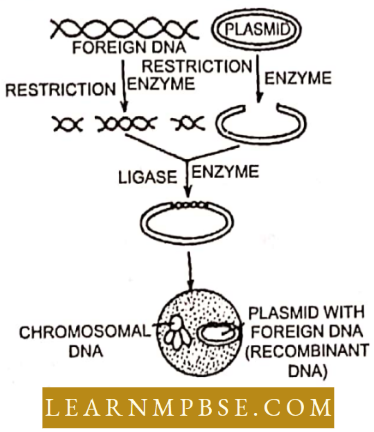
Principles And Processes Of Biotechnology Genetic Engineering

With the help of restriction enzymes DNA is cut at specific sites and then joined with DNA of plasmids or phages. Then these plasmids or phages known as vectors are introduced into a bacterium. The process is known as transformation.

With the division of bacteria, desirable quantities of that particular DNA segment can be obtained. The key tools needed for the recombinant DNA technology to be accomplished are:

  1. Cell culture with desired DNA
  2. Restriction enzymes
  3. DNA polymerase
  4. Ligases
  5. Vector (s)
  6. Host organism/cell.

NEET Biology Principles And Processes Of Biotechnology Cloning Vectors

Vectors And Their Types: A vector is defined as a DNA molecule capable of self-replication and used as the carrier of DNA segments to be cloned (Gene). In an actual sense, it is required for transferring and cloning the gene in a suitable host or bacterium.

  • The gene is inserted in the vector forming Recombinant DNA or Recombinant vector. The recombinant vector is also called the hybrid vector or chimeric vector (chimera = a mythological monster with a lion’s head, goat’s body, and serpent’s tail).
  • The vectors can be cloning vectors i.e., those which isolate, characterize, and clone genes, or expression vectors i.e., those which not only allow multiplication (cloning) but may also be manipulated in such a way that the inserted gene may express in the host.
  1. Use Of Plasmids as Genetic Material: Plasmids are obtained from bacteria. They are treated with restriction endonuclease enzyme to obtain the fragments of the desired genome. They are allowed to fuse with the help of DNA ligase enzyme. The recombinant plasmids thus formed are used as genetic material.
    • Plasmid: Additional DNA rings present in bacteria can be elaved by R.E. (Restriction Endonuclease), and can be joined with foreign DNA by ligase.
    • Ti plasmids of Agrobacterium and Ri plasmid of Agrobacterium rhizogenes are best-known vectors in higher plants.
    • The Plasmids Normally Used As The Vectors Are: The size of plasmids ranges from 1 x 10⁶ to 200 x 106 daltons. These can be of the following types
      • Single copy plasmids i.e., those which occur one plasmid per cell.
      • Multiple copy plasmids i.e., those which occur 10 to 20 copies per cell.
      • There are also plasmids that, are under the relaxed replication control, thus permitting their accumulation in very large numbers i.e., up to 1000 copies per cell. These are the plasmids that we use for cloning purposes due to their increased yield potential.
  2. Bacteriophage DNA: Lambda (X) phage is another very useful vector for Gene cloning in bacteria. Plasmid vectors described above are normally used to clone DNA segments of small size i.e., up to 10 kilo bases.
    • However, while preparing a genomic library for a eukaryote with quite large DNA fragments or even whole genomes the requirements of cloning are fulfilled by lambda phage derivatives used for transferring genetic material from one bacterium to the other.
    • From these cloning of 20-25 kilobases is possible. These consist of linear double-stranded DNA molecules which have been engineered in a way that their lytic cycle is possible but a lysogenic cycle is not possible.
    • The Lambda Phage Genome is λ about 50 kbp circular DNA. It follows either a lytic path or a lysogenic path. Lytic one may be switched towards lysogeny and vice versa. An important feature of the lambda genome is that only about 60% genome is required for the lytic growth of phage and the central 40% can be replaced by foreign DNA.
      • The percentage of foreign DNA can be increased also but a maximum up the 75-95% of the wild genome. This is made possible by removing some of the non-essential parts of the phage genome but only up to a certain limit.
    • The Lambda Cloning Vectors Are Of Two Types:
      • The insertion vector, which accepts inserts only 2 kbp long at a single multiple cloning site λ gt 10 and λ gt 11 vectors.
      • The replacement vectors, which accept inserts 9-23 kbp long with involvement of replacement of a non-essential part (stuffer) of the genome, for example, EMBL3 and EMBL4 vectors.
  3. Plant And Animal Vectors.
  4. Jumping Genes (Transposons)
  5. Artificial Chromosomes Of Bacteria, Yeast, And Mammals.
  6. Cosmids: These are the vectors that can accommodate DNA segments up to 45 kbp. These are actually plasmid particles to which specific DNA sequences, namely those for the cos sites are inserted.
    • Since the cos sites enable the DNA to be packed in the phage (λ) particle we can say that cosmids allow the packaging of DNA in phage in vitro thus permitting their purification.
    • Like plasmids, these cosmids also perpetuate in bacteria. The advantage of cosmids for cloning is that its efficiency is high enough to produce a complete genome library of 106 – 107 clones from a mere Img of insert DNA. The disadvantage is its inability to accept more than 40- 50 kbp of DNA.
  7. Phagemids: These arc plasmids with a fragment of filamentous phage DNA, thus combining the desirable features of both.
    • Segments of foreign DNA cloned in them are multiplied as plasmid vectors, but when these plasmid vectors are infected with a filamentous phage called helper phage, the phagemid genome present already behaves like a phage.
    • As a result of this the phagemid generates multiple copies of one strand of it and the associated DNA inserted in it.
    • The single strand can be purified from these phage particles and used for:
      • Sequencing
      • Site-directed mutagenesis
      • Synthesis of strand-specific probes

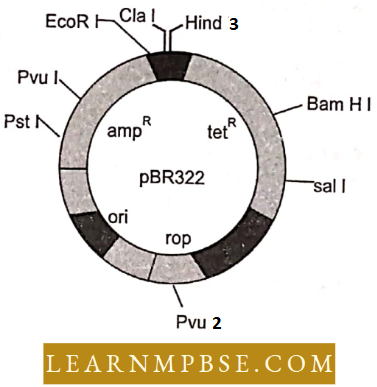
Principles And Processes Of Biotechnology Cloning Vector pBR Restriction Sites

Phagemids have been developed by inserting intergenic regions of a variety of filamentous phages into plasmids.

Origin Of Replication (Ori)

  • This is a sequence of base pairs on DNA where replication starts.
  • Any piece of DNA linked to this sequence can be made to replicate within the host cells.
  • This sequence is also responsible for controlling the copy number of the linked DNA.

Process Of Biotechnology NEET

Selectable Marker

  • A marker is a gene that helps in selecting those host cells that contain the vector (transformant) and eliminating the non-transformants.
  • Common selectable markers for E. coli include the genes encoding resistance to antibiotics such as ampicillin. chloramphenicol, tetracycline, and kanamycin or the gene for β galactosidase which can be identified by a color reaction.

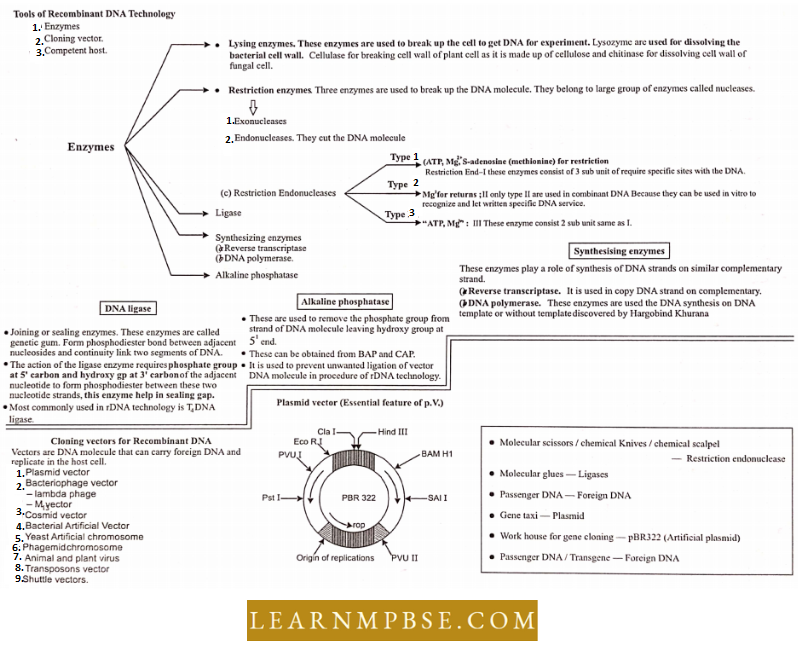
Enzymes Used In Genetic Engineering: The following Enzymes are used

  1. Lysing Enzyme: It is used to open up cells to get DNA for genetic experiments. Lysoenzyme and Lysozyme arc are commonly used to dissolve bacterial cell walls.
  2. Cleaving enzymes to break DNA molecules; of 3 types
    • Exonuclease cuts off nucleotides from 5′ or 3′ end.
    • Endonuclease cleaves DNA at any point except ends.
    • Restriction Endonuclease. It cleaves DNA duplex at specific points → Discovered by Arbern Nathans and Smith (1962) in Bacteria.
  3. Uses Of Restriction Enzymes
    1. Restriction enzymes are used to cut a source DNA into small fragments for the isolation of a desired gene to be cloned.
    2. They are used to cut the vector DNAs at well-defined sites for cloning purposes.
    3. They are used to cut out unwanted sequences from natural vector DNAs to construct active vectors.
    4. They are used to cut a large DNA into small fragments for nucleotide sequencing.
    5. They are used to construct restriction maps of DNAs.
    6. They are used to cut DNAs to determine variant sequences among the DNAs of closely related individuals by restriction fragment length polymorphism (RELP).
  4. DNA Polymerase. Help in the formation of DNA strands on DNA template.
  5. Joining Enzyme (Ligase): Join and reseal the gaps in DNA fragments.

Fragmentation DNA: Fragmentation of DNA is carried out by incubating the purified. DNA molecules with suitable restriction enzymes at optimal conditions of temperature anil pH.

Principles And Processes Of Biotechnology NEET

Isolation Of DNA (Gene) Of Interest

  • The fragments of DNA are separated by a technique called gel electrophoresis.
  • The DNA is cut into fragments by restriction endonucleases.
  • These fragments are separated by a technique called gel electrophoresis.
  • Agarose, a natural polymer obtained from seaweeds is used as the matrix.
  • DNA fragments being negatively charged, are separated by forcing them to move through the matrix towards the anode under an electric field.
  • The DNA fragments separate/resolve according to their size.
  • The separated molecules are stained by ethidium bromide and visualized by exposure to UV- radiation, as bright orange colored bands.
  • The separated bands of DNA (on the gel) are cut from the gel and extracted from the gel piece (elution).
  • Such DNA fragments are purified and used for constructing recombinant DNA by joining them with cloning vectors.

Amplification Of The DNA/Gene Of Interest.

  • Amplification refers to the process of making multiple copies of the DNA segment in vitro.
  • It employs polymerase chain reaction (PCR).
  • The process was designed by K. Mullis.
  • This technique involves three main steps :
    1. Denaturation
    2. Primer annealing and
    3. Extension of primers.
  • The double-stranded DNA is denatured by using high temperatures.
  • Two sets of primers are used; primers are the chemically synthesized short segments of DNA (oligonucleotides), that are complementary to the segment of DNA (of interest).

Ligation Of The DNA Fragment With The DNA Of The Vector.

  • After cutting the source DNA segment and the vector DNA (to make the space for source DNA), the two are mixed and incubated with ligase under suitable conditions.
  • This results in the formation of recombinant DNA (rDNA)

Transfer Of Recombinant DNA Into The Host.

  • The bacterial cells must be made competent to take up DNA; this is done by treating them with a specific concentration of calcium, that increases the efficiency with which DNA enters the cell through the pores in its cell wall.
  • Recombinant DNA can then be forced into such cells by incubating the cells with recombinant DNA on ice followed by placing them at 42°C and then putting them back on ice.
  • Microinjection is a method in which the recombinant DNA is directly injected into the nucleus of the animal cell with the help of microneedles or micropipettes.
  • Gene gun or biolistics is a method suitable for plant cells, where cells are bombarded with high-velocity microparticles of gold or tungsten coated with DNA.
  • Disarmed pathogens are used as vectors; when they are allowed to infect the cell, they transfer the recombinant DNA into the host.

Culturing The Transgenic Cell.

  • The cell containing the foreign gene (transgene) is cultured on a suitable medium.
  • The cells multiply and make clones.

Extraction Of The Desired Product.

  • The transgene expresses itself in the form of protein (s) under appropriate conditions.
  • The product (s) can be extracted from the medium by employing a suitable procedure.
  • Bioreactors are used for processing large volumes of culture to obtain the product of interest in sufficient quantities.

Biotechnology Principles And Processes NEET Study Material

Downstream Processing

  • The product obtained is subjected to a series of processes (collectively called downstream processing) before it is made into a finished product ready for marketing.
  • The two main processes are (1) separation and (2) purification.
  • The product is then formulated with suitable preservatives.
  • Such formulations have to undergo clinical trials, in the case of drugs.

Restriction Enzymes, Their Source, And The Target DNA Sequence With Cleavage Site

Principles And Processes Of Biotechnology Restriction Enzyms Their Source And Target DNA Sequence With Cleavage Site

NEET Biology Principles And Processes Of Biotechnology Steps Of Genetic Engineering (RDNA Technology)

Isolation Of DNA

  • DNA has to be isolated in pure form for the action of restriction enzymes.
  • DNA can be released from the cells by digesting the cell envelope by the use of enzymes like lysozyme for bacterial cells, chitinase for fungal cells, and cellulose for plant cells.
  • Since DNA is intertwined with histone proteins and RNAs, proteins are removed by treatment with proteases and RNAs by ribonucleases. o Other impurities are removed by employing suitable treatments.
  • The purified DNA is precipitated by the addition of chilled ethanol; it is seen as a fine thread in suspension.

Importance Of Genetic Engineering Includes The Following :

  • Gene Splicing: In Eukaryote, DNA is made up of exon (coding segment) and intron (Non-coding segment) or junk gene. This is also called the concept of split genes. It was discovered by RJ. Roberts and Phillip Sharp Nobel Prize in Physiology and Medicine (1993).
  • As far as transcription is concerned, entire DNA is transcribed to form mRNA. (heterogeneous) mRNA : (heterogeneous mRNA); If segments of mRNA corresponding to intron are removed, and remaining mRNA segments (corresponding to exon) are joined together, the mRNA (fully translatable) is called processed or spliced RNA.

NEET Biology Principles And Processes Of Biotechnology Production Of Various Drugs And Chemicals

Numerous medications, vaccines, pharmacological agents for the treatment of diverse ailments, and hormones have been created via genetic engineering (recombinant DNA technology), with several currently undergoing release.

 A few are described below:
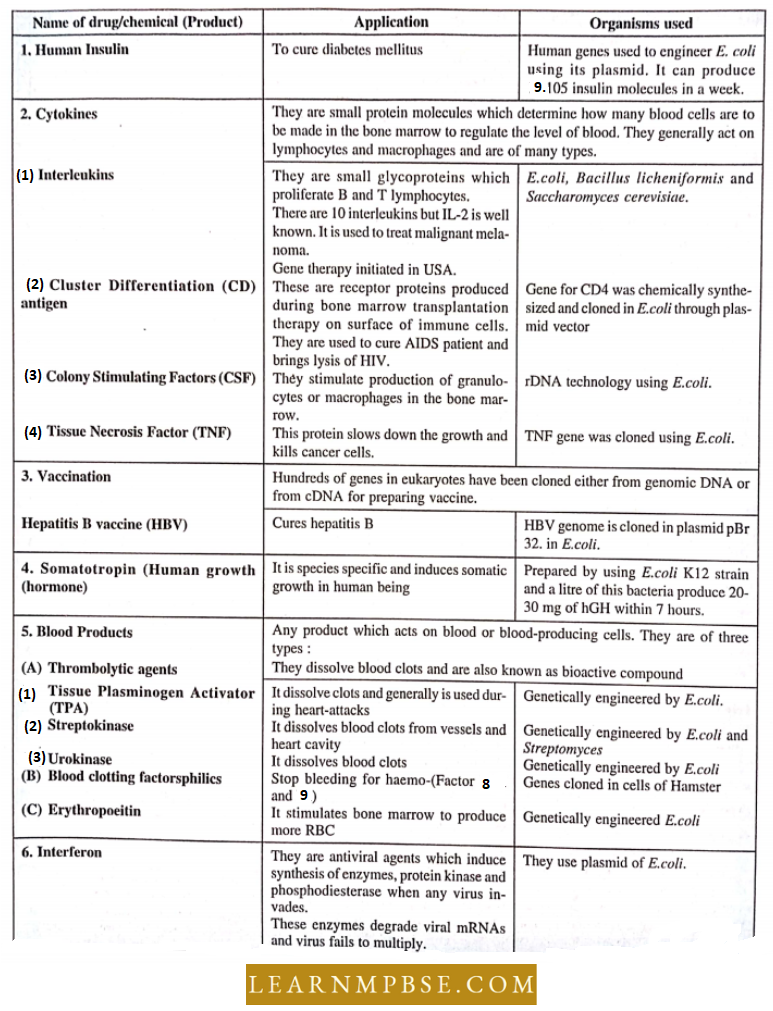
Principles And Processes Of Biotechnology Production Of Various Drugs And Chemicals

NEET Biology Principles And Processes Of Biotechnology DNA Cloning

To clone a specific gene, namely a DNA segment, it is essential to possess a pure fragment of DNA that encompasses that gene. There are various methods to acquire DNA. Single-stranded mRNA undergoes enzymatic conversion to double-stranded DNA. The resultant double-stranded DNA is termed complementary DNA (cDNA).

Process Of Biotechnology NEET

Clone DNA Can Be Obtained By

  1. Separation of those segments of DNA which are to be cloned.
  2. λ phage is used to join the DNA segment vector.
  3. To get more of isolated clones these vectors and DNA segment is inserted in the host cell where the division it provides many copies of the wanted DNA segment.
  4. Selection of wanted clone.
  5. Store the clones in the Gene Bank.
  • It is easy to prepare a clone when the size of DNA segment is 10kb or more otherwise recombination is difficult.
  • According to Boffey (1987), to get a segment of 10kb DNA 1.5 x 10³ colonies are to be raised of the E. coli genome and in Homo sapiens, 2 x 10⁶ colonies are to be raised.
  • To get more number of clones host cells are cultured in a culture medium and the wanted gene is separated by the use of a restriction enzyme and then stored.
  • If a particular gene is needed, it is taken from the gene bank inserted into the vector, and taken to the host cell.

NEET Biology Principles And Processes Of Biotechnology Organism Cloning

Production of individuals having identical genetic makeup from one parent through asexual reproduction is the cloning of organisms. Clones are exact genetic replicas of an individual. Clones of plants, bacteria, and protozoa can be easily obtained by vegetative propagation and asexual reproduction.
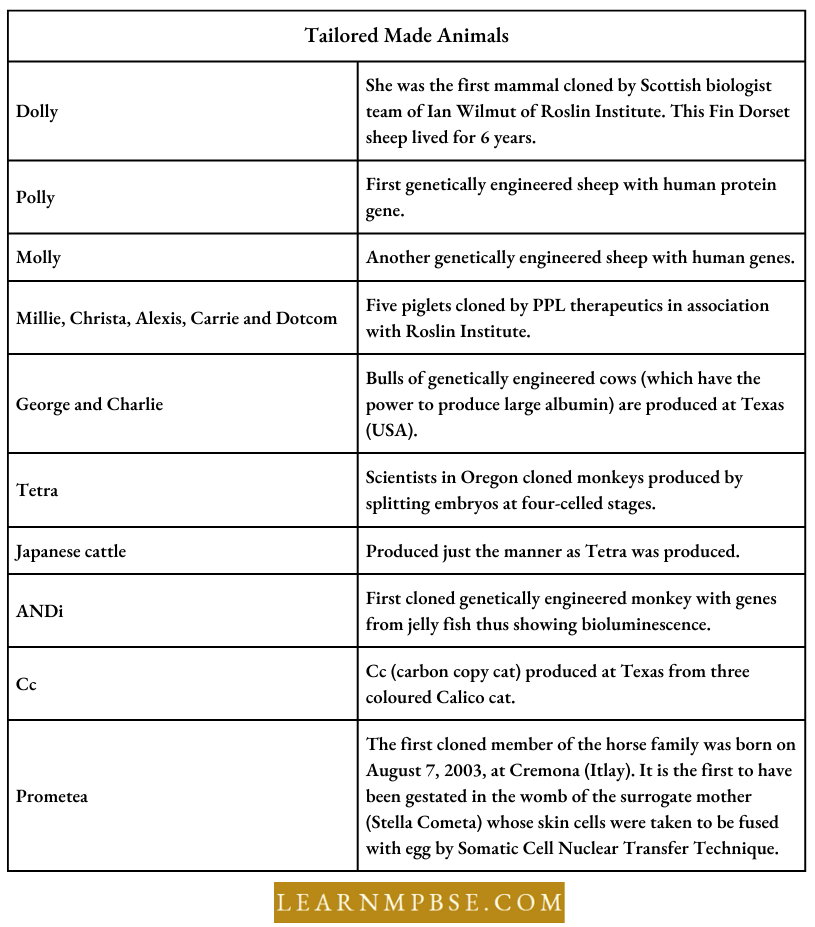
Principles And Processes Of Biotechnology Tailored Made Animals

The technique involves the artificial transplantation of the diploid nucleus into enucleated egg cells. These cells grow and develop into a young one similar to the parent whose diploid nucleus was transplanted.

Importance Of Cloning

  1. New organisms with high and desired characteristics can be obtained in pure form.
  2. Specific compounds for medicines that are made available by the specific organism can be obtained in high amounts by cloning.
  3. Organs could be formed by cloning methods for transplantation so that they can be accepted by the human system without any rejection.
  4. The main organs of transplantation are the Liver, Cornea, Heart, Kidney Skin, etc.
  5. The success of animal cloning also has some adverse effects. Man has thought of producing human clones which is unethical and has adverse society, religion, and the law would not permit this as they are afraid of the time when a man can clone a criminal then what be the fate of society?

Biotechnology Principles And Processes NEET Question Bank

VNTRs (Variable Number Tandem Repeats). The VNTRs of two persons may be of the same length in the sequence at certain sites but vary at others. Half of the VNTRs of the child resemble that of the mother and the other half with that of the father.
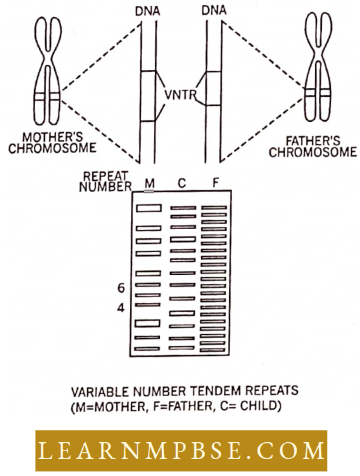
Principles And Processes Of Biotechnology Variable Number Tendem Repeats

  • Gene Cloning: A foreign DNA (useful in genetic engineering) is combined with a vector and multiplied faithfully.
  • Organism Cloning Nucleus of the ovum (IN) is removed and replaced by the nucleus of the diploid cell of the same organism. Now the egg with 2N nucleus is trans¬ferred to the uterus of the mother to have a normal pregnancy and delivers a clone of itself.
  • Dr. Steven Stice and James of Advanced Cell Technology Corporation, Texas (USA), developed a technique for cloning genetically engineered calves that will be able to produce medicines for humans in their milk: The first cloned calves; George and Charlie were born in January 1998. Thus cloned cows are called Living Pharmaceutical factories (L.P.F.)

NEET Biology Principles And Processes Of Biotechnology Genomics

The term genomics was introduced by Thomas Roderick to describe the scientific discipline of mapping, sequences, and analysis of genes. In fact genomics is the study of genomes. All the DNA in the cells of an organism, say for our cells from skin or muscle or brain and everything including genes, is its genome.

Our body contains 100 million cells of over 260 different kinds. However, in most cases complete set of instructions in each is the same, needed to make a whole new human being. In all, there are 23 different chromosomes containing packed DNA in a haploid set of the human genome. Additional DNA is in the cell’s mitochondria which is inherited from one’s mother.

  • Genomics is subdivided into structural genomics and functional genomics.
    • Structural Genomics is the study of genome structure and deals with the complete nucleotide sequences of organisms.
    • Functional Genomics is the study of genome function which includes transcriptome and proteome.
  • Transcriptome is a complete set of RNAs transcribed from a genome.
  • The proteome is a complete set of proteins encoded by a genome and aims at the deter¬mination of the structure and functions of all the proteins in living organisms.
  • The nucleotide sequences of the genomes of two subspecies of rice were published in April 2002.
  • The human body contains 100 million cells of over 260 different kinds.
  • There is a complete set of instructions in each of the cells needed to make a whole new human being.
  • There are 23 different chromosomes containing packed DNA in a haploid set of the human genome.
  • Additional DNA is in the cell’s mitochondria which is inherited from one’s mother.

Revelations Of Genome: The details of the findings of our genome have revealed some startling facts. Being the most complex organism, we were expected to have more than 100,000 genes. Instead, the human gene count is much lower than expected, approximately 30,000 to 40,000 genes

Additional DNA is in the cell’s mitochondria which is inherited from one’s mother.

Principles Of Biotechnology NEET Notes

Revelations Of Genome: The details of the findings of our genome have revealed some startling facts. Being the most complex organism, we were expected to have more than 100,000 genes. Instead, the human gene count is much lower than expected, approximately 30,000 to 40,000 genes.

  1. Bacteriophage: 10 thousand base pairs.
  2. Escherichia coli: 4,7 million base pairs 4,000 genes.
  3. Saccharomyces cerevisiae: 2 million base pairs 6,000 genes
  4. Caenorhabditis elegans: 97 million base pairs 18,000 genes
  5. Drosophila melanogaster: 180 million base pairs 13,000 genes
  6. Human: 3 billion base pairs cells 30,000 genes
  7. Lily: 106 billion base pairs per cell.

NEET Biology Principles And Processes Of Biotechnology Human Genome Protect

Additional DNA is in the cell’s mitochondria which is inherited from one’s mother. Many countries are working together with the National Institute of Health and Department of Energy USA., to decipher the human genome to know the position and function of each and every gene of the genome.

  • Jean Dausset 1983 first thought about the human genome project. He worked on the Human Leucocyte antigen system (HLAS) helping in organ transplantation.
  • The easiest way of getting DNA is by taking blood samples.
  • The genome project was carried out by DNA mapping, DNA sequencing, and functional analysis of DNA.
  • DNA mapping is done by using molecular markers. The simple sequence repeat is prepared and known as Sequence Tagged Site.
  • DNA sequencing is known by the DNA sequence of the mouse. Small segments of DNA are taken and sequenced.
  • Functional analysis of DNA is carried out by cDNA analysis of brain tissue, by computerized analysis of the sequence of genes, and by fixing the function of genes in the effect of mutation.
  • The human genome has 22 pairs of autosomes and one pair of sex chromosomes. The genes are present in linear positions on chromosomes and approximately 1,00,000 genes are present in the genome.
  • Renato Dulbecco (Virologist) of Italy started work on a human genome project in 1986.
  • Nobel laureate Jean Dausset for the first time produced a genome map under a human genome project in 1994.
  • The human genome is nearly deciphered by now (2000).
  • Human beings are 99.9 percent identical with each other at the DNA level.
  • Every alive human being is exactly the same and even bacteria are our cousins in code.
  • Different human genes vary widely in length often over thousands of base pairs.
  • While b-globin and insulin genes are less than 10 kilobase pairs, the gene responsible for Duchenne Muscular Dystrophy on ‘X’ chromosome is made up of 2400 kilo-base pairs which is probably the longest gene known.
  • Though the lily plant produces fewer proteins than human beings, it has 18 times more DNA.
  • Only less than 2 percent of the genome is known to include the exons, the protein-coding sequences.
  • Approximately 1 million copies of short 5 to 8 base pair repeated sequences clustered around the centromeres and near the ends of the chromosomes represent ‘the junk DNA’.

NEET Biology Principles And Processes Of Biotechnology Gene Bank And Genomic Library

It is the collection of cloned DNA segments obtained from the complete genome. Gene bank is prepared by Shotgun experiments where the whole cell is stored as a random and unknown clone.

NEET Biology Principles And Processes Of Biotechnology Protein Engineering

The ability to change the amino acid sequence of a protein by altering the sequence of its cDNA is known as protein engineering.

  • By site-directed mutagenesis technique, a new cDNA is created which is identical to the natural one except for changes designed by man.
  • This DNA is used to generate protein in bacteria to transfect cell lines, or to create transgenic organisms.
  • Protein engineering is used to study the proteins, to compare the catalytic properties of the normal and mutated form of an enzyme, etc.
  • This technique is used to identify the particular charged amino acid residue responsible for the selectivity of ion channels.
  • Nowadays protein engineering is used to generate a number of new proteins as a tool for scientific research, medical, and industrial purposes.

Biotechnology Principles And Processes NEET Mcqs

NEET Biology Principles And Processes Of Biotechnology Hybridoma Technology

Hybridoma is a hybrid cell obtained by the fusion of B-lymphocyte and cell (cell of antibody system of B-lymphocyte).

  • Hybridoma cells can grow for an indefinite period and can produce antibodies because of the B-lymphocyte genome.
  • Monoclonal antibodies are obtained from the in vitro culture of hybridoma cells.
  • Hybridoma technology is developed in 1975 by G. Kohler and C. Milstein for which they were awarded the Nobel Prize in 1984.
  • Antibodies obtained by this process are antigen-specific.

NEET Biology Principles And Processes Of Biotechnology DNA Fingerprinting

DNA Fingerprinting technique was developed by Alec Jeffreys (1985, 86) at Leicester University, United Kingdom.

Inheritance of DNA is very stable, Every person has a specific pattern of DNA sequence which shows a combination of the DNA sequence of both mother and father. The study of DNA fingerprints helps in the establishment of the identity of a person, the identification of criminals in case of murder or rape, and paternity tests in case of disputed parentage.

Principle of DNA Fingerprinting. It has been established that the DNA of a person carries some specific sequences of nucleotides that do not carry any information for proteins. Important for DNA typing profiling or fingerprinting are short nucleotide repeats that vary in number from person to person, but are inherited.

  • These are the Variable Number Tandem Repeats or VNTRs. The VNTRs of two persons may be of the same length and sequence at certain sites but vary at others.
  • In this example, a child might inherit a chromosome with six tandem repeats from the mother and the same tandem repeated four times in the homologous chromosome inherited from the father. Note that the half of VNTR alleles of the child resemble that of the mother and half that of the father.
  • For DNA fingerprinting, DNA is isolated from any body cell or even from blood stains, semen stains, or hair roots. These cells are subjected to Southern blotting.
  • In India first test of DNA fingerprinting was done in June 1989 to settle a disputed parentage in Madras. The laboratory for DNA fingerprinting is situated in Hyderabad at the Centre for Cell and Molecular Biology (CCMB).

Southern Blotting: A mixture of DNA fragments is separated by gel electrophoresis. DNA bands are denatured into single strands by an alkali solution. These DNA strands are fixed on the nitrocellulose membrane. This DNA is used for hybridization with the help of specific labeled DNA probes.

Then membrane is washed for any unbound DNA autoradiographs are taken and studied and DNA hybridization is done with the help of specific DNA probes. Polymorphism of DNA is revealed which shows very stable inheritance and is used for identification of a person.

Principles Of Biotechnology NEET Notes

Application Of DNA Fingerprinting

  • Identify criminals in forensic laboratories.
  • Determine paternity, who is the true biological father or mother of a child?
  • Verify whether a hopeful immigrant is, as he or she claims, really a close relative of already an established resident.
  • Identify racial groups to rewrite biological evolution.

DNA Footprinting. It is done to determine the location and lengths of binding sites of various proteins that bind to DNA. It is also possible to determine the sequence of the binding sites.
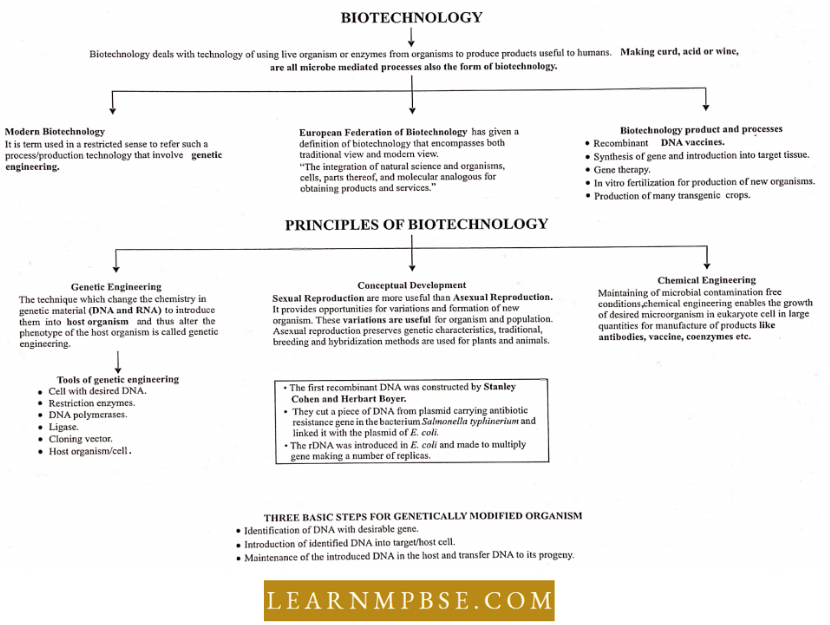
Principles And Processes Of Biotechnology Biotechnology And Its Priciples Flowchart

Principles And Processes Of Biotechnology Tools Of Recombinant technology


NEET Biology Principles And Processes Of Biotechnology Questions From Competitive Examinations

Question 1. Restriction endonucleases are used as:

  1. Molecular build-up at nucleotides
  2. Molecular degradation to DNA breakup
  3. Molecular knives for cutting DNA at specific sites
  4. Molecular cement to combine DNA sites.

Answer: 3. Molecular knives for cutting DNA at specific sites

Question 2. A somatic plant cell has the potential to develop into a full plant. This is called

  1. Totipotency
  2. Gene cloning
  3. Tissue culture
  4. Regeneration.

Answer: 1. Totipotency

Question 3. Enzymes breaking nucleic acids into nucleotides are called:

  1. Hydrolases
  2. Amylases
  3. Nucleic acids
  4. Nucleases.

Answer: 4. Nucleases.

Applications of Biotechnology NEET

Question 4. Recombinant DNA technology is related with:

  1. Stanley Cohen and Harbert Boyer
  2. Bateson and Punnet
  3. Huxley and Harvey
  4. Schleiden and Schwann.

Answer: 1. Stanley Cohen and Harbert Boyer

Question 5. Cosmid is:

  1. Extragenetic material in Mycoplasma
  2. Circular DNA in bacteria
  3. Extra DNA in bacteria
  4. Fragment of DNA inserted in bacteria for forming copies.

Answer: 4. Fragment of DNA inserted in bacteria for forming copies.

Question 6. Match the correct one

  1. RNA Polymerase-RNA primer
  2. Respiration-lysosome
  3. Restriction enzyme-genetic engineering
  4. Central dogma-DNA structure.

Answer: 3. Restriction enzyme-genetic engineering

Question 7. Plasmid is used as a carrier because:

  1. It has both ends with replicating points
  2. It has no free ends
  3. It is circular DNA with the capacity to bind, with eukaryotic DNA
  4. All Of the above.

Answer: 3. It is circular DNA with a capacity to bind, with eukaryotic DNA

Question 8. The Ti plasmid used in genetic engineering is obtained from:

  1. Bacillus thuringeinsis
  2. Agrobacterium rhizogenes
  3. Agrobacterium tumifaciens
  4. Escherichia coli.

Answer: 3. Agrobacterium tumefacient

Biotechnology Principles And Processes NEET Previous Year Questions

Question 9. The function of polymerase chain reaction (PCR) is:

  1. Translation
  2. Transduction
  3. DNA amplification
  4. None of these.

Answer: 3. DNA amplification

Question 10. The genetically engineered bacterium used in the production of:

  1. Thyroxine
  2. Human insulin
  3. Epinephrine
  4. Cortisol.

Answer: 2. Human insulin

Question 11. Abnormal gene is replaced by normal genes through:

  1. Gene Therapy
  2. Medicines
  3. Cloning
  4. Radiation.

Answer: 1. Gene Therapy

Question 12. In genetic engineering, the term vector is applied to:

  1. Plasmid
  2. Sources of DNA
  3. Cell which receives
  4. Virus.

Answer: 1. Plasmid

Question 13. Gene therapy involves

  1. Introducing a normal gene in a cell
  2. Eliminating defective and useless genes
  3. Treating of defective genes with radiation
  4. Replacement of defective genes with normal ones.

Answer: 4. Replacement of defective genes by normal ones

Question 14. Which of the following enzymes is used in genetic engineering?

  1. Translocase
  2. Topoisomerase
  3. DNAse
  4. Restriction endonuclease.

Answer: 4. Restriction endonuclease.

Question 15. The transgenic animals are those which have:

  1. Foreign RNA in all its cell
  2. Foreign DNA in all its cells
  3. Foreign DNA in some of its cells
  4. Both 1 and 3

Answer: 2. Foreign DNA in all its cells

Question 16. The known sequence of DNA that is used to find complementary DNA strands is:

  1. Vector
  2. Plasmid
  3. DNA probe
  4. Recombinant DNA.

Answer: 3. DNA probe

Question 17. Totipotency in the cell is:

  1. Flower in a culture medium
  2. Development of fruit from a flower in a culture medium
  3. Development of an organism from a cell in a culture medium
  4. Development of all tissues of all kinds from a cell in a culture medium.

Answer: 3. Development of an organism from a cell in a culture medium

Steps In Biotechnology Process NEET

Question 18. The nuclease enzyme, which begins its attack from the free end of a polynucleotide, is?

  1. Exonuclease
  2. Kinase
  3. Polymerase
  4. Endonuclease.

Answer: 1. Exonuclease

Question 19. DNA fingerprinting method is very useful for:

  1. DNA tests for identity and relationships
  2. Forensic studies
  3. Polymorphism
  4. All of the above.

Answer: 4. All of the above.

Question 20. Reverse transcriptase:

  1. Disintegrates host DNA
  2. Translates host DNA
  3. Transcribes viral RNA to DNA
  4. Polymerises host DNA.

Answer: 3. Transcribes viral RNA to DNA

Question 21. Boviene spongiform encephalopathy disease is equal to:

  1. KalaAzar
  2. Parkinson’s disease.
  3. Creutzfeldt-Jacob disease
  4. None of the above.

Answer: 3. Creutzfeldt-Jacob disease

Question 22. A clone of sheep Dolly has been made by :

  1. Gene transfer
  2. Somatic cell cloning
  3. Nucleus transfer
  4. Germinal cell cloning.

Answer: 3. Nucleus transfer

Question 23. Which one of the following bacteria has found extensive use in genetic engineering work in plants?

  1. Agrobacterium tumefaciens
  2. Clostridium septicum
  3. Xanthomonas citri
  4. Bacillus coagulens.

Answer: 1. Agrobacterium tumefaciens

Question 24. Improvement of the genotype of an organism by the addition of some foreign genes is:

  1. Genetic diversity
  2. Gene handling
  3. Tissue culture
  4. Genetic engineering.

Answer: 1. Genetic diversity

Question  25. A variable number of tandem repeats (VTNRs) in the DNA molecule are highly useful in:

  1. Monoclonal antibody production
  2. DNA fingerprinting
  3. Recombinant DNA technology
  4. Stem cell culture.

Answer: 2. DNA fingerprinting

Question 26. The first clone animal of the world is:

  1. Molly sheep
  2. Polly sheep
  3. Dolly sheep
  4. Molly goat.

Answer: 1. Molly sheep

Question 27. In transgenics, the expression of transgene in the target tissue is known by:

  1. Enhancer
  2. Transgene
  3. Promoter
  4. Reporter.

Answer: 4. Reporter

Question 28. DNA fingerprinting is related to:

  1. Molecular analysis of profiles of DNA samples
  2. Analysis of DNA samples using imprinting devices
  3. Techniques used for molecular analysis of different specimens of DNA
  4. Techniques used in the identification of fingerprints of different persons.

Answer: 1. Molecular analysis of profiles of DNA samples

Question 29. Which of the following is specifically used in genetic engineering?

  1. Ligase
  2. Gyrase
  3. DNA polymerase
  4. Restriction endonuclease.

Answer: 4. Restriction endonuclease

Question 30. Molecular scissors, which cut DNA at specific sites:

  1. Ligase
  2. Cellulase
  3. Pectinase
  4. Polymerase.
  5. Restriction endonuclease.

Answer: 3. Polymerase

Question 31. Plasmids are extrachromosomal circular DNA molecules:

  1. Which have their own point of replication and can replicate independently
  2. Which have their own point of replication but cannot replicate independently
  3. Which do not have their own point of replication and cannot replicate independently of bacterial chromosomal DNA
  4. None of the above.

Answer: 1. Which have their own point of replication and can replicate independently

Steps In Biotechnology Process NEET

Question 32. Identify the plasmid:

  1. Alu I
  2. Hindffl
  3. Eco RI
  4. pBR 322.

Answer: 4. pBR 322.

Question 33. Natural genetic engineer is:

  1. Bacillus subtillis
  2. Pseudomonas spp.
  3. Escherichia coli
  4. Agrobacterium tumefaciens.

Answer: 4. Agrobacterium tumefaciens

Question 34. The most thoroughly studied of the known bacteria-plant interaction is the:

  1. Plant growth simulation by phosphate-solubilising bacteria
  2. Cyanobacterial symbiosis with some aquatic ferns
  3. Gall formation on certain angiosperms by Agrobacterium
  4. Nodulation of Sesbania stems by nitrogen-fixing bacteria.

Answer: 3. Gall formation on certain angiosperms by Agrobacterium

Question 35. What does Bt stand for the popular crop Bt cotton?

  1. Best
  2. Best type
  3. Biotechnology
  4. Bacillus tomentosa.
  5. Bacillus thuringiensis.

Answer: 5. Bacillus thuringiensis

Question 36. DNA fingerprinting technique was first developed by:

  1. Jeffreys, Wilson, and Thein
  2. Schleiden and Schwann
  3. Edward and Steptoe
  4. Boysen and Jensen.

Answer: 1. Jeffreys, Wilson and Thein

Question 37. What is the first step in the Southern Blotting technique?

  1. Isolation of DNA from a nucleated cell such as the one from the scene of crime
  2. Denaturation of DNA on the gel for hybridization with a specific probe
  3. Production of a group of genetically identical cells
  4. Digestion of DNA by restriction enzyme.

Answer: 4. Digestion of DNA by restriction enzyme

Question 38. An example of gene therapy is:

  1. Production of injectable hepatitis b vaccine
  2. Production of vaccines in food crops like potatoes which can be eaten
  3. Production of test tube babies by artificial insemination and implantation of fertilized eggs
  4. Introduction of the gene for adenosine deaminase in persons suffering from severe combined immunodeficiency (SCID).

Answer: 4. Introduction of gene for adenosine deaminase in persons suffering from severe combined immunodeficiency (SCID)

Question 39. The total number of nitrogenous bases in human ge¬nome is estimated to be about:

  1. 35 million
  2. 3.1 billion
  3. 3.5 million
  4. 35 thousand.

Answer: 2. 3.1 billion

Question 40. The name of the drug used in cancer treatment produced by using biotechnology is:

  1. HGH
  2. TSH
  3. Insulin
  4. Interferon
  5. Terramycin.

Answer: 4. Terramycin

Biotechnology Principles And Processes NEET Notes

Question 41. Which of the following pairs is correctly matched?

  1. Central dogma-Codon
  2. Okazaki fragments-Splicing
  3. RNA polymerase-RNA primer
  4. Restriction enzymes- Genetic engineering.

Answer: 2. Okazaki fragments-Splicing

Question 42. Tj plasmid is used for making transgenic plants. It is obtained from:

  1. Azotobacter
  2. Agrobacterium
  3. Rhizobium in leguminous root
  4. Yeast.

Answer: 2. Agrobacterium

Question 43. Somaclonal variation can be obtained by:

  1. Hybridization
  2. Tissue culture
  3. Application of colchicine
  4. Irradiation with gamma rays.

Answer: 2. Tissue culture

Question 44. The enzyme used for cutting DNA segments in genetic engineering is:

  1. ATPase
  2. Ligase
  3. DNA polymerase
  4. Restriction endonuclease.

Answer: 2. Restriction endonuclease

Question 45. Widely used tools in the genetic engineering of crop plants is:

  1. Protoplast fusion
  2. Transposon
  3. Microinjection
  4. Agrobacterium mediation.

Answer: 4. Agrobacterium mediation

Principles And Processes Of Biotechnology NEET

Question 46. Which one of the following hydrolyses internal phosphodiester bonds in a polynucleotide chain?

  1. Lipase
  2. Protease
  3. Exonuclease
  4. Endonuclease.

Answer: 4. Endonuclease

Question 47. There is a restriction endonuclease called £coRI. What does the “co” part in it stand for?

  1. Coli
  2. Coelom
  3. Coenzyme
  4. Colon.

Answer: 1. Coli

Biotechnology Principles And Processes NEET Study Material

Question 48. Agarose extracted from seaweeds finds use in:

  1. Spectrophotometry
  2. Tissue culture
  3. Gel electrophoresis
  4. PCR.

Answer: 3. Gel electrophoresis

Question 49. Given below is a sample of a portion of the DNA strand giving the base sequence on the opposite strands. What is so special shown in it?

5′ _____ GAATTC _______ 3′

3′ ______ CTTAAG _______ 5′

  1. Replication completed
  2. Deletion mutation
  3. Start codon at the 5’ end
  4. The palindromic sequence of base pairs.

Answer: 4. Palindromic sequence of base pairs

Question 50. In DNA fingerprinting which of the following is true?

  1. VNTR is used as a probes
  2. Specific metabolic genes are used as probes
  3. Housekeeping or luxury genes are used as probes
  4. All of the above.

Answer: 1. VNTR is used as probes

Question 51. The matching sequence of DNA between two pieces of evidence, one of the criminals with the suspect is known as:

  1. DNA fingerprinting
  2. DNA amplification
  3. Gene mapping
  4. DNA resolution.

Answer: 1. DNA fingerprinting

Question 52. A technology which has found immense use in solving cases of disputed parentage is:

  1. DNA fingerprinting
  2. Polymerase chain reaction
  3. Recombinant DNA technology
  4. Monoclonal antibody production.

Answer: 1. DNA fingerprinting

Question 53. The first hormone prepared by genetic engineering is:

  1. Insulin
  2. Oxytocin
  3. Adrenaline
  4. Somatotropin.

Answer: 1. Insulin

Question 54. The first biochemical to be produced commercially by microbial cloning and genetic engineering is:

  1. Interferon
  2. Penicillin
  3. Human insulin
  4. Fertility factors.

Answer: 3. Human insulin

Question 55. Which of the following statements is true?

  1. In the historic cloning experiment of Dr. Wilrnut, the transplanted nucleus was taken from an udder cell
  2. Mammalian characters appeared first in dinosaurs
  3. The heart of mammals is incapable of being in vitro
  4. The pyramid of biomass is upright in the pond ecosystem.

Answer: 1. In the historic cloning experiment of Dr. Wilrnut, the transplanted nucleus was taken from an udder cell

Question 56. Protoplasts of two different species are fused in:

  1. Dona propagation
  2. Organography
  3. Micropropagation
  4. Somatic hybridization.

Answer: 4. Somatic hybridization

Biotechnology Principles And Processes NEET Question Bank

Question 57. cDNA probes are copied from the messenger RNA molecules with the help of:

  1. Restriction enzymes
  2. Reverse transcriptase
  3. DNA polymerase
  4. Adenosine deaminase.

Answer: 4. Adenosine deaminase

Question 58. The electroporation procedure involves:

  1. Fast passage of food through sieve pores in phloem elements with the help of electric stimulation
  2. Opening of stomatal pores during the night by artificial light
  3. Making transient pores in the cell membrane to introduce gene constructs
  4. Purification of saline water with the help of a membrane system.

Answer: 3. Making transient pores in the cell membrane to introduce gene constructs

Question 59. Which one of the following is a correct statement

  1. “Bt” in “Bt-cotton” indicates that it is a genetically modified organism produced through biotechnol¬ogy
  2. Somatic hybridization involves the fusion of two complete plant cells carrying desired genes
  3. The anticoagulant hirudin is produced from transgenic Brassica napus seeds
  4. The “Flavr Savr” variety of tomatoes has enhanced the production of ethylene which improves its taste.

Answer: 3. The anticoagulant hirudin is being produced from transgenic Brassica napus seeds

Question 60. A tumor-inducing plasmid widely used in the production of transgenic plants in that of:

  1. Escherichia coli
  2. Bacillus thuringiensis
  3. Staphylococcus aureus
  4. Agrobacterium tumefaciens.

Answer: 4. Agrobacterium tumefaciens

Question 61. The common bacterium used in genetic engineering is:

  1. E. coli
  2. Diplococcus
  3. Rhizobium
  4. Spirillium.
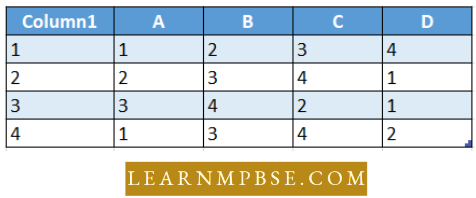
  1. a = 3, b = 1, c = 5, d = 4
  2. a = 1, b = 2,c = 3, d = 4
  3. a = 2, b = 1, c = 3, d = 4
  4. a = 4, b = 3, c = 1, d = 2
  5. a = 3, b = 1, c = 5, d = 2.

Answer: 1. a = 3, b = 1, c = 5, d = 4

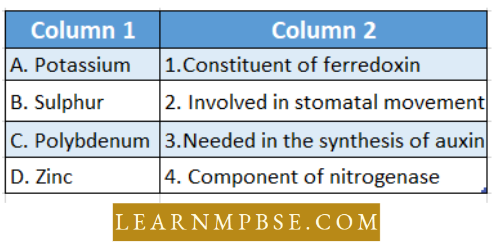
Question 62. Match The following and choose the correct combination from the options given:
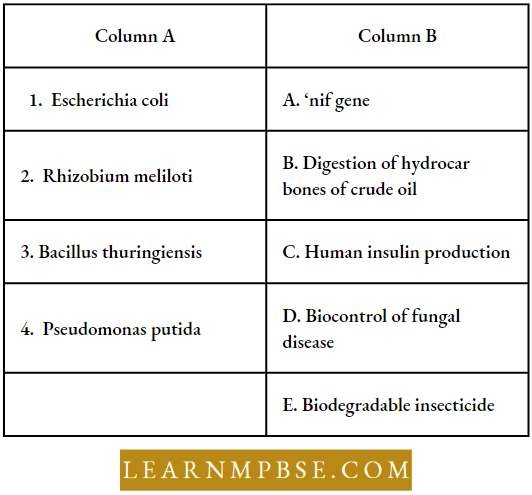
Principles And Processes Of Biotechnology Match The Column Question 62

Answer: 5

Question 63. Choose the correct statement with reference to ‘Dolly’:

  1. She was created by taking the nucleus from unfertilized eggs and cytoplasm from unfertilized eggs
  2. She was created by taking the nucleus from udder cells and cytoplasm from unfertilized eggs
  3. She was created by taking cytoplasm from udder cell and nucleus from unfertilized eggs
  4. She was created by taking cytoplasm from udder cell and nucleus from fertilized eggs
  5. She was created inside the test tube.

Answer: 2. She was created by taking the nucleus from udder cells and cytoplasm from unfertilized eggs

Question 64. Find the incorrect statement:

  1. Gene therapy is a genetic engineering technique used to treat disease at the molecular level by replacing defective genes with normal genes
  2. Calcitonin is a medically useful recombinant product in the treatment of infertility
  3. Bt toxin is a biodegradable insecticide obtained from Bacillus thuringiensis
  4. Trichoderma sp. is a biocontrol agent for fungal diseases of plants
  5. Totipotency is the potential ability of a cell to develop into a complete plant.

Answer: 2. Calcitonin is a medically useful recombinant product in the treatment of infertility

Question 65. Production of a human protein in bacteria by genetic engineering is possible because:

  1. Bacterial cell can carry out the rna splicing reactions
  2. The human chromosome can replicate in bacterial cell
  3. The mechanism of gene regulation is identical in humans and bacteria
  4. The genetic code is universal.

Answer: 4. The genetic code is universal

Question 66. Two microbes found to be very useful in genetic engineering are:

  1. Diplococcus sp. and Pseudomonas sp.
  2. Crown gall bacterium and Caenorhabditis elegans
  3. Escherichia coli and Agrobacterium tumefaciens

Answer: 3. Escherichia coli and Agrobacterium tumefaciens

Principles And Processes Of Biotechnology NEET

Question 67. What is the function of Restriction endonuclease?

  1. Restricts the synthesis of DNA inside the nucleus
  2. Synthesizes DNA
  3. Cuts the DNA molecule randomly
  4. Cuts the DNA molecule at specific sites.

Answer: 4. Cuts the DNA molecule at specific sites

Question 68. A genetically engineered micro-organism used successfully in bioremediation of oil spills is a species of:

  1. Trichodenna
  2. Xanthomonas
  3. Bacillus
  4. Pseudomonas.

Answer: 4. Pseudomonas

Question 69. The construction of the first recombinant DNA was done by using the native plasmid of:

  1. E.coli
  2. Salmonella typhimurium
  3. B.thuringiensis
  4. Yeast
  5. Agrobacterium.

Answer: 2. Salmonella typhimurium

Question 70. The basis of DNA fingerprinting is:

  1. The double helix
  2. Errors in the base sequence
  3. Polymorphism in sequence
  4. DNA replication
  5. DNA coiling.

Answer: 3. Polymorphism in sequence

Question 71. The linking of antibiotic resistance gene with the plasmid vector became possible with:

  1. DNA ligase
  2. Exonucleases
  3. Endonucleases
  4. DNA polymerase.

Answer: 1. DNA ligase

Question 72. Gel electrophoresis is used for:

  1. Isolation of DNA molecule
  2. Cutting of DNA into fragments
  3. Separation of DNA fragments according to their size
  4. Construction of recombinant DNA by joining with cloning vectors.

Answer: 3. Separation of DNA fragments according to their size

Question 73. Which one of the following palindromic base

  1. 5′ _______ GATATG ______ 3′
    3′ _______ CTACTA ______ 5′
  2. 5′ _______ GAATTC ______ 3′
    3′ _______ CTTAAG ______ 5′
  3. 5′ _______ CACGTA ______ 3′
    3′ _______ CTCAGT ______ 5′
  4. 5′ _______ CGTTCG ______ 3′
    3′ _______ ATGGTA ______ 5′

Answer:

2. 5′ _______ GAATTC ______ 3′
3′ _______ CTTAAG ______ 5′

Question 74. An improved variety of transgenic basmati rice:

  1. Gives a high yield and is rich in Vitamin A
  2. Is completely resistant to all insect pests and diseases of paddy
  3. Gives a high yield but has no characteristic aroma.
  4. Does not require chemical fertilizers and growth hormones.

Answer: 1. Gives high yield and is rich in Vitamin A

Question 75. Genetic engineering has been successfully used to produce:

  1. Transgenic models for studying new treatments for certain cardiac diseases
  2. Transgenic cow-Rosie which produces high-fat milk for making ghee
  3. Animals like bulls for farm work as they have superpower.
  4. Transgenic mice for testing the safety of the polio vaccine before use in humans.

Answer: 4. Transgenic mice for testing the safety of polio vaccine before use in humans

Question 76. The genetically modified (GM) brinjal in India has been developed for:

  1. Enhancing shelf life
  2. Enhancing mineral content
  3. Drought-resistance
  4. Insect-resistance.

Answer: 4. Insect-resistance

Question 77. PCR and Restriction Fragment Length Polymorphism are the methods for:

  1. Genetic transformation
  2. DNA sequencing
  3. genetic fingerprinting
  4. Study of enzymes.

Answer: 4. Study of enzymes

Question 78. For transformation, microparticles coated with DNA are to be bombarded with gene guns made up of:

  1. Platinum or Zinc
  2. Silicon or Platinum
  3. Gold or Tungsten
  4. Silver or Platinum.

Answer: 3. Gold or Tungsten

Question 79. Which of the following is not correctly matched for the organism and its cell wall degrading enzyme?

  1. Plant cells – Cellulase
  2. Algae – Methylase
  3. Fungi – Chitinase
  4. Bacteria – Lysozyme

Answer: 2. Algae – Methylase
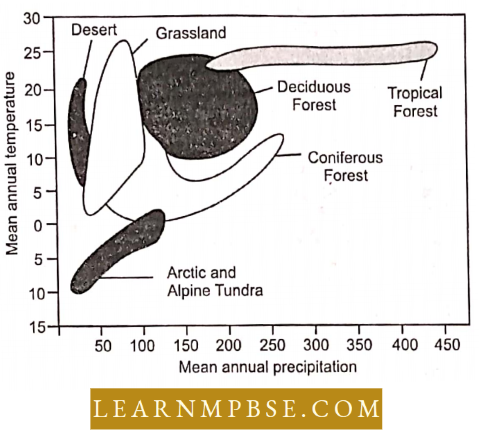
 

NEET Biology Multiple Choice Questions – Organisms and Populations

NEET Biology Organism And Environment Species And Population Multiple Choice Questions

Question 1. The annual growth rate for developing countries is:

  1. 5%
  2. 2%
  3. 2.5%
  4. 8%.

Answer: 3. 2.5%

Question 2. The study of the interrelationship between living organisms and their environment is called:

  1. Phytosociology
  2. Phytogeography
  3. Ecology
  4. Ecosystem.

Answer: 3. Ecology

Question 3. Plants and animals living in a given area constitute:

  1. Population
  2. Ecosystem
  3. Community
  4. Plankton.

Answer: 3. Community

Read and Learn More NEET Biology Multiple Choice Question and Answers

Question 4. The carrying capacity of an environment is determined by:

  1. Birth rate
  2. Death rate
  3. Limiting resources
  4. Population growth rate.

Answer: 3. Limiting resources

Organisms And Populations NEET Questions

Question 5. If there is a large gap between the birth rate and death rate in Haryana we can infer that Haryana would tend to have:

  1. More of old men
  2. More school-going children
  3. Lower rate of fertility
  4. Low dependency ratio.

Answer: 1. More of old men

Question 6. Demography is the study of statistics that deals with:

  1. Geography
  2. Population growth
  3. Local concentration of individuals
  4. Family pedigrees.

Answer: 2. Population growth

Question 7. The parameter for describing a population is:

  1. Time
  2. Number and kind
  3. Space or area
  4. All the above.

Answer: 4. All the above.

Question 8. The most thickly populated state in India is:

  1. U.P.
  2. Tamil Nadu
  3. West Bengal
  4. Kerala.

Answer: 3. West Bengal

Question 9. The most thinly populated state in India is:

  1. Sikkim
  2. Himachal Pradesh
  3. Rajasthan
  4. Arunachal Pradesh.

Answer: 4. Arunachal Pradesh.

Organisms And Populations NEET Questions

Question 10. Which of the following is monogamous

  1. Seal
  2. Deer
  3. Woodpecker
  4. Swan.

Answer: 4. Swan

Question 11. Which of the following is polygamous?

  1. Rat
  2. Wolf
  3. Deer
  4. Fox.

Answer: 3. Deer

Question 12. Which of the following lives in flocks?

  1. Deer
  2. Duck
  3. Elephant
  4. Monkey.

Answer: 2. Duck

Question 13. Animals found in herds is:

  1. Mice
  2. Swan
  3. Parrot
  4. Deer.

Answer: 4. Deer

Question 14. The human population first began to grow exponentially at the time of:

  1. Tool using revolution
  2. Agricultural revolution
  3. Industrial revolution
  4. First World War.

Answer: 2. Agricultural revolution

Question 15. About how many people starve to death each day?

  1. 1000
  2. 10,000
  3. 70,000
  4. 600,000.

Answer: 3. 70,000

Organisms And Populations NEET Questions

Question 16. The growth of the human population is most rapid in the:

  1. Tropical and subtropical regions
  2. Temperate region
  3. Asia
  4. North America.

Answer: 1. Tropical and subtropical regions

Question 17. What constitutes the most important boundary between different species?

  1. Territory
  2. Morphology
  3. Reproductive isolation
  4. Mode of nutrition

Answer: 3. Reproductive isolation

Question 18. Offspring of a stallion and Janet is called :

  1. Stajon
  2. Hinny
  3. Mule
  4. Mare.

Answer: 2. Hinny

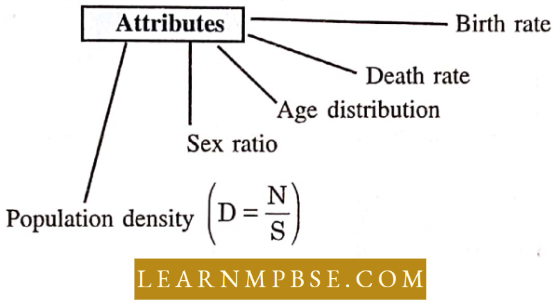
Question 19. Population density is expressed by :

  1. D = N + S
  2. D = N x S
  3. D = N÷S
  4. D = N-S.

Answer: 3. LD = N÷S

Question 20. Fingers and legs are shorter in colder regions. It is:

  1. Jorden’s rule
  2. Lindeman’s rule
  3. Allen’s rule
  4. Gloger’s rule.

Answer: 3. Allen’s rule

Organisms And Populations NEET Questions

Question 21. Population whose members reproduce asexually are termed:

  1. Panimictic
  2. Ecotype
  3. Apomictic
  4. Amphimictic

Answer: 3. Apomictic

Question 22. Population whose members reproduce are termed:

  1. Panimictic
  2. Apomictric
  3. Species
  4. Amphimictic.

Answer: 4. Amphimictic

Question 23. The study of interactions of an individual organism or a single species with the living and non-living components of its environment is:

  1. Autoecology
  2. Autoecious
  3. Autogamy
  4. Autonomy.

Answer: 1. Autoecology

Question 24. Ecological studies of plants were first started by:

  1. Warming
  2. Daubenmire
  3. Good
  4. Raunkier.

Answer: 1. Warming

Question 25. Synecology refers to the ecological study of:

  1. A population of species growing together
  2. Animals
  3. Plants
  4. Microbes.

Answer: 1. A population of species growing together

Question 26. All the living organisms on earth constitute:

  1. Community
  2. Biosphere
  3. Species
  4. Biome.

Answer: 2. Biosphere

NEET Important Questions On Ecology

Question 27. Individuals of the same species in a particular locality constitute:

  1. Population
  2. Hydrosphere
  3. Flora
  4. Fauna.

Answer: 1. Population

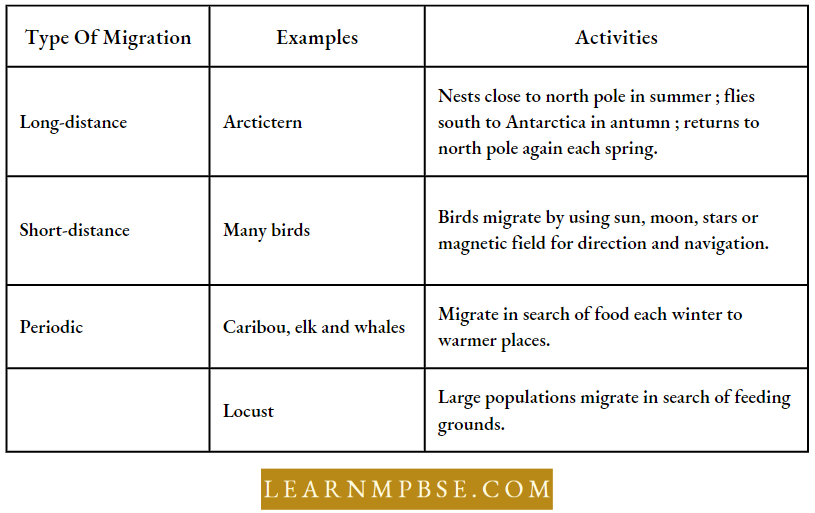
Question 28. Migration refers to:

  1. One-way outward movement
  2. One-way inward movement
  3. Periodic departure and return
  4. Death of individuals.

Answer: 3. Periodic departure and return

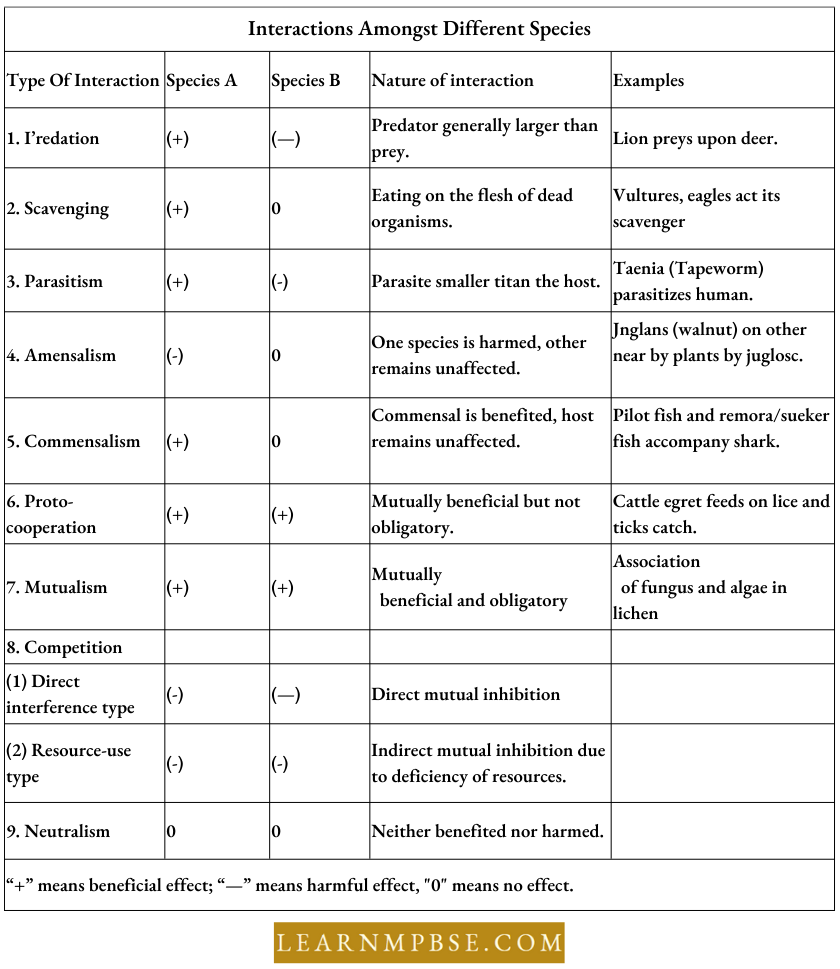
Question 29. Which of the following is an example of proto-cooperation?

  1. Echiuroid worm and small annelid
  2. Sea anemone and hermit crab
  3. Nitrogen-fixing bacteria and leguminous plants
  4. Trichophyta in the gut of termite.

Answer: 2. Sea anemone and hermit crab

Question 30. Gametophyte and sporophyte stages of a fern plant should ecologically be considered as:

  1. Two distinct species
  2. Two stages of a species
  3. Two varieties of a species
  4. Two organisms of a colony.

Answer: 2. Two stages of a species

Question 31. Which of the following is related to synecology?

  1. Same species
  2. Different species
  3. Both(1) and (2)
  4. None of above

Answer: 2. Different species

NEET Important Questions On Ecology

Question 32. Competition is most severe in two:

  1. Species
  2. Families
  3. Niche
  4. Orders

Answer: 1. Species

Question 33. The territory is defended against:

  1. Predator
  2. Any intruder
  3. Intruder of another species
  4. Intruder of the same species.

Answer: 4. Intruder of the same species

Question 34. Which of the following shows the polymorphism?

  1. Caricci papaya
  2. Apis indicia
  3. Volvox
  4. Both (2) and (3).

Answer: 4. Both (2) and (3)

NEET Questions Organisms and Populations Question 35. Cross-fertilization in plants is a kind of:

  1. Competitive interaction
  2. Co-operative interaction
  3. Parental care
  4. All the above.

Answer: 2. Co-operative interaction

Question 36. An interaction between two or more organisms when the resources necessary for them are limited refers to:

  1. Co-operation
  2. Competition
  3. Aggregation
  4. Family formation.

Answer: 2. Competition

Question 37. Flams and animals living in a given area form:

  1. Community
  2. Population
  3. Plankton
  4. Ecosystem.

Answer: 1. Community

Best MCQs For NEET Biology

Question 38. Sub-groups of a population capable of interbreeding are called as:

  1. Subpopulation
  2. Dummies
  3. Demes
  4. Biomes

Answer: 3. Demes

Question 39. In red deer, the herd is:

  1. Matriarchal
  2. Patriarchal
  3. Matriarchal or Patriarchal
  4. Not applicable.

Answer: 1. Matriarchal

Question 40. The biotic potential is counteracted by:

  1. Limitation of food supply
  2. Competition with other organisms
  3. The producer is the largest
  4. Both (1) and (2).

Answer: 1. Limitation of food supply

Question 41. The carrying capacity is determined by its:

  1. Death rate
  2. Filming resource
  3. Population growth rate
  4. Both (2) and (3).

Answer: 2. Flimiting resource

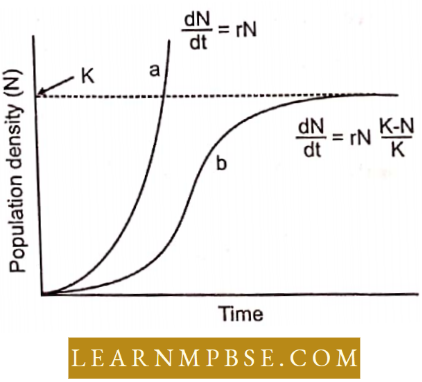
Question 42. A population can grow exponentially:

  1. When food is the only limiting resource
  2. When first invading a suitable and previously unoccupied habitat
  3. Only if there is no predation
  4. Only in the laboratory.

Answer: 2. When first invading a suitable and previously unoccupied habitat

Question 43. Which of the following does not directly affect biotic potential?

  1. A female’s age of first reproduction
  2. Carrying capacity of the environment
  3. Length of time a female is fertile
  4. Average number of offspring per brood or litter.

Answer: 2. Carrying capacity of the environment

Question 44. Which of the following chemical compounds helps in transmitting the message to other species of members?

  1. Alternative
  2. Ptyalin
  3. Pheromones
  4. None of the above.

Answer: 3. Pheromones

Question 45. The sympatric population cannot be isolated by:

  1. Behavioral barriers
  2. Seasonal barriers
  3. Habitat barriers
  4. Geographical barriers.

Answer: 4. Geographical barriers

Best MCQs For NEET Biology

Question 46. Term-species in ecology refers to:

  1. Autoecology
  2. Synecology
  3. Community ecology
  4. Paleoecology.

Answer: 1. Autoecology

Question 47. Population surge 230 years ago was due to:

  1. Industrial revolution
  2. Agricultural revolution
  3. Cultural revolution.
  4. Intellectual revolution.

Answer: 1. Industrial revolution

Question 48. The leveling of an S-shaped curve describing population growth is caused by:

  1. Carrying capacity
  2. The competitive exclusion
  3. Environmental resistance
  4. A change in the biotic potential.

Answer: 3. Environmental resistance

Question 49. The abundance of a species population within its habitat is called:

  1. Niche density
  2. Absolute density
  3. Relative density
  4. Regional density.

Answer: 1. Niche density

Question 50. Mule is produced by breeding:

  1. Mule and mare
  2. Horse and female ass
  3. Horse and mare
  4. Male ass and bitch.

Answer: 1. Mule and and mare

Best MCQs For NEET Biology

Question 51. When the population reaches carrying capacity:

  1. Mortality rate = Birth rate
  2. Mortality rate > Birth rate
  3. Mortality rate < Birth rate
  4. None of the above.

Answer: 1. Mortality rate = Birth rate

Question 52. Pheromones are secreted by certain exocrine cutaneous gland affect.

  1. Genitalia
  2. Skin colour
  3. Breast
  4. Mutual behavior of members of a species.

Answer: 4. Mutual behavior of members of a species

Question 53. The area covered by members of a species in search of food and mates is called:

  1. Range
  2. Home range
  3. Territory
  4. Habitat.

Answer: 2. Home range

Question 54. Crow also incubates the eggs of:

  1. Pigeon
  2. Dove
  3. Cuckoo
  4. Weaver bird.

Answer: 3. Cuckoo

Question 55. Pheromones of insects are:

  1. Growth promoters
  2. Growth inhibitors
  3. Means of communication
  4. Chemicals of unknown utility.

Answer: 3. Means of communication

Best MCQs For NEET Biology

Question 56. Population density of terrestrial organisms is measured in terms of individuals per:

  1. Metre
  2. Metre²
  3. Metre³
  4. Metre4

Answer: 2. Metre²

Question 57. Population density of aquatic organisms is expressed in terms of individuals per:

  1. Metre
  2. Metre²
  3. Metre³
  4. Metre4

Answer: 3. Metre³

Question 58. Which of the following factors is not a determinant of population size?

  1. Birth rate
  2. Immigration
  3. Emigration
  4. Migration.

Answer: 4. Migration.

Organisms and Populations Biology NEET Question 59. The dominant individual in a herd is

  1. Always a female
  2. Always a male
  3. Usually a male
  4. Usually a female

Answer: 3. Usually a male

Question 60. Tiger has a:

  1. Monogamous fixed partnership
  2. Patriarchy group
  3. Matriarchy group
  4. Solitary life

Answer: 2. Patriarchy group

Question 61. Which of these helps in the survival of a species?

  1. Group formation
  2. Maintenance of territory
  3. Communication
  4. All of the above.

Answer: 4. All of the above

Question 62. Honey bees perform dancing motions to signal:

  1. Distance of food source
  2. Direction of food source
  3. Availability of food
  4. Distance and direction of food source.

Answer: 4. Distance and direction of food source

Ecology MCQs For NEET

Question 63. Emigration affects the population in:

  1. Animals
  2. Land plants
  3. Animals and land plants
  4. Land plants and aquatic plants.

Answer: 1. Animals

Question 64. Brown-skinned human race:

  1. Mongoloid
  2. Polynesian
  3. Red Indian
  4. Australoid

Answer: 2. Polynesian

Question 65. The members or a form of polymorphic species:

  1. Interbreed with members in their own form
  2. Do not reproduce sexually
  3. Interbreed with members of other forms only
  4. Interbreed among themselves and with members of other forms also.

Answer: 4. Interbreed among themselves and with members of other forms also

Question 66. Cooperative interaction is essential for the perpetuation of:

  1. Animals
  2. Plants
  3. Both animals and plants
  4. Neither animals nor plants.

Answer: 3. Both animals and plants

Question 67. The aggregate of processes that determine the size and composition of any population is termed as:

  1. Population density
  2. Population explosion
  3. Population dispersal
  4. Population dynamics.

Answer: 4. Population dynamics

Question 68. When a tiger attacks cheetahs, the stag with the best antlers is surrounded by other individuals to protect it. It is an example of

  1. Cooperation
  2. Group formation
  3. Altruism
  4. Herding.

Answer: 3. Altruism

Question 69. Which of the following leads a solitary life?

  1. Swan
  2. Man
  3. Spider
  4. Monkey.

Answer: 3. Spider

Question 70. Family formation is a characteristic feature of:

  1. All animals
  2. A few animals
  3. Majority of animals
  4. Almost all animals.

Answer: 2. A few animals

Ecology MCQs For NEET

Question 71. Which among the following does not lead a monogamous life?

  1. Seal
  2. Fox
  3. Swan
  4. Wolf.

Answer: 1. Seal

Question 72. Rats are:

  1. Monogamous
  2. Bigamous
  3. Polygamous
  4. Do not have fixed partners

Answer: 4. Do not have fixed partners

Question 73. Ants communicate through:

  1. Sound
  2. Pheromones
  3. Contact
  4. Both (2) and (3)

Answer: 2. Pheromones

Question 74. Altruistic behavior is found in:

  1. Honey bee
  2. Termites
  3. Spotted deer
  4. All the above.

Answer: 4. All the above.

Ecology MCQs For NEET

Question 75. The factors which do not affect the population size is:

  1. Immigration
  2. Emigration
  3. Migration
  4. Birth rate.

Answer: 3. Migration

Question 76. The rapid decline in a population due to a high mortality rate is:

  1. Population density
  2. Population crash
  3. Population explosion
  4. All the above.

Answer: 2. Population crash

Question 77. According to the 1991 Census, the urban population of India was about:

  1. 30%
  2. 34%
  3. 51%
  4. 24%.

Answer: 4. 24%

Question 78. Genetically adapted population to a particular habit is:

  1. Mule
  2. Ecotype
  3. Ecosphere
  4. Ecology.

Answer: 1. Mule

Question 79. A fertile hybrid between the captive tiger and a lioness is:

  1. Mule
  2. Liger
  3. Tigress
  4. Tigon.

Answer: 4. Tigon.

Ecology MCQs For NEET

Question 80. Which of the following chemical compounds help in transmitting the message to other members of the same species?

  1. Hormone
  2. Ptyaiin
  3. Pheromones
  4. None of above.

Answer: 3. Pheromones

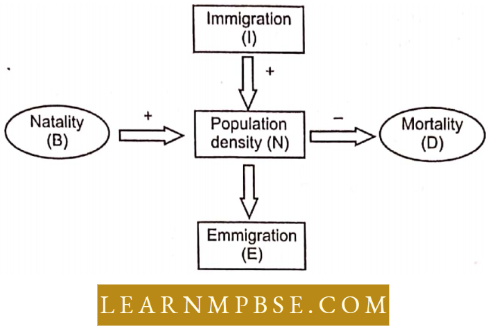
Question 81. The population tends to increase as individuals are added by:

  1. Natality
  2. Immigration
  3. None of the above
  4. Both of these.

Answer: 4. Both of these.

Question 82. The population tends to decrease by:

  1. Mortality
  2. Emigration
  3. None of these
  4. Both of these

Answer: 4. Both of these

Question 83. The most distinct and easily observation unit is:

  1. Cell
  2. Tissue
  3. Organs
  4. Individual organism.

Answer: 4. Individual organism.

Question 84. The occurrence of two forms among the organisms of the same kind is known as:

  1. Dimorphism
  2. Trimorphism
  3. Polymorphism
  4. None of the above.

Answer: 1. Dimorphism

Question 85. A green alga Volvox, a colonial form consists of over:

  1. 100 cells
  2. 1000 cells
  3. 10,000 cells
  4. 60,000 cells.

Answer: 4. 60,000 cells

Question 86. The chemicals of intraspecific communication are:

  1. Allochemics
  2. Kairomones
  3. Auxins
  4. Pheromones.

Answer: 4. Pheromones

Question 87. Human society is a product of:

  1. Instinctive behaviour
  2. Learnt behaviour
  3. Both (1) and (2)
  4. None of the above.

Answer: 2. Learnt behavior

Question 88. Match the terms in Column A with suitable terms in Column B.

  1. (1-c), (2-d), (3-a), (4-e); (5-b)
  2. (1-c), (2-d), (3—b), (4-e); (5-b)
  3. (1-c), (2-d), (3-a), (4-e); (5-b)
  4. (1-D), (2-c). (3-a), (4-e); (5-b).

Answer: 3. (1-c), (2-d), (3-a), (4-e); (5-b)

Question 89. Which of the following morphological forms is also known as ecophenes?

  1. Ecospecies
  2. Ecad
  3. Ecotype
  4. None of the above.

Answer: 3. Ecotype

Question 90. The relationship between one species and another within a community that has evolved through interactions is based upon:

  1. Requirement and mode of obtaining food only
  2. Requirement and mode of obtaining shelter only
  3. On the habits of the species only
  4. All of these.

Answer: 4. All of these.

Organisms And Populations NEET Questions

Question 91. The interaction among organisms in a community called as biotic factors influence:

  1. The structure of a community only
  2. Composition of a community only
  3. The function of a community only
  4. All of these.

Answer: 4. All of these.

Question 92. According to the species equilibrium theory, smaller islands have fewer species because they have:

  1. High rate of extinction
  2. Lower rate of colonization
  3. A smaller species pool to draw from
  4. Lower birth rates.

Answer: 1. High rate of extinction

Question 93. Competition between individuals of the species is called:

  1. Interspecific
  2. Intraspecific
  3. Feedback
  4. All of the above.

Answer: 2. Intraspecific

Question 94. Which of the following levels of organization emphasizes the structural aspects in terms of relation and requirement of organisms?

  1. Autecological level
  2. Synecological level
  3. Both (1) and (2)
  4. None of the above.

Answer: 1. Autecological level

Question 95. Synecology is the study of:

  1. Biosphere
  2. Individuals
  3. Environment
  4. Community in relation to the environment.

Answer: 4. Community in relation to environment.

Organisms And Populations NEET Questions

Question 96. The leaves are absent in the xerophyte:

  1. Calotropis procera
  2. Zizyphus jujube
  3. Acacia nilotica
  4. Cippciris aphylla.

Answer: 4. Cippciris aphylla

Question 97. The relationship between one species and another within a community that has evolved through interactions is based upon:

  1. Requirement and mode of obtaining food only
  2. Requirement and mode of obtaining shelter only
  3. On the habits of the species only
  4. All of the above.

Answer: 4. All of the above.

Organisms And Populations NEET Questions

Question 98. The interaction among organisms in a community called as biotic factors influence:

  1. The structure of a community only
  2. Composition of a community only
  3. The function of a community only
  4. All of the above.

Answer: 3. Function of a community only

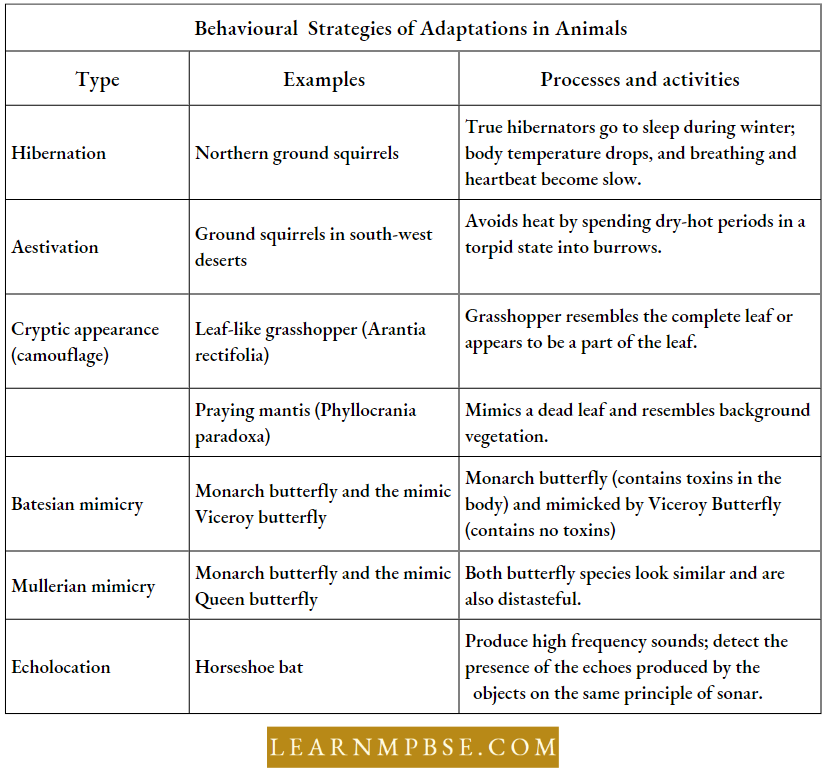
Question 99. The scientific study of mimicry was carried out first by:

  1. Darwin
  2. Bates
  3. Muller
  4. Von Frich.

Answer: 2. Bates

Question 100. A butterfly of India when resting with folded wings resembles a dead leaf. This mechanism of protection is called:

  1. Mimicry
  2. Hiding
  3. Congregation
  4. Camouflage.

Answer: 1. Mimicry

NEET Important Questions On Ecology

Question 101. A stick insect (Carausium) mimics a thin dry branch and a dead leaf or an oak leaf butterfly (Kallima) looks like a dead leaf. It is:

  1. Concealing protective mimicry
  2. Warning mimicry
  3. Concealing aggressive mimicry
  4. Warning alluring mimicry.

Answer: 1. Concealing protective mimicry

Question 102. The mimetic imitates other organism in:

  1. Shape and size
  2. Color
  3. Action and attitude
  4. Any of the above.

Answer: 3. Action and attitude

Question 103. Types of aggressive mimicry are

  1. Concealment type
  2. Alluring type
  3. Warning type
  4. Both (1) and (2).

Answer: 4. Both (1) and (2).

Question 104. The first scientific account of mimicry was given by:

  1. Bates
  2. Darwin
  3. Raunkier
  4. Haeckel.

Answer: 1. Bates

Question 105. Which one is not an example of concealing protective mimicry?

  1. Sea Dragons (Phyllopteryx) resemble seaweeds
  2. The Geometrid moth’s caterpillar resembles small branches.
  3. The praying mantis looks like branches
  4. Leaf insect (Phyllium) looks like a green leaf.

Answer: 3. Praying mantis looks like branches

Question 106. The palatable viceroy butterfly (Limenitis archippus) resembles a distasteful monarch butterfly (Doncisus plexippus) for its protection. This is called:

  1. Aggressive Mimicry
  2. Warning Mimicry
  3. Concealing Mimicry
  4. Alluring Mimicry.

Answer: 2. Warning Mimicry

NEET Important Questions On Ecology

Question 107. When a predator (mimic) remains hidden from prey to catch it suddenly as in praying mantis, it shows:

  1. Concealing aggressive mimicry
  2. Concealing protective mimicry
  3. Warning mimicry
  4. Alluring mimicry.

Answer: 1. Concealing aggressive mimicry

Organisms and Populations NEET Questions Question 108. When the mimic attracts its prey, it is called:

  1. Warning mimicry
  2. Alluring mimicry
  3. Protective coloration
  4. Camouflage.

Answer: 2. Alluring mimicry

Question 109. When a palatable female butterfly (for example, a Viceroy butterfly) copies an unpalatable species (Monarch butterfly) the type of adaptation is called:

  1. Batesian mimicry
  2. Mullerian mimicry
  3. Cryptic adaptation
  4. Warning coloration.

Answer: 1. Batesian mimicry

NEET Biology Notes – Organisms and Populations

NEET Biology Organisms and Populations Main Branches Of Ecology

Ecology:

Science examines the interaction between an organism and its external environment.

  • The word was introduced by Reiter (1865) and subsequently defined by Haeckel (1866) as the examination of reciprocal interactions between organisms and their environment.
  • The term ecology originates from the Greek words oikos, meaning “place to live,” and logos, meaning “study.” E.P. Odum characterized it as the examination of the structure and function of nature.

Organisms And Populations NEET Notes

Autoecology. Study of an individual organism or a particular species in relation to its environment.

Synecology. Study of groups of organisms (communities) in relation to their environment.

Conservation Ecology. It deals with the proper management of natural resources for the benefit of human beings.

Production Ecology. It deals with the gross and net production of organic matter content in different kinds of ecosystems so that proper land management may be achieved.

Ecological Energetics. It is concerned with the energy conservation and flow in the organisms within the ecosystem.

Radiation Ecology. It deals with the study of radioactive substances and radiation in the surroundings.

Space Ecology. This is concerned with a possible visit to and return from neighboring planets and its effects.

Estuarine Ecology. It deals with the study of organisms in estuarine points.

Read and Learn More NEET Biology Notes

Microbial Ecology. It is concerned with the studies of various principles that govern the distribution of microorganisms as algae, fungi, bacteria, etc. in nature.

Gynecology. Study of ecological adaptations in relation to genetic variability.

Paleoecology. Study of the relationship between organisms and the environment of the past.

Applied Ecology. Application of ecological concept for human welfare.

Silviculture. Study of maintenance and preservation of forests.

Organisms And Populations NEET Notes

System Ecology and Ecosystem Modeling. Data on ecological investigation are being computerized to formulate and describe the structure and function of ecosystems by preparing verbal, graphic, and mathematical models and equations and utilization in various ecological investigations.

Statistical Ecology. It deals with statistical studies on populations, sampling techniques, and community problems.

Pollution Ecology. It deals with the study of the effects of environmental pollutants on organisms and other objects.

Demoecology. Study of a population in relation to its environment.

Bioecology. Shelford and Clements used the term bioecology for the integrated study of plant ecology and animal ecology.

NEET Biology Organisms and Populations Level Of Organisation

Organism: Basic unit of study in ecology.

Population: Group of individuals of the same species inhabiting a given area.

Community Assemblage of different kinds of populations, living under the same set of environmental conditions interacting with each other. A biological community has a distinct species composition and structure.

Ecosystem A community integrated with its physical environment through the exchange of energy and recycling of nutrients.

Biome It is an ecosystem spread over a large area and defined by specified latitude, precipitation, temperature, flora, and fauna.

Biosphere Sum total of all biomes form a biosphere (The inhabited part of the earth is known as a biosphere.)

Landscape It is a part of the geographical region which is well-demarcated and consists of a large number of different types of ecosystems.

NEET Organisms And Populations Chapter Notes

NEET Biology Organisms and Populations Environment, Habitat, And Niche

The Environment Sum total of all biotic and abiotic factors that surround and potentially influence an organism is termed environment. It can be studied on

Large Scale Climate

Small Scale Microclimate

Organisms interact with their environment at several spatial and time scales. for example,

  1. Bacteria – fraction of cm³
  2. Tree-large area.

Weather: Short-term property of the atmosphere (such as temperature, pressure, humidity, rainfall, sunshine, cloud cover, and wind) at a given place and time which reflects hourly, daily, or weekly changes that constitute weather.

Weather changes with change in any of these atmospheric factors and has little impact on the flora and fauna of a place.

Climate average weather of an area is known as climate. It is affected by two factors

  1. Temperature
  2. Rainfall

Both these factors are determined by input of solar radiations which is turn depend on the latitude of that particular region.

NEET Biology Organisms And Populations Important Points

Climatic Zones

  1. Tropical (0° – 20° latitude)
  2. Sub-tropical (20° – 40° latitude)
  3. Temperate (40° – 60° latitude)
  4. Arctic and Antarctic (60° – 80° latitude)

Temperature decreases with an increase in latitude/altitude

NEET Biology Organisms And Populations

In Tropical Region Mountain: All 4 climatic Zones

  1. Alpine
  2. Temperature
  3. Sub-tropical
  4. Tropical

Temperature Zone Mountain: 2 climatic zones

  1. Alpine
  2. Temperate

Microclimate Climate conditions prevailing at a local scale or Immediate surrounding of plants and animals. for example: the interior of a forest is more humid than a nearby nonforested area.

Habitat Place occupied by an entire biological community for example: a pond, desert, river, or valley.

Microhabitat Part of habitual having a specific property for example edge of a pond, forest floor, or tree trunk.

Niche Or Ecological Niche (Grinnel) Refers to a specific place in a habitat occupied by a species where it can show all its activities and is characterized by the type of food available, amount of light available, and range of tolerance.

A habitat supports many species and has many niches but no two species can occupy the same niche.

Ecological Equivalents: Two different types of organisms which are living in different habitats but occupy the same niche for example both owls and cats feed on shrews and mice.

NEET Biology Organisms And Populations Organism And Its Environment

Ecology at the orgasmic level is also called physiological ecology because it explains how different organisms are adapted to their environment for survival and reproduction.

The climate of a particular region is affected by two factors i.e. temperature, and precipitation (rainfall and snowfall). Annual variations in the intensity and duration of temperature (seasons) and annual variations in precipitation are responsible for the formation of major biomes like desert rainforests, deciduous forests, and tundra.

Organism And Environment Species And Population Organism And Its Environment

  • Regional and local variations within each biome form a variety of habitats (places occupied by a population or an entire biological community) of India.
  • On this planet, life not only exists in favorable habitats but also in extreme and harsh habitats such as the Rajasthan desert, rain-soaked Meghalaya forests, streams, deep oceans, trenches, high mountain tops, boiling thermal springs, compost pits, permafrost polar regions and even in our intestines.

NEET Biology Organisms And Populations Important Points

The most important environmental factors that cause of physical and chemical conditions of different habitats are:

  1. Temperature
  2. Water
  3. Light
  4. Soil

Habitat includes not only abiotic (physio-chemical) components but also biotic components like pathogens, parasites, predators, and competitors of the organisms with which they interact constantly.

Over some time, organisms had through natural selection evolved adaptations for their survival and reproduction in different types of habitats.

NEET Biology Organisms and Populations Major A Biotic Factors

Temperature: It is the degree of hotness and coldness of a substance. It is the most ecologically relevant environmental factor. It is affected by altitude, latitude, topography, and Vegetation.

  1. Tropical zone > 24°C Megatherm
  2. Subtropical zone 17° – 24°C Mesotherm
  3. Temperature 7° – 17°C Microtherm
  4. Arctic/Antarctic <7° Hekistotherm

Temperature varies seasonally and decreases progressively from the equator towards the poles and from plains to the mountain top. There are however unique habitats, such as thermal springs and deep-sea hydrothermal vents where average temperature exceeds 100°C.

Temperature governs the geographical distribution of many plants and animals for example,

  1. Mango trees do not and cannot grow in temperate countries like Canada and Germany.
  2. Snow leopards are not found in Kerala forests.
  3. Tuna fish are rarely found beyond tropical latitudes in oceans.

Temperature greatly affects living organisms because it affects the kinetics of enzymes and through it the basal metabolism, activity, and other physiological functions of the organisms.

  • Organisms that can endure large fluctuations in temperature and can tolerate a wide range of temperatures are called eurythermal, for example, Artemesia, plants of temperate regions.
  • Most of the organisms are restricted to a narrow range of temperatures, such organisms are called steno thermals, for example, palms (seashore), and plants in warm tropics.
  • The levels of thermal tolerance of different species determine to a large extent their geographical distribution. In recent years, as the average global temperature is gradually increasing it is going to affect the distributional range of many species, particularly thermals.

Effects Of Temperature: Temperature affects – growth, metabolism, reproduction, sex ratio distribution coloration behavior, and morphology.

Water: Next to temperature, water is the most important factor influencing the life of organisms. Life is not possible without water.

Plants and animals show modifications according to the availability of water in the area and the requirements of conserving the obtained water. Plants in dry areas are called xerophytes. These plants develop modifications to increase water absorption and reduce transpiration.

NEET Biology Organisms And Populations

NEET Biology Organisms and Populations Soil Profile

It is the vertical section of the soil showing various layers or horizons. It consists of the following horizons:

  1. Horizon ‘A’. It is the uppermost horizon of the soil called as topsoil. It shows maxi-mum biological activity. Due to having most of the plant’s roots, soil flora, and fauna in this layer, its thickness varies from a few centimeters to 3 meters. It is differentiated into 4-sublayers. The superficial sublayers of litter and duff are designated as Aoo and Ao. These are sometimes excluded from horizon ‘A’ and included under horizon ‘O’ of their own. Horizon A is subdivided into the following sublayers:
    • Aoo(O1)(Litter layer). It is the uppermost sublayer containing freshly fallen undecomposed organic debris of dead leaves, bark, flowers, fruits, and animal remains.
    • Ao(O2)(Duff layer). Below Aoo, the organic matter is found under different stages of decomposition. Small insects, bacteria, and fungi are in abundance.
    • A1(Humus layer). It is dark and rich in organic matter which is finely divided, amorphous, dark brown, black colored, and mixed with mineral matter forming humus.
    • A2 This region is of light color and has poor inorganic matter. Mineral matter has leached down due to heavy rains.
  2. Horizon ‘B’ or Sub-soil. It is rich in mineral matter and very poor in organic matter. Biological activity is very little due to poor aeration. Roots of only large trees and shrubs reach in this region.
  3. Horizon ‘C’ or Zone of regolith. It is composed of partly weathered parental rocks.
  4. Horizon ‘R’. It is the lowermost layer of soil, consisting of rocks (unweathered) called Sub-Soil.

Comparison Of Soil Profile

Organism And Environment Species And Population Comparison Of Soil Profile

NEET Biology Organisms And Populations Revision Notes

NEET Biology Organisms and Populations Responses To Abiotic Factors (Organisms Response)

Organisms are often found living under varied environmental conditions which will not permit all biochemical reactions and physiological functions to proceed with maximal efficiency and so cannot enhance the overall fitness of the species.

  • During the course of millions of years of their existence, many species have evolved a relatively constant internal environment, despite varying external environmental conditions. This constancy may be in terms of optimal temperature and osmotic concentrations of body fluids.
  • A process by which the organisms, keep the internal environment constant is called homeostasis.
  • To further explain this concept, if an example is taken of a person who is able to perform best when the temperature is 25°C and wishes to maintain it so, even when it is hot or cold outside can be achieved by using an air-conditioner is summer and heater in winters.
  • Then performance would be always maximal, regardless of the weather around. This homeostasis is obtained through technology. It occurs through an expenditure of external energy.
  • Organisms maintain homeostasis through physiological means which requires an expenditure of internal energy of the body. However, all organisms are not able to spend so much energy on maintaining homeostasis.
  • So, to meet stressful abiotic conditions organisms regulate, conform, migrate, and suspend their activities.

Regulate: Some organisms are able to maintain homeostasis by physiological means which ensures constant body temperature, constant osmotic concentration, etc. All birds and mammals, and a very few vertebrate and invertebrate species are indeed capable of such regulation (thermoregulation and osmoregulation).

  • Animals having a regulated body temperature are called endothermic homoithermal or warm-blooded animals. The success of mammals is largely due to their ability to maintain a constant body temperature and because of this they thrive well whether they live in Antarctica or in the Sahara desert.
  • The mechanisms used by most mammals to regulate their body temperature are similar to the ones that we humans use. We maintain a constant body temperature of 37°C. In summer, when the outside temperature is more than our body temperature, we sweat profusely.
  • In winter when the temperature is much lower than 37 °C, we start to shiver, a kind of exercise which produces heat and raises the body temperature. Plants, on the other hand, do not have such mechanisms to maintain internal temperatures.

Organism And Environment Species And Population Organisms Response

Conform: the majority of animals (99%) and nearly all plants cannot maintain a constant internal environment. They do not have a temperature-regulating mechanism. The temperature of such organisms changes with the surrounding temperature. Such animals arc called ectothermit poikilothermal or cold-blooded animals.

  • In aquatic animals, the osmotic concentration of the body fluid changes with that of the ambient water osmotic concentration. Such plants and animals that change their internal environment in response to the external environment are called conformers.
  • Although regulators are most benefitted hut still conformers have not evolved to become regulators. It is comparable to the situation, where a person will sweat in summer because cannot afford an air-conditioner so will continue with sub-optimal performance in the hot summer months.
  • Thermoregulation is energetically expensive for many organisms. This is particularly true for small animals like shrews and hummingbirds. Heat loss or heat gain is a function of surface area.
  • Since small animals have a larger surface area relative to their volume, they tend to lose body heat very fast when it is cold outside; they have to expend much energy to generate body heat through metabolism.
  • This is the main reason why very small animals are rarely found in polar regions. During the course of evolution the costs and benefits of maintaining a constant internal environment the taken into consideration.
  • There are some organisms that are intermediate between conformers and regulators. They are able to maintain homeostasis up to a certain limit beyond which they behave like conformers. They are known as partial regulators.
  • If the stressful external conditions arc localized or remain only for a short duration, the organisms have two other alternatives.

Migrate: The organism can move away temporarily from the stressful habitat to a more hospitable area and return when the stressful period is over. Like a person moving from Delhi to Shimla for the duration of summer.

Many animals, particularly birds, during winter, undertake long-distance migrations to more hospitable areas. Every winter the famous Keoladeo National Park (Bharatpur) in Rajasthan receives thousands of migratory birds coming from Siberia and other extremely cold northern regions.

Organisms And Populations NEET Notes

Suspend (Stop For A Time): In bacteria, fungi, and lower plants, various kinds of thick-walled spores are formed which help them to survive unfavorable conditions and germinate only on the availability of a suitable environment.

In higher plants, seeds and some other vegetative reproductive structures serve as means to tide over periods of stress besides helping in dispersal. They do so by reducing their metabolic activity and going into a state of dormancy. In animals, the organism, if unable to migrate, might avoid the stress by escaping in time. It is of three types :

  • Hibernation i.e. winder sleep for example Bears.
  • Aestivation i.e. summer sleep for example Some snails and fish.
  • Diapause: Under unfavorable conditions, many zooplankton in lakes and ponds are known to enter diapause a stage of suspended development. Diapause is a stage in the development of certain animals during which developmental growth is suspended during winter when days are short.

Population Ecology NEET Notes

NEET Biology Organisms and Populations Ecological Levels Of Organisation

The ecological levels of the organization are an organism, population, community, ecosystem, biome, and biosphere.

  • Organisms are the basic unit of study in ecology. At the organismic level, we intend to study form, physiology and behavior, distribution, and adaptations in relation to environmental conditions.
  • Species is a group of organisms interbreeding among themselves to produce fertile young ones of their own kind.
  • Population Level. Individuals of a species living in an area form a freely interbreeding group called a population, for example, all individuals of elephants living in an area constitute a population.
  • Community Level. Populations of different species present in an area develop interdependence and interactions to form a well-knit group called a community or biotic community.
  • Ecosystem Level. The biotic community of a segment of nature interacts with abiotic factors to form an ecosystem. An ecosystem is generally a self-sufficient unit that has its own flow of energy, biogeochemical cycles, and system of controls.
  • A landscape is a unit of land with a natural boundary having a mosaic of patches.
  • Biome Level. A number of ecosystems are associated with forming a bigger organization specific to a geographic area or climate. It is called a biome. Some examples of biomes are deserts, temperate deciduous forests, tropical rainforests, etc.
  • Environment is sum total of all biotic and abiotic components.
  • The short-term properties of the atmosphere such as temperature, pressure, humidity, rainfall, sunshine, cloud cover, and wind at a given place and time are termed weather.
  • Climate. It is the average weather of an area.
  • Biosphere. It is the largest biological system on a global scale which occurs in the whole living mantle of the earth. The biosphere has the highest level of organization. It is made of several biomes.
  • The different climatic regions are tropical, subtropical, temperate arctic, and antarctic.
  • Habitat is the natural place of living of an organism.

Differences Between Habitat And Environment

Organism And Environment Species And Population Differences Between Habitat And Environment

Differences Between Habitat And Microhabitat

Organism And Environment Species And Population Differences Between Habitat And Microhabitat

Microclimate. It represents the climatic conditions that prevail at a local scale, or in areas of limited size such as the immediate surroundings of plants and animals. Microclimate generally differs from the prevailing regional climatic conditions. For example, in a forest, dense foliage reduces the amount of light reaching the ground.

This also results in a changed air temperature profile. The daytime air temperature inside the forests is lower than outside. Also, the interior of a forest may be more humid than a nearby non-forested area.

Population Ecology NEET Notes

NEET Biology Organisms and Populations Ecological Niche

The ecological Niche of an organism represents the range of conditions that it can tolerate, the resources it utilizes, and its functional role in the ecological system. The ecological niche involves not only the physical space occupied by an organism, but also its functional role in the community (i.e., a trophic position occupied), and its position in environmental gradients including other conditions of existence. The term ‘niche’ was for the first time used by Grinncl. (1971)

Population Interactions NEET Biology

Kinds Of Ecological Niche

  1. Trophic Niche. It is associated with the trophic position of an organism. For example. the two aquatic bugs. Corixa and Nototiccta live in the same habitat, i.e., pond but occupy different trophic niches.
  2. Spatial Or Habitat Niche. It is concerned with the physical space occupied by an organism. The best example of spatial or habitat niche is provided by the distribution of seven species of millipedes in the forest floor of a maple-oak forest (O’Neill, 1967).
    • All seven species occur in the same general habitat, i.e., forest floor, and belong to the same trophic level (that is all are decomposers in their role as detrivores). Another example is provided by the three species of fungi colonizing the decaying culms of fodder grass, for example, Setaria glauca.
    • These all fungi live in the habitat, the decaying internodes. and they all belong to the same trophic level (decomposers).
  3. Multifactor Or Hypervolume Niche. Multifactor (hypervolume) niche concept was developed by G.E. Hutchinson (1965) of Yale University. He suggested that if we measure the range of some environmental variable (for example, temperature) over which a particular species can live and reproduce we put this on a graph.

We then do the same for another environmental variable (for example, humidity) and put this on the second axis of the graph. The space that is enclosed will represent the niche of the species.

Since there are a large number (n) of other environmental factors, both abiotic and biotic, that affect the population, the niche is n-dimensional hypervolume, an abstraction since we are able to draw only with respect to three dimensions. This is considered to be the fundamental niche of the species.

Organisms And Populations Class 12 Notes For NEET

NEET Biology Organisms And Populations Environmental Factors And Their Importance To Plants And Animals

Environmental Factors Include:

  1. Light
  2. Temperature
  3. Humidity
  4. Wind
  5. Rainfall
  6. Water
  7. Atmospheric gases.
  1. Importance Of Light. It is important for photosynthesis, flowering in plants, bird migration, reproductive activities, biological rhythms, plant growth, metabolism, and periodicity.
  2. Effect Of Temperature. It is the most important factor affecting almost all activities of organisms. Most organisms can survive in the temperature range of 5°-35° C (except certain bacteria) cyanobacteria, shelled protozoa.
  3. Importance Of Humidity. It is the number of water vapors present in the atmosphere. Absolute humidity is maximum near the equator and gradually decreases towards the poles. It plays an important role in the life of plants as well as animals.
    • It promotes the growth of epiphytes example, orchids, and other plants that support animal life.
    • It regulates the evaporation of water from the body of land organisms in transpiration and perspiration.
  4. Importance Of Wind. Air in motion is called wind. Its direct effects are physical or mechanical while indirect effects are physiological. Wind modifies the humidity. Dry winds diffuse the dwarfing of plants. Wind helps in pollination, and dispersal of fruits and seeds and prevents frost damage.
    • Sometimes shrubs and trees are planted to protect the field against wind. Such structures are known as windbreaks or shelter belts. These plants (trees) are planted at 90° to the wind velocity.
    • It affects both plants and animals (more effects on plants) in the following ways :
      • Strong winds cause soil erosion reducing soil fertility. These also cause desertification by shifting of sand particles to fertile areas.
      • These cause lodging (flattening of plants against the ground) of plants like wheat, rice, maize, oats, sugarcane, etc.
      • These increase the rates of evaporation and transpiration leading to desiccation which causes dwarfism in the plants.
  5. Importance Of Rainfall. Rainfall is the source of groundwater and relative humidity (the ratio of the pressure of water vapors in the air to the vapor pressure of the air when saturated with water vapors at the same temperature). The amount of annual rainfall greatly affects the vegetation as well as the animal population of a particular region.
  6. Importance Of Water. Water is essential for life. It covers more than 70% of the earth’s surface and forms the most extensive habitat for the organisms. Types of plants and animals distributed in water bodies greatly depend upon the nature of water (freshwater or seawater). Land plants derive water from the soil while land animals derive water from pools, ponds, lakes, rivers, springs, etc.

NEET Biology Organisms and Populations Tolerance Factors Determine Distribution Of Species

Range Of Tolerance:

  • Biological species exhibit varying degrees of tolerance to environmental variables.
  • These components exhibit variability in their impact, and anyone present in minimal quantity may constitute a limiting factor.
  • The reaction of an organism to varying gradients of a singular environmental element, such as temperature, sunlight, or nutrient concentration, produces a bell-shaped curve as illustrated.

Organism And Environment Species And Population The Response Of An Organisms To A Range Or Gradient Of An Environment

Different Layers Of Atmosphere

Organism And Environment Species And Population Different Layers Of Atmosphere Based On Temperature

Organisms And Populations Class 12 Notes For NEET

NEET Biology Organisms and Populations Zones In The Lake

Shelford proposed the law of tolerance which states that organisms show all grades of tolerance and may have a wide range of tolerance of one factor and a very narrow range for another. Some additional principles of the law of tolerance may be stated as follows:

Organism And Environment Species And Population The Zones In Lake Water As Determined By Gradients Of Light Oxygen And Temperature From The Water Surface To Lake Bottom

  1. Organisms may have a wide range of tolerance for one factor and a narrow range for another.
  2. Organisms with a wide range of tolerance for all the factors are likely to be most widely distributed.
  3. When conditions are not optimum for a species with respect to a particular environmental factor, the limits of tolerance may be reduced with respect to other factors.
  4. The limits of tolerance for reproductive individuals, seeds, eggs, embryos, and larvae are usually narrower than for non-reproductive adult plants or animals. For example, adult blue crabs and many other marine animals can tolerate brackish water or fresh water with a high chloride content, but their larvae cannot live in such water and hence, they cannot reproduce in rivers and are not established there permanently.

To describe a species with a narrow range of tolerance for a particular factor, we use the prefix sten., for those with a wide range, we use the prefix eury. The term steno¬thermal and eurythermal, refer to temperature tolerance.

Population Interactions NEET Biology

Liebig’s Law of Minimum. This law states that the growth of the plant is dependent on the amount of the foodstuff which is to it in minimum quantity.

  • This statement is later on combined with a law of limiting factors first proposed by the British physiologist.
  • Blackmann who investigated the factors affecting the rate of photosynthesis and found that the rate is governed by the level of the one factor operating at a limiting intensity.
  • The two concepts combined form the so-called Liebig-Blackmann law.
  • However, two additional principles must be added.
  • The first is a constraint that Liebig’s law is strictly applicable only under steady-state conditions, i.e., when the inflow of energy and materials balances the outflow.
  • The second important consideration is the factor interaction. Thus, a high concentration of some substance, or the action of some factor other than the minimum one, may modify the rate of utilization of the latter. In other words, a high level of one factor or substance will modify the limiting effect of another, a process known as factor interaction.

Organisms And Their Environment NEET

NEET Biology Organisms and Populations Species And Population

The individual is the most concrete entity with a distinct structure and definite function.

  • Individual organisms of the same kind form higher units such as family, herd, population, and species.
  • Out of the above list, the species and population are the most universal and stable units.
  • Species include closely related, morphologically similar individuals who interbreed among themselves to produce the fertile young ones of their own type. Members of species may show individual variation, and sexual dimorphism and may occur as varieties. Polymorphic species have many specialized morphic forms which perform certain functions.
  • Different species may be bred artificially, but do not interbreed freely in nature.
  • New species evolve from pre-existing species by modifications.
  • All species show various cooperative and competitive interactions among their members.
  • Many species of animals have a definite home range in which their members find food and mates. Different groups form their territories which are often marked and guided by their members.
    a Members of species show intraspecific competition for food, territory, rank, and mate. Cooperation and sexual reproduction are the most fundamental and universal interactions.
  • Demography is the branch of the study of different aspects of the human population.

A population is a group of organisms of the same species living in a definite area at a given time.

Human Racers

  • Negroids
    • Dark skin
    • Warty Hair
    • Thick lips
  • Caucasoids
    • Light to dark skin
    • Blue to dark-eye
    • Medium to thin
    • Abundant body
  • Mongoloid
    • Yellow to brown skin
    • Brown eye
    • Medium to thin lips
    • Few body hairs

A set of local populations connected by dispersing individuals is called metapopulation,

  • Population has group characteristics, like density, natality, mortality, dispersal, distribution, biotic potential, and growth forms,
  • Population density is determined by the total number of individuals per unit space at a specific given time.
  • The size of the population is also affected by the natality (birth) and mortality (death) rate. It is also regulated by food, space, disease, and other natural factors, Human populations are characterized by rapid growth, wide distribution, and perennial reproductive activity.
  • Socio-cultural factors determine the human populations.
  • The inherent maximum capacity of an organism to reproduce or increase in number is termed biotic potential (r).
  • The environmental check on population size or its biotic potential is called environmental resistance (k).
  • The growth of population can be measured as an increase in its size over a period of time.
  • An S-shaped growth curve is obtained for most of populations,
  • No single population can live in isolation in a natural environment,
  • A biotic community is an association of several populations belonging to different species living in a common environment and interacting with one another,
  • The various species in a community share a common environment and are related by direct or indirect interactions.

Organisms And Populations Class 12 Notes For NEET

NEET Biology Organisms and Populations Biotic Community

A population of a single species is not a viable entity or unit by itself. An association of a number of different species in a common environment that can survive in nature is called
biotic communities such as pond communities, forest communities, etc.

Biotic Isolation. The occurrence of organisms living in isolation from other organisms.

Biotic Stability. Tendency in which a biotic community becomes stable.

  • It depends upon species diversity; the presence of biological contest, population density, and the carrying capacity of the environment. The larger the number of species present in a biotic community, the more stable it is.
  • The relationship between one species and another within a community has evolved through their interactions, based on the requirement and mode of obtaining food and shelter and also on the habits of the species.

Characters In Community Analysis

  1. Species composition
  2. Dominance
  3. Physiognomy and stratification.
  4. Species diversity
  5. Keystone and link species.
  6. Ecotones and Edge effect.

Organisms And Their Environment NEET

Earth’s Vegetation Can Be Divided Into Different Zones Based On Altitude.

  1. Upto 1800 feet—Tropical rain forest.
    • Tropical moist deciduous with 1000-1500 mm rainfall
    • Tropical moist evergreen with 2500 mm rainfall.
  2. 18001—4000 feet—Grassland or desert, savannah
  3. 4000’—7500 feet—Temperate deciduous forest. Oak is common
  4. 7500—12000 feet— Coniferous forest (Temperate evergreen forests) for example Pinus, Abies, Picea.
    • 12000 feet is regarded as a tree or timberline. Above this height of plants decreases.
  5. 12500—14500 feet— Alpine vegetation (tundras)

NEET Biology Organisms and Populations Biotic Stability

A biotic community is formed of large numbers and very diverse types of populations of plants, animals, and microbes which differ taxonomically from each other. All these populations are essential for biotic stability

Biotic Stability Definition: Absence of major fluctuations in the population and ability to undergo homeostasis after a disturbance). So stability amongst diversity is an important feature of a biotic community.

Elton (1958) stated that the stability of a biotic community is mainly governed by the number of species in it and the interactions between them. The larger the number of species in a community, the more stable it will be because:

  1. These provide alternative sources of food.
  2. Proper dispersal of different species so decreases the spreading of epidemics.
  3. Adjustment between members of different species using the same resource.
  4. Reduction of intraspecific interactions.
  5. Presence of biological control.

A monoculture community (having a population of single plant species) for example Eucalyptus or Casuarina acts as a paradise for pests and pathogens so is likely to be wiped out by fungal diseases or pests.

But in a polyculture community (having many populations of different plant species), only one species may be affected by a disease whereas the rest would survive. So a polyculture Tropical rain forest biome is more stable than a Tundra biome.

Organisms And Populations Class 12 Notes For NEET

Behavioral Strategies Of Adaptations In Animals

Organism And Environment Species And Population Behaviourial Strategies Of Adapations In Animals

NEET Biology Organisms and Populations Migration

Migration involves long-distance or short-distance movement of animals from one place to another. Many organisms that fly or swim undertake extensive migration as depicted below:

Migration As A Strategy Of Adaption In Animals

Organism And Environment Species And Population Migration As A Strategy Of Adaptation On Animals

NEET Biology Organisms and Populations Ecads

Ecads are alternatively known as ecophenes. An ecad of a plant species is a group of individuals that, while sharing the same genetic lineage, display notable variations in vegetative traits, such as leaf count on the stem, morphology, and dimensions.

  • These differences are solely environmental and thus transient or reversible. A shift from one ecad variety to another may occur due to a change in habitat.
  • Thus, the appearance of all ecads would be analogous if they were relocated to the same habitat.
  • A multitude of ecads has been recorded across several species. Ramakrishnan (1960) noted that Euphorbia hirta, belonging to the  Euphorbiaceae family, exhibits two ecads in India:
  • One that thrives in arid, compact soil (prostrate type) and another that flourishes along footpaths subjected to trampling (prostrate compact type).

NEET Biology Organisms and Populations Aquatic Thermal Zonatiqn

Based on temperature, as many as three aquatic strata have been differentiated where the temperature ranges between 5° to 23° C. This stratification becomes distinct in lakes during summer.

Epilimnion. It is the uppermost zone where the temperature decreases gradually.

Thermocline Or Metalimnion. It is the middle short zone where the temperature falls rapidly.

Hypolimnion. It is the lowermost or the bottom zone where the temperature gradients are not distinct. Its temperature may go up to 5° C.

Nocturnal. Active at night (moths, owls, bats, cockroaches).

Diurnal. Active during the day (butterflies, sparrows, crows, pigeons).

Auroral. Active at dawn only.

Vespernl. Active at dusk only. (Rabbit)

Adaptations In Organisms NEET Study Material

Crepuscular. Active at dawn and dusk (Rabbit).

  • Long Day Plants Raddish, spinach
  • Short Day Plants: Xanlhium, dahlia
  • Day Neutral Plants: Tomato
  • Desiccation: Transpiration rate exceeds absorption.
  • Pyric Factor: It refers to fire.
  • Lentic: Pertaining to standing water.
  • Lotic: Pertaining to flowing water.

Organisms And Populations Class 12 Notes For NEET

NEET Biology Organisms and Populations Hydrologic Adaptation

On the basis of water requirement and the type of soil, Warming, (1909) differentiated three major and thirteen minor types of plant communities as under:

  1. Hydrophilous:
    • Hydrophytes: Plants living in water,
    • Helophytes: Plants living in marsh,
  2. Xerophilous:
    • Oxylophytes: Plants growing on acidic soil,
    • Lithophytes: Plants growing on rocks,
    • Halophytes: Plants growing on saline soil,
    • Psammophytcs: Plants growing on sand and gravel,
    • Chersophytes: Plants growing on wastelands,
    • Psyehrophytes: Plants growing on cold soil,
    • Eremophytes: Plants growing in desert and steppe,
    • Psilophytes: Plants growing in savannah.
    • Sclerophyllous Formations: Include forests of shrubs and trees having sclerenchyma in the leaves.
    • Coniferous Formations: Include forests of conifers.
  3. Mesophilous:
    • Mesophytes: Terrestrial plants growing in normal habitat.

NEET Biology Organisms and Populations Adaptations Of Different Kinds

The ecological adaptation of the three major groups i.e., hydrophytes, mesophytes, and xerophytes shall now be dealt in some detail are as follows.

Hydrophytes: The hydrophytes are generally classified into the following five categories

  1. Free Floating: for example Lemna, Wolffia, Spirodela, Pistia, Eichhomia etc.
  2. Submerged Floating: for example Utricularia, Ceratophyllum, Najas etc.
  3. Rooted Submerged: for example Hydrilla, Vallisneria, Potamogeton etc.
  4. Rooted With Floating Leaves: for example Nymphaea, Victoria, Trapa, etc.
  5. Rooted Emergents: for example Ranunculus, Sagittaria etc.

Hydrophytes Morphological Adaptation

  1. Roots absent (Ceratophyllum, Wolffia ) or poorly developed.
  2. Root hair is absent in floating forms or poorly developed.
  3. Root cap absent, root pockets may be present (Eichhomia, Pistia).
  4. In some forms (Utricularia, Jussiea) floats may be present.
  5. In a few forms rhizomes (Nymphaea, Nelumbo) or stolons (Pistia, Eichhomia) may be present.
  6. Stems may be long, thin, slender, and elastic (Hydrilla).
  7. Leaves may be dissected (Uricularia, Ceratophyllum) or ribbon-shaped (Vallisneria).
  8. Leaves sometimes with bulbous/swollen base (Eichhomia, Trapa).
  9. Heterophylly present in emergent forms (Ranunculus, Sagittaria).

Adaptations In Organisms NEET Study Material

Mesophytes: The mesophytes can be classified into two community groups as under

  1. Herbaceous communities,
  2. Communities of woody plants.

The former communities are represented by herbaceous flora which is distinguishable into arctic and alpine grasslands, meadows and pastures, and croplands. The communities of woody plants comprise mesophytic bushlands, deciduous forests, and evergreen forests. The evergreen forests include antarctic forests, sub-tropical forests, and tropical rainforests.

The Mesophytes Are Characterized By:

  1. Root system well developed with distinct root cap and root hair.
  2. The shoot system is well organized; stems are generally aerial, sometimes underground or sub-aerial.

Xerophytes: The xerophytes are generally described as‘ plants of dry habitat’. They are generally classified into the following three categories

  1. Ephemeral Annuals. These plants escape dryness externally as well as internally. Hence they are also called ‘Draught resistant’. Argemone indica. Solariumxanthocarpum etc.
  2. Succulents. They suffer dryness externally but escape internally due to the presence of fleshy water storage tissue for example Opuntia, Aloe, Agave, Euphorbia sp.
    • Succulent Xerophytic Plants Are Of the Following Types:
      1. Chylocaulous stores the water in their succulent stem for example Opuntia, Euphorbia, etc.
      2. Chylophyllous stores the water in their leaves for example Agave, Aloe, Tradescantia, etc.
      3. Chylorhizous stores the water in their roots for example Asparagus.
  3. Non-succulent. They escape dryness externally as well as internally. They are the true xerophytes, for example, Calotropis procera, Casurina, Acacia nelotica, Zizyphus jitjuba, Capparis apliylla, etc.

On the basis of leaves, the xerophytes are sometimes classified into four groups.

  1. Microphyllous. They have leaves with very much reduced surface.
  2. Malacophyllous. They have fleshy leaves.
  3. Trichophyllous. They have hair on the leaf surface.
  4. Sclerophyllous. They have sclerenchyma inside the leaves.

Organisms And Their Environment NEET

Xerophytes Morphological Adaptations

  1. The root system is very well developed, even longer than the shoot.
  2. Root cap present, root hair extensively developed,
  3. Stems short, dry, hard, and rough.
  4. Presence of thick bark.
  5. Often phylloclades and cladodes are present.
  6. Leaves may be absent or reduced to spines or scales.
  7. Leaves usually with reduced surface.
  8. Stipules are spiny in many species (Acacia, Capparis, Zizyphus).
  9. Rarely phyllodes are present.
  10. Leaf surface shiny or hairy.
  11. Rolling of leaves in some plants.

Halophytes: Plants growing on saline soil are called as halophytes. On the basis of salt contents, they have been divided into three categories by Inveron, 1936 as under

  1. Oligohalophytes. They grow where NaCI concentration ranges between 0.01 to 0.1%,
  2. Mesohalophytes. They grow where NaCI concentration ranges between 0.1% to 1.0%
  3. Euhalophytes. They grow where NaCI concentration is 1.0% or more.

The Angiospermic Coastal Halophytes Are Of Two Types;

  1. Hydrohalophytes. They remain in the water.
  2. Hygrohalophytes. They are low coastal types.
    • Swamp halophytes
    • Marsh halophytes

The Halophytes Are Classified As Under.

  1. Lithophilous. They grow on rocks.
  2. Pssamophilous. They grow on sand.
  3. Psilophilous. They grow in savannah.
  4. Halophilous. They occur in saline soil.

Halophytes Adaptations

  1. Presence of shallow root.
  2. Presence of necrotrophic roots.
  3. Root buttresses-shaped.
  4. Leaves thick, succulent.
  5. Show viviparous germination.
  6. Presence of thick cuticle.
  7. Root cover of star-shaped cells.
  8. Thick-walled hypodermis.
  9. Aerenchyma present.
  10. Sclereids and H-shaped spicules are present.
  11. Vascular tissue is well developed.
  12. Multilayered cork in roots.
  13. Leaves generally hypostomatic
  14. Mesophyll is well differentiated.
  15. Water-storing tissue extensively developed.
  16. Presence of sunken stomata.
  17. Possess low chlorophyll contents.
  18. Show a high rate of transpiration.

Some of the common halophytes are Spertina altemilora, Aegiceras majus, Avicennia, officinalis, Rhizophora mucronata etc.

Cryptophytes (Geophytes ). Plants grow below the soil with underground buds such as bulbs and rhizomes. They are found in arid zones.

Hemicryptophytes. Perennial plants with buds in or just below the soil surface. Examples. Most of the biennial and perennial herbs.

Chasmophytes. Plants growing in rock crevices.

Calciphvtes. Plants usually grow in soil rich in calcium for example Euphorbia, and Lindernbergia.

Adaptations In Organisms NEET Study Material

Chamaeophytes. Surface plants with prostrate habitats have buds on the surface of the ground.

Annual Ephemerals. Plants that are capable of withstanding adverse conditions in the form of seeds.

Cryophytes. Plants growing on ice: Rhododendron, Betula. (Cushion-shaped dwarf shrubby vegetation)14500 feet up-ward—Snow line.

Organism And Environment Species And Population Cryophytes

Organisms And Populations Class 12 Notes For NEET

Types Of Vegetation On The Basis Of Rainfall

  1. Forests. Moderate to heavy rainfall occurring throughout the year in warm tropics produces evergreen rainforests. Heavy rainfall occurs in 7-8 months a year and produces deciduous forests. Areas having little summer but sufficient winter rainfall produce only scrub forests.
  2. Grassland. The places receiving high summer rainfall and low winter rainfall develop grasslands, which may be of two types.:
    • Prairie. A tract of grassland without any trees is called a prairie.
    • Savannah. A grassland with scattered trees is called a savannah.
  3. Desert. Deserts develop in places having very low summer and winter rains.

NEET Biology Organisms and Populations Biological Rhythms Are Of 3 Types

Circadian Rhythms for example opening and closing of stomata, nyctinastic movements, etc.

Tidal/Lunar Rhythms are associated with some particular moon phase for example, Spawning in Nereis, a menstrual cycle of 28 days in the human female.

Annual/Seasonal Rhythms are associated with some specific season of the year for example, hibernation in winter, aestivation in summer, shedding of leaves, flowering, etc.

NEET Biology Organisms and Populations

Biotic Community: It is a grouping of different but interdependent and interacting populations of different species that live together in a given locality. For example, pond community forest community

Population: In ecology, it is a group of individuals of the same species inhabiting the same area and functioning as a unit of a biotic community. or

  • It is a unit of a biotic community made up of a near-permanent group of interbreeding individuals of a species found in a particular area at a given time.
  • Although the term interbreeding is applied for sexual reproduction, a group of individuals produced from even asexual reproduction is also considered as population, for example, all the cormorants in wetlands, all rats in an abandoned dwelling, teakwood trees in a forest tract, bacteria in a culture plate and lotus in a pond.
  • Natural selection operates at the population level to evolve the desired traits, although, it is the individual organism, who has to cope with the changed environment.
  • A population has certain qualities that an individual organism does not have. For example, individuals may have deaths and births but the population has birth rates and death rates.
  • Population ecology is, therefore, an important area of ecology, because it links ecology to population genetics and evolution.

Important Characteristics/ Attributes Of A Population Are

  1. Birth Rate (Natality): It is expressed as an increase in a number of births with respect to a number of individuals in a population. for example, If in a pond there were 20 lotus plants last year and through reproduction 8 plants are added so the current population is 28 then the birth rate is 8/20 = 0.4 offspring per lotus per year.
  2. Death Rate (Mortality): It is expressed as a decrease in the number of deaths with respect to the total number of individuals in the population. for example, If 4 individuals in a laboratory population of 40 fruit flies died during a specified time interval (say a week) then the death rate in the population during that period is 4/40 = 0.1 individual per fruit fly per week.
  3. Sex Ratio: An individual has sex (male or female) but a population has sex ratio (for example 60% of the population are females and 40% males).
  4. Age Distribution: Various groups in the population determine its reproductive status.
    • Three ages are referred to as ecological ages
      • Pre-reproductive
      • Reproductive
      • Post-reproductive
  5. Age Pyramids: A graphic representation of different age groups found in a population with pre-productive groups at the base, reproductive ones in the middle, and post-reproductive groups at the top is called age pyramid. Depending upon the proportion of age groups we have three types of population and pyramids.
    • Growing/Expanding Population (Triangular Age Pyramid): When a number of pre-reproductive individuals form the largest group. It shows positive growth.
    • Stable Population (Bell-shaped Age Pyramid): When a number of pre-reproductive individuals in almost equal to reproductive individuals. Population growth is zero.
    • Declining Population (Urn-Shaped Age Pyramid): When a number of reproductive individuals is more than the number of pre-reproductive individuals. A number of post-reproductive individuals are also sizeable. It shows negative growth.
  6. Carrying Capacity (K): The maximum number of individuals of a population that can be sustained indefinitely in a given habitat, represents its carrying capacity. At K, the growth rate is equal to zero, Beyond K, population size decreases.
  7. Biotic Potential Vs Environment Resistance: An environmental check on population size or its biotic potential, is called environment resistance. Environmental resistance represents the limiting effect of abiotic (i.e. H2O and space) and biotic factors (i.e. food and competition) that do not allow the organization to attain its biotic potential and keep the population size at a much lower level.
    • Environmental resistance = \(\frac{K – N}{K}\).
  8. Population Size: The size of the population is dependent upon the outcome of competition with another species, the impact of the predator, or the effect of the use of pesticides.
    • Population size also called population density, (designated as N) is generally measured in numbers or in percent cover or biomass, per unit area for example with respect to number it can be as low as 10 (Siberian cranes at Bharatpur wetlands in any year) or go into millions (Chlamydomonas in a pond).
    • Although the total number is the most appropriate measure of population density, in some cases, it may not depict the correct role of a species in a large community. for example in a forest area, if there are 200 Parthenium plants and only one Banyan tree with a large canopy, we cannot say the population density of Banyan is low.
    • In such cases, percent cover or biomass is taken as a measure of population size.
    • If the population is large and counting is not possible, then relative densities are taken into consideration.
    • for example number of fish caught per trap is a good enough measure of the total population density in the lake.
    • Sometimes population size is indirectly estimated without actually counting them.
    • The Tiger census in National Parks and tiger reserves is often based on pug marks and fecal pellets.

Organism And Environment Species And Population Graphical Representation Of Different Age Groups

NEET Biology Organisms And Populations

Adaptations In Organisms NEET Study Material

Population Growth: The size of a population for any species keeps changing in time, depending on various factors including food availability, predation pressure, and changing weather conditions.

These changes in the population density give some idea of whether it is flourishing or declining. The density of a population in a given habitat during a given period fluctuates due to changes in four basic processes, two of which (natality and immigration) contribute an increase in population density and two (mortality and emigration) to a decrease.

  1. Natality: Refers to the number of births during a given period in the population that are added to the initial density.
  2. Mortality is the number of deaths in the population during a given period.
  3. Immigration is the number of individuals of the same species that have come into the habitat from elsewhere during the time period under consideration.
  4. Emigration is the number of individuals in the population who left the habitat and went elsewhere during the time period under consideration.

So, if N is the population density at time t, then its density at time t + 1 is Nt+1 = Nt+ [(B + 1)-(D + E)]

Organism And Environment Species And Population Population Growth

Under normal conditions, birth and death are the most important factors influencing population density, the other two factors, assuming importance only under special conditions, for example, if a new habitat is just being colonized, immigration may contribute more significantly to population growth than birth rates.

Growth Models: The growth of a population with time shows specific patterns resulting in different types of growth forms. These are

1. Exponetial Growth/J-growth Form: When food and space for a population are unlimited, each species has the ability to realize fully its inherited potential to grow, as Darwin observed while developing his theory of natural selection. Then the population grows in an exponential or geometric ratio.

If in a population of size N, the birth rates (not total number but per capita births) are represented as b and death rates (per capita death rates) and d, the increase or decrease in N during a unit period t(dN/dt) will be dN/dt = (b-d)xN

Let (b-d) = r, the n dN/Dt = rN

The r in this equation is called the intrinsic rate of natural increase and is a very important parameter selected for assessing the impacts of any biotic or abiotic factor on population growth. example, for the Norway rat the r is 0.015, and for the flour beetle is 0.12.

In 1981 the r value for the human population in India was 0.0205.

Organism And Environment Species And Population Growth Models

The above equation describes the exponential or geometric growth pattern of a population and results in a J-shaped curve when we plot N in relation to time.

We can derive the integral form of the exponential growth equation as Nt = N0 ert

Where,

Nt = population density after time t

N0 = population density at time zero

r = intrinsic rate of natural increase

e = the base of natural logarithms (2.71828)

Population Growth Models NEET Exam Preparation

Any species growing exponentially under unlimited resource conditions can reach enormous population densities in a short time. Darwin showed how even a slow-growing in animal like an elephant could reach enormous numbers in the absence of checks.

2. Logistic Growth, S-Shaped, Or Sigmoid Growth Form: In nature, populations do not have unlimited resources at their disposal. This leads to competition between individuals for limited resources. So in nature, exponential growth usually is not common.

  • Many countries have realized this fact and introduced various restraints to limit human population growth. In nature, a given habitat has enough resources to support the maximum possible number, beyond which no further growth is possible.
  • This limit is called as nature’s carrying capacity (K) for that species in that habitat. A population growing in a habitat with limited resources shows initially a lag phase, followed by a phase of increase (log phase) and decrease (declining phase), and finally, the population density reaches the carrying capacity (Stationary phase, Asymptote).
  • A graph of N in relation to time (t) results in a sigmoid curve.

This type of population growth is called Verhulst-Pearl Logistic Growth as explained by the following equation

dN/dt = rN (\(\frac{K-N}{K}\))

where N = Population density at time t

r = intrinsic rate of natural increase

K = Carrying capacity

Since resources for growth for most animal populations become limited sooner or later, the logistic growth model is considered a more realistic one.

Life history Variation: Populations evolve to maximize their Darwinian fitness (high r-value) in their habitat. It is known that in nature

  1. Some species live very long (for example, humans) some only for a short time (for example insects),
  2. Some breed only once in their lifetime (for example pacific salmon fish, bamboo) while others breed many times during their lifetime (for example, most birds and mammals,
  3. Some produce a large number of small-sized offspring (for example, oysters, and pelagic fishes) while others produce a small number of large-sized offspring (for example birds, and mammals).
  4. Ecologists suggest that life history traits of organisms have evolved due to the restrictions imposed by the abiotic and biotic components of their habitat.

Population Interactions: In nature animals, plants, and microbes cannot live in isolation, but interact in various ways to form a biological community. Three types of factors govern the ecological interaction amongst different populations of a biotic community i.e.

  1. Requirement and mode of obtaining food.
  2. Type and area of shelter.
  3. Habits of different populations.

Interspecific interactions arise from the interactions of populations of two different species.

These could be

  1. Beneficial (+ ve)
  2. Detrimental (-ve)
  3. Neutral (0)

All types of interactions have been called symbiosis by DeBary. (Later on, the term symbiosis became synonymous with mutualism).

Organisms And Populations Class 12 Notes For NEET

NEET Biology Organisms and Populations Interaction

Positive Interaction. Commensalism, proto-co-operation, and mutualism arc the interaction between two different species and limit the growth and distribution.

Negative Interaction. Amensalism, parasitism, predation, and competition are the negative interactions that govern the growth and distribution.

Neutral Interaction. In which neither of the two species is benefited nor harmed. According to Me Dougal symbiosis when conjunctive type (permanent) may be social or nutritive. When it is of disjunctive type (non-permanent) also it may be social or nutritive, The nutritive type may be antagonistic or reciprocal.

Clark differentiates symbiosis and antagonism as two distinct types of relationship. Burk Holder, however, differentiates at least nine types of relationships such as neutralism, competition (direct interference/resource use types), amensalism, parasitism, predation, commensalism, protocol operation, and mutualism.

NEET Biology Organisms and Populations Predation

It is a direct biological relationship between two species wherein one species (the predator) lethally consumes the other species (the prey) for sustenance. Consequently, a predator-prey dynamic exists.

  • Insectivorous plants, including Drosera, Utricularia, Dionaea,
  • Aldrovanda, Pinguicula, Nepenthes, Sarracenia, Cephalotus,
  • Darlingtonia, and Heliamphora, exemplify predation effectively. These plants consume insects and microorganisms to address their nitrogen shortage.
  • Herbivores consume not only herbs but also shrubs and trees. The plants are adversely affected to varying extents by grazing and browsing.
  • Annuals endure more intensive grazing compared to perennials.
  • Selective grazing results in an increase in the prevalence of unpleasant, thorny, and shrubby plants.
  • Consequently, biodiversity is diminished. This also diminishes the humus content of the soil.
  • Nevertheless, grazing and browsing contribute to a notable rise in soil nitrogen levels through the deposition of excreta from grazing animals. A frog functions as both a predator and prey.

Population Growth Models NEET Exam Preparation

Interactions Amongst Different Species

Organism And Environment Species And Population Interactions Amongst Different Species

NEET Biology Organisms and Populations Scavenging

Is also a direct relationship where an animal feeds on another dead animal that has died naturally or has been killed by another animal.

NEET Biology Organisms and Populations Parasitism

It is a relationship between two species in which one (parasite) is nearly dependent on the other (host) and may cause disease.

Characters Of Parasites

  1. Small size population.
  2. They are host-specific.
  3. they have higher biotic potential.
  4. They have poor means of dispersal and require special structures to reach or invade the host.
  5. They alter the population growth of the host.
  6. They cause weakness in the host.

The gainer is called a parasite and the loser is the host. The host is always larger than the parasite. On the basis of the position of the host, the parasites are classified into two categories ectoparasite and endoparasite. The endoparasite lives inside the host whereas the ectoparasite lives on the surface.

  • The parasitism may be total or partial. The former remains a parasite throughout its life and is wholly dependent whereas the latter is only partly dependent upon the host showing a tendency towards free living. On the basis of their location on a specific body part, the parasites have been categorized as stem, root, or leaf parasites.
  • The plants of Cuscula are total stem parasites whereas those of Orobanche, Rafflesia, Balanopliora, etc. are total root parasites. The partial stem parasites are Dendrophoe, and Viscum whereas Santalum and Thesiiun are partial root parasites.

Numerous fungi (Albugo, Puccinia, Ustilago, etc.), bacteria (Xanthomonas, Pseudomonas, Mycobacterium, Vibrio, Leptospira, etc.), and viruses are parasites on plants and animals. In the same way, several protozoans (Plasmodium, Entamoeba, etc.), flatworms, tapeworms, and roundworms live as endoparasites on other animals. A few insects occur as ectoparasites on other animals. Besides, these ectoparasites may carry fungi or bacteria as hyperparasites.

  • Parasite. An organism that lives in or on another organism of different species from which it derives its nutrition.
  • Parasitism. It is an association between two species where one is benefited and the other is harmed.
  • Sometimes a parasite is further parasitized by another parasite and the phenomenon is called hyperparasitism for example Nosema notabilis (a sporozoan) is an obligatory parasite of Sphaerospora polymorph (a protozoan) which in turn is a parasite of the urinary bladder of toadfish.
  • Social Parasitism is another interesting kind of parasitism in which one species is exploited by another species for some benefit for example cuckoo lays its eggs in the nest of a crow, leaving the eggs and the young in the care of foster parents. About 1% of all birds are brood parasites.
  • Sexual Parasitism. In Photocorynus (Angler fish) male lives as a tiny permanent parasite on the head of the female and depends upon her blood supply.
  • Parasitology. Study of parasites.
  • The Rufus woodpecker, (Micropternus brachyurus) nests in a hole excavated in the ball-shaped nest of Crematogasler (the red ants). The eggs, young, and adults of the birds do not suffer from the ferocious ants moving in the nest. The birds live on these ants. This can be said to be nature’s way of keeping the ant population within limits.
  • Biological Control. Controlling the population of harmful organisms by means of their natural predators, parasites, or pathogens for example Cactoblastis (cochineal insect) to control Opuntia; woodpecker (Micropternus) to control red ant; Zygogramma (beetle) to control Parthenium weed; Gambusia (minnow fish) to control mosquito larvae, etc.
  • Smoother Crops. Crops that do not allow the weeds to grow in the fields for example Sunflower, Barley, Rye, Soyabean, Millet, etc.

NEET Biology Organisms and Populations Commensalism

It is an association of two species in which one lives attached to another but does not harm it. One who is benefited is called commensal.

Organisms And Populations Class 12 Notes For NEET

NEET Biology Organisms and Populations Mutualism

It is a relationship between two species or organisms where both partners are benefited from each other.

Mutualism Examples

  1. Lichens. It is an association between fungi (protrusion, fixation, and absorption) and algae (food) which is sometimes described, as Consortium.
  2. Zoophily. Several types of animals are involved in the pollination mechanism. Many insects such as bees, moths, butterflies (entomophily), and birds (ornithophily) are involved in the pollination of (lowers when they visit them for food in the form of nectar.
  3. Zoochory. Several animals bring about the dispersal of seeds when they visit plants in search of food. A reference of all such plants may be given here whose seeds are dispersed by birds or mammals. They possess several specific anemochorous adaptations in their seeds or fruits.
  4. Mycorrhiza. The fungal mycelium found associated to the ‘roots’ of higher plants, the Mycorrhizae are also good examples of mutualism. It may be ‘ectotrophic or endotrophic’. The fungal partner gets food and shelter from the roots of higher plants and their hyphae substitute for the root hair of the host, thus helping in absorption.

Ecological Succession Stages NEET Biology

The mutualistic association is also seen in between many organisms for example, between alga Aphanocapsa and Ircinia, alga Zoochlorellac and flagellate Zooxanthellae and Hydra, and alga Zoochlorellae and Paramecium are worth mentioning. The alga protects the host cell by providing it with food and oxygen. In return, it gets protection.

NEET Biology Organisms and Populations Amensalism

It is a relationship in which one population is adversely affected while the other stays unscathed. The detrimental effect is attributable to certain molecules known as allochemics. There are three categories: allomones, kairomones, and depressants.

  • Allomones are chemicals that confer adaptive benefits to the organism that emits them, such as the ink emitted by the mollusk Loligo.
  • Kairomones are compounds that confer an adaptive benefit to the recipient population, such as those emitted by some nematodes that promote the growth of specific fungi.
  • Depressants are substances secreted by an organism that lethally affect the receiver population.
  • The alga Microcystis secretes hydroxylamine, which exterminates the adjacent fauna while remaining impervious itself.
  • Antibiosis. A relationship between two species that is detrimental to one of them. For instance, allelomorphy.

NEET Biology Organisms and Populations Protocooperation

It is a type of relationship that is beneficial to both partners but it is not obligatory for their survival. This relationship has been also termed by some workers as non-obligatory mutualism. Some large birds nest on the lower branches whereas the small ones live much higher. These large birds protect the small ones from tree-climbing predators.

Examples Of Competition

  • Frank (1957) Daphnia pulicaria causing the extinction of D. magna in mixed cultures.
    • Feeding behavior of cormorant (a bottom feeder of flat fish) and shag (a surface feeder of herrings and eels) by Lack (1945).
    • Feeding behavior of seven species of millipedes on the forest floor of a maple oak forest by O. Neill (1967).
  • Darwin’s finches (14 species of passerine birds) on the Galapagos islands (Lack, 1947).
    • Lotka (1925) and Volterra (1926) gave a mathematical model for interspecific competition.

Organisms And Populations Class 12 Notes For NEET

NEET Biology Organisms and Populations Mimicry

The phenomenon in which a particular harmless species of animal shows similarity to another species of animal which is dangerous, poisonous, or distasteful so to avoid its enemies.

Kinds Of Mimicry

  1. Protective mimicry
    • Carausius morasus (stick-insect or walking stick) The body and body appendages are long, slender like thin and dry branches.
    • Phyllium frondosurn (leaf-insect). The body is flat and green like a leaf.
    • Kallima paralecta (dead-leaf butterfly). The body looks like a dead and dry leaf when it rests on an oak tree.
    • Cryptolithodes (white crab) resemble the white pebbles.
    • Phyllopteryx (Australian sea horse) produces leafy outgrowths like seaweeds.
  2. Aggressive Mimicry
    • Concealing types or aggressive mimicry for example yellow spider (predator) sitting on marigold flowers is invisible to insects (prey).
    • Alluring type or aggressive mimicry for example the comer of an African lizard resembles a flower.
    • Ophyrous flowers resemble female wasps and thus get pollinated by male wasps.
  3. Feigning death or Conscious mimicry.
    • Stimulation Of Dkatii (Conscious Mimicry): Certain animals exhibit eonseimis imitation on the approach of danger and behave as if they are dead bodies. A few examples are cited below:
      1. American Opossum ‘Diddphis virginiam’ becomes unconscious and simulates as dead.
      2. Haiti-bodied beetles fall down like pebbles when they are about to be seized by the enemy.
  4. In Warning Type Protective Mimicry. The mimic resembles a distasteful or poisonous organism example, a palatable species of Viceroy butterfly (Bosilarchia archippus) resembles a distasteful Morarch utterly Donasais platypus) also termed Halesian mimicry.
  5. In Mullerian mimicry. Two or more unpalatable and related species resemble each other.
    • Examples Of Mimicry
      • Elephants and rhinos have colors similar to tree trunks and mud.
      • Lions and camels are sand colored.
      • Praying mantis, tree frog hyla. Grasshoppers are green in color.
      • Jellyfish and sea cucumbers are glassy.
      • Chameleons is able to change their color according to the background.
      • Camouflage. The color pattern of animals blends with their environment so as to minimize the risk of predation.
    • Conditions Necessary for Mimicry
      • The necessary conditions for the occurrence of protective mimicry have been analyzed by Wallace and are listed below:
      • The mimics of the imitative species occur in the same area which are occupied by the models.
      • Mimics are always or more often defenceless and they mimic the offensive or harmful animals.
      • Mimics are always fewer in number than the model individuals so the deceived animal encounters the mimics less often than the model.
      • The imitators should differ from their allies.
      • Even if the imitation is minute, it should be external and visible.

Ecological Succession Stages NEET Biology

NEET Biology Organisms and Populations Significance Of Mimicry

The main significance of mimicry appears to be the protection of individuals against enemies. This self-defense is naturally of survival value and of evolutionary significance. It means natural selection which is supposed to be one of the most important factors in evolution, favors mimicry since it assures better survival and greater success in the multiplication of race.

NEET Biology Organisms and Populations Polymorphism

The colony is formed of two types of individuals who differ in structure function or behavior.

  1. Apis indica. Colonial, Social insect. Queen, Workers or Drones.
  2. Termite, White Ant (Microtreme) have 5-caste:
    • Queen
    • Workers
    • Nasutes
    • Drones
    • Soldiers
  3. Portuguese Man Of War (Physalia) has zooids that show polymorphism
    • Dactylozooids – for defence,
    • Gastrozooids – for feeding.
    • Gonodendra – for reproduction.
    • Pheumatophore – for floating.
  4. Obelia – Trimorphic coelenterates:
    • Polyp – for nutrition.
    • Blastostyle – for Medusae formation.
    • Medusa – for sexual reproduction.
  5. Volvox (colonial protist) – Formed of about 500-60,000 cells.
    • Peripherally located vegetative zooids (with flagella)-For locomotion and nutrition.
    • Internally located reproductive zooids for multiplication.
  6. Show polymorphism in their flower coloration
    • Lathyrus odoratus – Sweet Pea
    • Rosa indica – Rpse
    • Violva tricolor – Pans

Differences Between Climate And Weather

Microclimate. It represents the climatic conditions that prevail at a local scale or in an area of limited size.

Environment. The sum total of all the biotic and abiotic factors that surround and potentiality of the environment serve as a resource, while others act as regulatory factors.

Habitat is the native environment of an animal or place.

Niche. The position or function of an organism in a community of plants and animals.

Landscape. It is a unit of land with a natural boundary having a mosaic of patches.

Individual Organism, is the most concrete and easily ob-servable unit in the environment because it is a distinct package carrying out life processes within its body as a distinct entity.

Acclimatization. The gradual physiological adjustment to slowly changing new environmental conditions is known as acclimatization. If some factors shift beyond the tolerance range of an organism, the organism can continue to the resting stage, migrate, or it can acclimatize.

Ectotherms (Cold Blooded Animals). The body temperature changes along with the change in environmental temperature. Frogs and snakes control their body temperature by moving around or seeking shade or undergoing hibernation.

Endotherms. They regulate their body temperature by physiological means and maintain a constant temperature Irrespective of changes in the temperature of surroundings, Birds and mammals have physiological mechanisms for keeping the body temperature constant.

Salinity is due to the accumulation of soluble minerals on the surface or beneath the surface of the earth.

  • The permeability of soil is due to the colloidal nature of the soil.
  • Plants die in water-logged soils due to the absence of air. Yak is adapted to very cold temperatures.
  • The natality rate (birth rate) number of individuals born per 1,000 individuals of a population per year.

Ecological Succession Stages NEET Biology

Changes In Population Are Expressed As Follows:

Nt = N0 + B + I – D – E

Nt = Increase in size

N0 = Initial size

B = Natality rate

I = Hate of immigration

D = Mortality rate

E = Rate of emigration.

J-shaped and S-shaped are the two forms of growth curves.

J-shaped growth curve is represented as \(\frac{d N}{dt}\) = rN

⇒ \(\frac{d N}{dt}\) = rate of change in population size

r = Biotic potential

N = Population size

Equation For S-Shaped Growth Curve: \(\frac{d N}{dt}\) = iN(\(\frac{k -N}{K}\))

k – N/k or 1 – \(\frac{N}{k}\)

NEET Biology Organism And Environment Species And Population Synopsis

Swell Wright Effect. Also called Genetic drift. It is the change in gene frequency due to random fluctuations in small isolated populations causing certain alleles to be lost while other alleles become more evenly distributed.

Schrveter and Kirchner coined the terms autoecology and synecology.

  • Ecology = Environmental biology
  • Term Bioccology was used by Shelford and Clements for the study of both plant and animal ecology.
  • Pheromones. 3 types—Primer Pheromone (example, Locustrol), Rcleaser pheromone (for example, Alarm hormone of worker ant), and Informer pheromone (provides information example, trail substance).
  • Population with an equal number of births and deaths shows a plateau phase.
  • Competition is severe in a population that has an irregular distribution
  • Carrying capacity does not directly affect the biotic potential.
  • Cross-fertilization is a kind of cooperative interaction among animals
  • Population dynamics. Study of changes in growth and density of population in relation to various parameters.
  • The country with negative growth is Austria.
  • Amphimictic population. The population whose members reproduce sexually.
  • Apomictic population. The population whose members reproduce asexually.
  • International Literacy Day falls on 9th September.
  • Toxicology: a term used by Mivort for ecology.
  • Ethology: the term was used in Hilaril for ecology.
  • Insect society is a product of instinctive behavior and Biological evolution whereas the human population is a product of learned behaviour.
  • In aquatic organisms, population density is expressed in cubic meters/cubic centimetre
  • Rats do not have any fixed partners

Major Biomes With Respect To Annual Temperature And Precipitation

  1. Deserts
  2. Grasslands
  3. Arctic and alpine tundra
  4. Tropical forests
  5. Temperate forest
  6. Coniferous forests.

Major Biomes Of India (Key Conditions: temperature, light, water and soil)

  1. Deserts (Rajasthan and parts of Gujarat)
  2. Tropical rainforests (Northeastern states)
  3. Sea Coast
  4. Deciduous forests
  5. Torrential stream
  6. Permafrost polar regions
  7. High mountain tops
  8. Boiling thermal springs
  9. Stirling compost pits.

Major Abiotic Factors

  1. Temperature
  2. Water
  3. Light
  4. Soil
  5. Air
  6. Rainfall
  7. Humidity

Response To Abiotic Factors: To maintain the constancy of the internal environment.

  1. Regulate
  2. Confirm
  3. Migrate
  4. Suspend

Adaptations: They enable the organism to survive and reproduce

Populations:

Organism And Environment Species And Population Population Attributes

Population Growth:

  • Natality
  • Mortality
  • Immigration
  • Emigration

Exponential Growth: J-Shaped Growth Curve

⇒ \(\frac{d N}{dt}\) = (b-d)N-S

Let (b-d) = r then \(\frac{d N}{dt}\) = rN

Logistic growth (S-shaped growth curve) \(\frac{d N}{dt}\) = rN (\(\frac{K -N}{K}\))

N = Population density at time

r = intrinsic rate of natural increase,

K = carrying capacity

Population Interactions

  • Mutualism – Lichens, Mycorrhiza
  • Commensalism – Orchid growing on mango tree, Sea anemone and clown fish
  • Amensalism – Penicillium does not allow growth of Staphylococcus
  • Predation – Starfish piaster, Prickly pear cactus
  • Parasitism – Liver fluke parasite on snails and fish.
  • Competition – Larger superior Barnacle Balanus dominates smaller Barnacle Chethamalus in the intertidal area.


NEET Biology Multiple Choice Questions – Animal Nutrition and Digestive System

NEET Biology Animal Nutrition and Digestive System  Multiple Choice Questions

Question 1. Which of the following animal products can be used by an animal as a source of energy?

  1. Carbohydrates only
  2. Fats only
  3. Carbohydrates, fats or proteins
  4. Carbohydrates or fats.

Answer: 3. Carbohydrates, fats or proteins

Question 2. The inadequate amount of iodine in the diet would lead to an enlargement of:

  1. stomach
  2. thyroid gland
  3. gonad
  4. pancreas.

Answer: 2. thyroid gland

Question 3. The stomach of a ruminant is divided into:

  1. oesophagus and duodenum
  2. omasum, reticulum, abomasum and rumen
  3. ileum and duodenum
  4. omasum and abomasum chambers.

Answer: 2. omasum, reticulum, abomasum and rumen

Question 4. Glucose, galactose and fructose all have the same molecular size and composition and their absorption through the mucosal cells takes place :

  1. at the same rate
  2. glucose is absorbed most rapidly
  3. fructose is absorbed most rapidly
  4. galactose is absorbed most rapidly.

Answer: 4. galactose is absorbed most rapidly

Read and Learn More NEET Biology Multiple Choice Question and Answers

Question 5. A high carbohydrate, low protein diet for prolonged periods in children may lead to a deficiency disease called :

  1. marasmus
  2. rickets
  3. keratitis
  4. kwashiorkor.

Answer: 4. kwashiorkor

Digestive System MCQs NEET

Question 6. Which of the following hormones is not produced by the alimentary canal?

  1. Insulin
  2. Cholecystokinin
  3. Gastrin
  4. Secretin.

Answer: 1. Insulin

Question 7. The bile secreted by the liver cells passes into the gall bladder through :

  1. hepatopancreatic duct
  2. cystic duct
  3. hepatic duct
  4. hepato gall duct.

Answer: 2. cystic duct

Question 8. Removal of the stomach produces :

  1. dumping syndrome
  2. Turner’s syndrome
  3. emphysema
  4. midget.

Answer: 1. dumping syndrome

Question 9. Gastro-colic reflex is meant for :

  1. the removal of bacteria from the body
  2. the removal of faeces from the body
  3. the synthesis of vitamins in the body
  4. None of the above.

Answer: 4. None of the above

Question 10. The enzyme which is found from Protozoa to Mammalia is known as :

  1. amylase
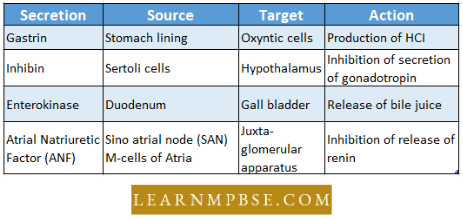
  2. trypsin
  3. pepsin
  4. lipase.

Answer: 2. trypsin

Question 11. The molecule used by most animals for long-term energy storage is :

  1. glycogen
  2. starch
  3. fats
  4. cholesterol.

Answer: 3. fats

Digestive System MCQs NEET


Question 12. A polypeptide secreted into the blood by the cells in the stomach wall stimulates the production of HCI by parietal cells of the stomach:

  1. gastrin
  2. secretin
  3. pancreozymin
  4. rennin.

Answer: 1. gastrin

Question 13. Which one of the following will not take place when glucose is taken as food?

  1. Ingestion
  2. Digestion
  3. Absorption
  4. Assimilation.

Answer: 2. Digestion

Question 14. The greenish faecal matter excreted by the newborn child is :

  1. meconium
  2. macrophages
  3. jaundice
  4. None of the above.

Answer: 1. meconium

Question 15. Energy is stored in muscles and the liver as :

  1. glycogen
  2. starch
  3. fats
  4. cholesterol.

Answer: 1. glycogen

Digestive System MCQs NEET

Question 16. Vermiform appendix in man is seen attached to :

  1. colon
  2. caecum
  3. rectum
  4. ileum.

Answer: 2. caecum

Question 17. Bile augments the digestion of:

  1. glycogen
  2. fat
  3. starch
  4. protein.

Answer: 2. fat

Question 18. Which of the following is not a human salivary gland?

  1. Parotid glands
  2. Submaxillary
  3. Sublingual
  4. Infraorbital.

Answer: 4. Infraorbital

Question 19. The chemical name of vitamin K is :

  1. plastoquinone
  2. plastocyanin
  3. phycocyanin
  4. phylloquinone.

Answer: 4. phylloquinone

Question 20. Which one of the following disaccharides gives rise to two molecules of glucose on hydrolysis?

  1. Lactose
  2. Sucrose
  3. Maltose
  4. Galactose.

Answer: 3. Maltose

NEET MCQs On Digestive System

Question 21. An animal with a diet deficient in at least one essential nutrient is said to be :

  1. starving
  2. undernourished
  3. malnourished
  4. suffering from Kwashiorkor disease.

Answer: 3. malnourished

Question 22. The liver is called the reticular gland because :

  1. it contains reticular tissue
  2. its shape is reticular
  3. lobules branches and anastomoses with one other to form a network
  4. hepatic duct and cystic ducts unite to form bile ducts.

Answer: 3. lobules branches and anastomoses with one other to form a network

Question 23. Brunner’s glands secrete :

  1. mucus
  2. secretin and cholecystokinin
  3. enterokinase
  4. hydrochloric acid.

Answer: 1. mucus

Question 24. Which of the following vitamins serves as a coenzyme?

  1. Vit. B,
  2. Vit. B2
  3. Niacin
  4. All the above.

Answer: 1. Vit. B

NEET MCQ  Question 25. Choose the wrong statement.

  1. Lipases and nucleases are not present in pancreatic juice.
  2. Goblet cells secrete mucus.
  3. Brunner’s glands are sub-mucosal glands.
  4. Carboxypeptidase catalyses the conversion of proteins.
  5. Bile contains no enzymes.

Answer: 2. Goblet cells secrete mucus

NEET MCQs On Digestive System

Question 26. The alimentary canal of prawn is:

  1. incomplete
  2. complete
  3. long
  4. None of the above.

Answer: 2. complete

Question 27. How many of the 20 amino acids are essential amino acids for an adult human?

  1. Eight
  2. Six
  3. Thirteen
  4. Fourteen.

Answer: 1. Eight

Question 28. The gastric juice secreted by gastric glands is :

  1. alkaline
  2. neutral
  3. acidic
  4. None of the above.

Answer: 3. acidic

Question 29. Most vitamins function as :

  1. lubricant for active transport
  2. a foundation for building bones
  3. transport molecules within the plasma membrane
  4. coenzymes.

Answer: 4. coenzymes

NEET MCQs On Digestive System

Question 30. The three secretions that mix with food in the small intestine are :

  1. saliva, gastric juice and bile
  2. gastric juice, bile and pancreatic juice
  3. bile, pancreatic juice and intestinal juice
  4. pancreatic juice, intestinal juice and gastric juice.

Answer: 3. bile, pancreatic juice and intestinal juice

Question 31. Enzymes are organic(proteinaceous) chemicals which accelerate biochemical reactions in cells by :

  1. increasing the temperature of cells
  2. increasing the energy of activation of the reacting molecules
  3. lowering the pH of the cells
  4. decreasing the energy of activation of reacting molecules.

Answer: 4. decreasing the energy of activation of reacting molecules

Question 32. The cells that produce dilute hydrochloric acid in the stomach are:

  1. parietal cells
  2. goblet cells
  3. digestive cells
  4. paneth cells.

Answer: 1. parietal cells

Question 33. The isolated patches of lymphoid tissue of the intestine are known as :

  1. hepatic cells
  2. Islets of Langerhans
  3. Peyer’s patches
  4. Kupffer cells.

Answer: 3. Peyer’s patches

Question 34. Gastric juice contains :

  1. ptyalin
  2. pepsin
  3. erepsin
  4. lipase.

Answer: 2. pepsin

Question 35. Bile is:

  1. acidic
  2. alkaline
  3. neutral
  4. None of these.

Answer: 2. alkaline

NEET Important Questions on Animal Nutrition

Question 36. Salts and digestive enzymes present in pancreatic juice amount to :

  1. 5%
  2. 3%
  3. 2%
  4. 8%.

Answer: 3. 2%

Question 37. Which one is a nitrogenous polysaccharide?

  1. Chitin
  2. Cellulose
  3. Glycogen
  4. Starch.

Answer: 1. Chitin

Question 38. A mineral is an atom that can be used by an animal in a form that is:

  1. an organic molecule
  2. an inorganic molecule or ion
  3. bonded 6 vitamins.
  4. bonded to several water molecules.

Answer: 2. an inorganic molecule or ion

Question 39. How many teeth in a man are grown twice in life?

  1. 32
  2. 28
  3. 20
  4. 12.

Answer: 3. 20

Question 40. The swallowing of bolus food in rabbits is called :

  1. defaecation
  2. deglutition
  3. regurgitation
  4. digestion.

Answer: 2. deglutition

Question 41. The pancreatic juice does not contain :

  1. trypsin
  2. amylopsin
  3. pepsin
  4. lipase.

Answer: 3. pepsin

Human Digestive System MCQs For NEET

Question 42. The blood capillaries of intestinal villi absorb all but:

  1. amino acids
  2. glucose
  3. salts
  4. fatty acids and glycerol.

Answer: 4. fatty acids and glycerol

Question 43. The factor which governs the absorption of digested food by intestinal villi is:

  1. peristalsis
  2. osmosis
  3. emulsification
  4. selective absorption.

Answer: 4. selective absorption

Question 44. Caecum in rabbits is concerned with :

  1. digestion of starch
  2. digestion of cellulose
  3. digestion
  4. digestion of lipids.

Answer: 3. digestion

Question 45. In the pancreas, pancreatic juice and hormones are secreted by:

  1. same cells
  2. different cells
  3. same cells at different times
  4. None of the above.

Answer: 2. different cells

Question 46. The dental formula of man is:

Digestive System In Dental Formula Of Man Question 46

Answer: 3.

Question 47. Teeth are derivatives of:

  1. epidermis of skin
  2. dermis of skin
  3. The bone of the skeleton of the jaw
  4. Both and (B).

Answer: 2. dermis of skin

Human Digestive System MCQs For NEET

Question 48. Teeth are :

  1. living structure
  2. dead structure
  3. partly dead and partly living
  4. exact nature is not known.

Answer: 3. partly dead and partly living

Question 49. Another term for digestion is:

  1. dehydration synthesis
  2. absorption
  3. hydrolysis
  4. monomer interchange.

Answer: 3. hydrolysis

Question 50. Diastema is the toothless gap in ambit

  1. between right ami left incisor
  2. between incisors ami premolars
  3. between premolars and molars
  4. behind the molars.

Answer: 2. between incisors ami premolars

Question 51. Teeth of frog are :

  1. diphyodont
  2. pleurodont
  3. acrodont
  4. thecodont.

Answer: 3. acrodont

Question 52. The tube that connects the pharynx to the middle ear is called:

  1. Eustachian tube
  2. omentum tube
  3. pharyngcoacoustic tube
  4. None of the above.

Answer: 1. eustachian tube

Question 53. The Alimentary canal runs in between :

  1. oesophagus to stomach
  2. oral aperture to the anus
  3. stomach to anus
  4. mouth to cloaca.

Answer: 4. mouth to cloaca

Question 54. The pan of intestine that is ‘U’ shaped is called :

  1. pyloric intestine
  2. duodenum
  3. ileum
  4. colon.

Answer: 2. duodenum

Human Digestive System MCQs For NEET

Question 55. The pans of the small intestine are :

  1. duodenum and colon
  2. colon and rectum
  3. jejunum, duodenum and ileum
  4. ileum and colon.

Answer: 3. jejunum, duodenum and ileum

Question 56. The large intestine of man is composed of :

  1. rectum and colon
  2. ileum and colon
  3. rectum and ileum
  4. caecum, colon and rectum.

Answer: 4. caecum, colon and rectum

Question 57. Opening of the stomach into the duodenum is guarded by :

  1. pyloric valve
  2. ileocecal valve
  3. stomach valve
  4. cardiac valve.

Answer: 1. pyloric valve

Question 58. Digestion is brought about by :

  1. enzymes
  2. acids
  3. vitamins and minerals
  4. alkaline solution.

Answer: 1. enzymes

Best MCQs For NEET Biology

Question 59. Which of the following characters is shared by the liver of the frog and man?

  1. Glisson’s capsule
  2. Presence of hepatic cord cells
  3. Secretion of bile
  4. Five lobes.

Answer: 2. Presence of hepatic cord cells

Digestive System MCQ Question 60. Pancreatic juice contains :

  1. Trypsin, Lipase and Maltase
  2. Pepsin, Trypsin and Maltase
  3. Trypsin, Chymotrypsin, Amylase and Lipase.
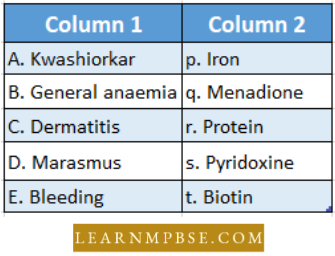
  4. Trypsin, Pepsin and Amylase.

Answer: 3. Trypsin, Chymotrypsin, Amylase and Lipase
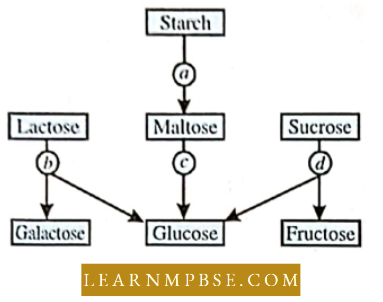
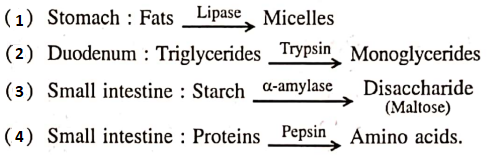
Question 61. Which of the following is not a protein-digesting enzyme?
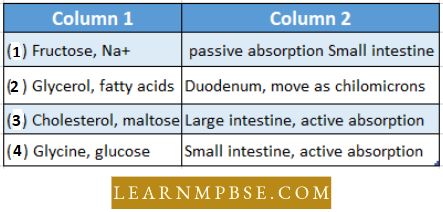
  1. Trypsin
  2. Rennin
  3. Pepsin
  4. Ptyalin.

Answer: 4. Ptyalin

Question 62. The final product of protein digestion is :

  1. amino acids
  2. glucose
  3. peptones and proteoses
  4. peptide.

Answer: 1. amino acids

Question 63. The exact sequence of events during the digestion of proteins is :

  1. proteins → peptones → amino acid → metaproteins and peptides
  2. proteins → proteases and peptones → peptides → amino acids
  3. proteins → acid metaprotcins → proteo¬ses → amino acids → peptides
  4. proteins -A primary proteins → peptides → amino acids.

Answer: 2. proteins → proteases and peptones → peptides → amino acids

Question 64. Enterogasterone stops the secretion of :

  1. trypsin
  2. gastric juice
  3. bile
  4. pancreatic juice.

Answer: 2. gastric juice

Best MCQs For NEET Biology

Question 65.  Cholecystokinin brings the release of :

  1. pancreatic juice
  2. gastric juice
  3. intestinal juice
  4. bile.

Answer: 4. bile.

Question 66. Proenzyme pepsinogen is activated by :

  1. Enterokinase
  2. Enterocrinin
  3. HCL
  4. Gastrin.

Answer: 3. HCL

Question 67. Secretin and pancreozymin bring the release of :

  1. pancreatic juice
  2. gastric juice
  3. bile
  4. intestinal juice.

Answer: 1. pancreatic juice

Question 68. Digestion within a digestive tract is :

  1. incomplete
  2. same as absorption
  3. extracellular
  4. an irreversible process.

Answer: 3. extracellular

Best MCQs For NEET Biology

Question 69. The liver can synthesize :

  1. Vitamin E
  2. Vitamin D
  3. Vitamin A
  4. Vitamin K.

Answer: 3. Vitamin A

Question 70. Absorption of glucose involves :

  1. hydration
  2. dehydration
  3. phosphorylation
  4. sulphonation.

Answer: 3. phosphorylation

Question 71. Vitamin B is :

  1. fat-soluble
  2. water-soluble
  3. insoluble
  4. no change.

Answer: 2. water-soluble

Question 72. The one difference between a frog and a man is that the frog has no :

  1. pancreas
  2. thyroid
  3. salivary gland
  4. adrenal gland.

Answer: 3. salivary gland

Question 73. Rickets, scurvy and poor vision are caused by to deficiency of:’ ‘

  1. vitamins D, C and A
  2. vitamins BJ2 B6andC
  3. vitamins B6, B12 and A
  4. vitamins B, D and A.

Answer: 1. vitamins D, C and A

Question 74. Gastric secretion is regulated by :

  1. neural mechanism
  2. hormonal mechanism
  3. neural and hormonal control
  4. None of the above.

Answer: 3. neural and hormonal control

Question 75. Iron is needed in the diet mainly to :

  1. synthesize haemoglobin
  2. aid the healing of wounds
  3. clean the blood
  4. strengthen the bones.

Answer: 1. synthesize haemoglobin

Best MCQs For NEET Biology

Question 76. With regard to nutrient-eating habits a human is.

  1. a herbivore
  2. an omnivore
  3. a carnivore
  4. a granivore

Answer: 2. an omnivore

Question 77. The abnormal metabolism of one of the following causes Gaucher’s iliscave :

  1. fats
  2. proteins
  3. carbohydrates
  4. All the above

Answer: 1. fats

Question 78. The main motion of lacteal is to both

  1. lipids
  2. glycogen
  3. milK
  4. proteins.

Answer: 1. lipids

Question 79. The main function of prolonged chewing is to rupture :

  1. membrane
  2. muscle bundles
  3. connective tissue
  4. cell walls.

Answer: 4. cell walls

Question 80. Which one of the following arcs is reabsorbed in the alimentary canal as such?

  1. Albumen of egg
  2. Polysaccharide
  3. Fat-soluble vitamin
  4. Protein.

Answer: 3. Fat-soluble vitamin

Question 81. Islets of Langerhans are :

  1. exocrine
  2. excretory
  3. endocrine
  4. digestive.

Answer: 3. Endocrine

Digestive System MCQs NEET

Question 82. What makes the chyme in human digestion move to the duodenum from the stomach?

  1. Peristaltic movement
  2. Gravitational pull
  3. Circulation of blood
  4. Gravitational push.

Answer: 1. Gravitational pull

Question 83. The activator of intestinal juice is :

  1. succus entericus
  2. secretin
  3. enterozymase
  4. enterocrinin.

Answer: 4. enterocrinin

Question 84. Which of the following is related to the digestive system in molluscs?

  1. Byssus Thread
  2. Osphradium
  3. Statocyst
  4. Radula.

Answer: 4. Radula.

Question 85. The nutrition in Hydra is holozoic. The entire process may be divided into four parts :

A. ingestion

B. digestion

C. excretion

D. egestion

  1. A, C, and D are correct
  2. A, B, and D are correct
  3. A, B, and C are correct
  4. A, C, and D are correct.

Answer: 2. A, B, and D are correct

Question 86. In man, the bile juice secreted by the liver per day is :

  1. 250 ml
  2. 600 ml
  3. 1000 ml
  4. 1,500 ml.

Answer: 2. 600 ml

Question 87. The method of intake of food in the case of ciliate paramecium is :

  1. holozoic
  2. saprozoic
  3. saprophytic
  4. holophytic.

Answer: 1. holozoic

Digestive System MCQs NEET

Question 88. The dental formula indicates the type of teeth and their number in sequence. Which sequence below is correct?

  1. Incisors, premolars, canines and molars
  2. Incisors, canines, premolars and molars
  3. Incisors, premolars, molars and canines ,
  4. Canines, incisors, prcmolars and molars..

Answer: 2. Incisors, canines, premolars and molars

Question 89. Carbohydrate splitting enzyme is secreted by :

  1. liver
  2. zymogen veils of gastric glands
  3. salivary glands
  4. crypts of lieberkuhn

Answer: 3. salivary glands

Question 90. The major utility of breaking lift of fond into small bits during chewing is :

  1. to reduce the area of food eaten up l
  2. to increase the surface area of food eaten up
  3. to enjoy the taste of food
  4. to make flic food soluble.

Answer: 2. to increase the surface area of food eaten up

Question 91. Peyer’s patches produce :

  1. enterokinase
  2. lymphocytes
  3. mucus
  4. trypsin.

Answer: 2. lymphocytes

Question 92. In the colon constriction of its surface forms a series of small pockets called :

  1. taeniae
  2. crypts of Lciberkuhn
  3. sacculus rotundas
  4. haustra.

Answer: 4. haustra

NEET MCQs On Digestive System

Question 93. The dietary component which is assimilated without any change is :

  1. cane sugar
  2. milk
  3. vitamins
  4. maltose.

Answer: 3. vitamins

NEET Digestive System Question 94. Gastric juice has a pH of about:

  1. 10
  2. 8.8
  3. 6
  4. 2.

Answer: 4. 2

Question 95. The glucagon is produced by :

  1. P-cells of the endocrine pancreas
  2. exocrine pancreas
  3. a-cells endocrine pancreas
  4. pancreatic duct.

Answer: 3. a-cells endocrine pancreas

Question 96. Pepsin changes :

  1. proteins into peptones
  2. fats into fatty acids
  3. milk into curd
  4. starch into sugar.

Answer: 1. proteins into peptones

Question 97. Lipase changes :

  1. proteins into peptones
  2. starch into sugar
  3. fats into fatty acids
  4. None of these.

Answer: 3. fats into fatty acids

NEET MCQs On Digestive System

Question 98. Trypsin reduces proteins and peptones to :

  1. amino acids
  2. nucleic acids
  3. glycogen
  4. None of these.

Answer: 1. amino acids

Question 99. Succus entericus acts in :

  1. alkaline medium
  2. strongly acidic medium
  3. neutral medium
  4. weakly acidic medium.

Answer: 1. alkaline medium

Question 100. The function of the bile salts is:

  1. to catalyse chemical reactions
  2. to emulsify the fats
  3. absorption of fat-soluble nutrients
  4. Both (2) and (3).

Answer: 4. Both (2) and (3)

Question 101. The gastric enzyme pepsin can shrink down protein into peptones in a medium which is:

  1. strongly alkaline
  2. weakly alkaline
  3. acidic
  4. at a neutral pH

Answer: 3. acidic

Question 102. liver, the biggest gland in the body, is concerned with the secretion of:

  1. hormones controlling digestion
  2. digestive enzymes
  3. bile
  4. mucus.

Answer: 3. bile

NEET MCQs On Digestive System

Question 103. The precursor of trypsin is synthesized in the :

  1. stomach
  2. duodenum
  3. liver
  4. pancreas.

Answer: 4. pancreas

Question 104. The enzyme crepsin helps the breakdown of peptones into amino acids in the :

  1. stomach
  2. duodenum
  3. large intestine
  4. pancreas.

Answer: 3. large intestine

Question 105. The muscular movement of the alimentary canal is known as :

  1. cyclosis
  2. peristalsis
  3. maceration
  4. metachronal waves.

Answer: 2. peristalsis

Question 106. Deficiency in the quantity of vitamin D causes :

  1. haemorrhage
  2. rickets
  3. scurvy
  4. beri-beri.

Answer: 2. rickets

Question 107. Deficiency in the quantity of vitamin C causes :

  1. haemorrhage
  2. scurvy
  3. muscular dystrophy
  4. reproductive impairment.

Answer: 2. scurvy

Question 108. Bile is green in colour due to the presence of:

  1. bilirubin and biliverdin
  2. haemoglobin
  3. sodium glycocholate
  4. sodium taurocholate.

Answer: 1. bilirubin and biliverdin

NEET Important Questions on Animal Nutrition

Question 109. The hard substance that forms teeth is :

  1. bone
  2. enamel
  3. dentine
  4. tendon.

Answer: 3. dentine

Question 110. The teeth which are embedded in sockets are called:

  1. homodont
  2. thecodont
  3. diphyodont
  4. heterodont.

Answer: 2. thecodont

Question 111. Which of the following components of food can be directly absorbed by blood without any chemical breakdown in the alimentary canal?

  1. proteins
  2. fats
  3. vitamins
  4. starch.

Answer: 3. vitamins

Question 112. The animals that can eat various plants and animal materials are called:

  1. cannibal
  2. carnivorous
  3. omnivorous
  4. herbivorous.

Answer: 3. omnivorous

Question 113. In which part of the alimentary canal is NH3 produced during the digestion of food?

  1. Liver
  2. Intestine
  3. Stomach
  4. Caecum.

Answer: 4. Caecum.

Question 114. A principal gastrointestinal hormone is :

  1. prolactin
  2. choline esterase
  3. secretin
  4. Acetyl Co-A.

Answer: 3. secretin

Question 115. The enzyme which coagulates milk is called :

  1. pepsin
  2. trypsin
  3. lactase
  4. renin

Answer: 4. renin

NEET Important Questions on Animal Nutrition

Question 116. The process involving the conversion of solid substances into liquid material finally results in the absorption along the gut wall, they are then incorporated into the cells as complex substances. The process is called :

  1. combination
  2. assimilation
  3. absorption
  4. defalcation.

Answer: 2. assimilation

Question 117. Acidic thick fluid food in the stomach is called:

  1. chyle
  2. chyme
  3. liquid
  4. vitaminous food.

Answer: 2. chyme

Question 118. A lubricant, mucin, in saliva, is made of:

  1. polyunsaturated fats
  2. glycoproteins
  3. actin and myosin
  4. phospholipid.

Answer: 2. glycoproteins

NEET Important Questions on Animal Nutrition

Question 119. Synthesis of glycogen from sugar in the liver is known as :

  1. Glycogenesis
  2. Glycolysis
  3. Glycogenolysis
  4. Glycogen.

Answer: 1. Glycogenesis

Question 120. About how much saliva does a person produce each day?

  1. 100 ml
  2. 1 to 1.5 litre
  3. 500 ml
  4. 250 ml.

Answer: 2. 1 to 1.5 litre

Question 121. Gastric juice contains the following enzymes :

  1. pepsin and rennin
  2. amylase and pepsin
  3. propepsin and prorenin
  4. insulin and glycogen.

Answer: 1. pepsin and rennin

Question 122. The function of HC1 in the stomach is to :

  1. kill micro-organisms
  2. convert pepsinogen to pepsin
  3. dissolve enzymes
  4. Both and (B).

Answer: 4. Both and (B)

Question 123. Amylase is an enzyme for which the substrate is :

  1. starch
  2. proteins
  3. cane sugar
  4. fats.

Answer: 1. starch

Question 124. A good source of lipase is :

  1. gastric juice
  2. saliva
  3. bile
  4. pancreatic juice.

Answer: 4. pancreatic juice

Question 125. The formula for sucrose is C12H22On. This means sucrose is composed of:

  1. 3 elements
  2. 45 elements
  3. 1 element
  4. 22 elements

Answer: 1. 3 elements

Question 126. All enzymes are chemically speaking :

  1. carbohydrates
  2. proteins
  3. lipids
  4. lipoproteins.

Answer: 2. proteins

Human Digestive System MCQs For NEET

Question 127. The lacteals are central lymph vessels which are found in :

  1. liver
  2. pancreas
  3. spleen
  4. villi.

Answer: 4. villi

Question 128. Which of the following does not produce any digestive enzyme?

  1. Intestinal mucosa
  2. Gastric mucosa
  3. Liver
  4. Pancreas.

Answer: 3. Liver

Question 129. Surgical removal of gall bladder in human beings would lead to :

  1. impairment of digestion of fat
  2. jaundice
  3. impairment of digestion of protein
  4. No effect during digestion.

Answer: 4. No effect during digestion

Question 130. In the process of peristalsis :

  1. circular muscles of the digestive tube con¬tract and those directly in front of it relax
  2. the longitudinal muscles of the digestive tube contract and relax alternatively
  3. both processes occur simultaneously
  4. None of the above.

Answer: 1. circular muscles of the digestive tube con¬tract and those directly in front of it relax

Question 131. The spleen is attached somewhere to the alimentary canals of frogs and rabbits:

  1. has an important role in digestion
  2. has a semi-important role in digestion
  3. has no role in digestion
  4. checks the blood circulation in the alimentary canal.

Answer: 3. has no role in digestion

Question 132. The fundamental requirement of food is for:

  1. growth and metabolism
  2. hunger
  3. repair
  4. metabolism.

Answer: 1. growth and metabolism

Question 133. Pseudorumination is :

  1. eating the skin
  2. zymogens
  3. chewing the cud
  4. swallowing the food.

Answer: 2. zymogens

Question 134. Inactive enzyme precursors such as pepsinogen for pep¬sin are called:

  1. zymogens
  2. polyglycolide
  3. activates
  4. cholenzymes.

Answer: 1. zymogens

Question 135. Most digestion and all absorption of food takes place in the:

  1. stomach
  2. caecum
  3. small intestine
  4. large intestine.

Answer: 3. small intestine

Question 136. The main advantage of having a digestive tract with a mouth and anus is :

  1. it permits different parts of the gut to become specialized to perform different functions of the digestive process in turn
  2. it permits an animal without teeth to have a means of grinding its food.
  3. it permits animals to eat larger organisms as food
  4. it permits animals to eat food in larger chunks.

Answer: 1. it permits different parts of the gut to become specialized to perform different functions of the digestive process in turn

Human Digestive System MCQs For NEET

Question 137. In humans, the digestion of food is completed in the :

  1. mouth
  2. stomach
  3. small intestine
  4. large intestine
  5. rectum.

Answer: 3. small intestine

Question 138. A portion of the stomach that has evolved extremely thickened muscular walls and is quite efficient at grind¬ing hard food is called a (n):

  1. rumen
  2. gizzard
  3. crop
  4. omasum
  5. caecum.

Answer: 2. gizzard

Question 139. Which of the following is not a function of the mammalian liver?

  1. Secretion of digestive enzymes for export to the gut
  2. Regulation of blood glucose and amino acid contents
  3. Production of the nitrogenous waste urea
  4. Production of plasma proteins for the blood.

Answer: 1. Secretion of digestive enzymes for export to the gut

Question 140. Bacteria entered with contaminated food are killed in the stomach by ;

  1. MCI
  2. Pepsin
  3. Rennin
  4. Sodium bicarbonate.

Answer: 3. Rennin

Question 141. The pylorus in frogs is found between :

  1. stomach and duodenum
  2. duodenum and ileum
  3. ileum and colon
  4. oesophagus and stomach.

Answer: 1. stomach and duodenum

Human Digestive System MCQs For NEET

Question 142. Vitamins are :

  1. inorganic substances that cannot be syn¬thesized by animals
  2. inorganic substances that can be synthesized by the animals
  3. organic substances that can be synthesized by animals
  4. organic substances only synthesized in animal cells.

Answer: 3. organic substances that can be synthesized by animals

Question 143. In the ileum which of the following is absorbed?

  1. Vit. K
  2. Bile salts
  3. Glucose
  4. Fat.

Answer: 3. Fat.

Question 144. Casein contained in the milk is a :

  1. bacterium
  2. protein
  3. fat
  4. oligosaccharide.

Answer: 2. protein

Human Digestive System MCQs For NEET

Question 145. Cod liver oil is a rich source of:

  1. iodine
  2. vitamin A
  3. vitamin B
  4. vitamin C.

Answer: 2. vitamin A

Question 146. The vitamins we must consume daily are :

  1. fat-soluble
  2. water-soluble
  3. both (1) and (2)
  4. None of the above.

Answer: 2. water-soluble

Question 147. Enterokinase helps in the conversion of :

  1. caseinogen into casein
  2. proteins into polypeptides
  3. pepsinogen into pepsin
  4. trypsinogen into trypsin.

Answer: 4. trypsinogen into trypsin

Question 148. Match the items in column I (vitamin ) with those in column II (Deficiency diseases )

Digestive System Match The Items In Columns Question 148

  1. A-3, B-2, C-4. D-1
  2. A-1, B-2, C-4, D-3
  3. A-2, B-2, C-1, D-3
  4. A-3, B-4, C-4, D-2.

Answer: 3. A-2, B-2, C-1, D-3

Question 149. Substances which prevent deficiency diseases are called vitamins:

  1. Pavlov
  2. Funk
  3. Schwann
  4. Glisson.

Answer: 2. Funk

Question 150. Which one of the following statements about glycogen is correct?

  1. It is a disaccharide stored in the liver which can react with ammonia to form proteins.
  2. It is synthesised in the liver and takes part in the formation of bile and lipase,
  3. It is a polysaccharide which is synthesised and stored only in liver cells.
  4. It is synthesised in blood and stored in the liver and muscles to provide glucose in times of need.

Answer: 4. It is synthesised in blood and stored in the liver and muscles to provide glucose in times of need

Question 151. A dental disease characterised by mottling of teeth is due to the presence of a certain chemical element in drink¬ing water. Which is that element?

  1. Boron
  2. Chlorine
  3. Fluorine
  4. Mercury.

Answer: 3. Fluorine

NEET Digestive System Question 152. The saliva of man contains an enzyme known as:

  1. erepsin
  2. ptyalin
  3. amylase.
  4. maltase.

Answer: 2. ptyalin

Question 153. The human intestine lacks:

  1. symbiotic bacteria of human
  2. enzymes to digest cellulose
  3. developed vermiform appendix
  4. All the above.

Answer: 3. Developed vermiform appendix

Question 154. Canesugar injected into the blood is :

  1. changed to fructose
  2. changed to glucose and fructose
  3. undergoes no appreciable change
  4. changed to glucose.

Answer: 3. undergoes no appreciable change

Question 155. Fundus in sanguivorous animals is:

  1. round and tubular
  2. round and saccular
  3. long and branched
  4. long and tubular.

Answer: 4. long and tubular

Question 156. After digestion, amino acids are:

  1. absorbed into lymph
  2. absorbed into the portal circulation
  3. excreted to the extent of 50%
  4. converted into glucose in the intestine.

Answer: 2. absorbed into the portal circulation

Question 157. The rate of absorption of sugars by the small intestine is greatest for:

  1. pentoses
  2. hexoses
  3. disaccharides
  4. oligosaccharides.

Answer: 2. hexoses

Question 158. Which of the following are reabsorbed in the alimen¬tary canal as such?

  1. albumen of egg
  2. polysaccharides
  3. fat-soluble vitamin
  4. proteins.

Answer: 3. fat-soluble vitamin

Question 159. The activator of intestinal juice is :

  1. succus entericus
  2. secretin
  3. entero-zymase
  4. enterocrinin.

Answer: 4. enterocrinin

Question 160. Brunner’s gland is present in :

  1. duodenum
  2. jejunum
  3. ileum
  4. rectum.

Answer: 1. duodenum

NEET Biology Notes – Animal Nutrition and Digestive System

NEET Biology Animal Nutrition And Digestive System

Nutrition: Nutrition is the procurement of substances termed nutrients necessary for growth, maintenance and providing energy to carry out synthetic activities of living bodies.

Nutrition is of two types :

  1. Autotrophic mode of nutrition.
  2. Heterotrophic mode of nutrition.

Autotrophic Nutrition. Mostly green plants can manufacture their organic food due to the presence of chlorophyll. They take up CO2 and H2O and manufacture carbohydrates in the presence of sunlight.

  • Such organisms are called autotrophs and their mode of nutrition is called autotrophic. Organisms may be photoautotrophs Example, green plants. Euglena or chemoautotrophs, For Example, sulphur bacteria, nitrite bacteria etc.

Heterotrophic nutrition. In this type of mode of nutrition, the animals derive organic food materials by consuming bodies or products of other living or dead plants or animals. Heterotrophs may be holozoic, saprozoic or parasitic.

Myxotrophic nutrition. They carry out autotrophic as well as saprotrophic nutrition Example: Euglena.

Read and Learn More NEET Biology Notes

Animal Nutrition NEET Notes

NEET Biology Animal Nutrition and Digestive System Modes of Animal Nutrition

Based on food, heterotrophic animals are classified into the following categories :

  1. Herbivorous. These animals (herbivores) feed exclusively on plants Example, cows, horses, sheep, and rabbits.
  2. Carnivorous. Carnivore animals kill and feed upon the flesh of other animals Example. lion, tiger, wolves.
  3. Omnivorous. These animals feed on both plants and animals Example. man, cockroach, Pig-
  4. Carrion eaters. They feed on dead animals, also termed scavengers Example., Hyaena, Neltura, Kites etc.
  5. Fruitivorous animals feed on fruit and fruit juices, Example. Honey bees, and squirrels.
  6. Insectivorous animals eat insects as food Example, Frog and wall lizard.
  7. Sanguivorous animals are blood-sucking Examples, are leeches, body lice, and bed bugs.
  8. Cannibolus organisms devour their species Example, cockroaches, some fishes, frogs and snakes.
  9. Detritus. Animals feed chiefly upon organic matters present in the humus Example, earthworms.
  10. Eggivorous. Eat eggs
  11. Grainivorous Animals feed upon grains.
  12. Soilivorous. Eat up the soil.

Animal Nutrition And Digestive System NEET Notes

NEET Biology Animal Nutrition and Digestive System Feeding Mechanism

Feeding mechanism in liquid feeders. (Fluid feeder)

  1. Diffusion. Many parasitic organisms (protozoans, tapeworm) absorb the dissolved organic food through the body surface.
  2. Bloodsucking. Their mouth parts are modified for sucking blood For Example. leeches, vampire bats and mosquitoes (piercing and sucking type of mouth parts).
  3. Aphids suck plant sap.
  4. Feeding mechanism in Microplmgous animals (Filter feeders). The food of such animals (paramecia, sponges, corals, bivalves, tadpoles, mosquito larvae) is suspended in water fluid and they possess filtering devices (clusters of pseudopodia, cilia, flagella, sheets of mucus).
  5. The water current is drawn in and food is obtained.
  6. Feeding mechanism in necrophagous animals. These animals feed on large plant or animal matter. Filters are absent. The methods of feeding are different in different animals.
  • Amoeba has no mouth but ingests food with the help of pseudopodia. The process is called phagocytosis.
  • Some animals like hydra have tentacles for capturing prey.
  • Detritus feeders like earthworms suck solid organic food along with large quantities of soil.
  • Frogs and toads have protrusible sticky tongues for capturing prey.
  • Many animals apply their mouths directly to the food and use their teeth.

Primates including man carry the food with hands to mouth and teeth are special¬ized for biting, cutting, tearing, chewing and mastication. The tongue acts as a spoon for liquids. Their teeth jaw bones and muscles are well developed.

NEET Animal Nutrition And Digestive System Chapter Notes

NEET Biology Animal Nutrition and Digestive System Cockroach

Initially divided as foregut, midgut and hindgut.

  1. Foregut (stomodaeum) ectodermal part, lined with cuticle divided into :
  2. Buccal cavity and pharynx. The gut begins with a buccal cavity followed by a short pharynx.
  3. Oesophagus. A narrow but longer tube-like part in the thorax.
  4. Crop. The largest, thick-walled part, serves for storage of flood, digestion also occurs here but with the enzymes from the hepatic caeca.
    • Gizzard, (proventriculus) Thick walled, bulbous part with 6 cuticular teeth and a thick circular muscle layer, for grinding the food. From the lower part extends the secretory stomodaeal valve in the midgut to secrete the peritrophic membrane.
    • Midgut (or Mesenteron or ventriculus or stomach) A narrow tube of uniform diameter of endodermal origin. It is a true gut for digestion and absorption.
    • Food present in it is always covered by a peritrophic membrane, e 8-12 tube-like hepatic caeca demarcate the beginning of midgut as part of it.

Animal Nutrition And Digestive System NEET Notes

Hindgut (or Proctodaeum). Its junction with the mesenteron is marked by the presence of (60-150) Malpighian tubules the excretory organs.

  • Relatively larger in diameter, it is divided into the ileum, colon and rectum.
  • The cuticle lining of the ileum bears a minute spine which serves to break the peritrophic membrane.

The wall has six longitudinal fold, rectal papillae, for absorption of water.

NEET Biology Animal Nutrition And Digestive System Of Palaemon

The digestive system of Palaemon consists of an alimentary canal and a digestive gland, called hepatopancreas.

Alimentary Canal- The Alimentary canal is a straight tube and is distinguished into the following three parts :

  1. Stomodaeum or foregut which comprises the mouth, buccal cavity, oesophagus and stomach.
  2. Mesenteron or midgut which comprises the intestine.
  3. Proclodacum or hindgut which comprises the rectum and the anus.

Animal Nutrition And Digestive System NEET Notes

The foregut and hindgut have an internal lining of the cuticle (intima) but the midgut is a soft lining of endoderm.

Foregut

  1. Mouth. It is a longitudinal slit situated mid-ventrally in the third cephalic segment. The month is bounded by a shield-like Inbrum in front, bilobed labium behind and the incisor processes to mandible laterally. It leads into a short buccal cavity.
  2. Huecal cavity. It is an anthem-posteriorly compressed small chamber. It has a thick chitmous lining which is turned into irregular folds. The molar processes or mandibles project into the buccal cavity and lie opposite to each other. These are used to crush the food between them.

Digestive System Of Palaemon


  1. Oesophagus. It is a short but broad tube which runs vertically upwards from the buccal cavity to the cardiac stomach. Internally the thick muscular walls of the oesophagus are thrown into four prominent longitudinal folds which project into its lumen.
  2. Due to these folds, the lumen of the oesophagus assumes a star-shaped appearance.
  3. Stomach. It is the largest part of the alimentary canal. It occupies most of the cephalorhoracic cavity. The stomach lies buried in the hepatopancreas, and it is covered over by the hepatopancreas laterally, posteriorly and ventrally.
  4. The stomach is divided into two unequal chambers: the cardiac stomach and the pyloric stomach.

Cardiac stomach. It is a bag-like anterior chamber of the stomach. The internal chitinous lining (i.e., intima) of the cardiac stomach is thin and produced into numerous inconspicuous longitudinal folds covered by minute bristles. The wall of the stomach is supported by several calcified cuticular plates such as follows :

  1. Circular plate
  2. Lancevlate plate
  3. Hastate plate
  4. Combed plate
  5. Lateral grooves and groove plates
  6. Guiding ridges

Pyloric stomach. It is a very small narrow posterior chamber of the stomach. It lies below the posterior end of the cardiac stomach. Its lateral walls are thick and muscular.

  • They divide the lumen of the pyloric stomach into a small dorsal chamber and a large ventral chamber. Both chambers are connected by a short narrow vertical slit-like apparture.
  • Midgut It is a long, narrow, straight and slender tube which runs from the posterior part of the cephalothorax to the sixth abdominal segment. The midgut lies above the mass of the ventral abdominal muscles.

Hindgut. It extends from the posterior end of the midgut to the anus. It forms the shortest part of the alimentary canal. Anteriorly, the hindgut is swollen to a thick muscular sac, called the rectum while the posterior part is narrow and tubular which opens to the exterior through the. anus.

The rectum bears several thick longitudinal folds which project into the lumen of the hindgut. The rectum is lined internally by the chitinous cuticle.

Hepatopancreas. Die digestive gland, liver or hepatopancreas is a large bilobed, compact, orange-coloured gland which fills the cephalothoracic cavity. It surrounds the stomach and the anterior part of the midgut. Developmental!)’ it is formed from one pair of lateral tubular outgrowths, the hepatic caeca, of the midgut.

  • The hepatopancreas of an adult consists of numerous glandular tubules which are branched in a resinous manner. These branches are held together by the connective tissue to form a compact mass. The wall of the tubules is formed of a single layer of columnar epithelium.
  • This epithelium contains the following four types of cells. 1. granular cells; 2. ferment cells; 3, hepatic cells and -I. basal or replacing cells. All the epithelial cells rest on a basement membrane.
  • Functions. The hepatopancreas functions like the liver, pancreas and small intestine of higher animals. It performs the following functions :
  • Like the pancreas, it secretes digestive enzymes for the digestion of carbohydrates, fats and proteins. 2. Like the small intestine it absorbs digested food.

Like the liver. il serves as an important storage organ. It stores glycogen, fat and calcium. Some intracellular digestion also exists in its cells.

Digestive System Of Palameon & Functions

Food and Feeding: Polaemon is a nocturnal and omnivorous animal. It feeds on algae, mosses and other aquatic weeds. Occasionally, it feeds on small insects, snails, tadpoles, fishes, etc. and debris from the bottom.

The food is swallowed into the buccal cavity with the help of 1st pair of maxillipeds, maxillae and maxillulae. Inside the buccal cavity, food is masticated by the molar processes of mandibles.

Animal Nutrition And Digestive System NEET Notes

Digestion, Absorption and Egestion:

In Palaemon, the digestive process commences in the cardiac stomach.

  • The hepatopancreas secretes enzymes into the pyloric stomach, from whence they travel to the cardiac stomach to combine with the food.
  • The cardiac stomach alternately contracts and expands, facilitating the churning and enzymatic digestion of food.
  • The undigested meal, containing unabsorbed material, ascends the dorsal chamber and proceeds into the midgut for absorption.
  • The remaining digested food is absorbed in the midgut, while the residual faecal matter is sent to the hindgut and ultimately ejected through the anus.

Animal Nutrition NEET Notes

NEET Biology Animal Nutrition and Digestive System Of Vertebrates

The gut is divided only into functional parts not based on origin. The major parts are the mouth, pharynx, oesophagus, stomach, small intestine, large intestine and anus (or cloaca).

  • It is longer in herbivores than carnivores.
  • The major glands associated with it are the liver and pancreas.

Anatomy of Gut

Frog: Salivary glands are absent in frogs.

  • The oesophagus is a short tube as a frog has no neck and thorax.
  • The stomach is present in the middle of the body cavity and begins from the anterior part as a straight tube-like structure. Its posterior narrow pylorus makes ‘U with the duodenum, which lodges the pancreas.
  • The small intestine is about 1-1.5 feet long.
  • The large intestine is represented only by the rectum which opens into the cloaca.
    Rabbit (Mammals)
  • The oesophagus is a long tube as that passes through the neck and thoracic cavity.
  • The stomach is present in the left side of the abdominal cavity as a transverse bag-like structure and is roughly J-shaped.
  • ‘U’ is formed by the duodenal loop only.
  • The small intestine is about 4-5 feet long (giraffe = 250 ft).
  • Sacculus rotundas act as a junction from which the caecum arises as a separate branch of the large intestine, as the site for cellulose digestion.
  • Colon (50 cm) and rectum (75 cm) open into anus.

Ruminants. (for example cattle, sheep, goats, camel and deer) have a compound stomach with the following four chambers:

  1. Rumen First and the largest part for the storage of food and digestion of cellulose by symbiotic bacteria living here (Kumcnococcus).
  2. The reticulum (honeycomb) next chamber is also the site for cellulose digestion.
  3. Omasum (psalterium)-concentrates the food by absorbing H2O and H3CO, (absent in camel and deer).
  4. Abomasum or true stomach-last part is the secretion of gastric juice and digestion takes place here only. Camel’s rumen and reticulum have many diverticula (water pockets) but these do not store water.

Camel can live without water for two weeks. Its hump is a store of fats. For every 100 gms of fat metabolized, it produces 120 ml of H2O.

NEET Biology Digestive System Notes

NEET Biology Animal Nutrition and Digestive System Parts Of the Digestive System

Parts of the alimentary canal of man.

  1. Buccal Cavity
  2. Pharynx
  3. Oesophagus
  4. Stomach
  5. Small Intestine (Duodenum Jejunum, and Ileum)
  6. Caecum and
  7. Large Intestine (colon and rectum). It terminates at the anal opening.

Digestive Glands

  1. Salivary glands
  2. Gastric glands
  3. Liver
  4. Pancreas
  5. Intestinal glands

Mouth Cavity: The mouth (oral or buccal cavity) is formed by cheeks, hard and soft palates and tongue.

  1. The vestibule of die oral cavity is bounded externally by cheeks and lips and internally by gum and teeth.
  2. The roof of the buccal cavity is the palate that separates it from the nasal chamber, consisting of hard and soft palate. The mucous epithelium has thick transverse folds called palatine rugae (thick in the case of carnivorous animals).
  3. The terminal part of the soft palate hangs a fleshy ‘V’ shape in the throat called the uvula.

On either side of the uvula, tonsils are present that are made of lymphatic tissue.

Digestive System Of Alimentary Canal Of Man

Tongue: It is a thick, musculo-sensory organ.

  1. Attached to the floor of the mouth by a soft ligamentous fold, the frenulum.
  2. Covered by the mucous membrane of thick stratified squamous epithelium with papillae of 4 types.
  3. The tongue is made up of striated muscles (voluntary).
  4. The tongue possesses Nuhn’s glands (glandular lingual autistics).
  5. Taste receptors (taste buds) are found mainly on the lingual papillae of the tongue.
  6. Filiform: Most abundant short filamentous (absent in Rabbit),
  7. Fungiform: Small mushroom-shaped on the upper part with taste buds.
  8. Foliate: Small leaf-like folds on the lateral side.
  9. Circumvallate: Largest cup-like, on the posterior part.

NEET Biology Digestive System Notes

NEET Biology Animal Nutrition and Digestive System Dentition and Structure of Tooth

Originated from ectoderm and mesoderm.

Dentition. The teeth are cone-shaped structures present in the mouth cavity. A full set of teeth in adult numbers 32 and child 20 represented by dental formula  2/2; c 1/1/; pm 2/ 2; m3/3 = 32 and  2/2: c 1/1: pm 0/0: m 2/2 = 20 respectively, as the teeth are heterodont initial represented by i-incisor. c-canine, pm-premolars and m-molar. The teeth of man are thecodont, and diphyodont. heterodont and bunodont.

Digestive System V.S Of Teeth

Structure of tooth. The tooth is divisible into three parts-root, neck and crown. The root is lodged in the socket or alveolus of the jaw bone and is firmly fixed by a cement-like substance called cementum. The bulk of the tooth is composed of a hard ivory substance called dentine.

It encloses a pulp cavity containing soft pulp composed of adipose tissue, blood vessels and nerve fibres. The pulp cavity is lined by a layer of odontoblasts. The neck part of the tooth is firmly held by fleshy gum. The crown is covered by the hardest substance called enamel. The teeth help in cutting and mastication of food.

NEET Biology Animal Nutrition And Digestive System Revision Notes

NEET Biology Animal Nutrition and Digestive System Types of Teeth

  1. Acrodont dentition. When the teeth are not embedded in sockets they are part of some bone as maxillary teeth and vomerine teeth of frogs.
  2. Thecodont dentition. When teeth are separate entities and are embedded in the teeth sockets as in mammals and crocodiles.
  3. Diphyodont dentition. When two sets of teeth are produced in the lifetime i.e. milk teeth and permanent teeth, as in Mammals.

Digestive System Various Types Of Permanent Teeth Of Man

  1. Polyphyodnnt dentition. When teeth can be replaced many times in life as a frog.
  2. Homodont Dentition (Isodont). When teeth are alike as in frog.
  3. Heterodont Dentition . When there are different types of teeth present, like incisors canines, premolars and molars as in Mammals.
  4. pleurodont  Dentition. When the sides of teeth are fixed over the lateral surface of jaws as in reptiles.
  5. Bunodont Dentition. When there are low cusps present made by ridges of the teeth as in man,
  6. Solenodont. When the cusps are present as in sheep, etc,
  7. lophodont. When cusps fuse into transverse ridges as in elephants.
  8. Secodont. In carnivores such as cats. dog. lion. etc. cusps are pointed and are used in cutting.
  9. Crocodilian Teeth. Among the reptiles, crocodilians are exceptional in having theodont teeth. This suggests an evolutionary relationship between the reptiles and mammals.
  10. Carnnssial Teeth. In many carnivores (dogs, cats), the last upper premolar and the first lower molar are modified for shearing flesh. They are large and bite on each other like a pair of scissors. They are also called sectorial or shearing teeth.
  11. Eye Teeth. The upper canine is called eye teeth.

Digestive System In Dental Formula

Digestive System In Dental Formulae

NEET Biology Animal Nutrition And Digestive System Important Points

NEET Biology Animal Nutrition and Digestive System Pharynx

The pharynx is about a 12 cm long vertical canal beyond the soft palate. The food and air passages cross here. The pharynx may be divided into 3 parts: nasopharynx, oropharynx and laryngopharynx.

Function. The function of the pharynx as a part of the digestive tract is merely to serve as a passageway for food from the oral cavity to the oesophagus. It has in its walls the voluntary muscles which start swallowing movements.

NEET Biology Animal Nutrition and Digestive System Oesophagus

Esophagus:

The esophagus is a 25 cm long, narrow, muscular, straight tube lined with stratified squamous epithelium containing mucous glands.

  • It descends down the neck posterior to the trachea, traverses the thorax behind the heart, and passes through the diaphragm into the abdomen.
  • Here, it sharply curves to enter the stomach. This bend is a mechanism to prevent the reflux of stomach contents into the oesophagus.
  • Longitudinal folds maintain the cavity in a nearly closed state, except during the act of swallowing food.
  • This monitors the air intake during respiration; the upper section of the oesophagus has striated muscle, the middle section contains a combination of striated and smooth muscle, while the lower section consists solely of smooth muscle.

Functionality:

The esophagus transmits food via peristalsis from the pharynx to the stomach.

Human Digestive System NEET Biology

NEET Biology Animal Nutrition and Digestive System Stomach

This stomach is wide, and J-shaped. distensible, muscular sac plated obliquely on the left side in the upper part of the abdomen just below the diaphragm. It is about 30. cm long and 15 cm wide. It has a greater curvature and a lesser curvature along its lower and upper sides.

The stomach is the most dilated part of the alimentary canal. In mammals, it is divided into three regions :

  1. Cardiac stomach- Anterior
  2. pyloric stomach-Posterior
  3. Fundic stomach-Middle

The narrow central end of the stomach is called the pylorus.

  • The fundic part of the stomach is absent.
  • An empty stomach is lined with folds called rugae.
  • Ruminant animals such as cattle, buffalo, sheep, goats and camel have a compound stomach.
  • compound stomach consists of four chambers, rumen, reticulum, omasum and abomasum.
  • Some ruminants like camel and deer do not have omasum.
  • Rumen is the largest and first of (ho four chambers.
  • The rumen and reticulum are the sites of cellulose digestion these harbour numerous bacteria and protozoa w which carry out extensive fermentation of cellulose.
  • Cyclostomes and lobed fishes do not have stomachs.
  • Omasum concentrates the food by absorbing water and bicarbonates.
  • The fourth chamber, abomasum is the (rue stomach as it secretes gastric juice and HCL.
  • From the abomasum, the food passes to the small intestine.

Functions of stomach

  1. Temporary storage of food
  2. Mechanical breakdown of food
  3. Secretion of digestive juices.
  4. Partial digestion of food.

NEET Biology Human Digestive System Notes

NEET Biology Animal Nutrition and Digestive System Intestine

The intestine is quite longer in mammals, about 13 feet in rabbits, and 22 feet long in men because such a length increases the scope of food absorption.

  1. The intestine is usually longer in herbivores.
  2. The wall of the intestine is provided with only involuntary muscles.
  3. Small Intestine. The small intestine is a narrow tube, about 6 metres long in a living adult. It is the longest part of the alimentary canal. It comprises three parts: duodenum, jejunum and ileum.
  4. duodenum. It follows the stomach. It is somewhat C-shaped and about 25 cm. long.
  5. It receives the hepatopancreatic ampulla of the hepatopancreatic duct formed by the union of the bile duct and pancreatic duct.
  6. Jejunum. The jejunum is the middle part of the small intestine. It follows the duodenum and is about 2-4 metres long. Its wall is thicker and more vascular than that of the ileum.
  7. Ileum. The ileum forms the lower part of the small intestine. It is about 3-6 metres long and opens into the large intestine. Its wall is thinner and less vascular than that of the

Functions. The small intestine serves 2 main functions: completion of digestion and absorption of digested food. It also secretes some hormones such as cholecystokinin, secretin, duocrinin, and villikinin. entcrocrinin and enterogastrone.

NEET Biology Animal Nutrition and Digestive System Small Intestine

  • In men, there is a common opening of the bile duct and pancreatic duct.
  • Behind the duodenum is the jejunum, followed by the ileum.
  • The lining of the small intestine bears a series of transverse folds called plicae circular or valves of Kerkering.
  • Their internal lining is raised into innumerable minute finger-like processes called villi.
  • In the wall of the small intestine, lymphatic tissues arc present collated Pcycr’s patches.
  • Peyer’s patches are groups of lymph nodules that are most numerous in the ileum. They produce lymphocytes.
  • The distal end of the ileum is expanded to form a small dilated spherical sac called sacculus rotundas in rabbits.
  • The ileum opens into the caecum through an ileo-caccnl valve. large Intestine
  • The large intestine is shorter than the small intestine. It is called the large intestine as it is wider than the small intestine. It is arranged around the mass of the small intestine.
  • It is about 1-5 metres long. It lacks villi and microvilli. It shows three regions: caecum, colon and rectum.
  • The caecum is very large and spacious in herbivores such as rabbit, horse and ass.
  • The caecum of a rabbit is a thin-walled tube with peculiar external spiral constriction, which marks the presence of an internal spiral valve.
  • Digestion of cellulose in rabbits takes place in caecum (Stomach in ruminants).
  • Distally caecum terminates in a small, narrow, thick-walled tube vermiform appendix.
  • But in man, the caecum is a reduced small pouch-like part below the opening of the ileum into the large intestine.
  • In man, attached to the caecum is a twisted, coiled tube, measuring about 3 inches in length, called the vermiform appendix.
  • The colon is thicker than the small intestine and thinner than the caecum. Constrictions of its wall form a series of small pockets called haustra.
  • The haustra are arranged on either side of three median longitudinal muscle cords of the wall called taeniae.
  • The colon of man is divided into ascending, transverse, descending and pelvic (sigmoid) portions.
  • Mass peristalsis is initiated in the colon about half an hour after taking food.
  • The pelvic colon continues into the rectum.
  • The rectum is the last part of the alimentary canal, in man it is about 7-8 inches long.
  • The terminal one inch of the rectum is called the anal canal and its exterior opening is called the anus.
  • The Rectum of a rabbit is the narrow terminal part with faecal pellets present inside giving it a beaded appearance.

Human Digestive System NEET Biology

Functions. The large intestine mainly aids in the absorption of water; formation, temporary storage and elimination of faeces; and production of mucus for lubrication of mucosa.

  • It also plays some role in digestion, absorption and excretion. The colon bacteria produce vitamins B and K which are absorbed.

NEET Biology Animal Nutrition And Digestive System Important Points

NEET Biology Animal Nutrition and Digestive System Digestive Glands

Salivary glands in humans 3 pairs in man, four pairs in rabbit, 5 pairs in rat and absent in frog. These are compound tubular-alveolar types.

Parotid gland

  1. It is present near the ear (pinna).
  2. It is the largest salivary gland but produces only  29% of saliva.
  3. It contains the enzyme- Ptyalin (a-amylase). Ptyalin is lacking in predators, Example: Lion and Tiger.
  4. The viral infection of these glands causes Mumps.
  5. The secretion of these glands is poured into the buccal cavity through Slenson’s duct.

Submaxillary (submandibular) gland

  1. It is present in the lower side of the upper jaw.
  2. It produces- 70% of saliva secretion.
  3. Its secretion reaches the buccal cavity through Wharton’s duct.

Sublingual gland

  • It is present below the tongue.
  • It is the smallest salivary gland and produces only 5% of the secretion
  • Its secretion passes through the Duct of Rivins.

The salivary glands are absent in fishes, amphibians and aquatic  mammals,

Saliva -1.5 lit/day

  1. pH – 6 to 7 (slightly acidic), on standing/heating it releases CO2 and becomes alkaline.
  2. The mucus of saliva helps in lubrication
  3. Saliva also causes the denaturation of raw proteins without hydrolyzing them.
  4. Thiocyanate ions, present in saliva, act as an antimicrobial agent to prevent infection by the microbes that often enter along with the food.
  5. Saliva also has lysozymes.
  6. Ptylain of saliva acts on boiled starch and converts it into maltose (a disaccharide).

NEET Biology Animal Nutrition And Digestive System Important Points

NEET Biology Animal Nutrition and Digestive System Liver

It is the largest sized, reddish-brown gland of the body. It is present in the posterior concavity of the diaphragm in the right upper part of the abdomen.

  • The liver is a multilobulated gland. It is formed of two main and two small lobes. Two main lobes are the larger right and smaller left lobes, while two small lobes are the quadrate and caudate lobes.
  • Each liver lobe is formed of hexagonal lobules surrounded by a connective tissue sheath called a Glisson capsule.
  • Present on the lower surface of the right liver lobe, there is a thin-walled, pear-shaped sac, called the gall bladder. It stores the bile (about 60 ml) secreted by the liver.
  • Bile is drained from the liver by a bile duct which is formed by the joining of a cystic duct from the gall bladder and a common hepatic duct from different liver lobes.
  • Just near the duodenum, the bile and pancreatic ducts join to form the hepatopancreatic duct. The opening of the hepatopancreatic duct in the duodenum is guarded by a sphincter of Oddi. Daily secretion of bile is about 600-1200 ml.
  • Bilirubin is formed by the daily destruction of haemoglobin due to the death of 1% RBC every day.
  1. The human liver weighs about 1.5 to 2 kg. and is divided into 3 lobes
  2. Glisson’s capsule, connective tissue sheath around each lobule, is a characteristic feature of mammals.
  3. Kupffer’s cells are large phagocytic cells to remove unwanted substances or foreign material from the liver hence, also known as hepatic macrophages.
  4. Hepatic capillaries arise from the cell level and unite to form the main hepatic duct emerging from each lobe to join the bile duct (ductus choledocus) which is also joined by the Cystic duct emerging from the gall bladder.
  5. The cystic duct conducts bile to the gall bladder.
  6. Opening of the bile duct in the duodenum is guarded by the sphincter of Oddi.
  7. The gall bladder is a separate part associated with the liver for the storage and concentration of bile.
  8. The gall bladder is a sac located along the underside of the liver.
  9. The gall bladder is absent in birds, rats, whales and horses.
  10. Gall bladder stores bile.
  • Functions of Liver. The liver performs a variety of functions like synthesis, interconversions, storage, and secretion of various substances as follows:
  • Glycogenesis. Extra glucose is converted to glycogen with the help of insulin and stored in this form either in the liver or in muscles.
  • Glycogenolysis. Glycogen is converted into glucose when its level falls (below 80 mg/ 100 ml) in the blood. This is influenced by the glucagon hormone.
  • Glucogenesis. Synthesis of glucose from other carbohydrates.
  • Gluconeogenesis. Synthesis of glucose/carbohydrates from protein and lipids (non-carbohydrate sources)
  • Lipogenesis. Extra protein and carbohydrates are converted into lipids for storage in adipose connective tissue.
  • Deamination of protein. If protein is used for energy production, the NH2 group is removed from amino acid as NH2, the end product of keto acid, enters the Krebs cycle.
  • Ornithine Cycle. The chemical part of excretion, NH3 is converted into urea in a cyclic chain of reactions in which ornithine plays a pivotal role.
  • Cori Cycle. Lactic acid formed in muscle is convened buck In glycogen. Synthesis of substances like.
  • VitA from carotene.
  • Vit-D front cholesterol or ergocalciferol.
  • Plasma protein (Albumin, globulin. clotting proteins). heparin.
  • Angiotensinogen is an osmoregulatory substance in the blood.
  • Haemoglobin, formation of UHC in frog and embryonic mammals.

NEET Biology Human Digestive System Notes

Somatomedin, a growth-promoting factor also called IGF (insulin-like growth I actor) Detoxification of the following substances take place in the liver

  • Indole, skulls. cresol. phenol, alcohol, prussic acid and other toxic substances formed during digestion or obtained in blood.
  • Excess alcoholism affects the liver by overburdening work and fat deposition.
  • It converts alcohol to aldehyde which promotes lat deposition and causes puffiness and liver cirrhosis.
  • Storage of the following substances takes place in the liver
  • Glycogen, Vitamins like VitA, VitD, Vitk, VitB12  folic acid etc. Fe and Cu.
  • Water, lymph and blood, (about 1/5th of total blood).
  • By storing blood and water, the liver controls the volume and viscosity (concentration) of blood.
  • By generating and consuming heat in a different chemical reaction it acts as a thermoregulatory organ.

Secretion of Bile

  • Bile is a yellowish watery fluid, concentrated in the gall bladder, contains 85% water; 6% organic salt of bile acids (sodium glycocholate and sodium taurocholate); 1% inorganic salt (bicarbonate, carbonates and chlorides of Na and K); 1.5 to 2% lipid (cholesterol, lecithin); 3% mucin and bile pigment (bilirubin and biliverdin).
  • Extra cholesterol and bilirubin are eliminated from the body through the gut.
  • An increase in bilirubin level beyond normal (0.1 to 0.9 mg/100 ml.) in the blood is called jaundice. This happens if hepatic cells become sick due to viral or bacterial infection obstruction or lesion,

Gastric glands

  • Gastric glands are microscopic and present in the walls of the stomach. These glands secrete gastric juice,
  • A gastric, gland. has three types of cells.
  • Mucous cells,- Secreting mucus
  • Chief or peptic cell – Secreting pepsinogen zymogen cells and prorenin

Oxyntic. cells or parietal cells – Secreting HCL

Pancreas

The pancreas is the second largest gland in the human body. It is yellow-coloured, 12-15 cm long and a compound racemose gland. It is present in the loop of the duodenum. It is formed of head, body and tail.

  • Pancreas is a heterocrine gland. Its exocrine part is formed of a large number of lobules or acini. Each acinus consists of several glandular cells which secrete the pancreatic juices (pH 8.8). Pancreatic juices are drained by a pancreatic duct which joins the bile duct as described in the liver. About 1500 ml of pancreatic juice is secreted per day.
  • The rest part remains filled with areolar connective tissue known as stroma.
  1. Pancreatic secretion water-99%
  2. Inorganic – 0.5% (High amount of NaHCO3)
  3. Organic – 0.5% Mostly enzymes

Intestinal glands

  1. They are present in the wall of the intestine. These glands secrete intestinal juice (succus entericus)
  2. The wall of the duodenum contains intestinal glands (crypts of Lieberkuhn) and characteristic duodenal glands or Brunner’s glands produce alkaline mucus.
  3. In between the villi, the mucous membrane of the small intestine is folded forming intestinal glands or crypts of Lieberkuhn.
  4. The intestinal juice or succus entericus is secreted by the crypts of Lieberkuhn.
  5. Intestinal villi are more numerous and larger in the posterior part of the small intestine than in the anterior part because there is more digested food in the posterior part.

NEET Biology Human Digestive System Notes

NEET Biology Animal Nutrition and Digestive System Histology Of Wall Of Gut

  • Histology of wall of gut from outer to inner side.
  • Serosa – Peritoneum and Connective tissue Muscular Layer – Outer Longitudinal and inner Circular (Stomach – oblique muscles additional layers)
  • Sulunueosa – Connective tissue Mucosa
  1. Muscularis mucosa
  2. Lamina propria (reticular connective tissue)
  3. Surface epithelium.
  4. Mouth and Pharynx
  • Lined with the stratified squamous epithelium of ectodermal origin, hence representing the stomodaeal part. Possesses a striated muscle layer, hence the movement of food here is voluntary.

Oesophagus

  1. All four layers are typical as it serves only as the passage.
  2. Its thoracic part is without a serosa layer which shifts to form the mediastinal wall

Stomach

  1. Thick and highly distensible wall, when empty it forms inner longitudinal folds, rugae.
  2. The muscular layer is the thickest of all parts with the third and innermost oblique muscle layer.
  3. Submucosa has no speciality.
  4. Mucosa forms glands by invaginating into the submucosa and has three types of cells :
  5. Mucous (Goblet) cells secrete mucin
  6. Oxyntic (Parietal) cells secrete HCL
  7. Chief cells (Peptic or zymogenic) cells secrete enzymes.
  8. Cells of mucosa are secretory but not absorptive.

Enzymes In Digestion NEET

Small Intestine

The muscle layer is typical (no speciality).

  1. Submucosa is the most developed and specialised of all parts with the following structures :
  2. A highly organised system of blood capillaries up to villi for the transportation of absorbed food.
  3. Fine lymphatic channels (lacteals) are extended up to villi for absorption and transportation of lipids.
  4. The muscle layer (muscular mucosa) is present just behind the mucosa for the movement of villi.
  5. Two nerve plexuses of the autonomic nervous system (ANS) are present.
  6. The lymph nodes and Peyer’s patches are present which act as biological filters.
  7. Submucosa and mucosa together form inner transverse finger-like folds to increase the surface area of absorption. In mammals, the primary folds are called folds of Kerkering (or valvulae connivance or plica circular), which bear true villi as secondary folds.
  8. Folds of Kerkering increase surface area of absorption by 3 times, villi increase by 10 times and microvilli of mucosal cells increase by 20 times, thus total increase is by 600 times which comes to about 250 mtr2 in man.
  • Mucosa is the main functional layer for digestion and absorption with brush border cells both secretory and absorptive. Mucosa forms glands embedded in submucosa are:
  • Brunner’s gland (duodenal gland). Present mainly in the duodenum; secretes mucus; absent in the frog.
  1. Crypts of Lieberkuhn. Small flask-shaped gland in the crypts between two villi.
  2. Cells of Paneth in it secrete digestive enzymes, called succus entericus

Large Intestine: Thin-walled and transparent, divided as caecum, colon, and rectum.

Colon

  1. No secretion, no glands at all.
  2. There are three inner longitudinal folds called taeniae – specialized structures for the absorption of water.
  3. The transverse membranous foils between two taeniae form a series of pockets, dentistry, highly developed in desert or dryland animals like rabbit, pont. camel etc. but, less developed in man

Enzymes In Digestion NEET

NEET Biology Animal Nutrition and Digestive System Rectum

  1. Has six or more folds called rectal papillae for the absorption of water,
  2. Goblet cells secrete mucus to facilitate defecation.
  3. Physiology of Digestion
  4. Digestion is the process of conversion of complex food into simple (absorbable) form, lists involve two parts :
  5. Mechanical part. Cutting and chewing of food to increase its surface area for enzymatic action,
  6. Chemical part. Enzymatic hydrolysis of food i.e. breaking tit molecular level i.e. actual digestion.
  7. It could be both extracellular and intracellular, but secures, optimal efficiency of extracellular digestion.
  8. Discovered by Beaumont (1833).
  9. It begins from the mouth and continues up to the small intestine, in herbivores digestion also takes place in the caecum but with the help of bacterial enzymes.

Digestive System pH Value Of Some Enzymes

NEET Biology Animal Nutrition and Digestive System Absorption Of Food

Talcs place, mainly jejunum and ileum through villi and microvilli by both active and passive preveses. It first enters mucosal cells and then passes into the submucosa.

  1. No absorption occurs in the stomach except that of ethanol (alcohol) and aspirin.
  2. Water is absorbed in the small intestine and large intestine.

Absorbed food is transported through two pathways: the hepatic portal system, directly to the liver and through the lymphatic channel it is drained into subclavian veins via the thoracic duct.

Digestive Enzymes And Their Functions NEET Study Material

Absorption of Glucose and Amino acids

  1. Both are absorbed mainly by active transport as this process is many thousand times faster than passive transport.
  2. Entry of glucose in the cell is coupled with Na+  where it immediately gets phosphorylated.
  3. Galactose is absorbed like glucose, and some disaccharides are absorbed directly.
  4. Fructose and mannose are absorbed by facilitated diffusion.
  5. From submucosa, these pass out through blood capillaries.

Absorption of Lipid: Glycerol and fatty acids in the cell generally combine to form lipids again. Thus lipid is absorbed in both forms :

Directly as lipid

  • Lipid enters mucosal cells as chylomicrons and micelles by pinocytosis in the crypts between villi.
  • Chylomicrons are lipid droplets of < I pm diameter formed by emulsification. With non-lipid substances like salts, amino acids etc. it forms micelles.
  • In submucosa, it enters lacteals and moves with lymph.
  • As glycerol and fatty acid
  • Glycerol is soluble in both the aqueous and lipid phases and hence easily passes through the cell membrane.
  • Small soluble fatty acids enter the cell as the membrane component, while large insoluble fatty acid after combining with (bile) forms a soluble micelle.

Animal Nutrition And Digestive System NEET Chapter Summary

NEET Biology Animal Nutrition and Digestive System Egestion (Efaecation or Defecation)

  • It is a tile process of elimination of faeces.
  • Slercobilin causes the brown/yellowish colour of faeces.
  • The foul odour of faeces is due to indole and skatole funned by decarboxylation of amino acids by bacteria in the colon.

NEET Biology Animal Nutrition and Digestive System Components Of Foods

The food of animals is chiefly formed of six kinds of components

  1. Carbohydrates
  2. Proteins
  3. lipids
  4. vitamins
  5. Water
  6. Minerals.

Out of these food components, carbohydrates, proteins, and fats are called macronutrients or proximate principles of food, while vitamins and minerals are called micronutrients or protective principles of food.

Proteins

  • Proteins are major building blocks as 75% of our body consists of proteins. All enzymes, O. earning pigments, antibodies, most hormones, arc proteins.
  • The chief source of proteins is milk. egg. fish. meat, pulse and cereals. Its requirement is more for growing children and pregnant and lactating mothers.
  • Proteins are more important for anabolism than catabolism Calorific value of proteins is 5.65 K cal and 20 amino acids, linked together by peptide bonds, make all different proteins.


D:\pavani\New folder\Objective Biology PART-1\images\ch 6.1\Digestive System Components Of Food.png

Eight are considered essential (which cannot be synthesized in the body and lias to be taken in diet), and 12 are non-essential (which can be synthesized in the body) which 2 are considered semi-indispensable because they may be synthesized in tissues but not at adequate rates to support growth in younger human individuals.

Digestive Enzymes And Their Functions NEET Study Material

NEET Biology Animal Nutrition and Digestive System Carbohydrates

  1. Chemical composition. Carbohydrates are polyhydroxyaldehydic or ketonic organic compounds. These are usually formed of C, H and O in the ratio of 1:2:1 with only a few exceptions.
  2. These are called carbohydrates because there is generally one water molecule for every carbon atom. The general formula is :
  3. Cn(H2:0)n where n is several carbon atoms, so arc called “hydrates of carbon” The Name of carbohydrates ends with the suffix – ose.
  4. Sources. Main sources of carbohydrates are potatoes (20%), fruits (banana – 20%, mango), cereals (rice – 23%. wheat – 57.3%), sugar, honey, sugarcane, sugarbeet, jam,’ bread, milk 4%) etc.

Daily requirements. On average, the need for carbohydrates for an adult person is 100 g per day. About 55-75% of total good calories should be in the form of carbohydrates.

  1. Of these. 80-85% should consist of easily digestible starch and dextrins. Requirements are more for mountaineers, athletes, labourers etc.
  2. Carbohydrates form about 1% of our body weight.

Functions. As Respiratory fuels. Carbohydrates, especially glucose, are the main respiratory fuels. About 60% of our total energy needs are provided by the breakdown of carbohydrates is 4.1 kcal of energy while the physiological fuel value of one gram of carbohydrates is 4.0 kcal (17 kJ) of energy.

  • To provide energy, the glucose undergoes biological oxidation in the mitochondria (powerhouse) of the cell to produce about 36 or 38 molecules of ATP.
  • So die theoretical recovery- of energy from one glucose molecule of 40%. The main reasons for the glucose being chief respiratory fuel are its presence in abundance and its easy oxidisability.
  • C6H12O6+6O2 > 6CO2 + 6H2O + Energy
  • So carbohydrates form the cheapest sources of energy.
  • Monosaccharides as structural components

Ribose (Pentose sugar) is a component of RNA; conenzymes like NAD, FAD etc. and energy carriers like ATP, GTP etc.

  • 2′-Deoxyribose (Pentose) is a component of DNA.
  • Galactose is a structural component of the medullary sheath.
  • As building blocks. Monosugars act as monomers for the formation of disaccha¬rides and polysaccharides.
  • Reserve foods. There are two main polysaccharides which act as reserve foods e.g. starch is a storage polysaccharide of plants and is stored as granules in amyloplasts.
  • Glycogen is the reserve food stored in the liver and muscles in animals.
  • The energy requirement of the body Organisms requires energy continuously. When work is done, energy is being spent. This energy is required to keep all systems in the body functioning.

Digestive System Energy Requirement Of The Body

Digestive System Relationship Between Energy Required and The Activity

  • A normal healthy man requires about 3000-kilo calories per day. Perhaps a sedentary worker needs a little less, say 2500 kilo calories hardworking labourer may need about 3500-kilo calories per day.
  • (Note: The term Calorie (capital C) as used by nutritionists is equivalent to 1 kilo calorie (kcal)) The energy requirement is calculated as so many calories for an hour for a particular type of work.

Digestive System Energy For Persons

  1. Basil metabolism. The amount of energy required by the body to maintain vital functions when no muscular work is being done and no food is being digested.
  2. Rasul metabolic rate (BMR). The amount of energy required daily by a person to maintain their basal metabolism is about 1,600 keal/day.
  3. Active metabolic rate (AMR). The amount of energy required daily by a person to maintain their high metabolic rate during heavy physical work is about 6,000 kcal/ day.
  4. Roughage. The indigestible fibrous material of food is called roughage For Example. cellulose of cell walls of plant material promotes peristalsis and checks constipation.
  5. Balanced diet. A diet which can provide materials for all the metabolic requirements of the body. Carbohydrates, proteins and fats should be nearly in the proportion of 4: 1: 1.

Lipids. Lipids comprise heterogenous organic compounds which are insoluble in water but are readily soluble in non-polar organic solvents like ether, chloroform, benzene etc. On hydrolysis.

  • lipids yield fatty acids which are utilized by living organisms. In addition to fats, lipids include waxes, phospholipids, glycolipids and fat-soluble vitamins A, D, E and K).

Daily Requirement. About 50 gms. of fat are needed by man daily. Fats are digested slowly and delay the hunger sensation between meals. Our diet should contain less saturated fats, such as butter, ghee and hydrogenated vegetable oils, than unsaturated fats, such as simple vegetable oils.

  • Excess of saturated fats increases the cholesterol and causes arteriosclerosis.

Sources. The sources of fats in our diet are vegetable cooking oil, vanaspati ghee, desi ghee, butter, cream, oil seeds and nuts, milk, cheese, mutton and eggs.

Enzymes In Digestion NEET

Uses. The fats also serve a variety of functions:

  1. fuel,
  2. reserve food
  3. insulator
  4. formation of cell organelles
  5. shock absorption.

Animal Nutrition And Digestive System NEET Chapter Summary

NEET Biology Animal Nutrition And Digestive System Vitamins

N.I. Lunin was the first to identify vitamins, and Funk was the first to use the term “vitamins.” The “vitamin theory” was introduced by Hopkin and Funk in 1912, which posits that deficiencies in vitamins are the cause of deficiency diseases.

  • As growth and metabolic regulatory substances, vitamins are intricate organic compounds that are required daily in minute quantities.
  • Green plants are the sole source of vitamin synthesis; consequently, animals are reliant on plants to meet their vitamin needs.
  • The human body can store A, D, and ll,2 and produces vitamin D through the use of ultraviolet radiation of sunlight. Vitamins are named after the alphabets they represent, their chemical composition, and the deficiency diseases they prevent.
  • Vitamins are compromised by excessive heating, frying, and low temperatures. It is feasible to synthesize vitamins, as their chemical composition is recognized. Vitamins are classified as either fat-soluble (A, D, E, and K) or water-soluble (B and C).

Animal Nutrition And Digestive System NEET Chapter Summary

NEET Biology Animal Nutrition and Digestive System Memory Points

  • PFA Polyunsaturated fatty acids are found in abundance in corn oil and sunflower oil
  • NiN National Institute of Nutrition
  • Vit C was the first vitamin to be produced during the fermentation process using wild bacteria.
  • Vit B12 was first to be isolated in 1948 from liver extract and during the production of antibiotics in fermentation.
  • Within the body, vitamin B12 is produced by the microflora of the digestive system.

Excessive intake of vitamin A causes bone reabsorption and hypercalcaemia.

  1. An alcoholic is always deficient in Vit. C
  2. Vitamin B17 is a recently discovered vitamin with anti-cancer properties.
  3. Vitamin theory was proposed by Hopkins and Funk.
  4. Earlier known vitamin -Vitamin C
  5. Vitamin B6 is used in the treatment of tuberculosis
  • Vit P Hesperdin is insoluble in water and is present in citrus fruits and green vegetables. It maintains blood capillary resistance. Its deficiency causes subcutaneous bleeding. ,
  • Vitamins which are synthesized by the intestinal flora are vitamin K, Thiamine, Riboflavin, Pantothenic Acid, Niacin, Pyridoxine, Biotin and Folic acid.
  • Vitamin B12 and alcohol. Alcohol interferes with the metabolism of B1 in the liver. Alcohol intake along with a deficiency of vitamin B1 can also cause brain cell damage. Therefore, regular alcohol drinkers should take vitamin B complex every day.
  • Cod Liver oil is considered to be a rich source of vitamins A and D.
  • Presently Vit B12 is produced directly during the courses of fermentation by propioni bacteria and certain strains of Pseudomonas.
  • Vit B12 is found essentially in cereals, vegetables and brewer’s yeast. It was produced in 1938 by using microbes.
  • Most of the B complex vitamins are coenzymes.
  • Wheat grain contains – Vitamins such as thiamine, riboflavin, niacin, pantothenic acid, folic acid, and tocopherol (The richest source)
  • Proteins & Minerals P, K, Mg, Mn, Ca, Na, Sn, Zn. & Fat.
  • Destruction of vitamins. Overcooking, excessive alcohol, tobacco and coffee; certain medicines destroy vitamins
  • Dietary deficiency of proteins leads to a fall in plasma proteins which are important for the retention of water in blood plasma by their osmotic effect.
  • A fall in plasma proteins leads to filtering out excessive volumes of water from the blood to the tissues. Excessive accumulation of fluids in the body tissues causes oedema.
  • Zinc is necessary to maintain normal plasma concentration of vitamin A.

Animal Nutrition And Digestive System NEET Chapter Summary

NEET Biology Animal Nutrition And Digestive System Physiological Role And Source Of The Important Minerals

Digestive System Physiological Source Of The Important Minerals

NEET Biology Animal Nutrition and Digestive System Disorders Of the Digestive System

  • Nausea- discomfort preceding vomiting.
  • Anorexia – loss of appetite.
  • In India, Orissa tops the list of states of people suffering from malnutrition.
  • Enlargement of rectal vein which causes piles.

Dyspepsia. Indigestion due to defective diet.

  • Pavlov pouch was fabricated by Pavlov to study the effect of feeding on gastric secretion.
  • Peristaltic movements are low in the rectum.
  • A hiatal hernia or diaphragm is the opening in the diaphragm. The part of the stomach is pushed into the thoracic cavity.
  • Gastritis is inflammation of the gastric mucosa.
  • A peptic ulcer is an erosion of the stomach or duodenal mucosa.

Nutrient Absorption In Small Intestine NEET Exam Preparation

Cirrhosis of the liver – The liver appears orange. It is due to the accumulation of bilirubin in the liver. Other substances are mixed with the yellow pigment (bilirubin), hence the liver appears orange.

  • Hepatitis is inflammation of the liver.
  • Pancreatitis is inflammation of the pancreas.
  • Constipation is the infrequent passage of dry, hardened faeces.
  • In ulcerative colitis the mucosal lining of the colon becomes ulcerated.
  • Some people cannot digest milk and milk consumption in them causes diarrhoea and gas generation because they do not produce lactase. The lactose of the milk is fermented by intestinal microflora-producing gas.
  • Removal of the stomach produces dumping syndrome.
  • Treatment with all axons destroys 3 cells of pancreatic islets
  • Treatment with CaC12 destroys cells of islets of Langerhans
  • Abnormal metabolism of fats causes Gaucher’s disease (also called cerebroside lipidosis)
  • PEM Protein Energy Malnutrition
  • Kwashiorkor Marasmus
  • FFA Free fatty acid,
  • Avg. Indians Iwvo to obtain about 50% of their requirements of energy from early dratos, 33% from fats and 15% from protein.
  • The vermiform appendix (1.. vermiformis, worm-like; appendix, attachment) is a short, thin outpouching of the caecum. It does not function in digestion, but like the tonsils, it contains numerous lymphatic nodules and is subjected to inflammation a condition called appendicitis.
  • It is commonly detected in its later stages be pain. Rupture of the appendix can cause inflammation of the surrounding body cavity peritonitis.
  1. The substances which provide materials for growth, energy and maintenance are called nutrients.
  2. The process of procurement of nutrients is called nutrition.
  3. The mode of nutrition may be autotrophic or heterotrophic.
  4. Nutrients may be organic or inorganic.
  5. Proximate principles of food
  6. They are macronutrients
  7. These include carbohydrates, lipids and proteins.
  8. They are energy sources and help in carrying out organic functions.
  9. Protective principles of food
  10. They are micronutrients.
  11. These include water and minerals.
  • They do not provide energy but help in carrying out various vital processes.
  • About 20 vitamins are required in small amounts.
  • The mode of nutrition in animals is heterotrophic which may be holozoic or saprozoic.
  • Based on food habits holozoic animals are classified into herbivores, carnivores, omnivores, insectivores, sanguivores, detritivores, insectivores or fluid feeders.
  • Ingestion is the intake of food.
  • Microphagous animals. These animals feed on those solid particles which are too small to be captured singly. These animals possess different types of filtering devices. Therefore, the method of intake is also known as filter feeding.
  1. The water passes through the filters and food is retained (e,g., pseudopodia, cilia, flagella and setae in some crustaceans etc.)
  2. Filter feeders. They are aquatic animals and feed on tiny particles suspended in water.
  3. Examples. Lepas (Crustacean), Molluscs, Amphioxus. Herdmania.
  4. Macrophagous animals. These animals feed on those solid particles which are large enough to be captured singly. Filters are absent in these animals. The method of capturing food is different in different animals.
  5. Pseudopodia capture and ingest the food in amoeba. This process is called phagocytosis. Earthworms spreads its mouth cavity to capture the food. Coelenterates capture the food with the help of tentacles.
  6. Fish, amphibians, creeping animals and birds capture their food with the help of jaws, tongues and beaks and ingest it without chewing them. The food captured by most of the mammals is masticated before being swallowed.
  7. Their teeth as well as jaw bones and muscles are specially developed for mastica¬tion. In herbivores, the premolars and molars have predominant ridges on the crowns for effective grinding. The carnivores, however, have large and sharp canines for tearing the flesh of prey.

Mutualism. Two organisms living in association with each other derive nutrition from each other, in such case nutrition is called mutualism.

Examples of mutualism

  • E.coli living in the intestine of man synthesises vita-min B12, which is utilised by man and E.coli receives, in return simpler food from the intestine of man.
  • Rhizobium bacteria live in the nodules of leguminous plants.
  • The cloacal thymus is the purely endocrine gland on the roof of the cloaca of the birds discovered by Fabricius.
  • Mass peristalsis is initiated in the colon about half an hour after taking food.
  • Riboflavin was called ‘yellow enzyme’ by Warburg and Christian.

Animal Nutrition And Digestive System NEET Chapter Summary

NEET Biology Animal Nutrition And Digestive System Quanta To Memory

Oesophagus. In Birds, the oesophagus is very long and often dilated in front of the sternum into a large, thin-walled crop to store food before digestion. Crop glands in both sexes secrete a nutritive fluid the pigeon’s milk, which is regurgitated and fed to the hatchlings.

  1. In the upper one-third of the oesophagus, only skeletal muscles are found.
  2. After the voluntary phase, swallowing of ‘bolus’ becomes an involuntary reflex triggered by tactile stimulation of the palate and pharyngeal wall controlled by the swallowing centre in the medulla and lower parts of the brain stem.
  3. In humans, more than one litre of saliva is secreted into the oral cavity.
  4. spite of the fact the mucus protects the stomach lining from being digested, it is completely replaced every 3 days.
  5. Each day, the stomach wall secretes about 3 litres of gastric juice.
  6. About every 20 seconds, the stomach contents are mixed by the churning action of smooth muscles. When an empty stomach churns, hunger pangs are felt.
  7. It takes about 2-6 hours after a meal for the stomach to empty.
  8. Amylases found in animals are called a-amylose, and those in plants are called /Lamylose.
    • Stomach. Cyclostomes and the carp, Labeo, lack stomach.
    • Water Cells. These are sac-like diverticula arising from the rumen and reticulum of the camel stomach. They contain food undergoing digestion and do not store water as commonly supposed.
    • Camel can go without taking water for a long time as it can use metabolic water formed by chemical breakdown of stored glycogen and fat.
    • Intrinsic Castle’s Factor. It is secreted by parietal cells of the gastric glands and aids in vitamin B]2 absorption. Lack of this vitamin makes the bone marrow unable to form sufficient red corpuscles, causing pernicious anaemia.
    • Small Intestine. Final digestion of double sugars right on the surface of microvilli and of dipeptides on the microvilli and within the microvilli-bearing cells. Products of digestion, viz., glucose and amino acids, are released into the intestinal lumen.
    • Paneth Cells. These occur at the base of the crypts of Lieberkuhn and secrete antibacterial lysozyme.
    • Argentaffin Cells. These also occur at the base of the crypts of Lieberkuhn. They secrete some gastrointestinal hormones and neurotransmitters.
    • Peyer’s Patches. These are white patches on the intestinal mucosa. They consist of lymphoid tissue packets with white corpuscles. They fight infection and are often called abdominal tonsils.

Enzymes In Digestion NEET

Large intestine. The vermiform appendix contains lymphoid tissue that neutralizes bacterial toxins.

  1. Some of the bacteria including Escherichia coli present in the large intestine or colon produce vitamin K, which is absorbed by the host and this is probably the main source of this vitamin for humans.
  2. Millions of cells lining the human stomach and intestine are abraded away and destroyed every time the food is digested, but cell division constantly regenerates the lining of the digestive tract.
  • Every five days, the lining of the human small intestine is entirely replaced as a result of ongoing cell division.
  • Parietal cells of the stomach give MCI and chief cells give pepsinogen.
  • The surface of the upper gastrointestinal tract, oesophagus, and mouth have a much thinner, mucous cell layer than the stomach, which is why vomiting can cause, a burning sensation in the oesophagus or mouth.
  • The vermiform appendix (L. vermiform’s, worn-like; appendix, attachment) is a short, thin outpouching of the caecum. It does not function in digestion, but like the tonsils, it contains numerous lymphatic nodules and is subject to inflammation a condition called appendicitis.
  • It is commonly detected in its, later stages by pain. Rupture of the appendix can cause inflammation of the surrounding body cavity peritonitis.
  • About 40-50 lakh villi are present in the human intestine.
    1. On the surface of each epithelial cell of villi about 650 microvilli are present, ‘
    2. The functional and structural unit of the liver is the liver lobule Part of the alimentary canal where NH3 (Ammonia) is produced during digestion is the caecum
    3. Bursa Fabrici. It is a blind sac on the cloaca in birds. It has lymphoid tissue involved in antibody production and in fighting invading bacteria. It is, therefore called cloacal thymus.
    4. Like the thymus, it is prominent in early life and tends to atrophy in the adult.
    5. The centre in the brain which controls hunger is known as the satiety centre. It is located in the hypothalamus of the brain.
    6. The chief function of the ileum is absorption.
    7. The most important functions of saliva are mechanical.
  • Piscivorous animals feed on fish. ,
  • Saliva and tears contain an antibacterial enzyme called lysozymes.
  • Poison glands of snakes are modified labial glands homologous to parotid salivary glands.
  • The liver of a rabbit is encapsulated by two sheaths – an outer membranous serous capsule consisting of a visceral peritoneum and an inner Glisson’s capsule of a thin layer of dense connective tissue. Glisson’s capsule is found in the liver of some mammals.
  • The rumen, Reticulum, Omasum and Abomasum are the correct sequence through which food passes through a ruminant.
  • Diastema is a toothless space in rabbits between the incisors and premolars.
  • Fibres running between the periodontal membrane to the root of the tooth across the cement are known as Sharpey’s fibres.
  • C-shaped duodenum is a characteristic of man. Reverse peristalsis or anti-peristalsis in the stomach and duodenum causes vomiting.
  • The vomiting centre is the medulla oblongata of the brain.
  • Some people suffer from “travelling sickness” on their way to a hill station in a bus, the sickness comprises nausea and vomiting, which are due to rapidly changing directions of motion of the body stimulating the receptors of the membranous labyrinth, from where the stimuli reach the vomiting centres in the medulla oblongata through the cerebellum.
  • Peristaltic movements are the least in the rectum of the alimentary canal.
  • In herbivorous animals, the small intestine is much longer (tadpole) than that of carnivorous animals (For Example. frog in proportion to body size)
  • In rabbits, there are 4 pairs of salivary glands: Parotid, sub-axillary, sub-lingual and infraorbital (below the orbits and absent in man).
  • Liver. It is relatively much larger in the foetus. It has a double blood supply: about 70% coming from the hepatic portal system and 30% from the arterial system.
  • The liver of a rabbit is formed of five lobes: Right central (largest), left central, left lateral, caudate and Spigelian (smallest and absent in the liver of man).
  • Faecal matter is solid in the descending colon.
  • The lining cells of the small intestine have microvilli for absorbing digested food. The microvilli are not present in the embryo but develop after birth as the young one starts suckling.
  • Once glycogen reserve is exhausted the adipose tissue (fat cells) comes to the rescue of the fasting person.
  • Bp is absent in plants, but present in almost all animal tissues of which rich sources are liver, kidney, milk, etc.
  • Tapeworms are said to be “Wallowers” because they absorb nourishment through their body surface.
  • Rennin is secreted by young mammals. It is not secreted by adult mammals.
  • The first pancreatic transplant took place in l%6 in the U.S.
  • Bad breath is usually due to cavities in the teeth, and infection of the throat and nose.
  • Many people are overfed but undernourished.
  1. Tea/coffee inhibits the absorption of iron from the diet. Prolonged consumption of tea or coffee after meals can lead to iron deficiency anaemia.
  2. The cells of the epithelial lining in a vertebrate stomach are not damaged by HC1 because of mucus secretion covering the epithelium.
  3. Under extreme demand of glucose (starving) even reserve proteins and fats are converted into glucose through a process of gluconeogenesis.
  4. Wound healing is enhanced by Vit-C.
  5. Lips (Labia Ora). Chelonians and birds lack lips. The upper lip of rabbits, hares, rats and squirrels has a median vertical cleft, the harelip, exposing the upper teeth. Some humans also have harelip as a congenital abnormality.
  6. It can be set right by a surgical operation. The upper lip and snout are prolonged into a long, thick, prehensile proboscis or trunk in elephants. Platypus and whales lack movable lips.
  7. Cheek Pouches. In some rodents (squirrel, rat) and certain old-world monkeys, the vestibule (space between cheeks and jaws) extends to form cheek pouches for temporary storage of masticated food.

NEET Biology Human Digestive System Notes

NEET Biology Questions For Competitive Examinations

Question 1. Protein/enzyme is absent in :

  1. Saliva
  2. Bile
  3. Pancreatic juice
  4. Intestinal juice.

Answer: 2. Bile

Question 2. Match the degestive juices listed under Column-1 with the enzymes given under Column-2; Choose the choice which gives the correct combination of the alphabets of the two columns.

Digestive System Match The Degestive Juices Question 2

  1. A — r, B — s, C — p, D — t
  2. A — r, B — t, C — p, D — q
  3. A — s, B — r, C — p, D — t
  4. A — r, B — S, C — q, D — p.

Answer: 4. A — r, B — S, C — q, D — p.

Question 3. What should be taken to offset the deficiency of rhodopsin?

  1. Papaya and Mango
  2. Orange and Amla
  3. Watermelon and Strawberry
  4. All the above.

Answer: 1. Papaya and Mango

Question 4. Vitamins required for the development of erythrocytes are:

  1. D
  2. B12
  3. E
  4. K.

Answer: 2. B12

NEET Biology Human Digestive System Notes

Question 5. In the case of taking food rich in lime juice, the action of ptyalin on starch is :

  1. Enhanced
  2. Reduced
  3. Unaffected
  4. Stopped.

Answer: 2. Reduced

Question 6. Digestive juice contains catalytic agents called :

  1. Vitamins
  2. Hormones
  3. Enzymes
  4. Nitrates.

Answer: 3. Enzymes

Question 7. Bile acids are :

  1. Steroids
  2. Carbohydrates
  3. Modified proteins
  4. Vitamins.

Answer: 1. Steroids

Question 8.Which one correctly matched :

  1. Vit. E-Tocoferol
  2. Vit. D-Riboflavin
  3. Vit. B-Calciferol
  4. Vit. A-Thiamine

Answer: 1. Vit. E-Tocoferol

Question 9. Where does the conversion of harmful prussic acid into potassium sulphocyanide take place?

  1. spleen
  2. liver
  3. bone marrow
  4. lymph glands.

Answer: 2. liver

Question 10. Water is absorbed mainly by :

  1. Large intestine
  2. small intestine
  3. stomach
  4. pancreas.

Answer: 1. Large intestine

Question 11. The number of different teeth (incisors, canines, pre¬molars and molars) in each jaw are :

  1. 4, 4, 6. 4
  2. 4,2,4,6
  3. 4, 2, 5, 6
  4. 6, 2, 4, 4.

Answer: 2. 4,2,4,6

Question 12. “Your food shall be your medicine”. This quotation was given by :

  1. Newton
  2. Hippocrates
  3. Einstein
  4. Lenz.

Answer: 2. Hippocrates

Question 13. Term proteins were first used by :

  1. Berzelius
  2. Funk
  3. Kuhne
  4. Marconi.

Answer: 1. Marconi

Question 14. Gall baldder is absent in :

  1. cow
  2. pig
  3. horse
  4. cat.

Answer: 3. horse

Disorders Of Digestive System NEET Biology

Question 15. Vitamin K is necessary for:

  1. R.B.C.
  2. W.B.C.
  3. plasma
  4. production of prothrombin.

Answer: 4. production of prothrombin

Question 16. A person suffering from profuse bleeding after an injury. Such a person is deficient in which vitamin?

  1. Vit A
  2. Vit K
  3. Vit D
  4. Vit E.

Answer: 2. Vit K

Question 17. Which of the following is the largest part of a cow’s alimentary canal?

  1. Reticulum
  2. Rumen
  3. Omasum
  4. Abomasum.

Answer: 2. Rumen

Question 18. Absorption of glucose and amino acids occurs by:

  1. Passive absorption
  2. Active absorption
  3. Simple diffusion
  4. Facilitated diffusion.

Answer: 2. active absorption

Question 19. Magnesium is most abundant in :

  1. milk
  2. meat
  3. soybean
  4. fish.

Answer: 2. meat

Question 20. Deficiency of which of these causes anaemia?

  1. Fe
  2. Zn
  3. A1
  4. Mg.

Answer: 1. Fe

Question 21. Which one pair is not correctly matched?

  1. Vit Bp-Pernicious anaemia
  2. Vit B6-Beri-Beri
  3. Vit C-Scurvy
  4. Vit B2 -Pellagra.

Answer: 4. Vit B2 -Pellagra

Question 22. Lysozymes are found in :

  1. Mitochondria
  2. Tears
  3. Saliva and tears both
  4. Saliva.

Answer: 3. Saliva and tears both

Question 23. Just as hydrochloric acid is to pepsinogen so is :

  1. Enterokinase to trypsinogen
  2. Haemoglobin to oxygen
  3. Bile juice to fat
  4. Glucagon to glycogen.

Answer: 1. Enterokinase to trypsinogen

Disorders Of Digestive System NEET Biology

Question 24. Plasma protein also performs :

  1. Nutritive function
  2. Physioehemienl function
  3. Transportive function
  4. All the above three.

Answer: 4. All the above three

Question 25. Which is non-reducing sugar?

  1. glucose
  2. galactose
  3. mannose
  4. sucrose.

Answer: 4. sucrose

Question 26. Which is false for nutrition in Amoeba?

  1. pseudopodia feeder
  2. holozoic nutrition
  3. photonivorous
  4. Photoautotroph.

Answer: 4. photoautotroph

Question 27. Match the types of cells listed under column 1 with the secretions under column II. Choose the answer which gives the correct combination of the alphabet of two columns :

Digestive System Match The Type Of Cells Question 27

  1. A = s b = r ; C = p D = t
  2. A = q b = r; C = p D = t
  3. A – s b = q; C = p D = t
  4. A = t b = q; C = r, D = S.

Answer: 1. A = s b = r ; C = p D = t

Question 28. The lacteals are found in :

  1. Spleen
  2. Mammary gland
  3. Salivary gland
  4. Villi.

Answer: 4. Villi

Question 29. Number of teeth which grow twice are :

  1. 8
  2. 14
  3. 12
  4. 20.

Answer: 4. 20

Animal Nutrition And Digestive System NEET Notes

Question 30. Which of the following is not an insectivorous plant?

  1. Drosera
  2. Nepenthes
  3. Monotropa
  4. Utricularia.

Answer: 3. Monotropa

Question 31. Seaweeds are important sources of :

  1. Chlorine
  2. Fluorine
  3. Iodine
  4. Bromine.

Answer: 3. Iodine

Question 32. During digestion, lymphatics of the intestine become filled with fat globules giving a white colour to the lymph. This lymph is called :

  1. Cistron
  2. Chyle
  3. Chyme
  4. Bilirubin.

Answer: 2. Chyle

Question 33. Cattle fed with spoilt hay of sweet clover which contains dicumarol :

  1. Are healthier due to a good diet
  2. Catch infections easily
  3. May suffer from vitamin K deficiency and prolonged bleeding
  4. May suffer from Beri Beri due to a deficiency of B vitamins.

Answer: 3. May suffer from vitamin K deficiency and prolonged bleeding

Question 34. Duodenum has characteristic Brunner’s glands which secrete two hormones called :

  1. Prolactin, Parathormone
  2. Estradiol, Progesterone
  3. Kinase, Estrogens
  4. Secretin, cholecystokinin.

Answer: 4. Secretin, cholecystokinin

Question 35. The richest sources of vitamin B,2 are :

  1. Chocolate and green grain
  2. Rice and Men’s egg
  3. Carrol and chicken’s breast
  4. Goat’s liver and Spirulliiui

Answer: 4. Goat’s liver and Spirulliiui

Question 36. Which one of the following pairs is not correctly matched?

  1. Vitamin B1 = Beri-Beri
  2. Vitamin B2 = Pellagra
  3. Vitamin B12 = Pernicious anaemia
  4. Vitamin B6 = Loss of appetite.

Answer: 2. Vitamin B2 = Pellagra

Question 37. Which one of the following is the correct matching of a vitamin, its nature and its deficiency disease?

  1. Vitamin A – Fat-soluble – Beri-Beri
  2. Vitamin K – water-soluble – Pellagra
  3. Vitamin A – Fat soluble-Night blindness
  4. Vitamin K – fat soluble – Beri-Beri.

Answer: 3. Vitamin A – Fat soluble-Night blindness

Animal Nutrition And Digestive System NEET Notes

Question 38. Which of the following is a mismatch? :

  1. Thiamine – Damage to nerves and heart
  2. Ascorbic acid – Scurvy
  3. Riboflavin – Slow rate of clotting of blood
  4. Niacin – Damage to skin and intestinal lining.

Answer: 3. Riboflavin – Slow rate of clotting of blood

Question 39. Carboxypeptidase is secreted by :

  1. Pancreas
  2. Lining of intestine
  3. Salivary glands
  4. Stomach.

Answer: 1. Pancreas

Question 40. Which group of three of the following five statements (a-e) contains all three correct statements regarding bribery?

  1. A crippling disease prevalent among the native population of sub-Saharan Africa;
  2. A deficiency disease caused by lack of thiamine (vitamin B1);
  3. A nutritional disorder in infants and young children when the diet is persistently deficient in essential protein;
  4. Occurs in those countries where the staple diet is polished rice;
  5. The symptoms are pain from neuritis, paralysis, muscle wasting, progressive oedema, mental deterioration and finally heart failure;
  1. 1, 2 and 4
  2. 2, 3 and 5
  3. 1, 3 and 5
  4. 2, 4 and 5

Answer: 4. 2, 4 and 5

Question 41. A patient is generally advised to consume especially more meat, lentils, milk and eggs in the diet only when he suffers from :

  1. Kwashiorkor
  2. Scurvy
  3. Anaemia
  4. Rickets.

Answer: 1. Kwashiorkor

Question 42. Secretin and cholecystokinin are digestive hormones. They are secreted in :

  1. Oesophagus
  2. Ileum
  3. Duodenum
  4. Pyloric stomach.

Answer: 3. Duodenum

Question 43. Epithelial cells of the intestine involved in food absorption have on their surface :

  1. Pinocytic vesicles
  2. Microvilli
  3. Zymogen granules
  4. Phagocytic vesicles.

Answer: 2. Microvilli

Question 44. enzymes, vitamins and hormones can be classified into a single category of biological chemicals because all of these :

  1. help in regulating metabolism
  2. are exclusively synthesized in the body of a living organism
  3. are conjugated proteins
  4. enhance oxidative metabolism.

Answer: 1. help in regulating metabolism

Question 45. HCL is secreted by :

  1. zymogen cells
  2. peptic cell
  3. oxyntic cells
  4. None of these.

Answer: 3. oxyntic cells

Animal Nutrition And Digestive System NEET Notes

Question 46. Which of the following vitamins is water soluble as well as anti-oxidant?

  1. Vit B1
  2. Vit A
  3. Vit D
  4. Vit C.

Answer: 4. vit C

Question 47. The given graph shows the effect of substrate concentration on the rate of reaction of the enzyme green-gram-phosphatase. What does the graph indicate?

Digestive System Match The Items Question 148

  1. The rate of enzyme reaction is directly proportional to the substrate concentration
  2. Presence of an enzyme inhibitor in the reaction mixture
  3. Formation of an enzyme-substrate complex
  4. At higher substrate concentration the pH increases.

Answer: 2. Presence of an enzyme inhibitor in the reaction mixture

Question 48. Which one of the following four secretions is correctly matched with its source, target and nature of action?

Digestive System Energy Which One Of The Following Four Secretions Question 48

Answer: 1.

Question 49. Maltase converts,

  1. maltose to glucose at pH greater than 7
  2. maltose to glucose at a pH lesser than 7.0
  3. maltose to alcohol
  4. starch to maltose at pi 1 higher than 7.0,

Answer: 1. Maltose to glucose at pi I greater than 7

Question 50. Which pair is essential for the growth of first in water?

  1. calcium and phosphorus
  2. phosphates and carbonates
  3. sulphate and carbonates
  4. nitrates and sulphates.

Answer: 1. calcium and phosphorus

Question 51. Match the following nutritional vitamin deficiencies in column 1 with the causes/deficiencies in column 2 and choose the correct option from the answer key.

Digestive System Match The Following Question 51

  1. A = p, B = t, C = q, D = r, E = s
  2. A = t, B = q, C = r, D = s, E = p
  3. A = t, B = r, C = s, D = p, E = q
  4. A = r, B = s, C = p, D = t, E = q.

Answer: 4. A = r, B = s, C = p, D = t, E = q

Question 52. The main function of lacteals in the villi of human small intestine is the absorption of:

  1. amino acids and glucose
  2. glucose and vitamins
  3. water and mineral salts
  4. fatty acids and glycerol.

Answer: 4. fatty acids and glycerol

Question 53. Which of the following is called a detritivore?

  1. an animal feeding on decaying organic matter
  2. an animal feeding on a plant
  3. a plant feeding on an animal
  4. an animal feeding on another animal.

Answer: 1. an animal feeding on decaying organic matter

Question 54. Which one of the following enzymes carries out the initial step in the digestion of milk in humans?

  1. Pepsin
  2. Rennin
  3. Lipase
  4. Trypsin.

Answer: 2. Rennin

Human Digestive System NEET Biology

Question 55. Examination of the blood of a person suspected of having anaemia shows large, immature, nucleated erythrocytes without haemoglobin. Supplementary his diet with which of the following, is likely to alleviate his symptoms?

  1. Riboflavin
  2. Iron compounds
  3. Thiamine
  4. Folic acid and cobalamine.

Answer: 4. Folic acid and cobalamine

Question 56. Which of the following pairs of the kind of cells and their secretion is correctly matched?

  1. oxyntic cells – a secretion with pH between 2.0 and 3.0
  2. alpha cells of islets of Langerhans – secretion that decreases blood sugar level
  3. Kupffer cells – a digestive enzyme that hydrolyses nucleic acids
  4. sebaceous glands a socialism trial evaporates on cooling,

Answer: 1. oxyntic cells – a secretion with pH between 2.0 and 3.0

Question 57. The following is a scheme showing the rate of carbohydrate timing digestion in the human alimentary canal. Identify the enzymes acting at stages indicated as a, b, c and d. Choose the convict option from those given

Digestive System The Following Question 57.

  1. a = amalyse, b = maltase, c = lactase, d = invertase
  2. a = amylase, b = maltase, c = invertase, d = lactase
  3. a = amylase, b = invertase, c = maltase, d = lactase
  4. a = amylase, b = lactase, c = maltase, d = invertase.

Answer: 4. a = amylase, b = lactase, c = maltase, d = invertase.

Question 58. Which one is correctly matched?

  1. vitamin E-thiamine
  2. vitamin D-riboflavin
  3. vitamin B1 -tocopherol
  4. vitamin A-calciferol
  5. vitamin B12-cyanocobalamine.

Answer: 5. vitamin B12-cyanocobalamine

Question 59. Which of the following is the correct chronological order for enzyme activity of some enzymes taking part in protein digestion?

  1. pepsin→ trypsin -4 peptidase
  2. pepsin →peptidase →trypsin
  3. trypsin → pepsin → peptidase
  4. peptidase → trypsin → pepsin

Answer: 1. pepsin →trypsin -4 peptidase

Question 60. Which of the following can be absorbed by hepatic caeca?

  1. glucose and amino acid
  2. glucose and lipid
  3. lipid
  4. glucose.

Answer: 4. glucose

Question 61. Which of the following hormones helps in the secretion of HCL from the stomach?

  1. renin
  2. gastrin
  3. secretin
  4. somatomedin,

Answer: 2. gastrin

Human Digestive System NEET Biology

Question 62. Statements

  1. The element which is very important for the production of thyroxine is iodine
  2. Vitamin B6 is otherwise known as niacin or nicotinic acid
  3. Fructose is a monosaccharide and is a hexose sugar
  4. Globulin is an example of a conjugated protein of the above statements.
  1. 1, 2 and 3 are correct but 4 is wrong
  2. 1 and 3 are correct but 2 and 4 are wrong
  3. 1 and 2 are correct but 3 and 4 are wrong
  4. 1 is correct while 2, 3 and 4 are wrong
  5. 1, 3 and 4 are correct but b is wrong.

Answer: 2. 1 and 3 are correct but 2 and 4 are wrong

Question 63. ‘Crypts of Liebcrkuhn’ are found in :

  1. gall bladder
  2. liver
  3. pancreas
  4. intestinal tracts
  5. salivary glands.

Answer: 4. salivary glands

Question 64. Glisson’s capsule is associated with

  1. liver
  2. pancreas
  3. lung
  4. Kidney.

Answer: 1. liver

Question 65. The main digestive function of enterokinase is :

  1. conversion of casein into paracasein
  2. conversion of pepsinogen into pepsin
  3. conversion of trypsinogen into trypsin
  4. Stimulation of the gastric glands to secrete gastric juice
  5. conversion of trypsin into trypsinogen.

Answer: 3. conversion of trypsinogen into trypsin

Question 66. Which of the following is the correct matching of the site of action on the given substrate, the enzyme acting upon it and the end product?

Digestive System Which Of the Following Is Correct Question 66

Answer: 3

Question 67. What will happen if the secretion of parietal cells of the gastric glands is blocked with an inhibitor?

  1. Gastric juice will be deficient in chymosin
  2. Gastric juice will be deficient in pepsinogen
  3. In the absence of HCL secretion, inactive pepsinogen is not converted into the active enzyme pepsin
  4. Enterokinase will not be released from the duodenal mucosa so trypsinogen is not converted to trypsin.

Answer: 3. In the absence of HCL secretion, inactive pepsinogen is not converted into the active enzyme pepsin

Question 68. Anxiety and eating spicy food together in an otherwise normal human may lead to:

  1. Jaundice
  2. Diarrhoea
  3. Vomiting
  4. indigestion.

Answer: 4. indigestion

Question 69. Select the correct match of the digested products in humans given in column 1 with their absorption site and mechanism in column 2.

Digestive System Select The Correct Match Of Digested Products Question 69


Answer: 4.  Glycine, Glucose – Small Intestine, Active absorption

NEET Biology Multiple Choice Questions – Respiration In Plants

NEET Biology Respiration In Plants Multiple Choice Questions

Question 1. While a muscle is in the process of reducing an oxygen debt :

  1. Lactate is converted into pyruvate
  2. All the NAD* is in the reduced form
  3. Pyruvate is converted into lactate
  4. NADH acts as an oxygen acceptor.

Answer: 1. Lactate is converted into pyruvate

Question 2. NAD functions in cell respiration as a (an):

  1. energy currency
  2. enzyme
  3. coenzyme
  4. hydrogen donor.

Answer: 3. coenzyme

Respiration In Plants MCQs For NEET

Question 3. Which of the following statements about oxidative phos¬phorylation is not true?

  1. More of the ATP in a normal cell is formed by oxidative phosphorylation via the electron transport chain than by substrate-level phosphorylation UJ;
  2. In eukaryotes, the formation of ATP by oxidative phosphorylation requires that the inner mitochondrial membrane remains intact
  3. NAD is a carrier molecule that travels down the electron transport chain to release ATP during oxidative phosphorylation
  4. In eukaryotes, the electron transport chain and the enzymes of the citric acid cycle are located in nvmitoc- conidia whereas the enzymes of glycolysis are located in the cytoplasm
  5. The role of oxygen is to act as an acceptor for electrons.

Answer : 3. In eukaryotes, the electron transport chain and the enzymes of the citric acid cycle are located in nvmitoc- conidia whereas the enzymes of glycolysis are located in the cytoplasm

Read and Learn More NEET Biology Multiple Choice Question and Answers

Question 4. Transfer of energy in animal cells is in the form of:

  1. ATP
  2. ADP
  3. Protein
  4. Monohexose phosphate.

Answer: 1. ATP

Question 5. Directly largest amount of phosphate bond energy is produced in the process of respiration during the:

  1. Glycolysis
  2. Anaerobic respiration
  3. Krebs’ cycle
  4. Fermentation.

Answer: 1. Glycolysis

Question 6. The end products of Krebs’ cycle are :

  1. 3 (NADH2), 1 FADH2,2 GTP
  2. 4(NADH2),1GTP
  3. 2 (NADH2), 2(FADH2), 1 GTP
  4. 3 (NADH2), 1 (FADH2), 1 GTP.

Answer: 4. 3 (NADH2), 1 (FADH2), 1 GTP.

Question 7. One NADH2 yields how many ATP molecules?

  1. Three
  2. Six
  3. Four
  4. One.

Answer: 1. Three

Respiration In Plants MCQs For NEET

Question 8. Acetyl Co-A combines with which of the following compounds to form citric acid :

  1. Oxalosuccinic acid
  2. Oxaloacetic acid
  3. Citric acid
  4. Ketoglutaric acid.

Answer:  2. Oxaloacetic acid

Question 9. Respiratory quotient (RQ) is represented by C02/02 and R.Q. for organic acid is :

  1. more than one
  2. less than one
  3. One
  4. infinity.

Answer: 1. more than one

Question 10. Oxidative phosphorylation is the formation of :

  1. NADPH2 in respiration
  2. ATP in respiration
  3. NADH2 in photosynthesis
  4. ATP in photosynthesis.

Answer: 2. ATP in respiration

Question 11. In the process of respiration, the potential energy stored in organic compounds is released in the form of:

  1. physical energy
  2. chemical energy
  3. kinetic energy
  4. radiant energy.

Answer:  2. chemical energy

Question 12. Glycolysis operates in :

  1. cytoplasm
  2. endoplasmic reticulum
  3. perinuclear space
  4. Golgi body.

Answer: 1. cytoplasm

Question 13. The process of respiration which results in the formation of pyruvic acid is :

  1. phosphorylation
  2. glycolysis
  3. photorespiration
  4. Krebs’ cycle.

Answer: 2. glycolysis

Question 14. Respiratory Quotient (R.Q.) is the ratio of:

  1. 02 consumed to C02 evolved
  2. water and C02
  3. carbohydrates and 02
  4. C02 evolved and 02 was consumed.

Answer: 4. C02 evolved and 02 was consumed.

Respiration In Plants MCQs For NEET

Question 15. In anaerobic respiration, the end product is :

  1. starch
  2. pyruvic acid
  3. sugar
  4. ethyl alcohol and C02.

Answer: 4. ethyl alcohol and C02.

Question 16. Energy-rich compounds produced in respiration are:

  1. adenosine diphosphate
  2. adenosine triphosphate
  3. adenosine monophosphate
  4. adenosine acetate.

Answer: 2. adenosine triphosphate

Question 17. One molecule of glucose on complete oxidation releases how much energy?

  1. 2870 KJ
  2. 1292 KJ
  3. 247 KJ
  4. 3800 KJ.

Answer: 1. 2870 KJ

Question 18. Which mineral acts as an activator in isocitric acid de-hydrogenase enzyme in Krebs’ cycle?

  1. Mn
  2. Fe
  3. Mg
  4. Mo.

Answer: 3. Mg

Question 19. During complete aerobic respiration, how much ATP is gained in prokaryotes?

  1. 40 ATP
  2. 8 ATP
  3. 38 ATP
  4. 24 ATP.

Answer: 3. 38 ATP

Question 20. In proteins, R.Q. value is:

  1. Less than unity
  2. More than unity
  3. Zero
  4. Unity.

Answer: 1. Less than unity

Respiration In Plants MCQs For NEET

Question 21. The inner membranes of mitochondria and chloroplasts :

  1. are relatively permeable to H+
  2. have ATP enzymes attached to one face only
  3. contain molecules of the electron transport system
  4. All the above.

Answer: 4. All the above.

Question 22. K (J is found to be always unity in :

  1. Fats
  2. carbohydrates
  3. proteins
  4. organic acids.

Answer: 2. carbohydrates

Question 23. How much ATP is produced during anaerobic respiration?

  1. 8 ATP
  2. 2 ATP
  3. 5 ATP
  4. 6ATP.

Answer: 2. 2 ATP

Question 24. If naked peas sce<ls are kept in four respiratory flasks then they would germinate best if the flask contains :

  1. C02
  2. N2
  3. 02
  4. H2

Answer: 3. 02

Question 25. What is the link between glycolysis and Krebs’ cycle?

  1. oxaloacetic acid
  2. Acetyl CoA
  3. citric acid
  4. pyruvic acid.

Answer: 2. Acetyl CoA

Question 26. Name the scientist who found how the energy of glucose was released in aerobic respiration.

  1. Pasteur
  2. Calvin
  3. Krebs
  4. Hopkins

Answer: 3. Krebs

Question 27. In glycolysis the net gain is two ATP molecules and two molecules are released:

  1. NAD
  2. FADH
  3. NADH2
  4. FAD.

Answer: 3. NADH2

Plant Respiration NEET Questions

Question 28. The scries of reactions in the TCA cycle take place in :

  1. ribosome
  2. grana
  3. mitochondria
  4. endoplasmic reticulum.

Answer: 3. mitochondria

Question 29. In the Krchs’ cycle, citric acid is activated by :

  1. aconitase
  2. malate dehydrogenase
  3. succinyl coenzyme A
  4. coenzyme A.

Answer: 1. aconitase

Question 30. In the ‘FCA cycle, the acid reacts with acetyl coenzyme A:

  1. fumaric acid
  2. succinic acid
  3. oxaloacetic acid
  4. malic acid.

Answer : 3. oxaloacetic acid

Question 31. Oxidative phosphorylation is the synthesis of :

  1. ADI* during the aerobic respiration
  2. NADP during the anaerobic respiration
  3. ATP during aerobic respiration
  4. phytochrome.

Answer: 3. ATP during the aerobic respiration

Question 32. When two molecules of Tripalmitin are used as a respiratory substrate the RQ is:

  1. 4
  2. 0.7
  3. 1
  4. Infinity.

Answer: 2. 0.7

Plant Respiration NEET Questions

Question 33. Glucose is converted into pyruvic acid through a series of reactions with a net gain of: ,

  1. 2 molecules of ATP
  2. 36 molecules of ATP
  3. 4 molecules of ATP
  4. 38 molecules of ATP.

Answer: 1. 2 molecules of ATP

Question 34. The maximum rate of respiration in many plants of the tropics can be observed in the range of:

  1. ()°C—25°C
  2. 20° C to 45° C
  3. 60°C—IOO°C
  4. Above 100° C.

Answer: 2. 20° C to 45° C

Question 35. In woody stems, respiration takes place through :

  1. pores
  2. stomata
  3. lenticels
  4. injured parts.

Answer: 3.  lenticels

Question 36. During ATP synthesis electrons pass through :

  1. phytochromes
  2. cytochromes
  3. water
  4. oxygen.

Answer: 2. cytochromes

Question 37. R.Q. for Oxalic acid is :

  1. 4
  2. I
  3. Infinity
  4. 0.9.

Answer: 1. 4

Question 38. In plants glucose used as a respiratory substrate is derived from :

  1. starch
  2. maltose
  3. sucrose
  4. galactose.

Answer: 3. sucrose

Plant Respiration NEET Questions

Question 39. During glycolysis, fructose 1,6 biphosphate is produced by the action of which enzyme?

  1. Mutase
  2. Phospho fructokinase
  3. Invcrtasc
  4. Hexokinase.

Answer: 2. Phospho fructokinase

Question 40. In the conversion of pyruvic acid to C02, which does not take place :

  1. pyruvic acid to succinic acid
  2. pyruvic acid to lactic acid
  3. pyruvic acid to malic acid
  4. None of these.

Answer: 1. pyruvic acid to succinic acid

Question 41. The function of cellular respiration is to :

  1. make NADH
  2. make ATP
  3. gel rid of glucose
  4. get rid of C02

Answer: 4. get rid of C02

Question 42. It is not advisable to sleep under trees at night because :

  1. They release 02 at night.
  2. They release C02 at night.
  3. They release both CO-> and 02 at night
  4. They produce none of the above.

Answer: 2. They release C02 at night.

Question 43. The function of mitochondrial cristae is to.

  1. increase the availability of phospholipids
  2. store coenzyme A
  3. increase the surface area of the inner membrane
  4. prevent the escape of 0-> gas.

Answer : 3. increase the surface area of the inner membrane

Question 44. The number of molecules of pyruvic acid formed from one molecule of glucose at the end of glycolysis is :

  1. 1
  2. 2
  3. 3
  4. 4.

Answer: 2. 2

Question 45. Oxidative phosphorylation takes place on :

  1. grana
  2. crista
  3. mitochondrial matrix
  4. ribosomes.

Answer: 3. mitochondrial matrix

Plant Respiration NEET Questions

Question 46. Which among the following is the most appropriate rea¬-‘ son for storing green-colored apples at low temperatures?

  1. The rate of respiration is reduced
  2. The rate of photosynthesis is reduced
  3. The rates of photosynthesis and respiration are reduced
  4. Respiration and photosynthesis are completely inhibited.

Answer: 2. The rate of photosynthesis is reduced

Question 47. The other name of Glycolysis is :

  1. BMP pathway
  2. TCA pathway
  3. I IMP pathway
  4. None of the above.

Answer: 1. BMP pathway

Question 48. One molecule of ATP yields how much energy?

  1. 8.9 K cal
  2. 6.5 K cal
  3. 34KJ
  4. 3.4 KJ.

Answer: 3. 34KJ

Question 49. In which kind of plants CO, compensation is usually higher:

  1. C4 plants
  2. C3 plants
  3. CAM plants
  4. None of the above.

Answer: 3. CAM plants

Question 50. ATP is:

  1. an enzyme that brings about oxidation
  2. a hormone
  3. a molecule with high energy phosphate bond
  4. a protein.

Answer: 3. a molecule with high energy phosphate bond

Question 51. Which of the following processes make direct use of oxygen?

  1. Glycolysis
  2. Fermentation
  3. Krebs’ citric acid cycle
  4. Electron transport.

Answer: 4. Electron transport.

Question 52. Which of the following is not true of glycolysis?

  1. Substrate-level phosphorylation takes place
  2. CO and 11,0 are end products
  3. ATP is generated
  4. ATP is used.

Answer: 2. CO, and 11,0 are end products

Question 53. When a yeast is producing wine, which of the following is not produced?

  1. Pyruvic acid
  2. Ethanol
  3. CO,
  4. Acetyl Co A.

Answer: 4. Acetyl Co A.

NEET Important Questions On Respiration

Question 54. In the conversion of pyruvic acid to acetyl CoA, pyruvic acid is :

  1. oxidized
  2. reduced
  3. broken into one carbon fragment
  4. isomerized.

Answer: 2. reduced

Question 55. The function of coenzyme A is to :

  1. isomerize pyruvic acid
  2. isomerize NAD
  3. activate acetyl group
  4. facilitate oxidative phosphorylation.

Answer: 3. activate acetyl group

Question 56. How many carbon atoms are in an oxaloacetic acid molecule, which joins with an acetyl group during step 1 of the Kerbs’ citric acid cycle?

  1. 6
  2. 4
  3. 3
  4. 2.

Answer: 2. 4

Question 57. At the end of the Krebs’ citric acid cycle, most of the energy removed from glucose molecule has been transferred to :

  1. Citric acid
  2. Oxaloacetic acid
  3. ATP
  4. NADH2 and FADH2

Answer: 2. Oxaloacetic acid

Question 58. In ETS, the final acceptor of protons is :

  1. Cyt. b
  2. Cyt. a3,
  3. Oxygen
  4. Ubiquinone (substance).

Answer: 3. Oxygen

Question 59. The atom within each cytochrome molecule that actually accepts and releases electrons is :

  1. Carbon
  2. Iron
  3. Zinc
  4. Oxygen.

Answer: 2. Iron

Question 60. Oxygen which forms part of the ETS, enters the mitochondrion as an atom in :

  1. Glucose
  2. Pyruvic acid
  3. C02
  4. Oxygen gas.

Answer: 4. Oxygen gas.

NEET Important Questions On Respiration

Question 61. Fatty acids enter cellular respiration as :

  1. one carbon fragment
  2. two carbon fragments
  3. long chains of 16-20 carbon atoms
  4. three-carbon fragments.

Answer: 2. two carbon fragments

Question 62. Within the mitochondrion, the proton gradient develops across the :

  1. inner membrane
  2. outer membrane
  3. intermembrane space
  4. matrix.

Answer: 3. intermembrane space

Question 63. Match the items in Column 1 with those in Column 2 :

Respiration in Plant Match the Item Question 63

  1. (1—E), (2—B), (3—D). (4—A), (5—C)
  2. (1—A). (2—C). (3—A). (4—D), (5—C)
  3. (1—B), (2—D), (3—A). (4—E), (5—C)
  4. (1—B), (2—C). (3—D), (4—A), (5—E),

Answer: 2. (1—A). (2—C). (3—A). (4—D), (5—C)

Question 64. Which is true for glycolysis under aerobic conditions?

  1. Only ATP is produced
  2. Only NADH2 is produced
  3. Both ATP and NADH2 arc produced
  4. Neither ATP nor NADH is produced.

Answer: 3. Both ATP and NADH2 arc produced

Question 65. Which is not true for the TCA cycle when one acetyl group is oxidized?

  1. Two CO, molecules are released
  2. Three NADf molecules and one FAD molecule are reduced
  3. One GTP molecule is produced
  4. 38 ATP molecules are produced.

Answer: 4. 38 ATP molecules are produced.

Question 66. An organism which does not produce water as a waste of the respiratory process is likely to be :

  1. green plant
  2. autotroph
  3. anaerobe
  4. aerobic organism.

Answer: 3. anaerobe

NEET Important Questions On Respiration

Question 67. A high concentration of oxygen above 25% :

  1. reduces respiration
  2. increases respiration
  3. does not have any effect
  4. leads to the bursting of cells.

Answer: 1. reduces respiration

Question 68. If CO, is given off in respiration, why does the amount of CO, in the atmosphere remain relatively constant?

  1. CO, forms carbonate rocks
  2. CO is a buffer
  3. CO is converted in photosynthesis to carbohydrates
  4. CO is split up during photosynthesis.

Answer: 3. CO, is converted in photosynthesis to carbohydrates

Question 69. How many molecules of ATP are produced directly from one molecule of glucose during glycolysis :

  1. 6
  2. 8
  3. 0 2
  4. 38.

Answer: 3. 0 2

Respiration in Plants NEET Questions MCQ Question 70. In ETS, complex IV refers to :

  1. succinate dehydrogenase
  2. cytochrome oxidase
  3. ATP synthetase
  4. Ubiquinone.

Answer: 2. cytochrome oxidase

Question 71. Sir Hans Adolf Krebs (1900-1987) shared the Nobel Prize for Physiology and Medicine (1953) along with :

  1. A. Todd.
  2. 11. Theorell.
  3. Fritz Lipmann
  4. Linus Pauling.

Answer: 3. Fritz Lipmann

Question 72. The end product of the fermentation of sugars by Psuedomoiuts bacteria is :

  1. lactic acid and alcohol
  2. CO2
  3. ethyl alcohol +C02
  4. butyl alcohol.

Answer: 1. lactic acid and alcohol

Question 73. Which of these is not true for fermentation?

  1. NADH donates electrons to the ETS
  2. beginning with glucose
  3. Net gain of only 2 ATP
  4. Occurs in cytosol.

Answer: 1. NADH donates electrons to the ETS

Aerobic And Anaerobic Respiration MCQs

Question 74. Protein-rich pulses have R.Q. equal to :

  1. One
  2. More than one
  3. Less than one
  4. None of the above.

Answer: 3. Less than one

Question 75. The mineral activator needed for the enzyme carboxylase of the TCA cycle is :

  1. Mg
  2. Fe
  3. Mo
  4. Mn

Answer: 1. Mg

Respiration in Plants NEET Questions MCQ Question 76. A huge amount of starch is stored in potatoes, which are underground. This is made possible by :

  1. Synthesis of sugar in potatoes
  2. Migration of starch from aerial parts to the tubers
  3. Migration of starch from dead soil into the tubers
  4. The activity of enzymes that convert starch into sugar and back to starch after it has reached the potato.

Answer: 4. Activity of enzymes that convert starch into sugar and back to starch after it has reached the potato.

Question 77. Which of the following leaves will show the maximum rate of respiration?

  1. Young leaves
  2. Mature leaves
  3. Senescent leaves
  4. None of these.

Answer: 1. Young leaves

Question 78. Respiration in methane-forming bacteria and de-nitric-flying bacteria is :

  1. Aerobic
  2. Facultative aerobic
  3. Facultative anaerobic
  4. Obligatory anaerobic.

Answer: 4. Obligatory anaerobic.

Question 79. During respiration, there are:

  1. gain in the dry weight
  2. loss in the dry weight
  3. no change in the dry weight
  4. all the above are correct depending on the type of respiratory substrate.

Answer: 2. loss in the dry weight

Best MCQs For NEET Biology

Question 80. In animal cells, the first phase in the breakdown of glucose is :

  1. Fermentation
  2. ETS
  3. Krebs’ cycle
  4. Glycolysis.

Answer: 4. Glycolysis.

Respiration in Plants NEET Questions MCQ Question 81. A molecule of ATP is formed when an electron passes from :

  1. Cyt. c to Cyt. a
  2. Cyt. b to Cyt. c
  3. Cyt. a to Cyt. c
  4. Cyt. c to Cyt b.

Answer: 2. Cyt. b to Cyt. c

Question 82. Most of the energy is supplied by mitochondria through :

  1. Breakdown of proteins
  2. Reduction of NADP
  3. Breakdown of sugars
  4. Oxidizing TCA substrates.

Answer: 4. Oxidising TCA substrates.

Question 83. The end product of glycolysis is :

  1. Glucose
  2. Pyruvic acid
  3. Ethyl alcohol
  4. Carbon dioxide.

Answer: 2. Pyruvic acid

Question 84. Which is the link between glycolysis and Krebs’ cycle :

  1. Glucose
  2. Cytochrome
  3. Acetyl Co A
  4. Pyruvic acid.

Answer: 3. Acetyl Co A

Question 85. The end products of fermentation are :

  1. 02 and ethyl alcohol
  2. 02 and acetaldehyde
  3. C02 and ethyl alcohol
  4. C02 and acetaldehyde.

Answer: 3. C02 and ethyl alcohol

Best MCQs For NEET Biology

Question 86. In eukaryotes, a net gain of ATP in the complete oxidation of one molecule of glucose is:

  1. 20 ATP
  2. 36 ATP
  3. 38 ATP
  4. 56 ATP.

Answer: 2. 36 ATP

Question 87. In ETS, which is the cytochrome that reacts with oxygen?

  1. Cyt a
  2. Cyt b
  3. Cyt b6
  4. Cyt a3

Answer: 4. Cyt a3

Question 88. Instantaneous sources of energy are:

  1. Starch
  2. Protein
  3. Glucose
  4. Sucrose.

Answer: 3. Glucose

Question 89. R.Q. is less than one in succulent plants because of:

  1. incomplete reduction
  2. complete reduction
  3. incomplete oxidation
  4. complete oxidation.

Answer: 3. incomplete oxidation

Question 90. Oxidative phosphorylation is the formation of :

  1. NADPH2 in respiration
  2. ATP in respiration
  3. NADPH2 in photosynthesis
  4. ATP in photosynthesis.

Answer: 2. ATP in respiration

Question 91. In hexose monophosphate shunt the number of C02 molecules evolved is :

  1. Same as in glycolysis
  2. Less than glycolysis
  3. More than glycolysis
  4. Much less than glycolysis.

Answer: 3. More than glycolysis

Question 92. Which of the following observations most strongly support the view that mitochondria contain electron-transfer enzymes aggregated into compact associations?

  1. A contractile protein capable of utilizing ATP has been obtained from mitochondria
  2. Mitochondria have a highly folded inner wall
  3. Disruption of mitochondria yields membrane fragments which are able to synthesize ATP
  4. Mitochondria in animal embryos have a tendency to concentrate in cells which become part of locomotory structures.

Answer: 3. Disruption of mitochondria yields membrane fragments which are able to synthesize ATP

Question 93. Maximum energy becomes available per mole of glucose when it is metabolized through :

  1. Glycolysis in the skeletal muscle of a sprinter
  2. Fermentation into ethanol by yeast
  3. Fermentation into methanol by enteric bacteria
  4. Aerobic respiration.

Answer:  4. Aerobic respiration

NEET Biology Notes – Respiration In Plants

NEET Biology Respiration In Plants

NEET Biology Respiration In Plants Respiration

  • Living organisms require energy in order to maintain their chemical composition, and movement, repair of damaged parts, grow, and reproduce.
  • Photosynthesis and respiration are the central energy-processing pathways of life.
  • The ultimate task of both processes is to produce energy intermediates to drive endergonic reactions.
  • These energy intermediates in living cells have phosphate groups attached by so-called high-energy phosphate bonds.
  • ATP (Adenosine triphosphate) is the energy intermediate or energy currency in every living organism.
  • UTP and GTP are other common energy intermediates.
  • Energy is usually released from ATP by hydrolyzing the terminal phosphate group, yielding ADP and inorganic phosphate group iP and about 8.9 kilo calories of energy per mole of ATP hydrolyzed.
  • ADP may be further hydrolyzed to form AMP and iP and 6.5 Kcal. of energy per mol.
  • ATP is resynthesized during phosphorylation. It is of three types: Photophosphorylation, oxidative phosphorylation, and substrate-level phosphorylation.
  • By weight each gram mol of glucose and fat yields 4.1 and 9.3 Kcal of biological energy respectively.
  • Complete combustion of glucose molecules in a calorimeter, into CO2 and H2O yields about 686,000 calories (686 Kcal.) of heat energy.
  • In biological oxidation, a glucose molecule yields 38 molecules of ATP ( 36 molecules of ATP in eukaryotes).
  • Biological systems are capable of utilizing only about 40% of chemical energy stored in glucose, the remaining is lost as heat

Read and Learn More NEET Biology Notes

NEET Biology Respiration In Plants Broad Outline Scheme Of Respiration

  • Respiration is the process in which there is a breakdown of complex substances into simple substances with the evolution of energy. If the breakdown occurs in the presence of oxygen then it is aerobic respiration.

Respiration in Plants The Broad Outline Scheme Of Respiration

In this kind, the breakdown is complete and a lot of energy is released. On the other hand, in anaerobic respiration, as O2 is not needed, the breakdown is incomplete and less energy is released.

Aerobic And Anaerobic Respiration In Plants

  • During aerobic respiration, pyruvic acid is formed from glucose in the first step. The various reactions take place in the cytoplasm. This step is called glycolysis.

Respiration in Plant Summary of Cell Respiration

Pyruvic acid enters mitochondria and changes into Acetyl COA which then enters Krebs’ cycle in mitochondria to produce H-,0 and CO, NADH-, and FADH, produced in Krebs’ cycle enter ETS to release ATP molecules (energy source). There”is terminal oxidation and oxidative phosphorylation.

Respiration in Plants The Steps Of Respiration At A Glane

NEET Biology Respiration In Plants Glycolysis

Respiration in Plant Schematic Representation OF Glycolysis Or EMP Pathway

Respiration in Plant Glycolysis

NEET Biology Respiration In Plants Other Methods Of Formation Of Pyruvic Acid

In addition to the EMP pathway, pyruvic acid

Can also be formed by following metabolic pathways of carbohydrates :

  • Hexose monophosphate pathway or shunt (HMP) Pentose phosphate pathway or 6-Phosphogluconate pathway
  • Phosphoketolase pathways.
  • Entner-Duodoroff (ED) pathway.
  • Hexose monophosphate pathway (HMP):

 Pathway Definition:

This is a multifunctional process primarily designed to produce reducing power in the form of NADPH, which acts as a donor of hydrogen and electrons in several reductive biosynthetic pathways, including in the synthesis of fatty acids and steroids.

  • The HMP details were provided by Warberg and Dickens, so it is referred to as the YVarberg-Dickens pathway. Event.
  • It is present in various animal tissues, including the liver (phospholipid synthesis), mammary glands (milk fat synthesis), adipose tissue (fatty acid synthesis), erythrocytes, adrenal cortex, and other endocrine glands associated with steroid hormone synthesis. It is lacking in the muscle cells. It also transpires in the

 Pathway Properties:

  1. In HMP, ATP is neither consumed nor produced.
  2. It occurs in the extramitochondrial cytoplasm which has all the enzymes of HMP.
  3. In this, hexoses arc is converted into pentoses, especially ribose-5-P.
  4. It is also called the direct oxidative pathway because in this C-l of glucose is oxidized first (In glycolysis, C3 and C4 are first oxidized),
  5. The co-enzyme used in oxidative reactions of HMP is NADP+ which is reduced to NADPII + H+ (In glycolysis, the H-acceptor used is NAD+).
  6. CO2 is produced.

Significance Of Ppp

  1. It provides an alternative route other than glycolysis for carbohydrate breakdown.
  2. It provides the erythrose-4-phosphate required for the synthesis of shikimic acid. It is the precursor of an aromatic ring compound.
  3. It generates NADPII molecules which are used as reductants in biosynthetic processes under conditions when NADPH molecules are not generated by photosynthesis.
  4. It is, therefore, important in non-photosynthetic tissues such as in differentiating tissues, germinating seeds, and during periods of darkness. Production of NADPH is not linked to ATP generation in the pentose phosphate pathway.
  5. It provides ribose sugar for the synthesis of nucleic acids.
  6. It plays an important role in the fixation of CO2.

Glycolysis And Krebs Cycle NEET

NEET Biology Respiration In Plants Oxidation Of Pyruvic Acid Formation of Acetyl Co-A

Respiration in Plant Formation Of Acetyl Co-A

The Acetyl Co A is the connecting link between glycolysis and Krebs’ cycle.

Respiration in Plant Diagrammatic Representation Of Oxidative Decarboxylation Of Pyruvic Acid

Respiration in Plant Krebs Cycle

NEET Biology Respiration In Plants Electron Transport System Ets Or Cytochrome System Cs

Cytochromes identified by Mac Cunn are intrinsic proteins abundant in iron (Fe+2). Cyt a3 contains both Cu²⁺ and Fe²⁺ and functions as cytochrome oxidase.

  • It is the primary energy source within a cell. It additionally regenerates coenzymes and creates water. The hydrogen atom pairs that dissociate from the prior processes do not directly combine with oxygen to produce water; instead, they first traverse a sequence of seven intermediate carriers situated on the inner mitochondrial membrane, including the cristae.
  • The transfer of electrons releases energy at three stages during the enzymatic binding of ADP and inorganic phosphate to produce ATP. The mechanism of energy storage via electron transport in the phosphate bond of ATP is termed oxidative phosphorylation.

The sequence of electron carriers is :

  1. NADH2 → FMN -V FeS

→ CoQ → Cyt b →Cyt c

  1. → Cyt a-a3 oxygen.

ATP Synthesis according to Chemisoniatic hypothesis (Peter Mitchell 1979).

  • It involves the passage of 2e from NADH2 pushing out three pairs of protons from the inner to the outer chamber of mitochondria resulting in proton gradient and electric potential.
  • These two jointly create a proton motive force. It causes the proton to move back through proton channels of F0 particles. Energy is made available to F0 particles for the synthesis of ATP as these particles have ATP activity

Respiration in Plant Electron Transport System

NEET Biology Respiration In Plants Factors Affecting Respiration In Plants

External Factors :

  1. Light. Light has no direct effect, however, the respiration rate is higher in sunlight than in darkness.
  2. Temperature. Respiration is maximum at 30°C. Above this temperature respiration rate decreases due to denaturation of enzymes. At low temperatures (zero or below zero) the enzymes become inactive and thus respiration decreases.
  3. Low temperatures in cold storage are useful in storing food grains, and vegetables. In hilly areas, the temperature is low at night and moderate during the day causing reduced respiration and high photosynthesis.
  4. According to Vant Hoffs law, the rate of respiration increases 2-2.5 times with every 10°C increase in temperature between 0-25°C, i.e. Q10 = 2-2.5 (cascade effect).
  5. Oxygen. It is essential for aerobic respiration. A high concentration of O2 inactivates the respiratory enzyme and reduces respiration. Oxygen also inhibits the fermentation of sugar by yeast cells or anaerobic respiration (Pasteur effect).
  6. Carbon dioxide. Respiration decreases with increases in CO2 concentration. High CO2 concentration causes stomatal closure and checks the intake of O2. Thus reduces respiration.
  7. Water. Water is essential for enzyme activity. Respiration will not occur in the absence of oxygen. This is the reason that dry seeds with 8-12% moisture do not germinate unless watered.
  8. Wound and injuries. For healing the injured areas, respiration is increased.
  9. Chemicals. Cyanide and carbon monoxide inhibit respiration.

Respiration In Plants NEET Notes

Internal Factors: Protoplasm. (Meristematic) cells with dense protoplasm have a high rate of respiration.

  1. Substrate. The rate of respiration is directly proportional to the amount of substrate. Respiration decreases if end products accumulate.

Outline of ATP production during aerobic oxidation of glucose to CO2 and H2O

GLYCOLYSIS

  • ATP produced directly    ….4 molecules
  • ATP consumed             …. 2 molecules
  • Net gain of ATP          … 2 molecules
  • From hydrogen produced and sent down the electron transport system Route II and Route I (2 x 2) / (2 x 3) respectively       4/6 molecules

Pyruvic Acid Oxidation

  • From hydrogen produced and sent down the electron transport system (2×3)      6 molecules

Krebs’ Cycle (Tricarboxylic Acid Cycle)

  • ATP produced directly (From GTP)      …. 2 molecules
  • From hydrogen accepted by NAD (3 x 3)  ….9 molecules
  • Therefore for the two molecules of citric acid metabolized (9×2)….18 molecules
  • From hydrogens accepted by FAD (1×2)                           …. 2 molecules
  • Thus for the two molecules of citric acid metabolized (2 x 2) …..4 molecules
  • Total                                                         ..36/38 molecules

2 molecules of ATP consumed in transferring NADH into mitochondria in eukaryotes _2 molecules

Net gain of ATP in eukaryotes = 36 molecules

NEET Biology Respiration In Plants Anaerobic Respiration

The path for anaerobic respiration from glucose to pyruvic acid is the same as in aerobic respiration i.e. glycolysis.

  • Pyruvic acid then forms ethyl alcohol and CO2 or lactic acid. All these reactions occur in the cytoplasm and mitochondria are not involved.
  • Fate of Pyruvic acid in anaerobic respiration. When there is no oxygen available to
    accept hydrogen atom, pyruvic acid (the end product of glycolysis) itself becomes the acceptor
    of hydrogen ions and protons.
  • In animals, when cells are temporarily deprived of oxygen (as in skeletal muscles during exercise), pyruvic acid is converted into Inctic acid.
  • In this reaction, NADH produced in glycolysis is oxidized into NAD+, and the two protons and two electrons So released are used in the conversion of pyruvic acid into lactic acid.
  • The accumulation of lactic acid in the muscle causes fatigue. However, during rest, the lactic acid is again converted into pyruvic acid and undergoes aerobic respiration. Many bacteria obtain energy from glycolysis and convert pyruvic acid to lactic acid.

Respiration in Plant Fermentation

The net yield of ATP in anaerobic respiration.

There is a gain of only 2 molecules of ATP, that too, during glycolysis in anaerobic respiration. Production of much lesser ATP moleculeÿ, during anaerobic respiration is due to the following reasons-

  1. Reactions do not proceed beyond glycolysis.
  2. Even NADH produced in glycolysis is not channeled through the respiratory chain to produce ATP. Instead, it is used in the reduction of pyruvic acid.

Respiration In Plants NEET Mcqs With Answers

Fermentation differs from anaerobic respiration by the following features-

  1. Fermentation is an extracellular process.
  2. It usually occurs in microbes.
  3. Enzymes extracted from cells perform fermentation.
  4. A small quantity of oxygen rather stimulates fermentation while anaerobic respiration occurs in the absence of oxygen.

Respiration in Plant ATP production In Different Types OF Respiration

The energy stored during photosynthesis in carbohydrates In plants glucose is derived from sucrose. The latter such as glucose and starch, is released by breaking the C-C bonds of such molecules through oxidation for cellular use.

  • This process of release of energy is called respiration.
  • One molecule of glucose releases about 2870 KJ of energy during aerobic respiration and 247 KJ during anaerobic respiration.
  • In plants, glucose is derived from sucrose. The latter is converted into glucose and fructose by an enzyme invertase and these two molecules readily enter the glycolysis pathway.
  • The total energy yield from 38 molecules comes to 12c KJ (one ATP molecule yields 34 KJ of energy). Enter released in one molecule of glucose on complete oxidation corresponds to 2870 KJ. Tim the efficiency is 45 percent and the rest of the energy is lost as heat.
  • In the bacterium Pseudomonas, glucose gives rise to pyru¬vic acid through the ED pathway. In this bacterium a molecule of glucose yields only one molecule of pyruvic acid. One ATP molecule is used and two are generated with a net gain of I ATP. Pyruvic acid is decarboxylated to acetaldehyde, which is then reduced to ethanol as in yeast.
  • Plants show cyanide-resistant respiration because of an additional enzyme catalase which converts O2 into water and oxygen. This respiration induces climacteric effect and atherogenicity

NEET Biology Respiration In Plants Quanta To Memory

  1. Respiration is independent of light.
  2. Photosynthesis is 10 times faster than respiration.
  3. Efficiency of energy is 40-45%.
  4. The term respiration was coined by Dutrocliet.
  5. 264 gms of CO2 is liberated during the complete oxidation of 180 gms. of glucose.
  6. 88 gms of ethyl alcohol is formed by partial oxidation of 180 gms. of glucose.
  7. 92 gms. of CO2 is formed by anaerobic respiration of 180 gms of glucose.
  8. All the respiratory substrates join a common scheme of oxidation, Krebs’ cycle.
  9. All enzymes, substrates, intermediates, and end products of glycolysis are present in the cytosol.
  10. Krebs cycle is the central pathway of cell respiration where the catabolic pathways converge upon it and anabolic pathways diverge from it.
  11. The only high-energy phosphate produced in the Krebs cycle is GTP.
  12. Glucose is the most common respiratory substrate.
  13. During starvation, first glycogen, then, fats, and finally proteins are oxidized to liberate energy.
  14. Ripening fruits show an increase in the rate of respiration (climacteric respiration)
  15. F0 carries proton channels while F0 has ATP ase activity according to Mitchell’s chemiosmotic coupling theory.
  16. Each pyruvic acid produces 15 ATP molecules in aerobic respiration while each Acetyl Co-A produces
  17. 12 ATP molecules.
  18. Krebs cycle is also called the Amphibolic process in which a number of intermediates of the Krebs cycle are used in anabolic pathways.
  19. The ratio of ATP in aerobic and anaerobic respiration is 18.1 (36:2)
  20. The ratio of C09 formation in aerobic and anaerobic respiration is 3:2.
  21. Respiratory poisons are 2, 4 dinitrophenol, Antimycin-A, and cyanides.
  22. Fats constitute the reserve energy and are used only after the consumption of carbohydrates. Proteins are used only after the consumption of both carbohydrates and fats.
  23. Cytochromes are Fc-containing electron carriers except cytochrome which contains both Fe and Cu.
  24. The pentose phosphate pathway: Also called hexose Monophosphate shunt, was explained by Warburg and Dickens. As a result of PPP, overall 35 ATP molecules are produced. It occurs in the cytosol. In the liver, this pathway is responsible for nearly 60% of the total carbohydrate oxidation,
  25. Pasteur effect: Reduction in the amount of breakdown of the respiratory substrate and evolution of CO, when an anaerobically respiring material is brought into an O2-containing environment.
  26. Dormant seeds represent a state of autooxidation.
  27. Acetyl CoA is the common intermediate of carbohydrate and fat metabolism.
  28. Fermentation was discovered by Gay Lussac.
  29. The enzyme extracted from yeasts that brought about the fermentation is zymase.
  30. RBCs and muscles get energy by glycolysis.
  31. Fruits and seeds are stored at low temperatures to reduce the rate of respiration.
  32. Viruses are infective agents that do not show the rate of respiration.
  33. If a leaf is kept in a sugar solution, its rate of respiration increases.
  34. The minimum concentration of O2 for aerobic respiration extinction point is 3 – 10 %.
  35. Dinitrophenol inhibits ATP synthesis (uncoupler of oxidative phosphorylation) but does not stop the transfer of electrons.
  36. Oligomycin inhibits oxidative phosphorylation (energy transfer inhibitor).
  37. Antimycin A stops the transfer of electrons from Cyt B to Cyt C and Cyanide prevents the transfer of electrons from cyt a3 to oxygen.

Difference Between Photosynthesis And Respiration

NEET Biology Respiration In Plants Questions For Competitive Examinations

Question 1. The three boxes in this diagram represent the three major biosynthetic pathways in aerobic respiration. Arrows represent net reactants or products.

Arrows numbered 4, 8, and 12 can all be :

Respiration in Plant Three Major Biosynthetic Pathways in aerobic Respiration

  1. ATP
  2. H20
  3. FAD+orFADH2
  4. NADH.

Answer: 4. NADH.

Question 2. Consider the following statements with respect to respiration.

  1. Glycolysis occurs in the cytoplasm of the cell.
  2. Aerobic respiration takes place within the mitochondria.
  3. The electron transport system is present in the outer mitochondrial membrane.
  4. C51H98C6 is the chemical formula of Tripalmi- tin, a fatty acid.
  5. Volume of O2 evolved

Respiratory quotient = Volume of O2 evolved \ Volume of CO2 consumed

Of the above statements

  1. 1, 2, and 4 alone are correct.
  2. 2, 3, and 4 alone are correct.
  3. 3, 4, and 5 alone are correct.
  4. 2, 4, and 5 alone are correct.
  5. 1, 3, and 5 alone are correct.

Answer: 1. 1, 2, and 4 alone are correct

Question 3. Anaerobic respiration of yeast produces :

  1. Oxygen
  2. Nitrogen
  3. CO2
  4. H2O.

Answer: 3. CO2

Question 4. Metabolism of one palmitic acid yields ATP :

  1. 36 ATP
  2. 56 ATP
  3. 136 ATP
  4. 48 ATP.

Answer: 3. 136 ATP

Question 5. Alcoholic fermentation is carried out by :

  1. Saccharomyces
  2. Lactobacillus
  3. Clostridium
  4. Aspergillus.

Answer: 1. Saccharomyces

Electron Transport Chain In Plants NEET

Question 6. Cytochrome is :

  1. Metallo flavoprotein
  2. Fe containing porphyrin pigment
  3. Glycoprotein
  4. Lipid.

Answer: 2. Fe containing porphyrin pigment

Question 7. In the case of the Kerbs cycle, the pyruvic acid before being combined with oxaloacetic acid is converted to :

  1. citric acid
  2. isocitrate
  3. succinyl CoA
  4. acetyl CoA.

Answer: 4. acetyl CoA.

Question 8. Which of the following receives electrons at the end of ETC?

  1. H2O
  2. H2
  3. CO2
  4. Cytochrome a3.

Answer: 4. Cytochrome a3.

Question 9. What is the total production of ATP at the end of a complete breakdown of one molecule of glucose during aerobic respiration?

  1. 4
  2. 8
  3. 38
  4. 34.

Answer: 3. 38

Question  10. Respiration in germinating seeds is usually high but with a decline in water and maturation the rate of respiration :

  1. increases steadily
  2. decreases steadily
  3. remains constant
  4. increases and decreases alternatively.

Answer: 2. decreases steadily

Question 11. PPP shunt is more advantageous than the Krebs cycle as :

  1. it utilizes less oxygen
  2. it reduces more of oxygen
  3. it yields more ATP
  4. ribose sugar is released which is used in the formation of nucleic acid.

Answer: 4. ribose sugar is released which is used in the formation of nucleic acid.

Question 12. The mechanism of aerobic respiration was discovered by :

  1. Calvin
  2. H. Krebs
  3. Hatch and
  4. Slack Pasteur.

Answer: 2. H. Krebs

Question 13. The dough kept overnight in a warm place becomes soft and spongy due to :

  1. osmosis
  2. absorption of CO2
  3. cohesion
  4. fermentation.

Answer: 4. fermentation.

Respiration In Plants NEET Syllabus Topics

Question 14. In glycolysis, electrons are removed by :

  1. ATP
  2. NAD
  3. Glyceraldehyde 3-phosphate
  4. Molecular oxygen.

Answer: 2. NAD

Question 15. During which stage in the complete oxidation of glucose are the greatest number of ATP molecules formed from ADP?

  1. Conversion of pyruvic acid to acetyl CoA
  2. Electron transport chain
  3. Glycolysis
  4. Krebs cycle.

Answer: 4. Krebs cycle.

Question 16. The chemiosmotic theory of ATP synthesis in the chloroplasts and mitochondria is based on :

  1. Proton gradient
  2. Membrane potential
  3. Accumulation of Na ions
  4. Accumulation of K ions.

Answer: 1. Proton gradient

Question 17. How many ATP molecules could maximally be generated from one molecule of glucose, if the complete oxidation of one mole of glucose to CO, and H2O yields 686 kcal and the useful chemical energy available in the high energy phosphate bond of one mole of ATP is 12 kcal?

  1. Fifty-seven
  2. One
  3. Two
  4. Thirty.

Answer: 1. Fifty-seven

Question 18. Which of the following statements is/are not true?

A. one ATP molecule yields 32 kJ of energy

B. pentose phosphate pathway was discovered by Dickens

C. when tripalmitin is used as a substrate, the R.Q. is 0.7

D. energy released by one molecule of glucose on complete oxidation corresponds to 1292 kJ.

  1. A, B, and D
  2. only C and D only
  3. A and D only
  4. A, C, and D only.
  5. C only.

Answer: 3. A, C, and D only.

Question 19. All enzymes of the TCA cycle are located in the mitochondrial matrix except one which is located in inner mitochondrial membranes in eukaryotes and the cytosol in prokaryotes. This enzyme is :

  1. isocitrate dehydrogenase
  2. malate dehydrogenase
  3. succinate dehydrogenase
  4. lactate dehydrogenase.

Answer: 3. succinate dehydrogenase

Question 20. The overall goal of glycolysis. Krebs cycle and the electron transport system is the formation of:

  1. ATP in one large oxidation reaction
  2. Sugars
  3. Nucleic acids
  4. ATP in small stepwise units.

Answer: 4. ATP in small stepwise units.

Electron Transport Chain In Plants NEET

Question 21. Which one of the following mammalian cells is not capable of metabolizing glucose to carbon dioxide aerobically?

  1. Unstriated muscle cells
  2. Liver cells
  3. Red blood cells
  4. White blood cells.

Answer: 3. Red blood cells

Question 22. Which of the metabolites is common to the respiration-mediated breakdown of fats, carbohydrates, and proteins?

  1. Frutosc 1,6- bisphosphate
  2. Pyruvic acid
  3. Acetyl CoA
  4. Glucose – 6 – phosphate

Answer: 3. Acetyl CoA

NEET Biology – Mineral Nutrition In Plants Multiple Choice Questions

Mineral Nutrition In Plants Multiple Choice Questions.

Question 1. Iron is mainly absorbed in :

  1. Ferrous form
  2. Ferric form
  3. Combined form
  4. All the above.

Answer:  4. Ferrous form

Question 2. Micronutrients are those elements :

  1. Not important for plant growth
  2. Required in large quantity
  3. Required in small quantities and are important as macro-nutrients
  4. Not present in the soil.

Answer: 3. Required in small quantities and are important as macro-nutrients

Question 3. Which of the following micronutrients can be absorbed by foliage?

  1. Hydrogen
  2. Potassium
  3. Sodium
  4. Zinc.

Answer: 2. Potassium

Read and Learn More NEET Biology Multiple Choice Question and Answers

Question 4. Which of the following elements are not absorbed from the soil?

  1. Nitrogen
  2. Iron
  3. Boron
  4. Carbon.

Answer: 4. Carbon.

Question 5. Which of the following is a component of chlorophyll?

  1. Calcium
  2. Sodium
  3. Zinc
  4. Magnesium.

Answer:  4. Magnesium.

Mineral Nutrition in Plants MCQs for NEET Biology

Question 6. Bidirectional translocation of minerals takes place through :

  1. Xylem
  2. Phloem
  3. Parenchyma
  4. Cambium.

Answer: 1. Xylem

Mineral Nutrition Mcqs For Neet

Question 7. The most abundant element in plants is :

  1. Oxygen
  2. Nitrogen
  3. Carbon
  4. Hydrogen.

Answer : 3. Carbon

Question 8. Minerals of soil are derived from :

  1. Rocks
  2. Clay
  3. Carbon
  4. Organisms.

Answer: 1. Rocks

Question 9. Trace elements are :

  1. Required in very minute quantity
  2. Radioactive
  3. Those which draw other elements
  4. First discovered in protoplasm.

Answer: 1.  Required in very minute quantity

Question 10. Pre-mature leaf-fall is caused by to deficiency of :

  1. Zinc
  2. Cobalt
  3. Nitrogen
  4. Potassium.

Answer : 3. Nitrogen

Question 11. The chlorophyll is not formed without :

  1. Potassium
  2. Magnesium
  3. Calcium
  4. Phosphorus.

Answer: 2.  Magnesium

Mineral Nutrition Mcqs For Neet

Question 12. The movement of mineral ions into plant root cells as a result of diffusion is called :

  1. Endocytosis
  2. Osmosis
  3. Passive absorption
  4. Active absorption.

Answer: 3. Passive absorption

Question 13. Woodward (1669) observed that plants grow better in muddy water than in rainwater because :

  1. Muddy water had macronutrients dissolved in it
  2. Muddy water had micronutrients dissolved in it
  3. Muddy water had most of the essential elements dissolved in it
  4. None of the above.

Answer: 3. Muddy water had most of the essential elements dissolved in it

Question 14. Who gave the criteria of essentiality?

  1. R. Hill
  2. F.F. Blackman
  3. M.P. Kaushik
  4. D.L. Arnon.

Answer: 4. D.L. Arnon.

Question 15. Which one of the following elements is essential for the photolysis of water?

  1. Chlorine
  2. Calcium
  3. Sodium
  4. Sulphur.

Answer: 1. Chlorine

Mineral Nutrition Mcqs For Neet

Question 16. Which one of the following plants cannot fix atmospheric nitrogen directly?

  1. Bean
  2. Castor
  3. Gram
  4. Pea.

Answer: 2. Castor

Question 17. In the nitrogen cycle, nitrite is converted to nitrate by :

  1. Azotobacter
  2. Rhizobium
  3. Nitrosowonas
  4. Nitrobacter.

Answer: 4. Nitrobacter.

Question 18. Plants absorb mineral salts from the soil solution through:

  1. A semipermeable membrane into the cytoplasm by selective absorption
  2. Perforations at the apex of root hair cells
  3. The cell wall which is permeable
  4. None of the above.

Answer: 1.  A semipermeable membrane into the cytoplasm by selective absorption

Mineral Nutrition In Plants Mcqs Neet

Question 19. Deficiency of iron causes :

  1. Bending of leaf tip
  2. Interveinal chlorosis first in young leaves
  3. Decrease in protein synthesis
  4. Reduced leaves and stunted growth.

Answer: 2. Interveinal chlorosis first in young leaves

Question 20. The function of Mg and Fe is:

  1. Synthesis of chlorophyll
  2. Synthesis of proteins
  3. Synthesis of fat
  4. Synthesis of organic acids.

Answer: 1. Synthesis of chlorophyll

Question 21. Which of the following elements is involved in nitrogen metabolism in the reduction of nitrates?

  1. Zinc
  2. Molybdenum
  3. Boron
  4. Manganese.

Answer: 2.  Molybdenum

Question 22. The mineral constituent of the cell wall is :

  1. Iron
  2. Sulphur
  3. Potassium
  4. Calcium.

Answer: 4.  Calcium.

Question 23. Active uptake of minerals by roots mainly depends on the :

  1. Availability of oxygen Light
  2. Temperature
  3. Availability of carbon dioxide.

Answer: 1.  Availability of oxygen Light

Mineral Nutrition In Plants Mcqs Neet

Question 24. Which of the following is a macronutrient?

  1. Ca
  2. Mn
  3. Zn
  4. Cu.

Answer: 1.  Ca

Question 25. Which of the following is a trace element?

  1. Zn
  2. Ca
  3. P
  4. Mg.

Answer: 1. Zn

Question 26. Synthesis of IAA requires:

  1. Iron
  2. Zinc
  3. Calcium
  4. Nitrogen.

Answer: 2. Zinc

Question 27. Which of the following is common to ferredoxin and cytochrome? ,

  1. Na
  2. K
  3. Fe
  4. Mg.

Answer : 3. Fe

Question 28. The brown colour of the leaves of cabbage is due to the deficiency of:

  1. Boron
  2. Nitrogen
  3. Sulphur
  4. Calcium.

Answer: 1. Boron

Neet Mcqs On Essential Minerals In Plants

Question 29. Most of the minerals in inorganic form are transported through :

  1. xylem
  2. Phloem
  3. Cortex
  4. Cambium.

Answer: 1. xylem

Mineral Nutrition MCQ Question 30. The mass flow hypothesis explains the transport of:

  1. Water
  2. Food materials
  3. Salts
  4. Auxins.

Answer:  2. Food materials

Question 31. Which of the following does not require carrier molecules during transport through cell membranes?

  1. Na+ and K+ transport
  2. Active transport of sugars and amino acids
  3. Simple diffusion
  4. Facilitated diffusion.

Answer: 3. Simple diffusion

Question 32. In a citrus plantation, all the plants were found to be suffering from the die-back disease and spraying of fungicides was of no help. This problem was due to the deficiency of:

  1. Auxins
  2. Zinc
  3. Gibberellic acid
  4. Copper.

Answer: 4. Copper.

Question 33. In fruit trees a disease exanthema is caused by the deficiency of:

  1. Na
  2. Ca
  3. Cu
  4. P

Answer: 3. Cu

Neet Mcqs On Essential Minerals In Plants

Question 34. Active transport of molecules from outside to inside across a membrane requires:

  1. Cyclic AMP
  2. Acetylcholine
  3. ATP (energy)
  4. Choline.

Answer:  3. ATP (energy)

Question 35. If chlorophyll is burnt, what will be left?

  1. Fe
  2. Na
  3. Mg
  4. Mn.

Answer: 3.  Mg

Mineral Nutrition MCQ Question 36. Deficiency of molybdenum causes:

  1. Poor development of vasculature
  2. Bending of leaves
  3. Chlorosis of leaves
  4. Mottling or necrosis of leaves.

Answer: 4.  Mottling or necrosis of leaves

Question 37. Which one of the following elements plays an important role in biological nitrogen fixation?

  1. Molybdenum
  2. Manganese
  3. Copper
  4. Zinc.

Answer: 1. Molybdenum

Question 38. Photolysis of water is increased by :

  1. Manganese
  2. Zinc
  3. Boron
  4. Copper.

Answer: 1.  Manganese

Neet Mcqs On Essential Minerals In Plants

Question 39. The role of inorganic nutrients in plant growth was at first indicated by :

  1. Wood ward
  2. Knop ‘
  3. Stewart
  4. De Saussure.

Answer: 2.  Knop ‘

Question 40. Which of the following essential mineral elements is not a constituent of any enzyme, but stimulates the reactions of many enzymes?

  1. Potassium
  2. Zinc
  3. Manganese
  4. Magnesium.

Answer: 1. Potassium

Question 41. The essential nutrient element required by plants in the least quantity is :

  1. Chlorine
  2. Zinc
  3. Molybdenum
  4. Manganese.

Answer: 3. Molybdenum

Question 42. Ammonium sulfate is a :

  1. Enzyme
  2. Fertilizer
  3. Weed killer
  4. Pesticide.

Answer: 2. Fertilizer

Question 43. For normal growth of plants one of the following is not required :

  1. Magnesium
  2. Lead
  3. Potassium
  4. Iron.

Answer: 2. Lead

Macro And Micronutrients In Plants Mcqs For Neet

Question 44. The essential element for the synthesis of auxin is :

  1. Zn
  2. Phosphorus
  3. Sulphur
  4. Potassium.

Answer: 1. Zn

Question 45. Pre-mature leaf-fail is caused due to the deficiency of :

  1. Molybdenum
  2. Sodium
  3. Phosphorus
  4. Sulphur.

Answer: 3. Phosphorus

Question 46. Which one of the following can fix atmospheric nitrogen directly?

  1. Pea
  2. Brassica
  3. Castor
  4. Petunia.

Answer: 1. Pea

Biology MCQ Mineral Nutrition Question 47. Mg and Fe are required by the plants for the :

  1. Energy transfer is concerned with photosynthesis
  2. Synthesis of chlorophyll pigments in leaves
  3. Mechanism of stomatal opening and closing
  4. Translocation of carbohydrates from the leaf to the stem.

Answer: 2. Synthesis of chlorophyll pigments in leaves

Question 48. The non-essential elements in the plant are:

  1. Calcium
  2. Barium
  3. Iron
  4. Magnesium.

Answer: 2.  Barium

Macro And Micronutrients In Plants Mcqs For Neet

Question 49. An example of an anaerobic nitrogen-fixing saprophytic bacterium is :

  1. Azotobacter
  2. Rhizobium
  3. Clostridium
  4. Pseudomonas.

Answer: 3.  Clostridium

Question 50. Organisms which fix free nitrogen in the soil are :

  1. Green algae
  2. Ferns
  3. Blue-green algae
  4. Mosses.

Answer: 3.  Blue-green algae

Question 51. Nodules with nitrogen-fixing bacteria are present in the roots of:

  1. Cotton
  2. Gram
  3. Wheat
  4. Maize.

Answer: 2.  Gram

Question 52. Members of the bean family are particularly important for the rotation of crops:

  1. Because they add green manure
  2. They add nitrates to the soil
  3. They make the soil porous
  4. They add calcium to the soil.

Answer: 2.  They add nitrates to the soil

Question 53. Nitrogen is an essential component of :

  1. Fats
  2. Carbohydrates
  3. Proteins
  4. Hormones.

Answer: 3. Proteins

Question 54. The most important element associated with proto-plasm and proteinaceous materials of plants is :

  1. Oxygen
  2. Nitrogen
  3. Potassium
  4. Sulphur.

Answer: 2. Nitrogen

Question 55. Which is a micronutrient?

  1. Calcium
  2. Zinc
  3. Magnesium
  4. Phosphorus.

Answer: 2.  Zinc

Macro And Micronutrients In Plants Mcqs For Neet

Question 56. Minerals are absorbed by roots mainly by :

  1. Active absorption
  2. Diffusion
  3. Donnan equilibrium
  4. Transfusion.

Answer: 1.  Active absorption

NEET Biology Mineral Nutrition In Plants Question 57. Which of the following elements can plants take directly from air?

  1. Phosphorus
  2. Nitrogen
  3. Carbon
  4. Calcium.

Answer: 3.  Carbon

Question 58. Chlorosis in plants occurs due to :

  1. High sunlight intensity
  2. Low light intensity
  3. Yellow pigment
  4. Deficiency of magnesium and iron in the soil.

Answer: 4.  Deficiency of magnesium and iron in the soil.

Question 59. Hydroponics is ;

  1. The study of soil conservators
  2. Culture of plants in water
  3. The study of plant ecology
  4. None of the above.

Answer:  2. Culture of plants in water

Question 60. Non-essential elements for the proper growth of the plant are:

  1. Potassium
  2. Calcium
  3. Magnesium
  4. Culture of plants in water

Answer: 1.  Potassium

Question 61. Nitrogen is usually absorbed by the plant in the form of:

  1. Nitrogen peroxide
  2. Free nitrogen
  3. Nitrate
  4. None of the above.

Answer: 3. Nitrate

Mineral Nutrition Mcqs For Neet

Question 62. Insectivorous plants can grow well in a soil deficient in: _

  1. Calcium
  2. Magnesium
  3. Nitrogen
  4. Iron.

Answer: 3.  Nitrogen

Question 63. Without essential mineral nutrients leaves of many plants turn yellow because of:

  1. Plasmolysis
  2. Etiolation
  3. chlorosis
  4. None of the above.

Answer: 3. chlorosis

NEET Biology Mineral Nutrition In Plants Question 64. Which element is essential as an electron carrier?

  1. Iron
  2. Zinc
  3. Potassium
  4. Calcium.

Answer: 1.  Iron

Question 65. Enzyme-catalyzed reactions can be inhibited by :

  1. Mg2++
  2. Zn2++
  3. Cu2++
  4. Hg2++.

Answer: 4.  Hg2++.

Question 66. If a dried leaf is taken in a crucible and heated to 600°C, a grey-coloured powder is left behind. It is referred to as:

  1. Dry weight
  2. Plant ash
  3. Wilting percentage
  4. Protein content of the plant.

Answer: 2.  Plant ash

Question 67. In the nodules of roots in leguminous plants, we find :

  1. N2 producing bacteria
  2. Denitrifying bacteria
  3. Fixing bacteria
  4. Ammonifying bacteria.

Answer: 3.  Fixing bacteria

Question 68. Which of the following is an obligate stem parasite?

  1. Cuscuta
  2. Orobanche
  3. Dalbergia sissoo
  4. Monotropa.

Answer: 1. Cuscuta

Mineral Nutrition Mcqs For Neet

Question 69. Which of the following is a partial root parasite?

  1. Sanlalum album
  2. Rafflesia
  3. Monotropa
  4. Mango,

Answer: 1.  Sanlalum album

Question 70. Pick up the saprophytic angiosperm :

  1. Neottia
  2. Agaricus
  3. Eucalyptus
  4. Cuscuta.

Answer: 1.  Neottia

Question 71. Helotism is master and slave relationship found in :

  1. Lichens
  2. Mysmicophytes
  3. Nepenthes
  4. Cuscuta.

Answer: 1.  Lichens

Question 72. The insectivorous plant, Nepenthes is also known as:

  1. Sundew plant
  2. Ficus
  3. Pitcher plant
  4. Dischidia.

Answer: 3. Pitcher plant

Question 73. The traps of carnivorous plants contain :

  1. Polysaccharides
  2. Digestive enzymes
  3. Phospholipids
  4. Weedicidcs.

Answer: 2. Digestive enzyme

Question 74. Which of the following formulae describes nitrogen fixation?

  1. N2 +3H2→ 2NH3
  2. 2NH+4 +202 + 8e→ N2 + 4H20
  3. 2NH3 →N2+ 3H2 ‘
  4. 2N2+ glucose —> 2 Amino acids.

Answer: 1. N2 +3H2→ 2NH3

Neet Mcqs On Essential Minerals In Plants

Question 75. Mineral uptake by a terrestrial plant is limited by insufficient:

  1. Blue light
  2. Soil water
  3. Apoplast
  4. Phellogen.

Answer: 2.  Soil water

Question 76. Plants that have mutualistic relations with nitrogen¬fixing bacteria provide the bacteria with :

  1. N2
  2. Enzymes
  3. Sugars
  4. Nitrite.

Answer: 3.  Sugars

Question 77. The nodule in a plant root where nitrogen-fixing bacteria live forms from cells of the :

  1. Epidermis.
  2. Cortex.
  3. Endodermis
  4. Vascular cylinder.

Answer: 2.  Cortex.

Mineral Nutrition MCQ  Question 78. Plants, such as clover and beans, that have nitrogen-fixing bacteria in their roots are in which of the following families?

  1. Orchidaceae
  2. Asteraceae
  3. Solanaceae
  4. Leguminosae.

Answer: 2. Asteraceae

Question 79. Contact exchange of ions occurs:

  1. Between root and soil particles
  2. Root and soil solution
  3. Cell and external solution
  4. All the above.

Answer: 1.  Between root and soil particles

Question 80. Bacteria that fix nitrogen for such plants as clover and beans are in which of the following genera?

  1. Denitrovibrio
  2. Rhizobium
  3. Pseudomonas
  4. Nitrobacter.

Answer: 2.  Rhizobium

Neet Mcqs On Essential Minerals In Plants

Question 81. Salt respiration is :

  1. Excretion of salt through respiratory channels
  2. Decrease in respiration during salt absorption
  3. Additional respiration involved in salt absorption
  4. Linking of ion movement with respiratory chain.

Answer: 3.  Additional respiration involved in salt absorption

Question 82. Which of the following plants will enrich the soil with nitrogen?

  1. Corn
  2. Alfalfa
  3. Wheatgrass
  4. Beets.

Answer: 2.  Alfalfa

Question 83. Organisms that fix nitrogen in aquatic habitats are :

  1. Green algae
  2. Cyanobacteria
  3. Crown algae

Protozoa.

Answer: 2.  Cyanobacteria

Question 84. ‘Grey-Speck’ disease is caused by the deficiency of:

  1. Molybdenum
  2. Zinc
  3. Manganese
  4. Boron.

Answer: 3.  Manganese

Mineral Nutrition MCQ  Question 85. The need of individual plants for any particular element is normally defined in terms of:

  1. Critical period
  2. Critical condition
  3. Critical concentration
  4. None of the above.

Answer:  3.  Critical concentration

Question 86. Permeability of protoplasm is accelerated by :

  1. Na
  2. K
  3. Ca
  4. P.

Answer: 2. K

Question 87. Black necrosis of the stem and root tip is caused by the deficiency of:

  1. Magnesium
  2. Chlorine
  3. Copper
  4. Boron.

Answer: 4. Boron.

Mineral Nutrition In Plants Mcqs Neet

Question 88. Which of the following is not caused by a deficiency of mineral nutrition?

  1. Necrosis
  2. Etiolation
  3. Chlorosis
  4. Shortening of internodes.

Answer:  Etiolation

Mineral Nutrition MCQ  Question 89. Which of the following is not essential for plant growth?

  1. Zn
  2. I,
  3. K
  4. Fe.

Answer: 2.  I

Question 90. Which of the following nutrient elements is most important for protein synthesis?

  1. N,
  2. K
  3. Mg
  4. Fe.

Answer: 1. N

Question 91. Which of die following is not a major element?

  1. Zn
  2. Ca
  3. Mg
  4. P.

Answer: 1. Zn

Question 92. Nitrogen fixation by bacteria requires the enzyme :

  1. Decarboxylase
  2. Nitrogenase
  3. Nitrogen deaminase
  4. Nitrodioxidase.

Answer: 2. Nitrogenase

Question 93. Zinc is essential for:

  1. Biosynthesis of chlorophylls
  2. Biosynthesis of 3—IA A
  3. Stomatal closing
  4. Oxidation of carbohydrates.

Answer: 2.  Biosynthesis of 3—IA A

Question 94. Plants that have naturalistic relations with nitrogen¬fixing bacteria receive from the bacteria :

  1. Ammonium
  2. Amino acids
  3. Nitrate
  4. Nitrite.

Answer:  1. Ammonium

Mineral Nutrition In Plants Mcqs Neet

Mineral Nutrition MCQ  Question 95. An association between a fungus and a root of a higher plant is termed mycorrhiza which is an example of:

  1. Parasitism
  2. Helotism
  3. Symbiosis
  4. Myrmecophily.

Answer: 3.  Symbiosis

Question 96. Which of the following groups of plants can grow in nitrogen-deficient soils?

  1. Lichens
  2. Gymnosperms
  3. Bryophytes
  4. Insectivorous plants.

Answer: 4. Insectivorous plants.

Question 97. The theory which suggests that C02 produced in respiration plays an important role in mineral absorption is:

  1. Contact exchange theory
  2. Carbonic acid exchange theory
  3. Active absorption dietary
  4. None of the above.

Answer: 2.  Carbonic acid exchange theory

Question 98. Nodulation of legumes is reduced in deficiency of:

  1. Sulphur and potassium
  2. Sulphur and boron
  3. Manganese and copper
  4. Zinc and iron.

Answer: 2. Sulphur and boron

Question 99. Presence of phosphorus:

  1. Brings about healthy root growth
  2. Promotes fruit ripening
  3. Retards protein formation

None.

Answer: 3. Retards protein formation

Biology MCQ Mineral Nutrition Question 100. A balancing element is :

  1. Ca
  2. Mg
  3. K
  4. All the above.

Answer: 4. All the above.

Question 101. Match List I ( nutrient) with List II (deficiency symp¬tom in leaf) and select the correct answer using the codes given below the lists:

Plant And Nutrition Special Modes Mineralof Nutrition In Plants Match The Following Question 101

Plant And Nutrition Special Modes Mineralof Nutrition In Plants Match the Following Question 101

Answer: 2.

Question 102. The soluble resources of phosphorus and nitrogen in soil generally get depleted because they are usually found as:

  1. A disproportionate mixture of negatively and positively charged ions
  2. Negatively charged ions
  3. Only positively charged ions
  4. A balanced mixture of negatively and positively charged ions.

Answer: 2.  Negatively charged ions

Question 103. At times of heavy rain, minerals in the upper layers of the soil are moved downward by a process known as:

  1. Smearing
  2. Leaching
  3. Weathering
  4. Gravitation.

Answer: 2. Leaching

NEET Biology – Mineral Nutrition In Plants Notes

NEET Biology Mineral Nutrition In Plants

The mineral elements that are essential for the plant body are mostly absorbed by roots. Only Carbon, Oxygen and Hydrogen are obtained from air and water. The utilization of various elements absorbed by plants in growth and development is called mineral nutrition.

NEET Biology Mineral Nutrition In Plants Essentiality Of An Element

The essentiality of an element can be judged by ash analysis, solution culture or solid medium culture. The earliest culture solution was prepared by Sachs.

NEET Biology Mineral Nutrition In Plants Functions Of Minerals

The minerals perform several functions such as the construction of the plant body, maintenance of osmotic pressure, permeability, pH, performing catalytic function, imparting toxicity and balancing function.

NEET Biology Mineral Nutrition In Plants Physiological Role of Essential Elements

  • Each important element executes a unique array of functions that are not entirely replicated by other essential elements.
  • An element is crucial for the survival of a higher green plant for one or more of the following four reasons.
  • It may provide a nutritive function as a constituent of one or more primary classes of plant compounds.
  • It may also play a catalytic role, either as an enzyme activator or as an essential component of an enzyme.
  • It may operate as three non-catalytic ‘metallo-biomolecules’ or as a free ion.

Macro-elements. A scientific approach to the role of mineral elements started with Sachs and Knop in 1850. It has been proved that carbon, hydrogen, oxygen, sulfur, phosphorus, calcium, magnesium, and iron are essential for the growth and development of plants.

Read and Learn More NEET Biology Notes

These elements are required in large amounts and without them normal metabolism is retarded. These elements are referred to as Macro-elements or Major elements because of the relatively large quantities in which they are needed for plant life.

Neet Biology Mineral Nutrition Notes Pdf

Micro-elements. Plants also require other elements in small quantities. These elements are not involved in the composition of plants but are present in traces. They help as catalysts in various metabolic processes.

These elements which are required in small quantities or traces are called micro-elements or trace elements. Some important micro-nutrients are Manganese, Zinc, Boron, Copper Molybdenum and Chlorine.

NEET Biology Mineral Nutrition In Plants Minerals Critical Concentration

  1. The need of individual plants for any particular element is normally defined in terms of -critical concentration. This is the concentration of that nutrient, measured in the tissue, 1st below the level which gives maximum growth (Epstein, 1972).
  2. In the absence of any essential element, the plant will be expected to exhibit certain morphological and biochemical symptoms of that deficiency. In some cases, the deficiency symptoms will clearly reflect the functional role of that element (Hopkins, 1995)

NEET Biology Mineral Nutrition In Plants Minerals Other Elements

  1. Sodium. The importance of sodium for the growth of marine algae was first realised by Osterhout in 1906. It is also needed by blue-green algae for growth. In higher plants, it maintains the differential permeability of cytomembranes.
  2. It also participates in nitrogen metabolism. The C plants also require sodium. It may partially substitute for potassium in lower as well as higher plants.
  3. Silicon. It is present in grasses, sedges, rushes, equisetum, and several algal forms. Somnar, 1926 observed that it is essential for the growth of rice and millet whereas Lipman, 1938 discovered that it is necessary for the growth of sunflower and barley.
  4. Aluminium. It is found to improve the growth of several plants. On the other hand, many plants are known to possess sensitivity to aluminium toxicity.
  5. Cobalt. It is a component of vitamin B12  (Cyanocobalamin). A few blue-green algae and the bacterium Rbizobium, a symbiotic nitrogen-fixing bacteria of leguminous nodules also require cobalt
  6. Gallium. Steinberg, 1945-46 found that the fungus Aspergillus niger and Lenina minor need gallium for their growth.
  7. Selenium. Plants like Astragalus and Stanleya act as selenium indicators. They contain a high concentration of selenium.
  8. Iodine. Some marine algae like Laminaria accumulate iodine in huge amounts.
  9. Besides, gold is known to occur in Equisetum and vanadium is necessary for the growth of certain plants.

Mineral Nutrition in Plants Notes for NEET Biology

NEET Biology Mineral Nutrition In Plants Mineral Uptake By Plants

A plant obtains C2 H2 and O2 as CO7 are obtained from the atmosphere and water and the rest of the minerals are taken from the soil (solution mining). The absorption may occur through root hair Mycorrhizae or the mature part of the root.

  • The soils may be acidic having principal cation H+, or alkaline where Ca4-1″ predominates. Acidic soils are made alkaline by liming (cation exchange) and alkaline soil by adding sulphur becomes acidic.
  • This sulphur is oxidised to sulphuric acid by microbes.
  • The cell-to-cell movement of ions occurs through symplast and plasmodesmata. There may be pores of 7 A diameter in the plasma membrane. Besides, there are carrier proteins (permeases) in this membrane.
  • Dead membranes are more permeable than living. The membranes are more permeable to O7, N2 COT and other smaller molecules. The lipophilic molecules are more permeable than hydrophilic.
  • The ionic absorption has been regarded as an active process or passive. In the latter process, there is no expenditure of metabolic energy,
  • According to Hylmo, there is a mass flow of mineral ions into the root along with transpiration current. Many other workers believe that the mineral ions diffuse into the root along a concentration gradient.
  • The part of the plant cell or tissue that permits free diffusion is called outer space and the apparent volume accommodating these ions is apparent free space.
  • The facilitated diffusion occurs through protein channels. It is stereospecific and occurs up to the saturation limit. The ions are transported through carrier proteins,
  • The ion exchange hypothesis states that a particular ion is exchanged by a similar type of ion i.e., a cation by a cation and anion by an anion. It may occur by contact exchange or by the formation of carbonic acid.
  • The Donnan equilibrium is believed to be reached due to the presence of some diffusible or fixed zones. It explains the entry of ions against a concentration gradient,
  • There is ample evidence to believe in the active uptake of salts such as a faster rate of absorption, absorption against a concentration gradient, the correlation between rates of respiration and salt absorption, salt-induced respiration etc.
  • According to Van den Honert, the cation and anions are transported through separate carriers. They make a complex and release them into the cell enzymatically,
  • Lundegardh believes that the anions are transported across the membrane through a cytochrome pump whereas the cations are transported passively,
  • Many people think that in the transport of ions, ATP is used up. The hydrolysis of ATP causes the release of energy. The transport is mediated by ATP ase.
  • The movement of ions and carriers may occur in the same direction (symport carrier) or the opposite direction ( antiport carrier).
  • While Goldacre believes that contractile proteins act as carriers. IJennett-CJark considers that lecithin is the main carrier of ions across the membrane.
  • The process of salt absorption is influenced by many factors such as temperature, light, oxygen, and growth. pH and mineral interaction.

Essential Minerals In Plants Neet Notes

NEET Biology Mineral Nutrition In Plants Deficiency Symptoms Due To Mineral Deficiencies

  1. Chlorosis: Chlorophyll formation in leaf tissue is impaired due to mineral shortage or illness. It is sometimes referred to as a physiological disease, arising from deficiencies in certain minerals such as iron, magnesium, and nitrogen.
  2. Etiolation: Etiolation refers to the yellowing or whitening of green plant tissues. Etiolation is a physiological occurrence observed in green plants cultivated in the absence of light.
  3. Necrosis: Cellular and tissue necrosis.
  4. Impeded development: Plants do not achieve normal height and stay stunted.
  5. Abscission: Leaves, flowers, and fruit exhibit premature abscission in the fall.
  6. Mottling: Presence of verdant and non-verdant regions.
  7. Leaf Deformations: Abnormal leaf curling resulting from uneven growth is termed helotism. Heart rot in plants refers to the internal weakening or decomposition of tissues due to their breakdown.

NEET Biology Mineral Nutrition In Plants Special Modes Of Nutrition

  1. The plants which are dependent on sonic other sources for their nutritional requirements are called heterotrophic plants which can be placed into four groups depending upon the sources of food: Parasites, saprophytes, symbionts and insectivorous or carnivorous plants.
  2. Parasites are common among fungi and bacteria but less common among flowering plants. The angiospermic parasites are of two types: Partial parasites and total parasites or holopurnsites.
  3. The partial parasites are green and thus photosynthesize but they obtain water and minerals from their host through their haustoria which remain in contact only with the xylem of the host. 1 he partial parasites are of two types i.e.
  4. Partial stem parasites For example. Viscum (mistletoe), Loranthus and Arceuthobium. Arccuthobium minutissimum is the smallest green leafless parasite growing on Pinus excelsa. This plant is the minutest one among the dicots;
  5. Partial root parasites For example. Sanlalum album (sandalwood tree) and Tliesitim.
  6. The total parasites are non-green as they do not possess chlorophyll and hence derive their entire food from their host. Their haustoria communicates with both the xylem and phloem of the host.
  7. Saprophytes obtain their food from dead and decaying organic matter and are common among fungi and bacteria but less common among higher plants. The saprophytic flowering plants are Neottia (bird’s nest orchid), Monotropa (Indian pipe), Corallorhiza, Epipogon, etc.
  8. Almost all the saprophytic angiosperms possess mycorrhiza (an association of the fungus with the roots) and lack root hairs. Mycorrhiza may be ectotrophic as in Pinus, Belula, Monotropa (the Indian pipe), and Sarcodes; or endotrophic as in Neottia, Epipogon and Corallorhiza.
  9. Symbionts form symbiotic associations in which both the organisms of the association are benefited Example. lichens, and the association of legumes with Rhizobium (N2-fixing bacteria).
  10. Insectivorous plants are autotrophic so far as their carbohydrate nutrition is concerned but they are dependent on captured insects for their nitrogen requirement as they grow in N2-deficient soils (generally swamps and bogs). Thus, they are partly autotrophic and partly heterotrophic.
  11. About 200 species of angiosperms are insectivorous and some of them are :
  12. Drosera or Sundew – Its leaves possess glandular hairs called tentacles which secrete a sticky fluid containing digestive enzymes.
  13. Utricularia or bladderwort is an aquatic, free-floating, rootless plant with dissected leaves and some of the leaf lobes are modified into sac-like structures called bladders.
  14. Nitrogen And Nitrogen Metabolism.
  • Nitrogen is a highly inert gas. Most of the nitrogen exists in proteins and amino acids. However, it is also found in large quantities in nucleic acids, cytochromes, chlorophyll, vitamins, alkaloids etc.
  • It is not used directly and is found in fixed forms in combination with C2 H2O2 to constitute other compounds. Nitrogen plays an important role in metabolism, heredity, reproduction and growth. Nitrogen combines with oxygen and hydrogen to form nitrate (NO2), nitrite (NO2) and ammonium salts (NH2). Bacteria and blue-green algae can also fix atmospheric nitrogen.

Plant And Nutrition Special Modes Mineralof Nutrition In Plants Special Modes of Nutrition

  • Soil contains nitrogen in the form of nitrate, ammonium salts and organic nitrogenous compounds. Ammonia is absorbed by the plants directly. Urea and amino acids can be absorbed directly by the plants. Urea is first converted into ammonia by the action of the enzyme urease.

Important Contributors

  • Sachs, using a culture solution showed the essentiality of nitrogen for plant growth.
  • Jenny and Overstreet (1938) proposed ion-exchange theory.
  • Bulk flow or mass flow theory was given by Hylmo (1953) and later sup¬ported by Kramer (1956).
  • The study of mineral nutrition was carried out by Knop (1865).
  • Winogradsky (1891) discovered biological nitrogen
  • P.R. Stout and D.R. Hoagland proved that minerals transport are translocated in the plants through the xylem.
  • Aristotle (300 B.C.) thought that plants get their nutrients in organic form from the soil.
  • Theodore de Saussure (1804) proposed that nutrients are made available to the plants from soil.
  • T.H. Vanden-Honert (1936) proposed carrier-mediated uptake of ions.
  • Jenny and Overstreet (1938) proposed ion-exchange theory.
  • Goerick (1940) developed Hydroponics.
  • Lundegardh (1950) proposed the cytochrome pump theory of salt absorption.
  • Hylmo (1953) proposed mass flow theory.
  • Bennet Clark (1956) proposed protein-lecithin as a carrier.
  • The enzyme nitrogenase successively reduces N2 into diimide and hydrazine and finally to 2NH with the utilisation of ATP.
  1. NHN NH = NH→NHT – NHT→2NH
  2. Nitrogen Diimide Hydrazine Ammonium
  3. Hydrogen ions and electrons for the reduction process are provided by reduced ferredoxin.
  4. Nitrogenase acts only in anaerobic conditions and under aerobic conditions it undergoes irreversible damage.
  5. The enzyme nitrogenase requires ATP, Mg++, an electron source and anaerobic conditions for converting nitrogen to ammonia.
  6. Anaerobic condition in symbiotic nitrogen fixation is provided by leghaemoglobin present in root nodules.
  7. Haemoglobin is made up of four peptide chains while leghaemoglobin in root nodules is a single peptide chain.
  8. Leghaemoglobins are red colour haemoglobin-like pigments which absorb oxygen and protect enzymes from oxygen.
  9. Though nitrogen is present in abundance in the atmosphere but cannot be directly used. It is converted into nitrates and nitrites by certain nitrogen-fixing bacteria and cyanobacteria.
  10. Species of Rhizobium are associated symbiotically with nodules of nodulated tap roots of leguminous plants.
  • The di-nitrogen (N,) of the atmosphere is reduced to ammonia by the action of the enzyme nitrogenase in the presence of a reducing agent and energy currency ATP.
  • Nitrogen Fixation Requires Three Components.
  • Strong reducing agent
  • ATP to transfer hydrogen atoms to dinitrogen ami the (f/x) enzyme sj-stem.
  • The reducing agents (FAD) and ATP are provided by photosynthesis and respiration.
  • Ammonia is utilized by plants as nitrate which is absorbed with the help of enzymes nitrate reductase and nitrite reductase.
  • Ammonium ions are used for the synthesis of amino acids, proteins and other nitrog¬enous molecules of plants.
  • Reductive animation. It is the primary pathway of amino acid formation. It involves the incorporation of ammonia or ammonium ions into ketoglutaric acid to yield glutamic acid.
    n-ketoglutaric acid + NH, -MX-Iminoglutaric acid a-Iminoglutaric acid + NADH + H+ Glutamic acid + NAD
  • Transamination. It involves tyre transfer of the amino group (-NH,) of one amino acid to the carboxylic group of a keto acid. As far as 17 different amino acids can be synthesized from glutamic acid by transamination.
  • Eight protons and six electrons are required to reduce a molecule of nitrogen into two molecules of ammonium.

Previous Year Neet Questions On Mineral Nutrition

Hydrogen is used in the conversion of molecular nitrogen to ammonia.

NEET Biology Mineral Nutrition In Plants Minerals

  • The chemical substances that provide nourishment to living organisms are termed nutrients,
  • Mostly all plants obtain their inorganic nutrients from soil, water and atmosphere.
  • Some green plants supplement their nutritional requirements with parasitic and insectivorous habits, Out of 105 elements, plants require about 20 elements. <=S> Inorganic elements are essential for their normal growth and reproduction.
  • Some elements form structural components whereas others participate in metabolic reactions or act as cofactors for several enzymes.
  • Elements become essential constituents of proteins, carbohydrates, fats, nucleic acids etc. co Some of them serve as activators/cofactors for various enzymes.
  • Heterotrophic plants could be parasitic, saprophytic, symbionts and insectivorous.
  • Lichens, mycorrhizae etc. are examples of symbionts. CO Droserci, Utricularia and Nepenthes are examples of insectivorous plants.
  • The carbon of plants is derived from that of atmospheric carbon dioxide.
  • Deficiency of minerals results in disorders such as reduction in growth, chlorosis and necrosis, co The elements are absorbed through the root by active or pas¬sive absorption and transported through the xylem to other parts of the plant.
  • Plants absorb minerals in the form of ions from the soil, Absorption of minerals occurs mainly from the region of elongation in the root.
  • Outer space or apoplast includes cell walls and intercellular spaces.
  • Inner space or symplast is formed by protoplast and plasmodesmata.
  • Mineral ions enter into the apoplast by a passive process named diffusion.

The movement of ions from apoplast to symplast is by

  1. Passive absorption
  2. Active absorption

These are 

1. Passive ion absorption:

  • Passive ion absorption transpires along the concentration gradient without the expenditure of energy (ATP).
  • Theories explaining the passive absorption of minerals include
    1. Donnan equilibrium
    2. Ion exchange
    3. Mass flow hypothesis.
  • According to the Don equilibrium concept (proposed by Donnan 1911) fixed ions present on the inner surface of the plasma membrane disturb the ionic equilibrium (electrochemical) of the cell. Initially, the cell accumulates cations when fixed ions are present, followed by the diffusion of anions into the cell.
  • The ion exchange theory posited by Jenny and Overstreet involves the exchange of ions from root I P2 OH with soil ions, facilitated by carbonic acid generated from the dissolution of CO2 in water, which dissociates to produce fP and HCO2ions for the ion exchange process.
  • The movement of ions accompanying the movement of water owing to transpiration is termed mass low.

Active absorption:

The process of actively absorbing ions against their concentration gradient by utilizing energy is termed active absorption. Vandcn presented a carrier notion to elucidate active absorption.

NEET Biology Mineral Nutrition In Plants Quanta To Memory

  • The roots of plants absorb a large number of elements from the soil. But only a few of these are essential for plant life.
  • Sodium and Iodine which are essential for animals, are not required by most plants.
  • Micronutrients are as important as macronutrients in plant nutrition.
  • Among the micronutrients. Iron is required in much larger quantities.
  • Recent research has shown that in addition to the already established microelements, Cobalt, Vanadium, Silicon, and Nickel may be essential for certain plants.
  • Examples of electrophilic mycorrhiza are beech and oak.
  • An example of endotrophic mycorrhiza which shows fungus within the roots is Epigonon.
  • Loranthus and Viscum album are partial parasites.
  • Cusciita reflex is a total stem parasite
  • A few members of the family Orobanchaceae such as Orobanchc are total root parasites flourishing on the roots of tomato, potato, and brinjal.
  • Epigonon (orchids), Monotropa, and sarcodes are a few examples of saprophyte plants.
  • Excess of salts in soils leads to the development of plant indicators.
  • The most common free ion in the cells is K+.
  • Potassium is required for the activity of about 40 enzymes.
  • Interveinal chlorosis of young leaves is due to deficiency of Iron, while that in old leaves is due to deficiency of Mg.
  • Deficiency of Zn causes little leaf disease in cereals.
  • The plants growing in water or by solution culture technique are termed hydroponics or soilless culture.
  • Manganese is essential for the photolysis of water.
  • Prokaryotes absorb the element nitrogen in gaseous form.
  • Gold has been reported to occur in the stems of Equisetum
  • Na-EDTA is the disodium salt of ethylene diamine tetra acetic acid.
  • In plants growing in nitrogen-deficient soils, the older leaves become chlorotic first, because nitrogen from older leaves moves into younger leaves. Younger leaves show normal nitrogen as they receive it from older leaves.
  • The pungent smell of onion and garlic is due to sulphur compounds.
  • NPK are the critical elements.
  • NPK fertilizers contain nitrophosphate with potassium.
  • Nitrogen is translocated from roots as amides, amines and amino acids through the xylem. Phloem sap contains P-proteins as well as citrates and malates. The concentration of Ca++ in phloem sap is lower than in xylem.
  • The young leaves collect phosphorus and older leaves have calcium deposition. Iron is deposited along the veins and cobalt is in the hydathodes.
    Aeroponics is a system for growing plants with their roots bathed in the nutrient mist (a cloud of moisture in the air).

Macronutrients And Micronutrients In Plants Neet

NEET Biology Mineral Nutrition In Plants Questions From Competitive Examinations

Question 1. Inorganic nutrients are present in the soil as :

  1. Biomolecules
  2. Atoms
  3. Electrically charged ions
  4. Colloids.

Answer: 3. Electrically charged ions

Question 2. Clay and organic matter in the soil have negative charges. They attract positively charged ions like :

  1. Ca2+
  2. Mg2+
  3. K+
  4. All the above.

Answer: 4.  All the above.

Question 3. Which of the following is required by plants for the formation of ATP’?

  1. N, Ca
  2. N, Cu
  3. N, K
  4. N. Ca.

Answer: 1.  N, Ca

Question 4. Magnesium is an important component of:

  1. Chlorophyll
  2. Florigen
  3. Hacmoerythrin
  4. Enzyme.

Answer: 1.  Chlorophyll

Question 5. Plants use Zinc as :

  1. Zn
  2. Zn2+
  3. ZnSO4
  4. Zn(NO3)2.

Answer: 2. Zn2+

Question 6.’ Plants growing in urea sprayed but Mg deficient soil
will show:

  1. Deep green foliage
  2. Early flowering
  3. Yellowing of leaves
  4. Loss of pigmentation in petals.

Answer: 3. Yellowing of leaves

Question 7. ATP molecules combine with carrier molecules and allow passage of substances :

  1. No ATP is required
  2. Along concentration gradient
  3. Against concentration gradient
  4. Both (2) & (3).

Answer: 3. Against concentration gradient

Question 8. Enzyme first used for nitrogen fixation :

  1. Nitrogenase
  2. Nitroreductase
  3. Transferase
  4. Transaminase.

Answer: 1. Nitrogenase

Question 9. This is an insectivorous plant:

  1. Eichhornia
  2. Opuntia
  3. Crotolariadarsa
  4. Utricularia.

Answer: 4. Utricularia.

Macronutrients And Micronutrients In Plants Neet

Question 10. Which of the following is non-symbiotic?

  1. Azotobacter
  2. Nostoc
  3. Rliizobiwn
  4. None of the above.

Answer: 1. Azotobacter

Question 11. Trace elements in plants are:

  1. K
  2. P
  3. Zn
  4. S.

Answer: 3. Zn

Question 12. Which of the following elements is essential for nitrogen metabolism in plants?

  1. Iron
  2. Potassium
  3. Magnesium
  4. Molybdenum.

Answer: 4. Molybdenum

Question 13. Plants absorb nitrogen in the form of:

  1. Nitrate
  2. Nitrites
  3. Urea and NH3
  4. NH4.

Answer: 1. Nitrate

Question 14. Which element is located at the centre of the porphyrin ring in chlorophyll?

  1. Manganese
  2. Calcium
  3. Magnesium
  4. Potassium.

Answer: 3. Magnesium

Question 15. The major role of minor elements inside living organisms is to act as:

  1. Binder of cell structure
  2. Co-factors of enzymes
  3. Building blocks of important amino acids
  4. Constituent of hormones.

Answer: 2. Co-factors of enzymes

Question 16. Plants deficient in the element zinc, show its effect on the biosynthesis of plant growth hormones:

  1. Abscisic acid
  2. Auxin
  3. Cytokinin
  4. Ethylene.

Answer: 2. Auxin

Question 17. The most abundant element found in plants is :

  1. Carbon
  2. Nitrogen
  3. Iron
  4. Manganese.

Answer: 1. Carbon

Question 18. The movement of ions is usually called llux. The inward movement into cells is called :

  1. Efflux as an active process
  2. Influx as a passive process
  3. Influx as an active process
  4. Efflux as a passive process

Answer: 3. Influx as an active process

Symptoms Of Mineral Deficiency In Plants NEET Biology

Question 19. Molybdenum is obtained by plants and is a part of enzymes

  1. P – MO            Q – Nitrogenase
  2. P – MqO+22    Q – All enzymes
  3. P – Mq              Q – Nitrate reductase
  4. P – MqO+22    Q – Nitrogenase

Answer: 4. P – MqO+22    Q – Nitrogenase

Question 20. Which of the following is incorrect :

  1. Potassium plays an important role in the opening and closing of stomata.
  2. Some essential elements cannot alter the osmotic potential of a cell
  3. C, H, 0 and N are structural elements of the cell.
  4. In addition to 17 elements, there are some beneficial elements such as sodium, silicon, cobalt and sodium

Answer: 2.  Some essential elements cannot alter the osmotic potential of a cell

Question 21. Copper is the activator in enzymes:

  1. Carbonic anhydrase
  2. Tyrosinase
  3. Lactic dehydrogenase
  4. Tryptophanase.

Answer: 2. Tyrosinase

Question 22. If by radiation all the nitrogenase enzymes are inactivated, then there will be no :

  1. Conversion of nitrate to nitrite
  2. Fixation of atmospheric nitrogen
  3. Fixation of nitrogen in legumes
  4. Conversion of ammonium to nitrate.

Answer: 3. Fixation of nitrogen in legumes

Question 23. The ability of the Venus Flytrap to capture insects is due to :

  1. A passive process requiring no special ability on the part of the plant
  2. Chemical stimulation by the prey
  3. specialized “muscle-like” cells
  4. Rapid turgor pressure changes.

Answer: 4. Rapid turgor pressure changes.

Question 24. All of the following statements concerning the actinomycetous filamentous soil bacterium Frankia are correct EXCEPT that Frankia :

  1. Can induce root nodules on many plant species
  2. Cannot fix nitrogen in the free-living state
  3. Forms specialized vesicles in which the nitrogenase is protected from oxygen by a chemical barrier involving triterpene hopanoids
  4. Like Rhizobium, it usually Infects its host plant through root hair deformation and stimulates cell proliferation in the host’s cortex.

Answer: 2. Cannot fix nitrogen in the free-living state

Question 25. If there is a deficiency of micronutrients that not only affects the growth of plants but also vital functions such as photosynthetic and mitochondrial electron flow. Among the list given below, which group of three elements shall affect most, both photosynthetic and mitochondrial electron transport :

  1. Cu, Mn, Fe
  2. Ca, K, Na
  3. Mn, Co.
  4. Co, Ni, Mo

Answer: 1. Cu, Mn, Fe

Question 26. Prolonged liberal irrigation of agricultural fields is likely to create the problem of:

  1. Acidity
  2. Aridity
  3. Salinity
  4. Metal toxicity.

Answer: 3. Salinity

Question 27. The first stable product of fixation of atmospheric nitrogen in leguminous plants is:

  1. Ammonia
  2. NO3
  3. Glutamate
  4. NO2

Answer: 1. Ammonia

Question 28. Which is essential for root hair growth?

  1. Ca
  2. Zn
  3. MO
  4. S.

Answer: 1. Ca

Neet Biology Mineral Nutrition Notes Pdf

Question 29. Sulphur is an important nutrient for optimum growth and productivity in :

  1. Fibre crops
  2. Oilseed crops
  3. Pulse crops
  4. Cereals.

Answer: 3. Pulse crops

Question 30. Nitrogen fixation in root nodules of legumes is to :

  1. Convert atmospheric N2 to NH3
  2. Convert ammonia to nitrite
  3. Transport oxygen for the activity of nitrogenase
  4. Protect nitrogenase from oxygen.

Answer: 4. Protect nitrogenase from oxygen.

Question 31. Match the following and choose the correct combination from the options given.

Plant And Nutrition Special Modes Mineralof Nutrition In Plants Match The Following Question 31

  1. A-2 ,   B-l,   C-4,   D-3
  2. A -4,  B- 2,  C-3,  D-4
  3. A-4,   B-3,   C-2,   D- 1
  4. A-1,   B-3,  C-4,    D-2
  5. A-3,   B -4,  C-1,  D-2.

Answer: 1. A-2 ,B-l ,C-4 ,D-3

Question 32. A plant requires magnesium for :

  1. Protein synthesis
  2. Chlorophyll synthesis
  3. Cell wall development
  4. Holding cells together.

Answer: 2. Chlorophyll synthesis

Question 33. Which one of the following elements is not an essential micronutrient for plant growth?

  1. Zn
  2. Cl
  3. Ca
  4. Mn.

Answer: 3. Ca

Question 34. Match the following mineral elements with their deficiency symptom and choose the correct option.


Plant And Nutrition Special Modes Mineralof Nutrition In Plants Match the Following Question 34

  1. A-3,  B-1,  C-5,  D-2,  E-4
  2. A-1,  B-4,  C-5,  D-3,  E-2
  3. A-3,  B-4,  C-5,  D-1,  E-2
  4. A-2,  B-3,  C-4,  D-1,  E-5
  5. A-4,  B-2,  C-1,  D-3,  E-5

Answer: 3.

Question 35. Which one of the following elements in plants is not remobilised?

  1. Phosphorus
  2. Calcium
  3. Potassium
  4. Sulphur.

Answer: 2. Calcium

Question 36. Nitrifying bacteria :

  1. Oxidize ammonia to nitrates
  2. Convert free nitrogen to nitrogen compounds
  3. Convert proteins into ammonia
  4. Reduce nitrates to free nitrogen.

Answer: 1.  Oxidize ammonia to nitrates

Question 37. The function of leghaemoglobin in the root nodules of legumes is:

  1. Inhibition of nitrogenase activity
  2. Oxygen removal
  3. Nodule differentiation
  4. Expression of if gene.

Answer: 2. Oxygen removal

Question 38. Which one of the following is the wrong statement?

  1. Root nodule-forming nitrogen fixers live as aerobes under free-living conditions.
  2. Phosphorus is a constituent of cell membranes, certain nucleic acids and all proteins.
  3. Nitrosomonas and Nitrobacter are chemoautotrophs
  4. Anabaena and Nostoc are capable of fixing nitrogen in a free-living state also.

Answer: 2.  Phosphorus is a constituent of cell membranes, certain nucleic acids and all proteins.

Question 39. Consider the following statements concerning facilitated transport.

  1. Requires ATP energy,
  2. Transport saturates
  3. Highly selective.
  4. Requires special membrane properties.
  5. Uphill transport.

Of The Above Statements

  1. 1, 2 and 3 are relevant but 4 and 5 are irrelevant
  2. 2, 3 and 5 are relevant but 1 and 4 are irrelevant
  3. 3, 4 and 5 are relevant but 1 and 2 are irrelevant
  4. 1, 4 and 5 are relevant but 2 and 3 are irrelevant
  5. 2, 3 and 4 are relevant but 1 and 5 are irrelevant.

Answer:  3. 3, 4 and 5 are relevant but 1 and 2 are irrelevant

Question 40. Find out the Correctly matched pair.

Plant And Nutrition Special Modes Mineralof Nutrition In Plants Find Out Correctly Question 40

Answer. 4. Manganese – Needed in the splitting of water to liberate oxygen during photosynthesis.

Photosynthesis And Translocation Of Organic Solutes Multiple Choice Questions

NEET Biology Photosynthesis And Translocation Of Organic Solutes Multiple Choice Questions

Question 1. The oxygen from H->0 is incorporated into :

  1. Oxygen gas
  2. Water
  3. Carbohydrates
  4. NADPH + H+.

Answer: 1. Oxygen gas

Question 2. Engelmatin’s experiment with Spirogyra demonstrated that :

  1. The full spectrum of sunlight is needed for photosynthesis
  2. Only red wavelengths are effective in causing photosynthesis
  3. Only blue wavelengths are effective
  4. Both blue and red wavelengths are effective.

Answer: 4. Both blue and red wavelengths are effective.

Question 3. Red and blue light support the highest rates of synthesis because :

  1. These are the only wavelengths reaching from the sun
  2. These are the only wavelengths that cannot be absorbed
  3. Chlorophyll absorbs these wavelengths more than other wavelengths
  4. These wavelengths have the highest energy visible spectrum.

Answer: 3. Chlorophyll absorbs these wavelengths more than other wavelengths

Question 4. The role of phycobilins in photosynthesis is to :

  1. Absorb and transfer energy to chlorophyll
  2. Donate electrons to the electron transport
  3. Fix carbon dioxide
  4. Carry hydrogen or electrons.

Answer: 1. Absorb and transfer energy to chlorophyll

Read and Learn More NEET Biology Multiple Choice Question and Answers

Question 5. A cell that lacks chloroplast does not:

  1. Evolve carbon dioxide
  2. Liberate oxygen
  3. Require water
  4. Utilize carbohydrates.

Answer: 2. Liberate oxygen

Photosynthesis MCQs For NEET

Question 6. Energy is transferred from the light reaction step to the dark reaction step by :

  1. Chlorophyll
  2. ADP
  3. ATP
  4. RuBP.

Answer: 3. ATP

Question 7. The thylakoids are removed and kept in a culture medium containing C02 and H2. If the set-up is exposed to light, hexose sugar are not formed as the end product. The most appropriate reason for this will be :

  1. The light trapping device is non-functional
  2. Enzymes involved in CO2 imitation are not available for the process.
  3. The pigment (P?Q0 and P680) are not linked
  4. Carbon assimilation cannot take, place in the light.

Answer: 2. Enzymes involved in CO2 imitation are not available for the process.

Question 8. In photosynthesis the oxygen evolveci1 and oxygen in glucose come from :

  1. H90 and C02 respectively
  2. H20
  3. co2
  4. C02 and H20 respectively.

Answer: 1. H90 and C02 respectively

Question 9. Algae float in the water during day time and sink during night time because :

  1. They become light due to the consumption of food materials in respiration
  2. They lose weight at night
  3. They come up to enjoy the sunshine
  4. They become buoyant in light due to the accumulation of oxygen bubbles released in photosynthesis.

Answer: 4. They become buoyant in light due to the accumulation of oxygen bubbles released in photosynthesis.

Solute Transport And Translocation MCQ Question 10. Quantosome contains :

  1. 200 chlorophyll molecules
  2. 230 chlorophyll molecules
  3. 250 chlorophyll molecules
  4. 300 chlorophyll molecules.

Answer : 3. 250 chlorophyll molecules

Question 11. In photosynthesis chlorophyll serves as :

  1. Hydrogen acceptor
  2. A raw material
  3. An energy converter
  4. As end product.

Answer : 3. An energy converter

Question 12. The first step in photosynthesis is :

  1. Absorption of light by Pigment system I
  2. Production of ATP and NADPH2
  3. Absorption of light by chlorophylls of both Pigment systems I and II
  4. Production of ATP.

Answer : 3. Absorption of light by chlorophylls of both Pigment systems I and II

Photosynthesis MCQs For NEET

Question 13. “Assimilatory Power” is :

  1. ATP
  2. NADPH2
  3. Both (A) and (B)
  4. solar energy.

Answer : 3. Both (A) and (B)

Question 14. In C3 plants initial acceptor of C02 is :

  1. fructose 6-P04
  2. Ribulose 1, 5 diphosphate
  3. Ribulose phosphate
  4. Xylulose 5-P04.

Answer: 2. Ribulose 1, 5 diphosphate

Question 15. The site of dark reaction in plastid is :

  1. Granal lamella
  2. Stroma
  3. Stromal lamella
  4. Outer membrane.

Answer: 2. Stroma

Question 16. The products of the light reaction in photosynthesis are :

  1. ADP and Glucose
  2. ATP and NADPH2
  3. Ferredoxin and Cytochrome b6.
  4. Plastoquinone and Cytochrome

Answer: 2. ATP and NADPH2

Question 17. Chloroplasts fix:

  1. 02
  2. H2
  3. C02
  4. N2.

Answer: 3. C02

Photosynthesis MCQs For NEET

Question 18. The first stable product of carbon assi£nilation in C3 plants is: etc 

  1. 3-Phosphoglyceraldehyde
  2. Glucose otorlq.
  3. Starch
  4. Pyruvic acid.

Answer: 1. 3-Phosphoglyceraldehyde

Question 19. All photosynthetic green plants contain :

  1. chlorophyll a
  2. Chlorophyll b
  3. Chlorophyll c
  4. Chlorophyll d.

Answer: 1. chlorophyll a

Question 20. The principle of limiting factor was proposed by :

  1. Stephen Hales
  2. Ingenhousz
  3. Blackman
  4. Calvin.

Answer: 3. Blackman

Question 21. The sequence of dark reaction of photosynthesis was discovered by :

  1. Blackman
  2. Calvin
  3. Robin Hill
  4. Levitt.

Answer: 2. Calvin

Question 22. Photophosphorylation takes place :

  1. During day time
  2. During night
  3. During both day and night
  4. On rainy days only.

Answer: 1. During day time

Question 23. The process of conversion of light energy into chemical energy is called :

  1. Photoperiodism
  2. Photophosphorylation
  3. Phototropism
  4. Photolysis.

Answer: 2. Photophosphorylation

Question 24. In C4 plants carbon dioxide is initially fixed with :

  1. Adenosine triphosphate
  2. Ribulose diphosphate
  3. Phosphoenol pyruvate
  4. Citric acid.

Answer: 3. Phosphoenolpyruvate

Question 25. Etiolated plants are formed due to a lack of:

  1. Light
  2. Hg
  3. Fe
  4. Mg.

Answer: 1. Light

NEET MCQs on Photosynthesis

Question 26. In photosystem I, the trap centre of energy is :

  1. P 700
  2. Carotene
  3. P 680
  4. Xanthophyll.

Answer: 1. P 700

Question 27. In photosystem II, the trap centre of energy is :

  1. P-700
  2. Carotene
  3. P-680
  4. Xanthophyll.

Answer: 3. P-680

Question 28. In Photosynthesis, the sunlight :

  1. Is converted into kinetic energy
  2. Is converted into chemical energy
  3. Is used as a catalyst.
  4. Plays no role.

Answer: 2. Is converted into chemical energy

Question 29. The role of light in photosynthesis was discovered by :

  1. Priestley
  2. Von Helmont
  3. Ingenhousz
  4. De Saussure.

Answer: 3. Ingenhousz

Transport In Plants MCQ  Question 30. The role of chlorophyll in photosynthesis is the absorption :

  1. And decomposition of water
  2. Of C02 and water
  3. Of light and photolysis of water
  4. Of strong light in the form of chemical energy.

Answer: 3. Of light and photolysis of water

Question 31. During photosynthesis the C02 as one of the raw materials enters and leaves through :

  1. Lenticels
  2. Hydathodes
  3. Stomata
  4. The general surface of leaves.

Answer: 3. Stomata

Question 32. The ratio of the volume of 02 liberated to the volume of C02 absorbed during photosynthesis is known as :

  1. Respiratory quotient
  2. Photosynthetic quotient ‘
  3. Tidal volume
  4. Expiratory reserve volume.

Answer: 2. Photosynthetic quotient ‘

Question 33. The Hill (Light) reaction or photochemical phase of photosynthesis results in the production of:

  1. ATP
  2. 02
  3. NADPH2
  4. All the above.

Answer: 4. All the above.

NEET MCQs on Photosynthesis

Question 34. Which clement is essential for the photolysis of water 7

  1. Nitrogen
  2. Chlorine
  3. Carbon
  4. Oxygen.

Answer: 2. Chlorine

Question 35. In which of the following phases of photosynthesis is C02 usually utilised?

  1. Photochemical phase
  2. Photolysis
  3. Photophosphorylation
  4. Dark reaction,

Answer: 4. Dark reaction,

Question 36. In C4 plants initial C02 fixation takes place in the chloroplasts of:

  1. Guard cells
  2. Spongy mesophyll
  3. Palisade tissue
  4. Bundle sheath.

Answer: 2. Spongy mesophyll

Question 37. What happens during photosynthetic phosphorylation?

  1. ATP is formed
  2. ATP is not formed
  3. 02 is evolved from C02
  4. Water does not join the process.

Answer: 1. ATP is formed

Question 38. In a chloroplast, the site for the light reaction is :

  1. Grana
  2. Stroma
  3. Lamella
  4. Unit membrane.

Answer: 1. GranaGrana

Question 39. Leaves appear green because they :

  1. Absorb green light
  2. Reflect green light
  3. Both absorb and reflect green light
  4. None of the above.

Answer: 2. Reflect green light

NEET MCQs on Photosynthesis

Question 40. Which is a C4 plant?

  1. Tomato
  2. Saccharum
  3. Potato
  4. Pea.

Answer: 2. Saccharum

Question 41. C4 plants are different from C3 plants with reference to the following :

  1. Types of end products of photosynthesis
  2. The initial acceptor of C02 is phosphoenol pyruvate
  3. Types of pigments involved.
  4. No ATP was consumed.

Answer: 2. Initial acceptor of C02 is phosphoenol pyruvate

Question 42. Photorespiration includes :

  1. Hatch and Slack’s cycle
  2. Glycolate cycle x
  3. Krebs’ cycle
  4. Calvin cycle.

Answer: 2. Glycolate cycle x

Question 43. Photorespiration takes place only in:

  1. Green parts of the plant
  2. All the living cells of the plant
  3. Mitochondria
  4. Root.

Answer: 1. Green parts of the plant

Question 44. The leads appear yellow when grown in :

  1. Light
  2. dark
  3. At Hig temperature
  4. At low temperatures.

Answer: 2. dark

Question 45. In the process of photosynthesis, the first step is :

  1. Absorption of CO0
  2. Absorption of 02
  3. Excitation of an electron of chlorophyll by a photon of light
  4. Photolysis of water.

Answer: 3. Excitation of an electron of chlorophyll by a photon of light

Question 46. The substrate for photorespiration is :

  1. Aspartate
  2. Malate
  3. Pyruvate
  4. Glycolate.

Answer: 4. Glycolate.

NEET Important Questions on Photosynthesis

Question 47. Chlorophyll ‘a’ is characterized by the side group of:

  1. Phytol
  2. Keto
  3. Methyl
  4. Aldehyde.

Answer: 3. Methyl

Question 48. Assimilatory powers produced during photosynthesis are:

  1. H20 and 02
  2. RuDP and RuMP
  3. C6H1206 and PGAL
  4. ATP and NADPH2.

Answer: 4. ATP and NADPH2.

Question 49. C4 plants differ from C3 plants with respect to :

  1. Number of ATP molecules consumed
  2. First product
  3. The substrate which accepts carbon dioxide
  4. All the above.

Answer: 2. First product

Question 50. C02 fixation during C4 pathways occurs in the chloro- plast of:

  1. Guard cells
  2. Bundle sheath cells
  3. Spongy parenchyma
  4. Mesophyll cells.

Answer: 2. Bundle sheath cells

Question 51. In plants, the synthesis of chlorophyll occurs in the presence of

  1. Phytochrome
  2. Cytochrome
  3. Light
  4. None of the above.

Answer: 3. Light

Question 52. Persons who got Nobel Prizes for their work in photosynthesis are :

  1. Calvin and Borlang
  2. Calvin and Benson
  3. Beadle and Tatum
  4. Flemming and Waksman.

Answer: 2. Calvin and Benson

Question 53. Chlorophyll is soluble :

  1. In water
  2. In organic solvents
  3. In H20 and organic acids
  4. None of these.

Answer: 2. In organic solvents

NEET Important Questions on Photosynthesis

Question 54. The process of photophosphorylation was studied by :

  1. Calvin
  2. Amon
  3. Priestley
  4. Blackman.

Answer: 2. Amon

Question 55. The ‘Dark Reaction’ in photosynthesis is called so because it :

  1. Cannot occur in light
  2. Needs only darkness
  3. Does not require light energy
  4. Occurs more rapidly at night.

Answer: 3. Does not require light energy

Question 56. In photosynthesis‘02 is liberated due to :

  1. Hydrolysis of carbohydrates
  2. Breakdown Of Chlorophyll
  3. Photolysis of water
  4. Reduction of Carbon dioxide.

Answer: 3. Photolysis of water

Question 57. The correct formula of chlorophyll ‘a’ is :

  1. C55H72O5N4Mg
  2. C55H70O6N4Mg
  3. C55H7405N4Mg
  4. C55H70O5M5Mg.

Answer: 1. C55H72O5N4Mg

NEET Important Questions on Photosynthesis

Question 58. Agranal chloroplasts are a characteristic feature of one of the following: ’

  1. Bundle sheath of sugarcane leaves
  2. Mesophyll of Pea leaves
  3. Bundle sheath of mango leaves
  4. Mesophyll of maize leaves.

Answer: 1. Bundle sheath of sugarcane leaves

Question 59. Which of the following is present at 3 carbon atoms of n pyrrole ring of chlorophyll a molecule?

  1. Aldehyde group
  2. Carboxyl group
  3. Methyl group
  4. Mg.

Answer: 4. Mg.

Question 60. Which of the following occurs in the C3 cycle?

  1. Reductive carboxylation
  2. Oxidative carboxylation
  3. Photophosphorylation
  4. Oxidative phosphorylation.

Answer: 1. Reductive carboxylation

Question 61. Which of the following wavelengths is active in view of photosynthesis?

  1. 400—500 nm
  2. 400—700 nm
  3. 200-150 nm
  4. 510—600 nm.

Answer: 2. 400—700 nm

Question 62. Which pigment is absent in chloroplast? ,

  1. Chlorophyll
  2. Anthocyanin
  3. Xanthophylls
  4. Carotenoids.

Answer: 2. Anthocyanin

Question 63. The C4 cycle was discovered by :

  1. Calvin
  2. Hatch and Slacks
  3. Amon
  4. Blackman.

Answer: 2. Hatch and Slacks

Photosynthesis And Translocation NEET Questions

Question 64. The plant which is used for the study of photosynthesis research is:

  1. Chlamydomonas
  2. Chlorella
  3. Hydrilla
  4. Spinach leaves.

Answer: 2. Chlorella

Question 65. Chlorophyll absorbs :

  1. Red light
  2. Blue light
  3. Greenlight
  4. Both blue and red light.

Answer: 4. Both blue and red light.

Question 66. The Discovery of the Emerson effect has shown the existence of:

  1. Light and dark reaction
  2. Photorespiration
  3. Photophosphorylation
  4. Two distinct pigment systems.

Answer: 4. Two distinct pigment systems.

Question 67. Starch is detected in the leaf:

  1. By white appearance
  2. With iodine solution
  3. Starch granules
  4. Presence of an energy store.

Answer: 2. With iodine solution

Photosynthesis And Translocation NEET Questions

Question 68. Cyclic phosphorylation produces :

  1. ATP and NADPH2.
  2. NADPH2 only
  3. ATP only
  4. ATP, NADPH2 and 02.

Answer: 3. ATP only

Question 69. The path of the C02 molecule during the dark reaction of photosynthesis was successfully traced by the use of :

  1. X-rays
  2. O18
  3. C14
  4. p32

Answer: 3. C14

Photosynthesis And Translocation NEET Questions

 Question 70. Maximal rates of |photosynthesis are obtained in the:

  1. Greenlight
  2. Red light
  3. Far-red
  4. Ultraviolet.

Answer: 2. Red light

Question 71. In C4 plants, C02 is first fixed in:

  1. Palisade parenchyma
  2. Guard cells
  3. Bundle sheath
  4. Spongy mesophyll

Answer: 4. Spongy mesophyll

Question 72. The electron donor in the photosynthetic process taking place in the eukaryotic plants is:

  1. H2S
  2. CO2
  3. ATP
  4. H20.

Answer: 4. H20.

Question 73. Tropical plants show high efficiency of C02 fixation because of:

  1. Calvin cycle
  2. Hatch and Slack pathway
  3. EMP pathway
  4. Krebs’ cycle.

Answer: 2. Hatch and Slack pathway

Photosynthesis And Translocation NEET Questions

Question 74. Which of the following enzymes is used for the carboxylation of RuDP?

  1. carboxylase
  2. Ribulose diphosphate carboxylase
  3. Peroxidase
  4. Phosphopentokinase.

Answer: 2. Ribulose diphosphate carboxylase

Question 75. Q10 is:

  1. The respiratory quotient
  2. Temperature coefficient
  3. Constant in the quantum equation
  4. A scale of quality.

Answer: 2. Temperature co-efficient

Question 76. Grana refers to :

  1. Stacks of thylakoids in plastids of higher plants
  2. A constant in the quantum equation
  3. Glycolysis of glucose
  4. A by-product of photosynthesis.

Answer: 1. Stacks of thylakoids in plastids of higher plants

Question 77. When a green cell transfers light energy into chemical energy which of the following reactions would take place?

  1. ADP + iP = ATP
  2. ATP – iP =s ADP
  3. AMP + iP = AFP
  4. GDP + P = GTP.

Answer: 1. ADP + iP = ATP

Question 78. Starch containing plastids are termed :

  1. Chloroplasts
  2. Chromoplasts
  3. Amyloplasts
  4. Leucoplasts.

Answer: 3. Amyloplasts

Best MCQs For NEET Biology

Photosynthesis MCQ Question 79. The electron carriers which in close association with photosynthetic pigment systems form an electron transport chain are :

  1. Present in the cytoplasm
  2. Present on the outer membrane of green plastids
  3. Bound to thylakoids
  4. Dissolved in stroma of chloroplasts.

Answer: 3. Bound to thylakoids

Question 80. Photorespiration is favoured by :

  1. High 02 and low C09
  2. Low 02 and high C02
  3. Low temperature and high 02
  4. Low light and high 02.

Answer: 1. High 02 and low C09

Question 81. Which of the following statements is correct about the C4 type of photosynthesis?

  1. The C4 cycle is an independent cycle
  2. The C4 cycle is adjunct to the Calvin cycle
  3. RuBP carboxylase has a higher affinity for CC)2
  4. Carboxylase is present in the bundle sheath cells.

Answer: 2. The C4 cycle is adjunct to the Calvin cycle

Question 82. C02 is used during :

  1. Light reaction
  2. Dark reaction
  3. Photolysis
  4. Grana.

Answer: 2. Dark reaction

Question 83. NADP+ is reduced to NADPH2 in:

  1. Photosystem-I
  2. Photosystem-II
  3. Photolysis
  4. Krebs’ cycle.

Answer: 2. Photosystem-II

Question 84. The light energy used by the higher plants for photo¬synthesis is only about:

  1. 1-2%
  2. 30%
  3. 70%
  4. 85%.

Answer: 1. 1-2%

Best MCQs For NEET Biology

Question 85. Calvin used which plant to trace out the carbon path.

  1. Spirogyra
  2. Chlamydomonas
  3. Chlorococcum
  4. Chlorella and Scenedesmus.

Answer: 4. Chlorella and Scenedesmus.

Question 86. Calvin cycle was investigated by the use of:

  1. C12
  2. O16
  3. C16
  4. C14.

Answer: 4. C14.

Question 87. Photorespiration is favoured by :

  1. High 02 and low C02 levels
  2. Low light intensity
  3. Low 02 and high CO-, levels
  4. Low temperature.

Answer: 1. High 02 and low C02 levels

Question 88. The isotopes that have proved useful in research on photosynthesis are :

  1. O18 and O14
  2. C11 andP32
  3. P32 and O18
  4. C14 and O18.

Answer: 4. C14 and O18

Question 89. Photosynthesis rate per unit of light energy would be more in:

  1. Intermittent sunlight
  2. Normal sunlight
  3. Bright regular sunlight
  4. Weak sunlight.

Answer: 1. Intermittent sunlight

Question 90. What is the smallest photosynthetically functional unit?

  1. Photon
  2. Electron
  3. Quantosome
  4. Chlorophyll.

Answer: 3. Quantosome

Question 91. Which one of the following crops is an efficient converter of solar energy and has a net productivity value of 2 to 4 kg. m2 per year?

  1. Bajra
  2. Sugarcane
  3. Wheat
  4. Rice.

Answer: 2. Sugarcane

Best MCQs For NEET Biology

Question 92. In the C4 plants, the C4 cycle occurs in the mesophyll cells and the C3 cycle occurs in the bundle sheath cells. But in CAM plants:

  1. C4 and C3 cycles occur in the mesophyll cells only
  2. The C4 cycle occurs very rarely.
  3. The C4 cycle occurs in bundle sheath cells and the C3 cycle in mesophyll cells; to
  4. C4 and C3 cycles occur in bundle sheath cells.

Answer: 1. C4 and C3 cycles occur in the mesophyll cells only

Question 93. Photorespiration occurs in :

  1. C3 plants
  2. All plants
  3. Algae only
  4. C4 plant

Answer: 1. C3 plants

Question 94. The plants like sugarcane, maize^Qypenis etc. show high efficiency^ ,C02 fixation because of:

  1. Hatch-Slack cycle
  2. Photophosphorylation
  3. Blackman’s law of limiting factor
  4. Calvin cycle.

Answer: 1. Hatch-Slack cycle

Question 95. Photosynthetic rate is independent of:

  1. temperature
  2. Light intensity
  3. Light quality
  4. Light duration.

Answer: 4. Light duration.

Question 96. In C4 plants. Calvin cycle

  1. Does not operate because PEP carboxylase fixes most of the CO, and leaves only a little of it for Calvin cycle
  2. Operates in the stroma of bundle sheath
  3. Operates in the grana of bundle sheath chloroplast
  4. Operates in the mesophyll chloroplast only.

Answer: 2. Operates in the stroma of bundle sheath

Question 97. Which one of the following is the most appropriate reason for storing green-coloured apples at low temperatures?

  1. Photosynthesis and respiration are completely inhibited
  2. The rate of respiration is reduced
  3. The rate of photosynthesis is reduced
  4. The rate of photosynthesis and respiration are reduced.

Answer: 4. Rate of photosynthesis and respiration are reduced.

Question 98. The specific function of light energy in the photosynthesis process is to :

  1. Activate chlorophyll
  2. Split water
  3. Reduce CO,
  4. Synthesise glucose.

Answer: 2. Split water

Photosynthesis MCQs For NEET

Question 99. Which of the following wavelengths of light is absorbed maximum for photosynthesis?

  1. 640 nm
  2. 440 nm
  3. 680 nm
  4. 700 nm.

Answer: 3. 680 nm

Question 100. Quanta required for assimilation of one mol. of CO,/0, liberation in photosynthesis are :

  1. 8
  2. 6
  3. 4
  4. 2.

Answer: 1. 8

Question 101. In an experiment to demonstrate the liberation of oxygen during photosynthesis in a fresh spring of the aquatic plant Hydrilla, 2 sets were arranged. The first set was with ordinary tap water (control set-up) and the second set was with an equal volume of brown aerated water. The evolution of Of, bubbles in the brown aerated water set will :

  1. Increase only initially
  2. Rapidly decrease
  3. Remain unaltered
  4. Cease to occur almost instantaneously.

Answer: 2. Rapidly decrease

Question 102. Which of the following is not a C4 plant?

  1. Cyperus
  2. Potato
  3. Saccharum officinarum
  4. All the above.

Answer: 2. Potato

Photosynthesis MCQs For NEET

Question 103. Purple sulphur bacteria are :

  1. Saprophytic
  2. Chemosynthetic
  3. Heterotrophic
  4. Photosynthetic.

Answer: 4. Photosynthetic

Question 104. The connecting link between respiration and photosynthesis is :

  1. Ribulose-1, 5-diphosphate
  2. 3-phosphoglyceraldehyde
  3. Glucose
  4. Sedo heptulose-1, 7, diphosphate.

Answer: 2. 3-phosphoglyceraldehyde

Question 105. Non-cyclic photophosphorylation involves :

  1. Pigment system II only
  2. Pigment system I only
  3. Both pigment systems I and II
  4. None of the above.

Answer: 3. Both pigment systems I and II

Question 106. The pigment that absorbs red and far-red light in plants is:

  1. Cytochrome
  2. Xanthophyll
  3. Phytochrome
  4. Carotene.

Answer: 3. Phytochrome

Question 107. When PGA is changed into phosphoglyceraldehyde during photosynthesis, which of the following reactions occurs?

  1. Oxidation
  2. Reduction
  3. Electrolysis
  4. Hydrolysis.

Answer: 2. Reduction

NEET MCQs on Photosynthesis

Question 108. During ATP synthesis, electrons pass through :

  1. C02
  2. 02
  3. H20
  4. Cytochromes.

Answer: 4. Cytochromes.

Question 109. 85-90% (or nine-tenth) of all the photosynthesis of the world is carried out by :

  1. Large trees with millions of branches and leaves
  2. Algae of the ocean
  3. Ferns of forest
  4. Scientists in the laboratory.

Answer: 2. Algae of the ocean

Question 110. Chemiosmosis requires a membrane, a proton pump and :

  1. ATPase only
  2. Proton gradient
  3. NADPH
  4. Proton gradient and ATPs

Answer: 4. Proton gradient and ATPs

Question 111. The main difference between the two light reactions of photosynthesis is :

  1. Photosystem I emits electrons to be transferred to Photosystem II
  2. Photosystem I generates strong reductant NADPH and Photosystem II a strong oxidant
  3. Photosystem I produces a strong oxidant and photosystem II a strong reductant NADPH
  4. Photosystem I produces ATP while Photosystem II does not produce ATP.

Answer: 2. Photosystem I generates strong reductant NADPH and Photosystem II a strong oxidant

Question 112. The C4 plants show :

  1. Higher transpiration and no photorespiration
  2. Low transpiration and no photorespiration
  3. High transpiration and photorespiration
  4. Low transpiration and photorespiration.

Answer: 2. Low transpiration and no photorespiration

Question 113. The light reactions of photosynthesis are initiated by :

  1. P 700 and P 680
  2. P 700, P 680 and Chi. b
  3. All components of chi. a
  4. P 700, P 695, P 680 and Chi. b.

Answer: 1. P 700 and P 680

Question 114. According to a recent Z-scheme, the electron released on behalf of PS II is accepted by :

  1. Quinone
  2. Ferredoxin
  3. F.R.S.
  4. Phaeophytin.

Answer: 1. Quinone

Question 115. The gap electron of PS II is filled due to the supply of electrons from :

  1. Plastocyanin
  2. Plastoquinone
  3. Photolysis of water
  4. Fe-S protein.

Answer: 3. Photolysis of water

Question 116. The PS II is thought to be bound to :

  1. Mn-Protein
  2. Fe-S protein iL
  3. Quinones
  4. Cytochromes.

Answer: 1. Mn-Protein

Question 117. If isolated chloroplasts suspended in an aqueous medium are supplied with inorganic phosphates, ADP, and NADP are illuminated they show :

  1. Complete photosynthesis
  2. Only Hill reaction
  3. Only cyclic phosphorylation
  4. Non-cyclic photophosphorylation.

Answer: 4. Non-cyclic photophosphorylation.

Question 118. The scientist who discovered atmospheric CO, concentration to be suboptimal for photosynthesis is :

  1. Godlewski
  2. Bossingault
  3. Dutrochet
  4. De Saussure.

Answer: 1. Godlewski

NEET MCQs on Photosynthesis

Question 119. Wilmott’s bubbler is meant to prove:

  1. CO is necessary for photosynthesis
  2. Light is necessary for photosynthesis
  3. Oxygen is evolved during photosynthesis
  4. Chlorophyll is essential for photosynthesis.

Answer: 3. Oxygen is evolved during photosynthesis

Question 120. The sap that flows out of the tire stem comes from :

  1. xylem
  2. Phloem
  3. Medullary rays
  4. Pith.

Answer: 2. Phloem

Question 121. Though potato tubers do not manufacture organic food, it is stored in them in large amounts. This is due to :

  1. Conversion of starch into the tuber
  2. Synthesis of food in the leaves, its translocation to the tubers and conversion into starch
  3. Synthesis of hexose sugar
  4. Formation of sugars and their conversion into starch in the tubers themselves.

Answer: 2. Synthesis of food in the leaves, its translocation to the tubers and conversion into s

Question 122. C4 plants are better adapted to tropical and desert areas because:

  1. Sunlight is more intense and the growing season is longer
  2. They can maintain a high rate of photosynthesis under water stress conditions
  3. They possess chloroplasts only in bundles in bundle sheaths
  4. Of all the above.

Answer: 3. They possess chloroplasts only in bundles in bundle sheaths

Question 123. In the following diagram if A represents water and carbon dioxide then

Photosynthesis And Translocation Of Organic Solutes In The Following Diagram Question .123

  1. I is photosynthesis, El is respiration and B is CH20 and oxygen
  2. I-is photosynthesis, Il-is respiration and B is C02 and H20
  3. I is respiration, II is photosynthesis and B is CH20 and O,
  4. I is respiration, II is photosynthesis and B is C02 and water.

Answer: 3. I is respiration, II is photosynthesis and B is CH20 and O,

Question 124. The difference between NAD+ and NADP4- is :

  1. One carries electrons to the electron transport system and the other carries them to synthetic reactions
  2. Only NAD+ production requires niacin in the diet
  3. One contains high-energy phosphate bonds and the other does not
  4. All of the above are correct.

Answer: 1. One carries electrons to the electron transport system and the other carries them to synthetic reactions

Question 125. A major drawback of Munch’s hypothesis is :

  1. It involves a turgor pressure gradient
  2. It explains unidirectional flow only
  3. It involves permeability throughout the mass
  4. Translocation is by the mass flow of solutes.

Answer: 2. It explains unidirectional flow only

Question 126. ‘High energy’ electrons from PS-I pass to NADP where they combine with hydrogen ions, which come from the initial photolysis of water, to form :

  1. ADP
  2. NADPH2
  3. FAD
  4. NAD.

Answer: 2. NADPH2

Question 127. In C4 plants, as opposed to C3 plants, the enzyme PEPase fixes carbon dioxide to PEP to form :

  1. Phosphoglycerate
  2. Oxalo succinate
  3. Oxaloacetate
  4. Dihydroxy acetone phosphate.

Answer: 3. Oxaloacetate

Question 128. If the plant is first exposed to light of 7300 A length and then to light of 6600 A, the plant:

  1. Will show inhibited growth activity
  2. Will resume normal growth activity
  3. Will not grow at all
  4. Will die.

Answer: 2. Will resume normal growth activity

Question 129. The cyclic electron pathway begins after :

  1. Photosystem I complex absorbs solar energy
  2. Photosystem II complex absorbs solar energy
  3. Both photosystem I and II absorb solar energy
  4. None of the above.

Answer: 2. Photosystem II complex absorbs solar energy